Okinawan Ryusou and Bingata: A Guide to Ryukyuan Dress
The Historical Divergence of Ryukyuan Dress
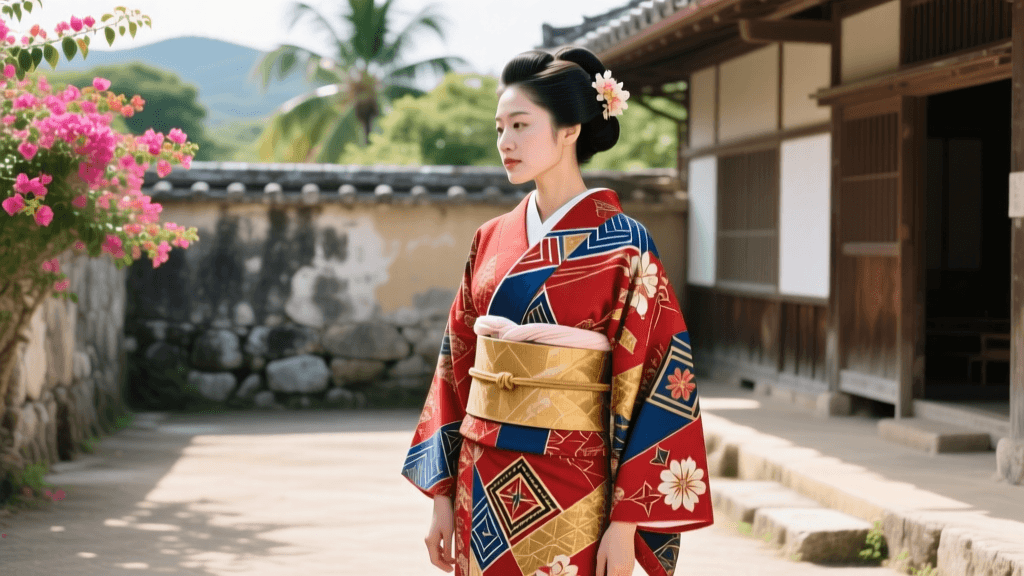
When discussing traditional Japanese clothing, the mainstream kimono of Honshu often dominates the narrative. However, the Japanese archipelago is home to profound regional and prefecture variations, none more distinct than the traditional garments of the Ryukyu Islands. Okinawa, the largest of the Ryukyu Islands, boasts a rich sartorial heritage shaped by its subtropical climate, indigenous culture, and centuries of maritime trade with China, Southeast Asia, and mainland Japan. The traditional Okinawan dress, known as Ryusou, and its accompanying textiles, most notably Bingata and Bashofu, represent a fascinating divergence from the Edo-period kimono. For collectors, cultural enthusiasts, and travelers, understanding these regional variations offers a deeper appreciation of Asia's diverse textile history.
Anatomy of the Ryusou: Garments of the Subtropics
Unlike the heavily layered and tightly bound mainland kimono, the Ryusou is designed for breathability and ease of movement in Okinawa's humid, tropical climate. The traditional ensemble for both men and women historically consisted of several key components:
- Dujin (Inner Garment): A cross-collared, hip-length jacket. Unlike the mainland kosode, the dujin is worn loosely and is often left open at the front or secured with a simple, narrow sash.
- Ushin (Outer Garment): A wide-sleeved, flowing robe worn over the dujin. The sleeves of the ushin are exceptionally wide and open, allowing air to circulate freely around the arms and torso.
- Kasane (Layering): For formal occasions or cooler winter months, multiple layers of dujin and ushin are worn, but the overall silhouette remains relaxed and unrestrictive.
- Hachimachi (Headwear): Historically, Ryukyuan men wore a distinctive twisted headcloth called a hachimachi, the color and tying method of which denoted social rank within the Ryukyu Kingdom.
The fundamental difference lies in the fastening. While mainland kimono rely on the wide, structured obi to secure the garment and shape the silhouette, Ryusou utilizes thin, soft sashes or is simply tied at the hip, prioritizing comfort and airflow.
Bingata: The Resist-Dyed Masterpiece of Okinawa
No discussion of Okinawan regional dress is complete without Bingata, the vibrant, stencil-resist dyed textile that served as the official fabric of the Ryukyuan royalty and aristocracy. Recognized as a traditional craft by the Japanese government, Bingata is celebrated for its bold colors and dynamic motifs. According to the Ministry of Economy, Trade and Industry (METI), the craft utilizes natural pigments historically imported via the Ryukyu trade routes, including indigo, cochineal, and orpiment.
The motifs found on Bingata are distinctly non-mainland. While Honshu textiles often feature subtle, seasonal flora, Bingata embraces auspicious Chinese and Southeast Asian symbols: peonies, dragons, phoenixes, clouds, and waves. The dyeing process is labor-intensive, requiring the carving of intricate paper stencils (katagami), the application of a resist paste made from sweet potato starch, and meticulous hand-painting of pigments into the fabric. Finally, a soybean milk solution is applied to set the colors, resulting in a textile that is both vivid and remarkably colorfast.
Bashofu and Minzai: The Textiles of the Common People
While Bingata was reserved for the elite, the common people of Okinawa wore garments made from Bashofu and Minzai. Bashofu is a remarkable textile woven from the fibers of the Japanese fiber banana (Musa basjoo). The process of extracting, splitting, and weaving the banana fiber is incredibly demanding, yielding a fabric that is stiff, highly breathable, and perfect for the subtropical heat. Kijoka no Bashofu, produced in the northern village of Ogimi, is designated as an Important Intangible Cultural Property of Japan. Minzai, on the other hand, refers to everyday cotton or ramie textiles, often featuring simple kasuri (ikat) patterns, which were practical, washable, and durable for agricultural labor.
Regional Comparison: Mainland Kimono vs. Okinawan Ryusou
To truly understand the regional variations between the Japanese mainland and the Ryukyu Islands, it is helpful to compare their structural and functional differences side-by-side.
| Feature | Mainland Kimono (Honshu) | Okinawan Ryusou (Ryukyu) |
|---|---|---|
| Collar Style | Tightly crossed, high on the neck | Loosely crossed, often open at the chest |
| Sleeves | Attached to the body, varying depths | Extremely wide, open, and detached underarm |
| Fastening | Wide, structured Obi (up to 30cm wide) | Narrow, soft sash or hip-tie |
| Silhouette | Cylindrical, restrictive, padded | Flowing, A-line, unrestrictive |
| Primary Climate | Temperate (Four distinct seasons) | Subtropical (High humidity, warm) |
Practical Buyer's Guide: Sourcing Ryukyuan Garments
For those looking to acquire authentic Okinawan garments, whether for a personal collection, cultural study, or wearable fashion, navigating the local markets requires specific knowledge. The best place to source authentic pieces is in Naha, particularly around the Tsuboya pottery district and the specialized textile shops along Kokusai-dori. The Okinawa Prefectural Museum & Art Museum frequently hosts exhibitions that can help train your eye to recognize authentic historical stitching and dyeing techniques before you make a purchase.
Measurements and Fit
Because Ryusou is inherently loose-fitting, sizing is more forgiving than mainland kimono. However, if you are commissioning a custom piece or buying vintage, keep these standard measurements in mind:
- Dujin Length: Typically ranges from 75 cm to 85 cm, designed to hit at the mid-to-lower hip.
- Sleeve Drop (Sode): The vertical drop of the sleeve is usually between 30 cm and 40 cm, but the horizontal width can exceed 60 cm to create the signature flowing effect.
- Shoulder Span (Yuki): Often cut straight across without a shoulder seam, spanning 120 cm to 140 cm from cuff to cuff.
Pricing and Custom Order Timelines
Authentic, handcrafted Okinawan textiles are an investment. The pricing reflects the intense manual labor required, particularly for Bingata. Here is what you can expect to pay and the timelines involved:
- Vintage/Antique Bingata Obi: While not traditionally used to tie Ryusou, modern artisans create Bingata obi for mainland kimono enthusiasts. Expect to pay between ¥250,000 and ¥800,000 ($1,700 - $5,500 USD) for a hand-dyed maru obi.
- Custom Bingata Dujin: A modern, casual cotton dujin featuring hand-stenciled Bingata motifs typically costs between ¥45,000 and ¥85,000 ($300 - $600 USD).
- Authentic Bashofu Garments: Due to the scarcity of banana fiber and the aging population of weavers, genuine Kijoka Bashofu is exceedingly rare. A full bolt of fabric can exceed ¥1,500,000 ($10,000+ USD).
- Custom Order Timelines: If you are commissioning a bespoke Bingata piece from a master dyer in Naha or Shuri, be prepared for a wait time of 4 to 8 months. The carving of a new, custom katagami stencil alone can take several weeks, followed by the meticulous dyeing and drying processes which are highly dependent on Okinawa's weather.
Cultural Preservation and Modern Styling
The Battle of Okinawa in 1945 devastated the islands, destroying countless historical garments, stencils, and weaving workshops. The revival of Ryusou and Bingata is a testament to the resilience of the Ryukyuan people. Today, modern Okinawan designers are blending traditional textiles with contemporary fashion. It is increasingly common to see Bingata fabric tailored into modern aloha shirts, western-style dresses, and lightweight summer jackets, making the textile accessible to a global audience.
"The vibrant colors of Bingata are not merely decorative; they are a visual language of the Ryukyu Kingdom's maritime history, capturing the winds, waters, and flora of a subtropical paradise that refused to be erased by time or conflict."
Whether you are studying the structural ingenuity of the Ryusou, investing in a hand-woven Bashofu textile, or simply admiring the bold aesthetics of Bingata, Okinawa's traditional garments offer a vital, colorful chapter in the broader atlas of Asian textile traditions. For travelers and collectors alike, engaging with these regional variations provides a profound connection to the living history of the Ryukyu Islands. For more insights into regional Japanese crafts, consult resources like the Japan National Tourism Organization (JNTO) to plan your textile-focused itinerary.