Japanese Matsuri Festival Attire: Yukata, Happi, and Tabi Guide
The Magic of Natsu Matsuri and Traditional Garments
Japanese summer festivals, known as Natsu Matsuri, are a vibrant explosion of culture, spirituality, and community. From the thunderous beats of taiko drums to the mesmerizing Bon Odori dances, these festivals are deeply intertwined with traditional Japanese clothing. According to the Japan National Tourism Organization (JNTO), summer festivals are among the most sought-after cultural experiences for both locals and international visitors. Dressing appropriately not only enhances your comfort in the sweltering Japanese summer but also shows deep respect for the host communities. This guide provides a comprehensive, actionable breakdown of the essential performance and festival garments: the yukata, the happi coat, and traditional footwear.
The Yukata: Summer Festival Elegance
The yukata is the undisputed star of Japanese summer festivals. Originally conceived as a simple cotton bathrobe during the Edo period, it has evolved into a sophisticated, breathable garment worn at fireworks displays (hanabi taikai) and outdoor dances. Unlike the multi-layered, silk kimono, the yukata is unlined and typically made from lightweight cotton or synthetic blends designed to wick moisture and allow for maximum airflow.
Sizing and Measurements
Traditional yukata are made from a standard bolt of fabric called a tanmono, which measures approximately 38 centimeters (15 inches) in width. When purchasing off-the-rack festival yukata, sizing is primarily determined by length rather than width, as the garment is wrapped and tied to fit the wearer's girth. Standard sizing guidelines include:
- Small (S): 130 cm length (Suitable for heights 150-155 cm)
- Medium (M): 135 cm length (Suitable for heights 155-165 cm)
- Large (L): 140 cm length (Suitable for heights 165-175 cm)
- Extra Large (XL): 145+ cm length (Suitable for heights over 175 cm)
When trying on a yukata, the hem should fall precisely at the ankle bone. Excess fabric at the waist is folded into a tuck called the ohashori, which allows the garment to be adjusted for different heights and provides a stylish, layered silhouette.
The Art of the Obi: Tying the Knot
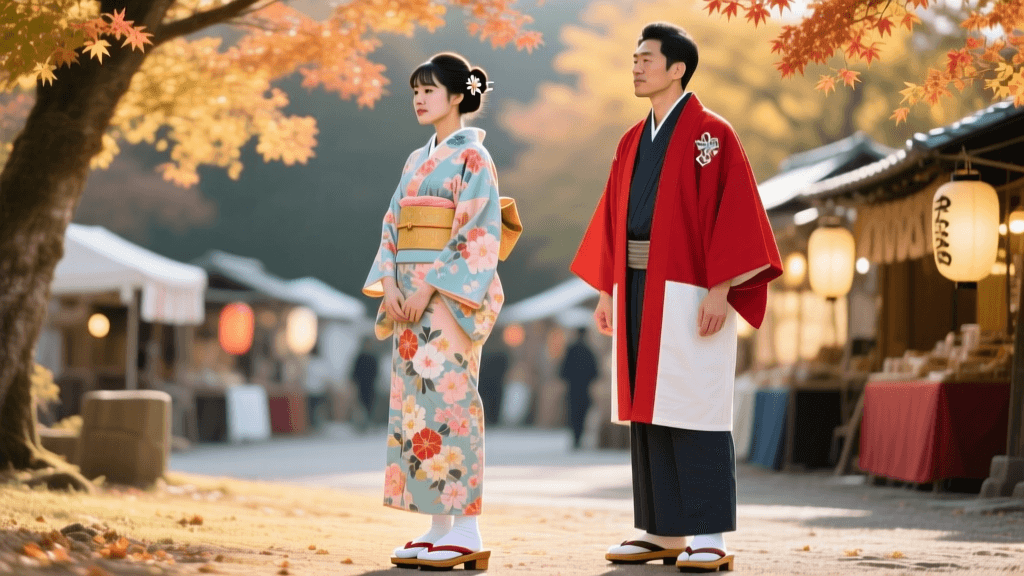
The obi (sash) secures the yukata. For women, a half-width obi (hanhaba obi) is standard for summer festivals. The most common and beginner-friendly knot is the bunko (library knot), which resembles a large bow at the back. For men, a stiff, narrow kaku obi is wrapped tightly around the hips and tied in a simple, flat knot at the back or slightly off-center at the front.
The Happi Coat: The Spirit of the Festival
While the yukata is primarily for attendees and dancers, the happi coat is the iconic uniform of the participants. The happi is a short, loose-fitting jacket characterized by wide sleeves and a straight hem. Historically worn by house servants and merchants bearing the crest (mon) of their masters, the happi is now the definitive garment of mikoshi (portable shrine) bearers, taiko drummers, and festival organizers.
Craftsmanship and Design
Authentic festival happi are crafted from heavy-duty cotton to withstand the rigorous physical exertion of carrying a mikoshi, which can weigh upwards of 1,000 kilograms. Many feature sashiko (decorative reinforcement stitching) on the shoulders and lapels to prevent tearing. The back of the coat typically displays the kanji of the local shrine, the neighborhood association (chokai), or the word matsuri. The lapels often feature contrasting geometric patterns or repetitive crests.
Sizing and Fit
Happi coats are designed to be highly accommodating, but they do come in variations. The standard length is about 80 to 85 centimeters, falling just below the hips. Sleeves are wide and open, allowing for unrestricted arm movement during dynamic performances. When purchasing a happi for a local festival, participants often must order through their neighborhood association to ensure the correct shrine crest is applied. Custom happi coats from traditional dyers cost between 8,000 and 20,000 JPY.
Footwear Essentials: Tabi, Geta, and Jika-Tabi
No festival outfit is complete without proper footwear. The Japanese summer climate demands breathable, elevated, or highly functional footwear depending on your specific role in the festival.
Tabi (Split-Toe Socks)
Tabi are essential for separating the big toe from the rest of the foot, allowing the wearer to grip the thong (hanao) of traditional sandals. For festival performances and formal yukata wearing, white cotton tabi are standard. Sizing is strictly measured in centimeters. A person with a US Men's size 9 shoe will require a 27 cm tabi. Modern festival tabi often feature a stretch-blend fabric and a rubberized sole for temporary outdoor wear.
Geta and Zori
Geta are wooden clogs with elevated teeth that keep the hem of the yukata clean and provide a distinctive clacking sound that echoes through festival streets. Zori are flatter, woven sandals. For festival attendees, vinyl or woven geta are practical, easy to clean, and cost between 2,000 and 5,000 JPY.
Jika-Tabi for Performers
For those carrying the mikoshi or performing vigorous taiko routines, standard geta are dangerous and lack support. Instead, performers wear jika-tabi—split-toe shoes with rubber soles that provide traction, ankle support, and shock absorption. Brands like Marugo and Rikio dominate this market, with prices ranging from 3,500 to 6,000 JPY.
Data Table: Festival Garment Comparison and Cost Breakdown
| Garment | Primary Use | Material | Avg. Cost (JPY) |
|---|---|---|---|
| Yukata | Attendee / Bon Odori Dance | Lightweight Cotton / Poly | 3,000 - 15,000 |
| Happi | Shrine Bearer / Drummer | Heavy Cotton | 8,000 - 20,000 |
| Tabi | Undergarment for Footwear | Stretch Cotton | 1,500 - 3,000 |
| Geta | Casual Festival Sandal | Wood / Vinyl | 2,000 - 5,000 |
| Jika-Tabi | Performance / Heavy Lifting | Cotton / Rubber Sole | 3,500 - 6,000 |
Dressing Etiquette and Actionable Tips
When dressing in traditional Japanese garments, adherence to cultural etiquette is paramount. The most critical rule is the wrapping direction: always wrap the left side over the right side. Wrapping right-over-left is strictly reserved for dressing the deceased for burial and is considered highly inauspicious and offensive in a festival setting.
Furthermore, the ohashori (the waist tuck) must be visible and relatively straight. A missing or messy ohashori makes the outfit look like a child's robe or a bathrobe. To secure the ohashori and keep the obi neat, women should use a datejime (a thin, elasticized under-belt) and an obi-ita (a stiff board inserted into the obi to prevent wrinkling).
Festival Timing and Sourcing Your Wardrobe
Timing your purchase is crucial for the best selection. Retailers in Japan begin stocking summer yukata and festival gear in early May, with peak inventory available throughout June. By late July, as the major festivals like Kyoto's Gion Matsuri conclude, stores begin discounting their stock. For international visitors seeking authentic experiences without the commitment of purchasing, rental shops in cities like Kyoto and Tokyo offer full yukata sets, including professional dressing services, for approximately 4,000 to 6,000 JPY per day. The Kyoto City Tourism Association provides extensive directories of certified rental shops and dressing schools.
According to The Japan Foundation, traditional garments worn during matsuri are not merely costumes; they are vital conduits of community identity, spiritual purity, and regional craftsmanship that connect modern participants to their ancestral roots.
Conclusion
Participating in a Japanese Natsu Matsuri is a profound cultural experience, and wearing the correct attire elevates that experience from mere observation to active participation. Whether you are gliding through lantern-lit streets in a crisp cotton yukata, or sweating alongside locals in a heavy happi coat while hoisting a mikoshi, understanding the measurements, materials, and etiquette of these garments ensures you honor the tradition. By investing in the right footwear, respecting the left-over-right rule, and sourcing your garments from reputable artisans or trusted retailers, you become a seamless part of Japan's vibrant, living tapestry of summer celebrations.