Okinawan Ryusou and Bingata: Japan's Tropical Garments
Introduction to Okinawa's Unique Textile Heritage
When exploring the rich tapestry of Asian traditional garments, the focus often lands squarely on the mainland Japanese kimono. However, Japan’s southernmost prefecture, Okinawa, harbors a distinctly different sartorial heritage born from the independent Ryukyu Kingdom. For over 450 years, the Ryukyu Kingdom operated as a vital maritime hub, trading extensively with Ming Dynasty China, Siam, Java, and Malacca. This vibrant cross-cultural exchange profoundly influenced Okinawan traditional clothing, resulting in garments uniquely adapted to a subtropical climate and infused with Southeast Asian and Chinese aesthetic sensibilities.
According to the cultural archives of the Okinawa Story, the island's traditional dress is not merely a regional variant of the mainland kimono, but an entirely separate sartorial system. From the breezy, unlined cuts of the Ryusou to the explosively colorful resist-dyeing techniques of Bingata, Okinawan garments represent a masterclass in climate-appropriate, culturally rich fashion. This guide explores the deep regional variations of Okinawan textiles and provides actionable advice for collectors, travelers, and textile enthusiasts looking to acquire and care for these tropical masterpieces.
Ryusou: The Traditional Garment of the Ryukyu Kingdom
The Ryusou (Ryukyu attire) is the formal traditional wear of the Okinawan people. While it shares a superficial T-shaped silhouette with the mainland kimono, its construction, wearing method, and underlying philosophy are radically different. Designed for high humidity and intense heat, the Ryusou prioritizes airflow and comfort without sacrificing aristocratic elegance.
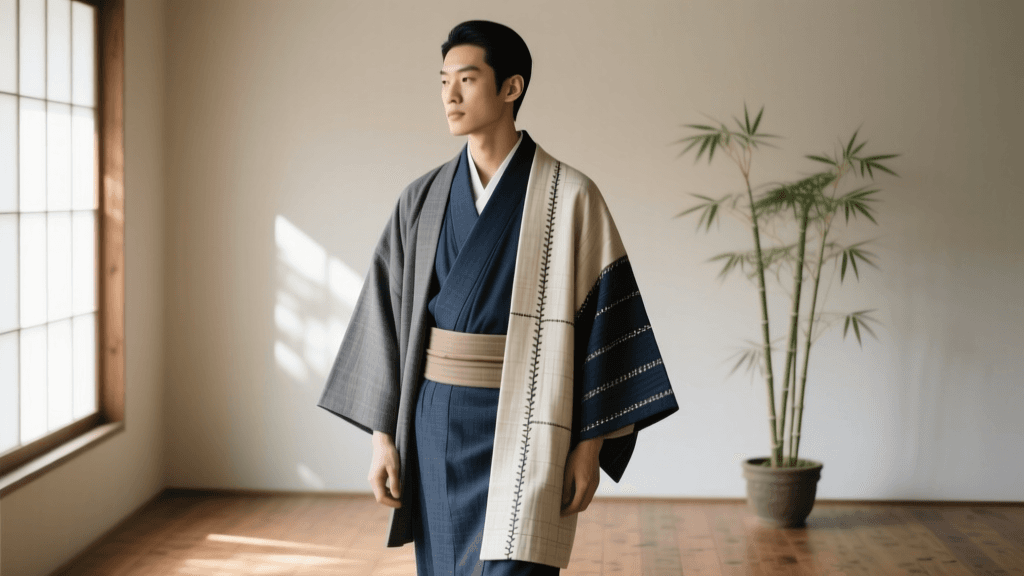
Unlike the heavily layered and tightly bound mainland kimono, the Ryusou is typically unlined and made from highly breathable textiles like ro (leno weave silk), sha (gauze), or locally woven ramie and banana fibers. The sleeves are exceptionally wide and open at the armpit, allowing heat to escape. Furthermore, the Ryusou does not utilize the stiff, elaborate obi sash found in Kyoto or Tokyo. Instead, it is secured with a simple, lightweight silk or cotton cord known as a himo, or a soft, narrow sash that ties gently at the front or side, allowing the fabric to drape loosely over the body.
Key Differences Between Ryusou and Mainland Kimono
Understanding the structural and stylistic divergences between Okinawan and mainland garments is essential for proper styling and appreciation. Below is a comparative breakdown of their defining characteristics.
| Feature | Mainland Japanese Kimono | Okinawan Ryusou |
|---|---|---|
| Climate Adaptation | Layered, padded, and lined for distinct four seasons. | Unlined, sheer, and breathable for subtropical heat. |
| Sleeve Construction | Attached to the body; features deep furi (unsewn pockets). | Wide, open at the armpit, and detached from the torso for airflow. |
| Fastening Method | Complex, stiff obi sash tied in elaborate knots at the back. | Soft himo cords or narrow sashes tied loosely at the front/side. |
| Undergarments | Multiple layers, including juban and susoyoke. | Minimal undergarments; often worn directly over lightweight modern slips. |
| Footwear | Tabi socks with zori or geta sandals. | Historically barefoot or straw sandals; modern wear uses standard zori. |
Bingata: Okinawa’s Vibrant Resist-Dyeing Technique
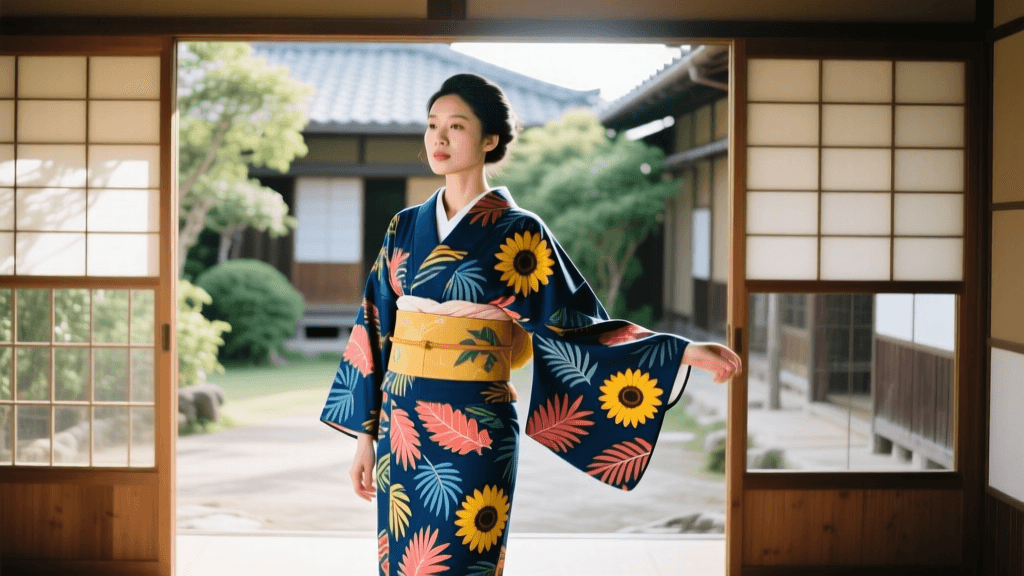
No discussion of Okinawan regional variations is complete without Bingata, the island's iconic stencil resist-dyeing technique. Recognized by the Japanese Ministry of Economy, Trade and Industry (METI) as a premier traditional craft, Bingata is characterized by its bold, high-contrast motifs and striking color palette. Historically, the wearing of Bingata was strictly regulated by the Ryukyuan court; specific colors and motifs (such as dragons, phoenixes, and peonies) were reserved exclusively for royalty and the aristocratic shizoku class.
The traditional Bingata process is incredibly labor-intensive. Artisans carve intricate patterns into mulberry paper stencils (katagami), which are then treated with persimmon tannin for durability. A thick resist paste made from sweet potato or rice is applied through the stencil onto the fabric. Once dry, natural pigments are painted into the reserved areas. The signature vivid yellows were historically derived from the fukugi tree, blues from indigenous indigo, and reds from cinnabar or safflower. After dyeing, the fabric is steamed, washed in the ocean or rivers to remove the paste, and stretched to dry in the sun.
Regional Textile Variations: Bashofu and Miyako Jofu
While Bingata provides the color, Okinawa's regional weaving traditions provide the canvas. Bashofu, woven in the northern village of Ogimi, is crafted from the fibers of the Japanese fiber banana (Musa basjoo). It requires over 200 banana trees to produce enough fiber for a single garment, resulting in a lightweight, crisp, and incredibly durable textile that feels like raw silk but breathes like linen. Further south, the Miyako Islands produce Miyako Jofu, a premium ramie cloth dyed with indigo and woven so tightly that it possesses a cool, smooth sheen. Both textiles are highly prized by collectors and are frequently featured in the Victoria and Albert Museum's extensive Asian textile archives as pinnacles of subtropical weaving.
Practical Guide: Buying, Wearing, and Caring for Ryusou
For textile enthusiasts and travelers looking to acquire authentic Okinawan garments, navigating the local markets requires specific knowledge regarding measurements, pricing, and studio locations.
Where to Shop in Okinawa
The epicenter of traditional textile commerce is Naha City. While the bustling Kokusai Dori offers mass-produced souvenirs, serious buyers should head to the Tsuboya Pottery District and the surrounding artisan alleys, where heritage Bingata studios operate. Notable ateliers include Chinen Bingata and Eijun Bingata, both of which have preserved techniques dating back to the Ryukyu Kingdom. For vintage and antique Ryusou, the Sunday flea markets at the Naha City Wakasa Park and specialized antique kimono shops tucked away in the Shuri district offer the best selection of pre-war textiles.
Costs, Measurements, and Custom Orders
Acquiring a genuine Ryusou or Bingata piece requires an understanding of local pricing and measurement standards, which differ from mainland conventions.
- Cost Expectations: A vintage, cotton everyday Ryusou can be found for 5,000 to 15,000 JPY ($35 - $100 USD). Authentic, hand-dyed silk Bingata garments start around 150,000 JPY ($1,000 USD) and can easily exceed 500,000 JPY ($3,500+ USD) for master-level pieces. Antique Bashofu is exceptionally rare and commands premium auction prices.
- Custom Measurements: If commissioning a piece, you will need your Yuki (arm span: center back of neck, over shoulder, to wrist) and Mitake (back of neck to ankle). For Ryusou, artisans typically add 2-3 cm to the Yuki for a relaxed, breezy fit. The Mitake is often cut 2-5 cm shorter than mainland kimono to prevent tripping on uneven coral-stone paths.
- Timing: Custom Bingata commissions are not quick purchases. Due to the meticulous hand-painting and weather-dependent drying processes, expect a lead time of 6 to 12 months. Plan your studio visit at the beginning of your trip to Okinawa to allow for final fittings and shipping arrangements.
Care and Maintenance in Humid Climates
Okinawa's subtropical humidity is the natural enemy of silk and natural dyes. Never machine wash or hand wash authentic Bingata; the natural pigments and delicate silk weaves require specialized dry cleaning by artisans familiar with resist-dyed textiles. When storing your Ryusou, avoid plastic garment bags, which trap moisture and encourage mold. Instead, wrap the garment in tatoushi (traditional washi paper wrappers) and store it in a breathable cedar chest with natural camphor. Unfold and air the garment in a shaded, well-ventilated room at least twice a year, ideally during the drier winter months.
Contemporary Relevance and Styling Tips
Today, Okinawan traditional garments are experiencing a renaissance, blending historical reverence with modern practicality. While full Ryusou is primarily worn during traditional Eisa dance festivals, weddings, and coming-of-age ceremonies, elements of Okinawan textiles are increasingly integrated into contemporary wardrobes.
A popular modern styling technique involves wearing a vintage, lightweight Bingata haori (jacket) over a simple linen dress or tailored trousers, allowing the vibrant Okinawan motifs to serve as a striking statement piece without the formality of a full ensemble. Additionally, modern Okinawan designers are repurposing antique Miyako Jofu into wide-leg, hakama-style trousers that offer the breathability of traditional ramie with a modern, gender-neutral silhouette. By understanding the profound regional variations and historical context of these garments, wearers can honor the legacy of the Ryukyu Kingdom while embracing a uniquely tropical approach to traditional Asian fashion.