Miao Ethnic Clothing: Silver Jewelry and Batik Guide
The Wearable History of the Miao People
The Miao people, widely known outside of China as the Hmong, represent one of the largest and most culturally distinct ethnic minority groups in Asia. Concentrated primarily in the mountainous regions of Guizhou, Yunnan, and Hunan provinces in southwestern China, the Miao have historically lacked a formal written language. Instead, they have encoded their history, mythology, and migratory patterns into their extraordinary textile and metalwork traditions. To wear a traditional Miao garment is to drape oneself in a living, breathing archive of ancestral memory.
For collectors, cultural enthusiasts, and sustainable fashion advocates, understanding Miao clothing requires a deep dive into two primary pillars of their craftsmanship: the alchemy of indigo batik and the staggering metallurgical artistry of their silver jewelry. This guide provides an actionable, detailed overview of these traditions, complete with sourcing advice, pricing expectations, and maintenance protocols for authentic pieces.
The Alchemy of Indigo Batik (Laran)
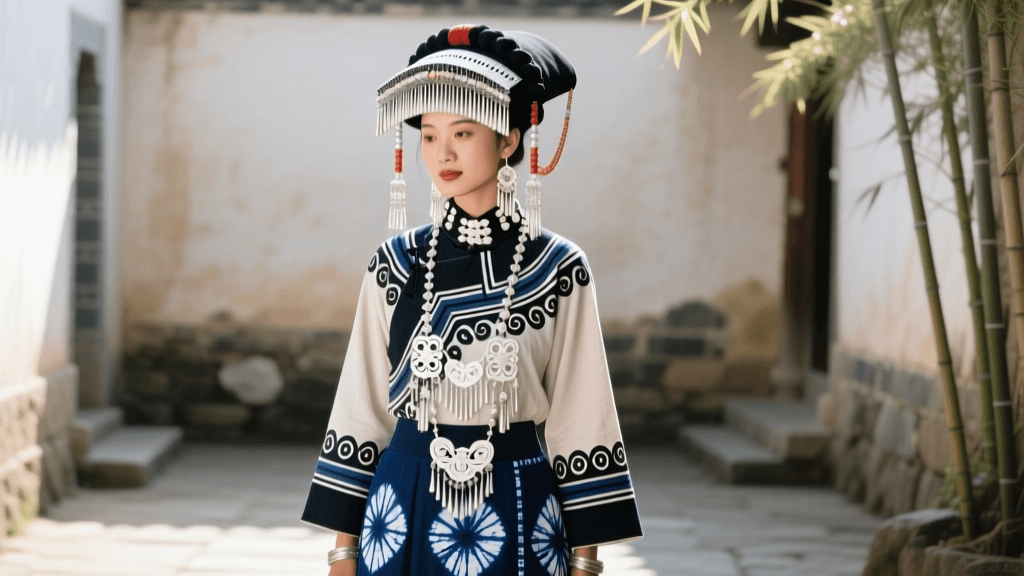
Miao batik, or laran, is a resist-dyeing technique that has been perfected over centuries. Unlike the Javanese method which often uses a spouted tool called a canting, Miao artisans utilize a specialized copper knife known as a ladao. The artisan heats natural beeswax and uses the copper blade to draw intricate geometric and zoomorphic motifs—such as the butterfly mother, dragons, and river spirals—directly onto handwoven cotton or hemp.
According to cultural documentation highlighted by BBC Travel's exploration of Guizhou's indigo villages, the dyeing process is a masterclass in organic chemistry. The fabric is submerged in massive wooden vats filled with fermented indigo leaves, rice wine, and plant ash. This fermentation process can take weeks to mature. The fabric is dipped repeatedly, sometimes up to twenty times, to achieve a deep, midnight-blue hue. Finally, the cloth is boiled in water to melt away the beeswax, revealing the stark white patterns beneath.
Actionable Advice for Sourcing Batik
- Authenticity Check: Genuine hand-drawn Miao batik features 'ice crack' lines—tiny, web-like veins of blue that seep into the white pattern where the hardened beeswax naturally fractured during handling. Machine-printed fakes have perfectly uniform, unbroken white spaces.
- Measurements & Fabric: Authentic jackets are typically cut in a traditional cross-collar or wrap style, requiring about 2.5 to 3 meters of 45cm-wide handwoven cotton.
- Cost Expectations: A genuine, hand-batik woman's wrap jacket from a master artisan in Danzhai County will cost between 800 and 1,500 RMB ($110 to $210 USD). Mass-produced tourist souvenirs sell for under 150 RMB but lack the depth of color and structural integrity of true fermented indigo.
Engineering the Miao Pleated Skirt (Baiqun)
The Miao pleated skirt is an engineering marvel of the textile world. Creating a single traditional skirt can require anywhere from 15 to 30 meters of handwoven cotton. The fabric is meticulously folded into hundreds of microscopic pleats. To set the pleats permanently, artisans traditionally use a binding paste made from egg whites, pig's blood, or the sap of the Bletilla striata orchid, wrapping the skirt tightly in a bamboo mat and letting it cure in the sun.
Skirt lengths vary dramatically by region, serving as a geographic identifier:
- Leishan County (Mini Skirts): Often called 'short skirts Miao', these skirts measure a mere 15 to 20 cm in length and are worn over embroidered leggings.
- Danzhai and Kaili (Midi/Maxi Skirts): These can range from 60 cm to over 100 cm, sweeping the ground and requiring significantly more fabric and labor, often pushing the price past 2,000 RMB ($280 USD).
The Weight of Tradition: Miao Silver Jewelry
While textiles tell the story of the Miao migration, silver represents their wealth, spiritual protection, and social status. The Miao believe that silver possesses the power to ward off evil spirits and illuminate the path to the afterlife. Silversmithing is a highly revered, hereditary profession among Miao men. A full festival or bridal silver set is a staggering display of wealth and endurance, often weighing between 10 and 15 kilograms (22 to 33 lbs).
As noted in research regarding minority material culture, such as the collections documented by the Metropolitan Museum of Art, Miao silverwork is characterized by repoussé, chasing, and intricate wire-weaving techniques that rival the finest European metalwork. The motifs frequently mirror the batik patterns, creating a cohesive visual language across the wearer's entire ensemble.
Miao Silver Jewelry: Data and Sourcing Chart
| Garment / Ornament | Average Weight | Estimated Cost (USD) | Primary Use & Notes |
|---|---|---|---|
| Silver Horn Headdress | 2.5 - 4.0 kg | $800 - $1,500 | Major Festivals (e.g., Sisters' Meal). Features intricate dragons and birds. |
| Multi-Layered Neck Rings | 3.0 - 5.0 kg | $1,200 - $2,500 | Weddings & Festivals. Solid or hollow silver; rests heavily on the collarbone. |
| Silver-Plated Jacket | 4.0 - 6.0 kg | $2,000 - $4,000 | Bridal Dowry. Hundreds of silver plates sewn onto a heavy cotton base. |
| Silver Hairpins & Combs | 0.2 - 0.5 kg | $100 - $300 | Daily & Festive Wear. Excellent entry-level pieces for collectors. |
Practical Sourcing: Where, When, and How to Buy
For those looking to acquire authentic Miao garments and silver, timing and location are everything. The best time to visit Guizhou province is during major cultural events, such as the Sisters' Meal Festival (usually in April) or the Lusheng Festival (autumn). During these times, villages like Xijiang, Shidong, and Kaili are alive with artisans displaying their finest, newly finished works.
According to cultural travel analyses by Smithsonian Magazine, Guizhou remains a vital haven for these minority cultures, though commercialization is a growing concern. When shopping in markets like the Kaili Sunday Market, keep the following actionable tips in mind:
- The Magnet Test: Always carry a strong neodymium magnet. Traditional Miao silver is high-purity (often 99% or higher). If the magnet pulls the metal, it is an alloy or silver-plated iron.
- The Sound Test: High-purity silver has a distinct, dull, and heavy 'clink' when tapped, rather than a high-pitched, ringing chime associated with brass or steel alloys.
- Negotiation: In village markets, bargaining is expected. Start at 50% of the asking price for textiles, but be respectful. For silver, which is priced partly by the gram weight of the metal plus the artisan's labor fee, margins are tighter; a 10-15% discount is more realistic.
- Antique vs. Vintage: True antique Miao silver (pre-1950s) is exceedingly rare and heavily regulated by Chinese cultural heritage laws. Most 'antiques' sold in tourist shops are artificially oxidized modern pieces. Buy from reputable guild-certified silversmiths in Kaili rather than street vendors.
Care and Maintenance Guide
Owning a piece of Miao heritage requires specific care protocols to preserve both the organic dyes and the reactive metals.
Caring for Indigo Batik
Natural indigo is not colorfast in the same way synthetic dyes are; it will 'bleed' indefinitely if washed improperly. Washing: Never use hot water or alkaline detergents, which will strip the indigo. Hand wash the garment separately in cold water with a mild, pH-neutral soap. Adding a half-cup of white vinegar or coarse sea salt to the final rinse can help set the dye. Drying: Dry the garment flat in deep shade. Direct sunlight will rapidly oxidize and fade the natural indigo to a dull gray.
Maintaining Miao Silver
High-purity silver tarnishes when exposed to sulfur in the air and human sweat. Polishing: Avoid harsh commercial silver dips, which can damage the delicate repoussé work. Instead, use a specialized silver polishing cloth. For deep tarnish in crevices, create a chemical bath: line a glass bowl with aluminum foil, add boiling water, a tablespoon of baking soda, and a tablespoon of salt. Submerge the silver for 3-5 minutes. The galvanic reaction will transfer the tarnish from the silver to the foil without removing any of the precious metal. Storage: Store silver pieces in individual anti-tarnish flannel bags with silica gel packets to control humidity. Wrap heavy neck rings in acid-free tissue paper to prevent them from scratching one another.
Conclusion
Miao ethnic clothing is far more than mere adornment; it is a profound expression of resilience, identity, and artistic genius. Whether you are acquiring a simple indigo-dyed scarf or investing in a multi-kilogram silver headdress, understanding the immense labor, cultural significance, and material science behind these pieces ensures that you are not just buying a garment, but preserving a vital piece of Asian heritage.