Okinawan Ryusou and Ainu Attus: Japan's Regional Dress
Beyond the Mainland: Exploring Japan’s Regional Garments
Japan’s sartorial heritage is globally celebrated, yet the mainstream image of the Japanese kimono often obscures the rich, diverse tapestry of regional and indigenous garments found across the archipelago. From the subtropical breezes of Okinawa to the rugged, snow-swept landscapes of Hokkaido, Japan’s prefectures and indigenous territories have cultivated distinct clothing traditions. These regional variations are not merely aesthetic choices; they are profound adaptations to local climates, available flora, and unique cultural cosmologies. While the Metropolitan Museum of Art extensively documents the evolution of the mainland kimono, understanding Japan's full textile legacy requires looking to its borders. In this comprehensive guide, we explore the striking contrasts between the Okinawan Ryusou and the Hokkaido Ainu Attus, providing collectors, travelers, and cultural enthusiasts with actionable insights into sourcing, wearing, and preserving these extraordinary garments.
Okinawan Ryusou and the Vibrancy of Bingata
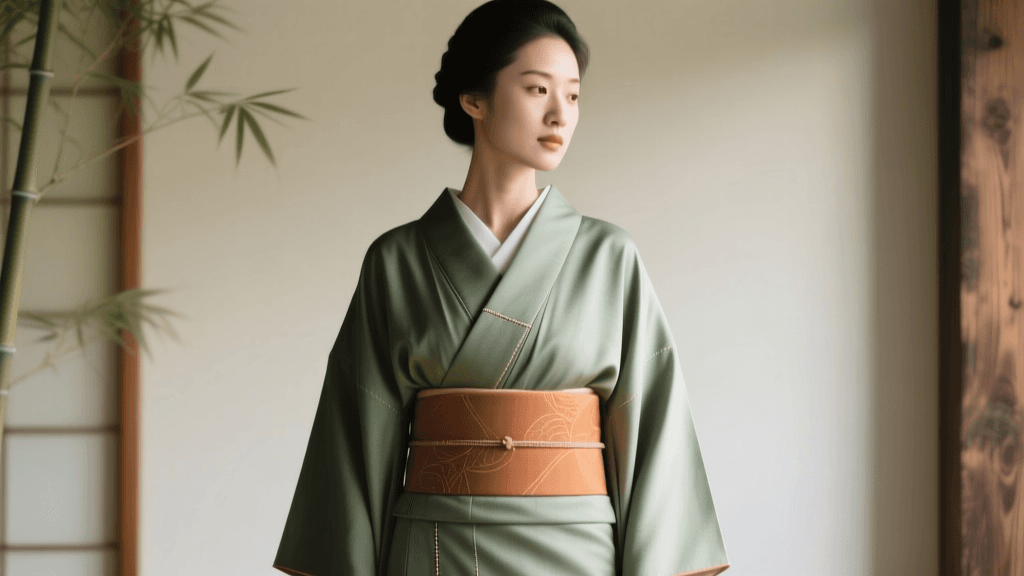
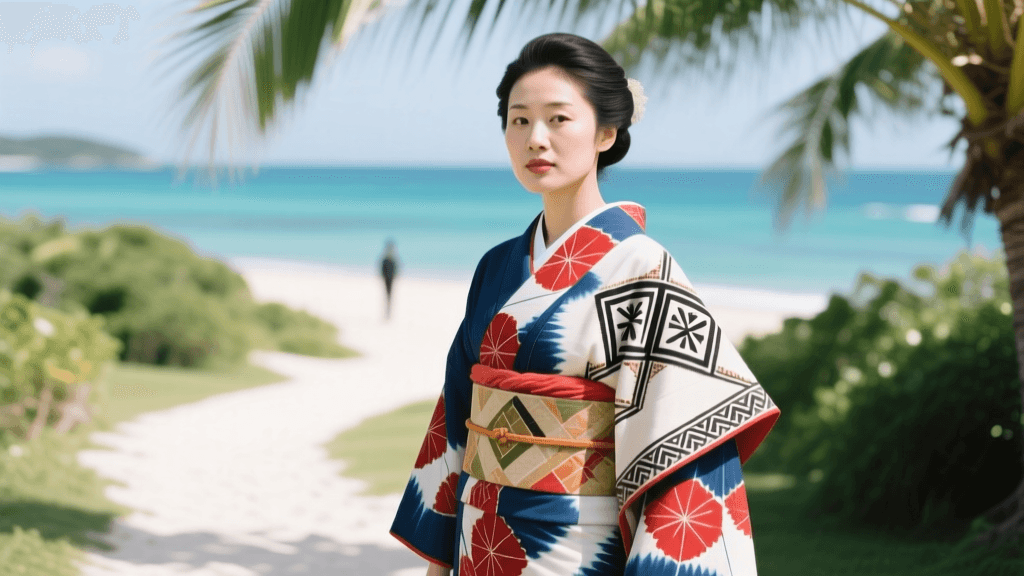
The Ryukyu Islands (modern-day Okinawa Prefecture) maintained an independent kingdom for centuries, fostering a unique culture that blended Japanese, Chinese, and Southeast Asian influences. The traditional garment of this region is the Ryusou. Unlike the heavily layered, tightly bound mainland kimono, the Ryusou is explicitly designed for a subtropical, humid climate. It features a looser fit, wider sleeves, and is typically unlined to allow for maximum airflow. The silhouette is elegant but relaxed, often lacking the deep okumi (front overlap) found in mainland garments, and is secured with a simple, woven sash rather than the rigid, heavily padded obi.
The most prestigious textiles associated with the Ryusou are Bingata and Bashofu. Bingata is a vibrant, stencil-resist dyeing technique characterized by bold motifs of tropical flora, fauna, and ocean waves, historically reserved for royalty and the warrior class. Bashofu, on the other hand, is a remarkably labor-intensive fabric woven from the fibers of the basho (Japanese fiber banana) plant. It is sheer, crisp, and exceptionally breathable. According to The Association for the Promotion of Traditional Craft Industries, both Bingata and Bashofu are officially designated as National Traditional Crafts, highlighting their immense cultural value.
Actionable Advice for Buyers and Travelers: If you are visiting Naha, the capital of Okinawa, renting a Ryusou for a photoshoot or cultural experience is highly accessible. Expect to pay between 5,000 and 8,000 JPY ($35–$55 USD) for a standard rental package along Kokusai Dori. For collectors seeking authentic, vintage Bashofu or Bingata garments, be prepared for a significant investment. A high-quality, mid-century Bingata obi can cost upwards of 150,000 JPY ($1,000 USD), while museum-grade Bashofu kimono can exceed 1,000,000 JPY ($6,800 USD). When measuring for a custom Ryusou, note that the mitake (back length) is often worn slightly shorter than mainland kimono to prevent the hem from dragging in humid, sandy environments. The standard yuki (sleeve span) is also cut wider to act as a natural cooling fan.
Hokkaido’s Ainu Attus: Resilience in the North
Traveling to the northernmost prefecture of Hokkaido reveals the traditional attire of the Ainu, Japan’s indigenous people. The Ainu worldview is deeply animistic, and this is reflected in their garments, which are crafted to honor the kamuy (spirits) of nature. The most iconic Ainu garment material is Attus, a durable, water-resistant fabric woven from the inner bark of the elm tree (ohyo). Creating Attus is a grueling, time-honored process. The bark is harvested in spring, soaked in rivers or hot springs to soften, and then split into fine threads by hand before being woven on a backstrap loom. The resulting fabric is incredibly tough, historically serving as workwear and protective gear against the harsh Hokkaido winters and dense forests.
Over time, Ainu artisans also incorporated cotton traded with the mainland, creating Minsa—a cotton fabric featuring distinctive indigo-dyed geometric patterns. These patterns, often consisting of repeating squares and lines, are not merely decorative; they serve as protective talismans designed to ward off evil spirits. Traditional Ainu garments are cut as simple T-shapes, lacking the complex tailoring of the mainland kimono, and are heavily adorned with intricate embroidery (shue) around the collar, cuffs, and hem to seal the garment against malevolent forces.
Actionable Advice for Buyers and Travelers: Authentic, fully woven vintage Attus garments are exceedingly rare today and are primarily found in museums. However, contemporary Ainu artisans frequently apply Attus weaving techniques and Minsa patterns to modern accessories, haori jackets, and bags. The best place to source authentic, ethically made Ainu crafts is the official museum shop at Upopoy (The National Ainu Folklore Museum) in Shiraoi, Hokkaido. Expect to pay around 15,000 to 30,000 JPY ($100–$200 USD) for a hand-woven Minsa clutch or belt. For a full, modern haori featuring traditional Ainu embroidery and Minsa accents, budget between 80,000 and 120,000 JPY ($550–$820 USD). Always verify that the purchase supports indigenous cooperatives rather than mass-produced souvenir factories.
Regional Garment Comparison Chart
To understand how these regional garments diverge from the mainstream Japanese kimono, refer to the structural and practical comparison below:
| Feature | Mainland Kimono | Okinawan Ryusou | Ainu Attus / Minsa |
|---|---|---|---|
| Climate Adaptation | Layered, seasonal (koromogae) | Sheer, unlined, breathable | Heavy, water-resistant, insulating |
| Primary Material | Silk, Hemp, Cotton | Bashofu (banana fiber), Silk | Elm bark (Attus), Cotton (Minsa) |
| Silhouette & Cut | T-shaped, deep overlap (okumi) | Looser, wider sleeves, shorter hem | Straight T-tunic, minimal overlap |
| Average Retail Cost | 150,000 - 500,000+ JPY | 80,000 - 300,000 JPY (Bingata) | 50,000 - 150,000 JPY (Modern Haori) |
| Care Requirements | Professional dry cleaning, airing | Shade drying, specialized washing | Brushing, avoiding high humidity |
Practical Guide to Wearing and Sourcing Regional Garments
Integrating regional garments into a modern wardrobe or collection requires an understanding of their structural differences and strict care requirements. Mainland kimono are strictly regulated by seasonal rules, but regional garments often follow different practical dictates based on local weather patterns and indigenous customs.
Care and Maintenance: Natural, regionally sourced fibers like Bashofu and Attus are highly susceptible to moisture, friction, and harsh chemicals. Never machine wash or dry clean these materials. Instead, gently brush off dust and air them out in a shaded, well-ventilated area after wearing. For Bingata silk garments, professional dry cleaning specializing in traditional Japanese textiles is mandatory to prevent the vibrant, natural dyes from bleeding or fading under UV exposure.
Timing Your Visit: To truly appreciate these garments in their living cultural context, align your travels with regional festivals. In Okinawa, the Naha Hari (dragon boat races) in early May features spectacular displays of traditional Ryukyuan court dress and vibrant Bingata textiles. In Hokkaido, the Shiraoi Chip Sanke (canoe sending ceremony) and various summer matsuri offer rare opportunities to see Ainu elders and youth wearing full traditional regalia, including the sapanpe (carved wooden headdress) and tepapa (woven headbands).
By looking beyond the standard silk kimono of Kyoto and Tokyo, collectors and enthusiasts can uncover a deeper, more diverse narrative of Japanese textile history. Whether you are investing in a breathable Bashofu summer garment or supporting indigenous Ainu weavers in Hokkaido, embracing Japan's regional dress is a powerful way to preserve the unique heritage of its diverse prefectures.