Ojibwe Jingle Dress Regalia: 2026 Powwow Materials Guide
The Enduring Legacy of the Jingle Dress
The Jingle Dress, known in the Ojibwe language as Chiigidiwin, is far more than a vibrant staple of the North American powwow circuit; it is a profound garment of healing, resilience, and spiritual medicine. Originating in the early 20th century among the Ojibwe (Anishinaabe) communities of the Great Lakes region, the dress was born from a vision of healing during a time of widespread illness. Today, as we navigate the 2026 powwow season, the Jingle Dress remains one of the most revered and widely recognized categories in Indigenous competitive and traditional dancing. For dancers, regalia makers, and cultural historians alike, understanding the intricate construction, material sourcing, and cultural protocols of the Jingle Dress is essential.
In 2026, the intersection of traditional craftsmanship and modern textile availability has created new opportunities for regalia makers. While the core spiritual elements remain untouched, contemporary dancers are utilizing advanced sewing techniques, lightweight metallic alternatives, and sustainably sourced fabrics to ensure their regalia can withstand the rigorous demands of intertribal powwows, which often span from the humid summers of the East Coast to the arid plains of the West. For deeper historical context on Anishinaabe healing traditions and the evolution of powwow dance categories, the National Museum of the American Indian offers extensive archival resources and educational exhibits that honor the dress's sacred origins.
Sourcing Fabrics and Trims in 2026
The foundation of any Jingle Dress is its fabric. Traditionally, heavy cotton broadcloth was the material of choice due to its durability and ability to hold the weight of hundreds of metal cones. In 2026, high-quality cotton-polyester blends and premium calico remain the industry standard. When sourcing fabric, regalia makers must account for the dress's unique silhouette, which typically features a straight or slightly A-line cut with long, flowing sleeves and a high neckline.
For an adult-sized Jingle Dress, you will generally need between 7 to 10 yards of primary fabric (usually 45 inches wide). Solid colors like deep red, forest green, royal blue, and black are traditional and provide a striking contrast for the metallic jingles and ribbon appliqué. When purchasing broadcloth in 2026, expect to pay between $12 and $18 per yard at specialized Native-owned trading posts or online textile retailers. It is crucial to pre-wash and press all cotton fabrics before cutting to prevent shrinkage, which can distort the precise spacing required for the jingle rows.
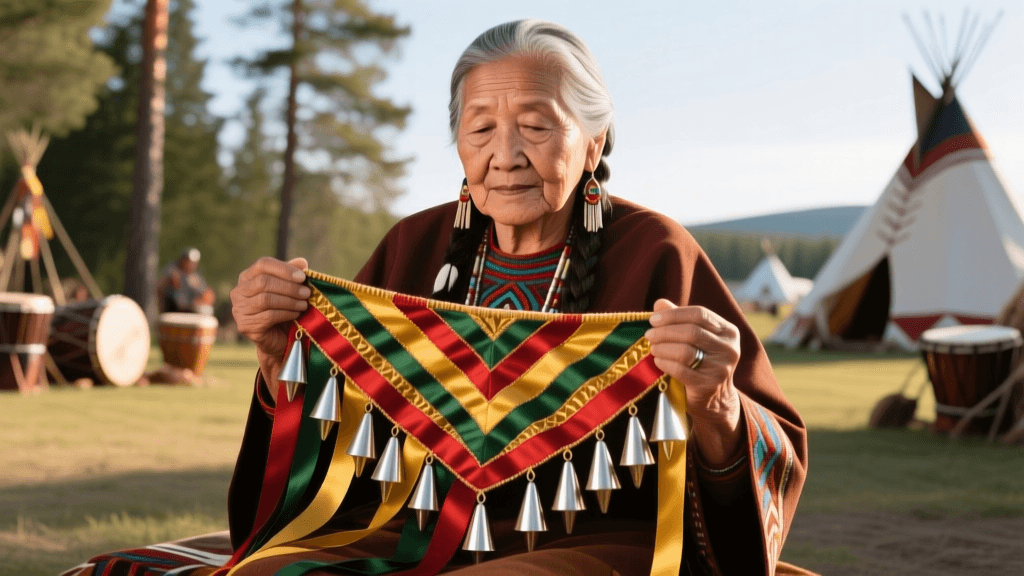
Ribbonwork is another vital component. Satin ribbons, typically 1/2 inch to 1 inch wide, are used to create geometric appliqué patterns along the hem, sleeves, and yoke. Modern sewing machines equipped with Teflon or roller feet make handling slippery satin ribbons significantly easier, allowing for crisp, zigzag, or straight-edge appliqué work without puckering the base broadcloth.
The Anatomy of the Jingle: Metal Cones
The defining feature of the regalia is the 'jingle'—a rolled metal cone that produces a rhythmic, rain-like sound when the dancer moves. Historically, these were crafted from the lids of snuff cans or rolled tin. Today, while some traditionalists still hand-roll tin cones for an authentic, deeper acoustic resonance, the vast majority of dancers in 2026 utilize commercially stamped aluminum or stainless steel cones. These modern alternatives are significantly lighter, reducing the physical toll on the dancer's shoulders and back during multi-day powwow weekends.
The sound profile of the dress is dictated by the size, material, and placement of the cones. A well-constructed dress should not sound like a chaotic crash of metal; rather, it should mimic the gentle, rhythmic patter of rain on a tin roof. This is achieved through meticulous spacing and the use of varied cone sizes across different tiers of the dress.
Jingle Dress Cone Sizing and Placement Chart
| Cone Size | Length | Diameter | Placement on Dress | Sound Profile |
|---|---|---|---|---|
| Large | 3.5 inches | 0.75 inches | Hem / Bottom Tier | Deep, resonant bass |
| Medium | 2.75 inches | 0.5 inches | Mid-calf / Knees | Balanced, rhythmic mid-tone |
| Small | 2.0 inches | 0.4 inches | Thigh / Waist | High-pitched, bright |
| Child / Petite | 1.5 inches | 0.3 inches | All tiers (Youth) | Light, rapid tinkling |
Note: A traditional adult Jingle Dress often features exactly 365 cones, representing each day of the year and the continuous, daily nature of healing prayers. However, contemporary competitive dresses may utilize anywhere from 150 to 250 cones to reduce weight while maintaining visual and acoustic impact.
Construction Techniques and Row Spacing
Attaching the jingles requires patience and precision. Each cone is attached via a fabric loop or a heavy-duty ribbon tie, which is then sewn securely to the dress. The most common method involves cutting 1-inch wide strips of broadcloth or using heavy grosgrain ribbon, folding them through the eyelet of the metal cone, and knotting them securely.
When mapping out the dress, makers typically use a fabric marker or chalk to draw horizontal or zigzag guidelines. The spacing between rows is usually between 2.5 to 3 inches, while the spacing between individual cones within a row is about 1 to 1.5 inches. This specific spacing ensures that the cones strike each other cleanly when the dancer executes the traditional side-step or the more modern, athletic competitive footwork, without tangling or clustering together.
In 2026, many regalia makers reinforce the areas where the cones are attached with a lightweight fusible interfacing (such as Pellon) on the inside of the dress. The constant striking and pulling of the metal cones can cause broadcloth to tear over time, and this hidden reinforcement dramatically extends the lifespan of the garment, protecting the dancer's investment of time and money.
Accessories: Beadwork and Footwear
The Jingle Dress is never worn in isolation; it is part of a comprehensive regalia ensemble. The accessories must complement the dress without overpowering it. A beaded belt, often featuring floral or geometric Anishinaabe motifs, cinches the waist and provides a visual break between the bodice and the skirt. In 2026, size 11/0 and 13/0 Charlotte cut beads remain the preferred choice for their brilliant faceting and light-catching properties.
Leggings and moccasins are equally important. Fully beaded leggings or those featuring intricate ribbon appliqué are worn to cover the lower leg, transitioning seamlessly into hard-soled or soft-soled moccasins. The footwear must be meticulously broken in before the powwow season begins. The traditional Jingle Dance footwork requires the dancer to keep one foot close to the ground while the other steps lightly, meaning the moccasin soles must provide excellent grip and flexibility on both grass and wooden arena floors.
Many dancers also carry a beaded bag or a feather fan. The fan, often made from eagle, hawk, or turkey feathers, is used to honor the drum and the audience during the honor beats of the song. Organizations like the Native Arts and Cultures Foundation frequently highlight the importance of supporting Indigenous beadworkers and quillworkers directly, ensuring that the economic benefits of regalia creation remain within Native communities.
Powwow Etiquette and Regalia Care
Wearing a Jingle Dress carries immense responsibility. Because the dress is considered medicine, dancers are expected to uphold a standard of respect and sobriety, particularly when participating in traditional or healing dances. It is a widely observed protocol that a Jingle Dress dancer should not dance while under the influence, and the regalia itself should be treated with reverence. It should never be placed on the floor, stepped over, or worn in inappropriate settings.
Proper storage and maintenance are critical for preserving the dress. After the 2026 powwow season concludes, the dress should be gently spot-cleaned or hand-washed if necessary, and allowed to air dry completely. The metal cones should be inspected for rust or sharp edges; a quick wipe with a lightly oiled cloth can prevent oxidation on steel cones. When storing the dress for the winter, it should be hung on a padded hanger in a breathable cotton garment bag. Avoid plastic bags, which can trap moisture and lead to mildew or fabric degradation. Acid-free tissue paper can be stuffed into the sleeves and bodice to help the garment retain its shape over the off-season.
By understanding the deep historical roots, mastering the technical construction, and respecting the cultural protocols, regalia makers and dancers ensure that the Jingle Dress continues to heal, inspire, and resonate across the Americas for generations to come.