Jingle Dress Regalia 2026: Sourcing Cones & Fabrics
The Origins and Evolution of the Jingle Dress
As the 2026 powwow circuit kicks off across North America, the Jingle Dress dance remains one of the most visually and audibly striking traditions in Indigenous regalia. Originating from the Ojibwe (Anishinaabe) people in the early 20th century, the Jingle Dress is fundamentally a healing garment. According to cultural historians at the Minnesota Historical Society, the dress was born from a vision received by an Ojibwe medicine man, who was instructed to create a dress adorned with metal cones to heal his ailing daughter. The rhythmic, percussive sound of the cones striking one another is meant to mimic the sound of rain on a tin roof, a deeply spiritual auditory cue that carries prayers to the Creator.
Today, the Jingle Dress has transcended its Ojibwe roots to become an intertribal staple, danced by women and girls across the Americas. However, crafting an authentic, competition-ready, or traditional community dress requires a deep understanding of material sourcing, structural mathematics, and cultural respect. In 2026, with global supply chains shifting and material costs fluctuating, knowing exactly where and how to source your metals and textiles is more critical than ever.
Sourcing Metal Cones: The 2026 Buyer’s Guide
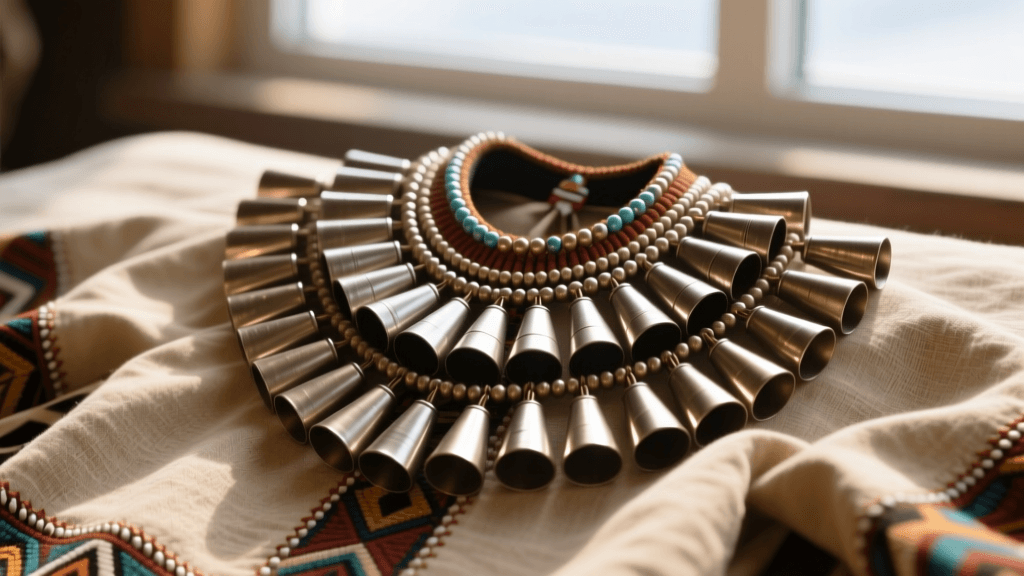
The heartbeat of the Jingle Dress is the cone, often referred to as a 'jingle' or 'roll.' A standard adult dress requires anywhere from 400 to 700 cones, depending on the size of the dancer, the length of the dress, and the specific U-shaped or V-shaped row patterns favored by the maker. In 2026, makers have three primary metal choices, each offering a distinct sound profile, weight, and price point.
Stamped Tin vs. Rolled Copper vs. Brass
Traditional stamped tin cones are lightweight and produce a bright, high-pitched, and incredibly loud sound. However, they are prone to rust if not properly maintained. Rolled copper cones offer a deeper, more resonant pitch and a beautiful natural patina, but recent 2026 commodity market shifts have made copper significantly more expensive. Brass cones have emerged as the premier compromise for the 2026 season, offering a brilliant gold shine, mid-range weight, and a crisp sound without the premium price tag of copper.
| Cone Material | Sound Profile & Weight | 2026 Avg Cost (per gross/144 pcs) | Best Use Case |
|---|---|---|---|
| Stamped Tin | High-pitched, bright, very lightweight | $45 - $65 | Traditional powwow dancing, youth dancers |
| Rolled Copper | Deep, resonant, heavy, mellows over time | $110 - $145 | Exhibition dancing, elder regalia, deep bass sound |
| Brass Alloy | Crisp, loud, medium weight, shiny | $75 - $95 | Competition powwows, high-visibility shine |
When purchasing in 2026, always buy from Indigenous-owned craft suppliers or specialized Native regalia distributors. Recent coverage by ICT (Indian Country Today) highlights the growing movement to support Native artisans who hand-roll copper and brass cones, ensuring that the economic benefits of regalia crafting remain within the community.
Fabric Selection and Yardage Calculations
The foundation of the Jingle Dress is the fabric. While early 20th-century dresses were made from whatever trade cloth was available, modern makers typically choose between cotton calico, cotton broadcloth, and wool-blend broadcloth. For the 2026 season, heavyweight cotton broadcloth remains the gold standard for its durability, drape, and ability to support the heavy weight of hundreds of metal cones without tearing.
Yardage Math for an Adult Dress
Calculating yardage is where many novice makers make costly mistakes. A standard adult Jingle Dress consists of a bodice, a long skirt, long sleeves, and often a tiered ruffle at the hem. Assuming a standard 60-inch fabric width, here is the 2026 yardage breakdown for an average adult woman (size Medium/Large):
- Bodice and Yoke: 1.5 yards
- Main Skirt: 2.5 to 3 yards (depending on desired fullness)
- Sleeves (Long, fitted or slightly flared): 1.5 yards
- Hem Ruffles: 2 yards
- Total Estimated Yardage: 7.5 to 8 yards
Always pre-wash and dry your cotton broadcloth or calico before cutting. Cotton shrinks, and if you sew your cones onto unwashed fabric, the first time the dress is exposed to heavy rain at an outdoor powwow, the fabric will shrink and pucker, ruining the drape and alignment of your jingles.
Ribbon Work and Appliqué Techniques
Ribbon work appliqué is what gives the Jingle Dress its vibrant, geometric visual identity. In 2026, the market is flooded with cheap, single-faced ribbons that fray easily. For regalia that must withstand the rigors of the powwow trail, you must source 100% polyester double-faced satin ribbon. The standard widths used for Jingle Dress appliqué are 3/4-inch and 1-inch.
Color selection is deeply personal and often tied to family or tribal affiliations. However, high-contrast combinations—such as royal blue with bright yellow, or deep purple with emerald green—are currently dominating the competition circuits for their visibility in the dance arena. When applying the ribbon, use a tight zigzag stitch or a blind hem stitch if doing it by hand. Avoid using fabric glue, as it will stiffen the broadcloth and degrade under the summer heat of outdoor powwows.
Assembly: Tying the Cones
The method used to tie the cones to the dress dictates both the sound and the longevity of the garment. Historically, leather thongs or cotton string were used. Today, artificial sinew (waxed polyester thread) is the undisputed standard for 2026 regalia makers. It does not rot, it resists moisture, and the wax coating helps lock the knots in place.
Cones are typically tied in U-shaped or V-shaped rows across the skirt and bodice. The spacing is crucial: cones should be placed approximately 1 inch apart horizontally, and rows should be spaced 1.5 to 2 inches apart vertically. If they are too close, they will tangle and mute each other's sound. If they are too far apart, the dress will lack the iconic 'rainstorm' auditory effect. When tying the cones, leave about 1/4 inch of slack between the fabric and the top of the cone. This slack allows the cone to swing freely and strike its neighbors, which is the entire purpose of the garment.
Maintenance and Storage for the 2026 Powwow Trail
A high-quality Jingle Dress is a significant financial and temporal investment, often costing between $600 and $1,200 in raw materials and taking over 80 hours to assemble. Proper maintenance is non-negotiable.
According to archival preservation guidelines from the Smithsonian National Museum of the American Indian, the longevity of Indigenous textile and metal artifacts relies heavily on climate-controlled storage and the prevention of oxidation.
While your dress is not a museum artifact, the same principles apply. Tin and low-grade brass cones will oxidize and rust if packed away while damp. After a rainy powwow weekend, never roll your dress up tightly and throw it in the trunk of a car. Hang the dress on a wide, padded hanger in a dry, air-conditioned room to allow the cones and fabric to dry completely.
For transport, invest in a heavy-duty, water-resistant canvas garment bag. Inside the bag, wrap the cone-heavy skirt in a clean, dry cotton bed sheet. This prevents the metal cones from snagging on the ribbon appliqué during transit. Never machine-wash a fully assembled Jingle Dress. The agitation will bend the cones and snap the sinew ties. Spot clean the fabric with a mild upholstery foam cleaner, and if the hem becomes muddy, use a soft-bristled brush and cold water to gently scrub the broadcloth, avoiding the metal entirely.
Conclusion
Crafting a Jingle Dress in 2026 is a beautiful synthesis of ancestral knowledge and modern material science. By carefully selecting your metals, accurately calculating your broadcloth yardage, and committing to the meticulous process of hand-tying each cone with artificial sinew, you are not just making a garment; you are participating in a living, breathing tradition of healing. Whether you are dancing for your own community or stepping into the arena at the Gathering of Nations, a well-sourced and properly maintained Jingle Dress will carry your prayers, and your rhythm, for generations to come.