Ojibwe Jingle Dress Regalia: 2026 Ethical Sourcing Guide

The Heartbeat of Healing: Jingle Dress Origins and 2026 Evolution
The Jingle Dress dance is one of the most profoundly spiritual, visually arresting, and acoustically unique traditions in Native American powwow culture. Originating with the Ojibwe (Chippewa) people of the Great Lakes region—specifically tied to the Mille Lacs Band of Ojibwe in Minnesota—the dance was born from a healing vision during the global influenza pandemic of the early 20th century. Today, the Jingle Dress is recognized across Turtle Island as a powerful symbol of resilience, prayer, and medicine. As we navigate the powwow circuit in 2026, a significant cultural shift is underway: dancers, seamstresses, and regalia makers are increasingly prioritizing sustainable textiles, ethical supply chains, and the revitalization of traditional, handcrafted techniques.
Creating a Jingle Dress is not merely a sewing project; it is an act of devotion and cultural preservation. The dress is defined by its rows of metal cones, or "jingles," which strike together as the dancer moves, creating a sound reminiscent of rain falling on a tin roof or the rhythmic heartbeat of the earth. In 2026, the push toward eco-conscious and ethically sourced materials has transformed how regalia makers approach this sacred garment. This guide explores the modern landscape of sourcing authentic metal cones, sustainable broadcloth, and ethical ribbonwork for Ojibwe Jingle Dress regalia.
Sourcing the "Jingles": Ethical Metal Cones in 2026
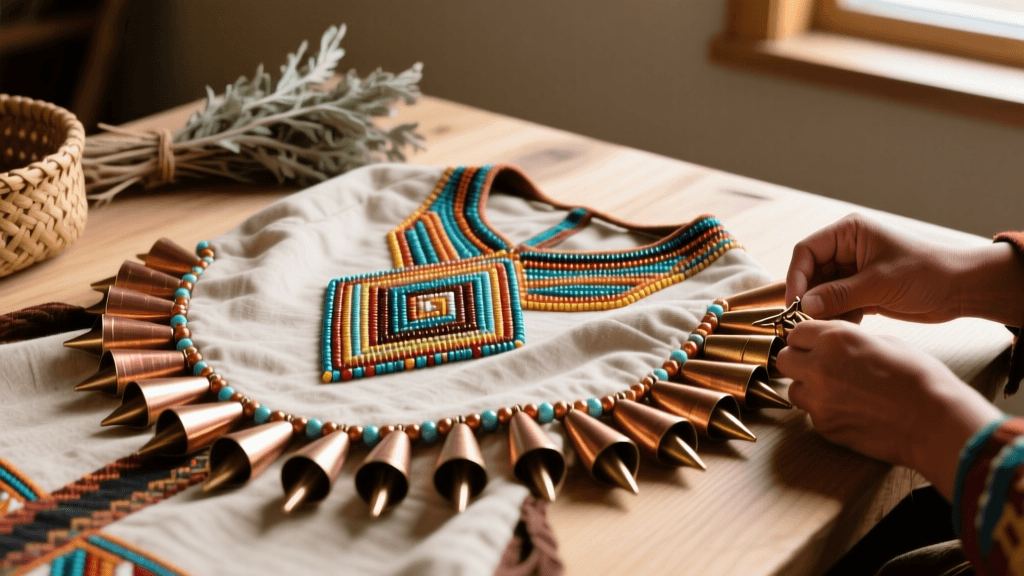
The defining feature of the regalia is the jingle itself. Historically, these cones were hand-rolled from the metal lids of snuff tins or baking powder cans. The maker would cut the metal into a specific shape, roll it tightly around a dowel, and pinch one end to create a conical bell. Today, while mass-produced, machine-stamped aluminum cones are widely available at trading posts and online marketplaces, the 2026 regalia community is experiencing a massive renaissance in traditional, hand-rolled metalwork.
Hand-Rolled vs. Machine-Stamped Cones
Machine-stamped cones, often imported and manufactured from lightweight aluminum, are inexpensive but lack the acoustic depth and historical resonance of traditional cones. They tend to produce a higher-pitched, thinner "clink." In contrast, hand-rolled cones crafted from heavier gauge metals—such as upcycled copper, brass, or reclaimed steel—produce a deeper, richer, and more resonant tone that carries across the powwow arena.
In 2026, many dancers are commissioning cones directly from Native metalworkers and artisans based on reservations across the Great Lakes and Plains regions. When sourcing ethical cones, look for artisans who utilize reclaimed metals and traditional rolling jigs. A standard jingle typically measures 2.5 inches in length with a 3/4-inch base diameter. For a full adult dress, you will need anywhere from 100 to over 365 cones. The tradition of using 365 cones represents a prayer for each day of the year, though modern dress designs often prioritize strategic placement over sheer volume to reduce the physical weight on the dancer.
Selecting Sustainable Broadcloth and Base Fabrics
The foundation of a Jingle Dress requires a fabric that is durable enough to support the weight of hundreds of metal cones, yet fluid enough to allow the dress to sway and "dance" with the wearer's movements. Historically, heavy wool broadcloth was the gold standard. However, the environmental impact of conventional wool production and the rising costs of imported textiles have led 2026 regalia makers to explore innovative, sustainable alternatives.
2026 Fabric Comparison Chart for Jingle Dresses
| Material Type | Acoustic Dampening | Weight & Drape | Est. 2026 Cost/Yard | Sustainability Rating |
|---|---|---|---|---|
| Traditional 100% Wool Broadcloth | High (Muffles cone clatter) | Heavy, structured | $45 - $60 | Moderate (Resource intensive) |
| Recycled Poly-Wool Blend | Medium-High | Medium, excellent drape | $28 - $35 | High (Upcycled fibers) |
| Heavyweight Organic Cotton Canvas | Low (Allows bright cone resonance) | Medium, stiff initially | $22 - $28 | High (Pesticide-free) |
| Upcycled Denim / Heavy Twill | Medium | Heavy, highly durable | $15 - $20 | Very High (Reclaimed) |
When selecting your base fabric, consider the acoustic engineering of the dress. A heavier fabric like wool or dense canvas will absorb some of the high-frequency vibrations of the metal cones, resulting in a deeper, more muted sound. Lighter, sustainable blends will allow the cones to ring out more sharply. Most regalia makers in 2026 recommend purchasing 5 to 7 yards of 60-inch-wide fabric to accommodate the A-line silhouette, the deep hem required to anchor the bottom rows of cones, and the matching yoke.
Ribbonwork, Appliqué, and Ojibwe Floral Motifs
No Jingle Dress is complete without its vibrant appliqué and ribbonwork. The Ojibwe floral motif is a hallmark of Great Lakes indigenous art, representing the medicinal plants, berries, and natural world of the region. In past decades, dancers often relied on cheap, mass-produced satin ribbons imported from overseas. Today, there is a strong movement toward supporting Native-owned textile mills and domestic manufacturers that produce high-quality, colorfast bias tapes and ribbons.
When designing your appliqué, consider using upcycled felt or wool scraps for the floral bases, layered with domestically milled ribbon. Zig-zag stitching or traditional hand-sewn edge-folding techniques are used to secure the ribbons. In 2026, LED-thread embroidery is also making a subtle appearance in evening or competition powwow circuits, allowing the floral motifs to softly illuminate, though traditionalists often prefer the classic contrast of bright yellows, reds, and blues against a deep navy or black broadcloth base.
Assembly, Spacing, and Acoustic Engineering
The placement of the jingles is crucial to both the visual impact and the sound of the dress. Cones are typically sewn onto the dress in horizontal rows or V-shaped chevrons. The standard spacing in 2026 remains true to historical patterns: cones are placed approximately 1 inch apart within a row, with rows spaced 2 to 3 inches apart vertically.
To attach the cones, makers use heavy-duty upholstery thread or sinew, looping through the pinched top of the cone and securing it to a reinforced fabric tape or directly to the dress. It is vital to reinforce the base fabric with interfacing or a secondary lining where the cones are attached; the cumulative weight of 200+ metal cones can easily tear unreinforced broadcloth over a season of dancing. Furthermore, the cones must hang freely without tangling. Some makers insert a small glass bead or a piece of rolled leather between the fabric and the top of the cone to act as a spacer, ensuring the metal rings clearly with every step.
Navigating the Indian Arts and Crafts Act and Ethical Sourcing
As the demand for authentic Native American regalia grows, so does the market for culturally appropriated, mass-produced knockoffs. When sourcing materials, commissioning metalwork, or purchasing pre-made regalia components, it is imperative to adhere to the guidelines set forth by the Indian Arts and Crafts Board. This federal agency ensures that products marketed as "Native American" or "Indian" are genuinely made by enrolled members of federally or state-recognized tribes.
Supporting ethical supply chains means buying directly from Ojibwe and other Native artisans. Whether you are purchasing hand-rolled copper cones from a metalworker on the White Earth Reservation or commissioning floral beadwork and ribbon appliqué from an elder in your community, direct economic support strengthens tribal sovereignty and preserves traditional knowledge. Institutions like the Minnesota Historical Society and the Smithsonian National Museum of the American Indian offer extensive digital archives and educational resources that can help regalia makers study historical patterns, ensuring their 2026 creations remain deeply rooted in ancestral accuracy.
Conclusion: A Garment of Prayer and Purpose
The Ojibwe Jingle Dress is far more than a garment; it is a living, breathing entity of healing and prayer. As you source your materials in 2026, remember that every yard of sustainable broadcloth, every hand-rolled metal cone, and every stitched floral motif carries intention. By prioritizing ethical sourcing, supporting Native artisans, and respecting the acoustic and historical traditions of the dress, you contribute to the ongoing vitality of Indigenous culture. When you step into the arena and the jingles begin their rhythmic rain, you are not just dancing—you are participating in a century-old legacy of resilience, medicine, and profound beauty.