Ojibwe Jingle Dress Regalia: Construction & 2026 Powwow Trends
The Sacred Origins of the Anishinaabe Jingle Dress
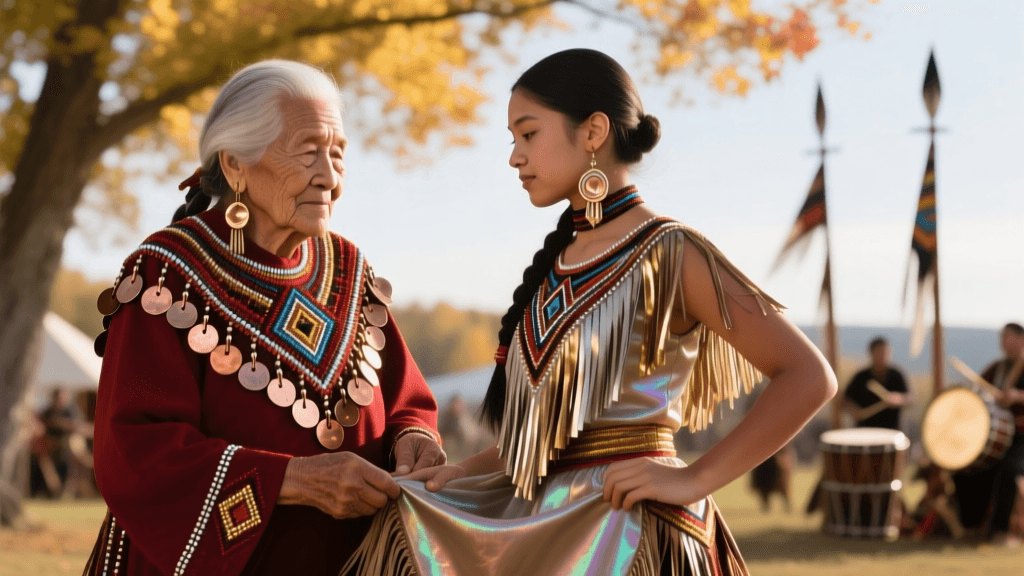
The jingle dress, known in the Ojibwe language as the bibigwan, is far more than a vibrant powwow garment; it is a profound symbol of healing, resilience, and Indigenous survivance. Originating among the Anishinaabe people—specifically tied to the White Earth Nation and the Mille Lacs Band of Ojibwe in Minnesota—the dress was born out of a vision during the devastating 1918 influenza pandemic. According to oral history, a medicine man dreamt of a dress adorned with metal cones that, when danced in a specific rhythm, would heal his gravely ill granddaughter. Upon waking, he and his wife crafted the first dress, and as the child danced, she was miraculously healed. Today, the jingle dress is widely recognized across North America as a sacred healing dress, carrying the prayers and medicine of its wearer to every powwow ground.
As we navigate the 2026 powwow season, from the massive Gathering of Nations in Albuquerque to the Red Earth Festival in Oklahoma City, the jingle dress remains a cornerstone of Indigenous North American dress traditions. While the core spiritual tenets of the dress remain unchanged, the construction techniques, fabric technologies, and stylistic trends have evolved to meet the demands of the modern competitive powwow circuit. Understanding how to construct, source, and respectfully wear the jingle dress requires a deep appreciation for both its historical roots and its contemporary 2026 iterations.
Deconstructing the Regalia: 2026 Construction Standards
Constructing a jingle dress is a labor-intensive process that requires precision sewing, an understanding of geometric ribbon appliqué, and a keen ear for acoustic balance. Historically, early 20th-century dresses were made from heavy wool broadcloth, which, while durable, posed significant challenges during the sweltering summer powwow months. In 2026, the standard for competitive and traditional dancers has shifted dramatically toward performance-oriented textiles.
Modern regalia makers are increasingly utilizing breathable, moisture-wicking poly-blend broadcloths and high-quality matte satins. These fabrics provide the necessary structural weight to keep the metal cones swinging in a uniform, rhythmic motion without clinging to the dancer's legs during complex footwork. The dress typically features a one-piece or two-piece design with a tailored yoke, long sleeves, and a flared skirt. The hemline is carefully calculated to hover just above the ankle, ensuring the cones do not drag in the dirt or catch on moccasin laces during the dance.
Material Requirements and Measurements
For artisans and family members looking to construct a standard adult-sized jingle dress for the 2026 season, precise material planning is essential. The following measurements serve as a baseline for a dancer standing between 5'4" and 5'7":
- Main Fabric: 4 to 6 yards of 60-inch wide broadcloth or matte poly-satin.
- Ribbon Appliqué: 15 to 25 yards of 1-inch to 2-inch wide polyester or rayon grosgrain ribbon (used for geometric tiering on the skirt and yoke).
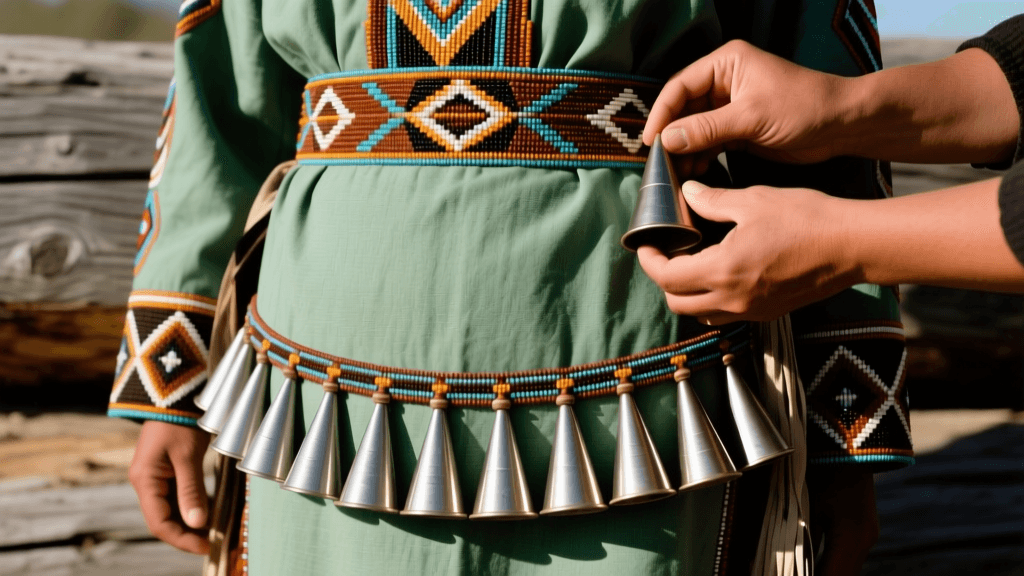
- Jingle Cones: 150 to 300+ cones, depending on the tier density and the dancer's preference for weight and sound.
- Heavy-Duty Thread: Upholstery or denim-weight polyester thread is mandatory for securing cone ribbons to the skirt tiers to prevent tearing during vigorous spinning.
- Cotton Twill Tape: 10 yards for internal waist ties and structural reinforcement along the cone rows.
Comparing Jingle Cone Types and Acoustic Profiles
The soul of the bibigwan lies in its sound, which is said to mimic the sound of rain falling on a tin roof. The choice of cone material drastically alters the acoustic profile and the physical weight of the dress. Below is a comparison of the primary cone types utilized by regalia makers in 2026.
| Cone Type | Material | Acoustic Profile | Best Use Case |
|---|---|---|---|
| Traditional Rolled | Recycled Tin / Tobacco Lids | Soft, muted, rhythmic rain-like sound | Old Style / Traditional Healing Dances |
| Stamped Standard | Galvanized Steel or Aluminum | Bright, sharp, high-decibel clinking | Fancy Jingle / Competitive Powwows |
| Copper Artisan | Hand-Rolled Pure Copper | Deep, resonant, warm tonal chime | Exhibition / Honoring Ceremonies |
| Brass Hybrid | Brass Alloy | Crisp, sustained ring with heavy swing | Advanced Dancers Requiring Momentum |
In 2026, there is a notable resurgence in Indigenous metalsmiths hand-rolling copper and brass cones, moving away from mass-produced imported steel. Supporting Native artisans who fabricate cones using traditional rolling blocks and rawhide or ribbon ties not only ensures a superior acoustic quality but also keeps the economic ecosystem within Indigenous communities.
Sourcing Authentic Materials in 2026
Sourcing materials for regalia requires navigating a market flooded with cheap, culturally appropriative knock-offs. For authentic broadcloth, ribbons, and cones, regalia makers rely on established Native-owned trading posts and specialized Indigenous suppliers. Stores like Crazy Crow Trading Post remain a staple for foundational sewing supplies, but many 2026 dressmakers are turning to direct-to-consumer Indigenous beadwork and ribbon suppliers found on platforms like Etsy and dedicated Facebook artisan groups. When purchasing ribbons for appliqué, it is critical to select high-quality rayon or polyester that will not fray when cut and sewn into the intricate zigzag and geometric patterns characteristic of Ojibwe design.
2026 Powwow Trends: Traditional vs. Fancy Styles
The evolution of the powwow has birthed two distinct categories of jingle dress dancing, each with its own sartorial requirements. The Traditional (Old Style) jingle dress dance emphasizes a grounded, graceful footwork where the dancer's moccasins barely leave the earth. The dress design for this style often features more subdued, earth-toned palettes—deep forest greens, navy blues, and rich burgundies—with fewer cones concentrated on the lower tiers to produce a steady, heartbeat-like rhythm. As noted by cultural historians at the Minnesota Historical Society, the preservation of this Old Style is vital to maintaining the original healing intent of the Anishinaabe vision.
Conversely, the Fancy Jingle category is a high-energy, athletic competition characterized by rapid spins, complex kick-steps, and dynamic arena coverage. To accommodate this, 2026 Fancy Jingle dresses are constructed with strategic gussets under the arms and hidden stretch-panels in the yoke. Visually, the 2026 Fancy Jingle trends are dominated by bold color-blocking, neon ribbon accents, and the integration of Swarovski crystals or faceted glass beads into the yoke appliqué to catch the arena lights during spins. The cone count on a Fancy dress frequently exceeds 300, creating a continuous, roaring wall of sound that commands the attention of the powwow judges.
Furthermore, a major trend in 2026 is the integration of digital and LED elements into evening exhibition dances, though this remains highly debated among traditionalists. While some younger dancers experiment with fiber-optic ribbon weaving, the consensus among powwow elders remains that the acoustic purity of the metal cones should never be overshadowed by visual gimmicks.
Cultural Protocol and Respect
It is imperative to distinguish between a costume and regalia. A costume is worn for play or disguise; regalia is a sacred expression of identity, spirituality, and community standing. The jingle dress is a medicine dress. According to extensive cultural documentation highlighted by Powwows.com, the dress must be treated with the utmost reverence. It should never be worn while consuming alcohol, it should not be placed on the floor, and it is generally not to be worn by those who do not belong to the Indigenous communities that hold the tradition, unless explicitly invited and guided by an Elder for a specific healing ceremony.
The healing power of the jingle dress has gained global recognition in recent years, serving as a profound symbol of Indigenous resilience against historical trauma and ongoing systemic challenges. As NPR reported in their extensive coverage of the dress's centennial legacy, the jingle dress has transcended its Ojibwe origins to become a pan-Indian symbol of prayer and healing, with dancers from tribes across the Americas adopting the dress to pray for their own communities' wellness.
Whether you are a seasoned regalia maker updating your sewing techniques for the 2026 season, a powwow attendee seeking to understand the deep significance of the dancers in the arena, or a student of Indigenous textile arts, the Ojibwe jingle dress stands as a masterclass in the intersection of spiritual medicine, acoustic engineering, and breathtaking sartorial artistry. By honoring the materials, the construction protocols, and the sacred origins of the bibigwan, we ensure that the healing rain of the jingle cones continues to fall upon the powwow grounds for generations to come.