Authentic Oaxacan Zapotec Huipils: 2026 Sourcing Guide
The Enduring Legacy of the Zapotec Huipil
The huipil is far more than a simple garment; it is a profound expression of identity, cosmology, and ancestral memory in Latin America. Among the most celebrated and highly sought-after textile traditions in the Americas is the Zapotec huipil from the state of Oaxaca, Mexico. As global interest in slow fashion and indigenous textile arts continues to surge in 2026, the demand for these handwoven masterpieces has reached unprecedented levels. However, this heightened visibility brings significant challenges, including the proliferation of mass-produced imitations and the exploitation of artisan labor. For collectors, cultural enthusiasts, and ethical fashion advocates, understanding the intricate details of Oaxacan weaving is no longer optional—it is essential.
In this comprehensive 2026 sourcing guide, we delve deeply into the anatomy of the authentic Zapotec huipil. We will explore the mechanics of the pre-Columbian backstrap loom, the chemistry of ancient natural dyes, and the critical markers of authenticity that separate genuine indigenous artistry from factory-made counterfeits. Whether you are looking to acquire a ceremonial piece for a private collection or a daily-wear garment that supports local cooperatives, this guide provides the actionable insights needed to navigate the modern market ethically and intelligently.
Anatomy of an Authentic Oaxacan Huipil
To truly appreciate the value of a Zapotec huipil, one must understand the painstaking labor and technical mastery required to bring it into existence. Unlike Western tailoring, which relies on the cutting and sewing of woven cloth, the indigenous huipil is a product of 'web' weaving, where the garment is woven to shape and the structure of the cloth itself forms the design.
The Backstrap Loom (Telar de Cintura)
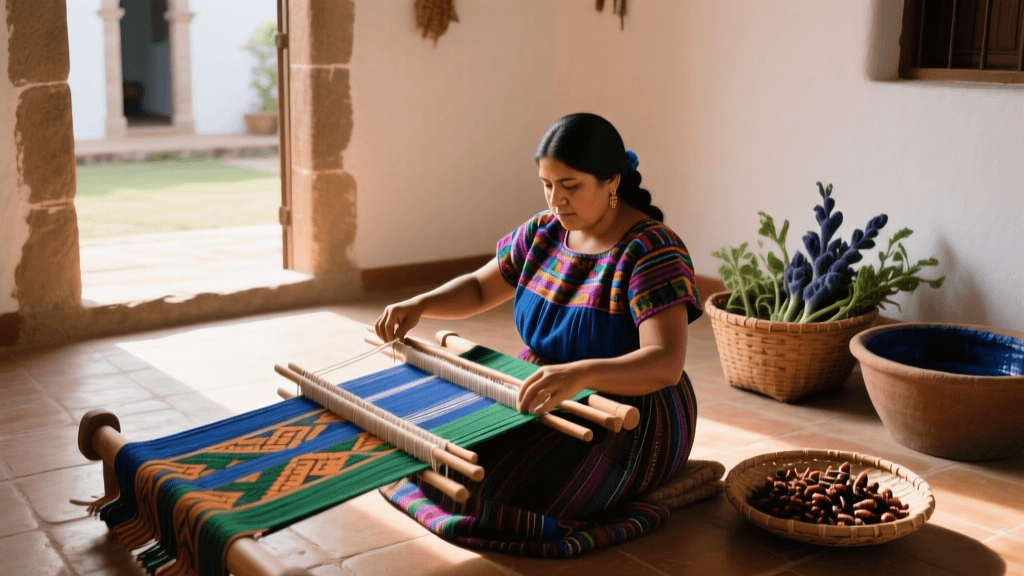
The traditional Zapotec huipil is woven on a backstrap loom, a device that has remained largely unchanged for millennia. According to research archived by the Museo Textil de Oaxaca, this loom consists of two horizontal bars: one tied to a fixed object like a tree or post, and the other attached to a strap that wraps around the weaver's lower back. The weaver's body becomes an integral part of the machine, controlling the tension of the warp threads (urdimbre) through subtle shifts in body weight.
This intimate connection between the artisan and the textile allows for extraordinary precision. The weaver uses a wooden batten (machete) to beat the weft threads (trama) tightly into place, creating a dense, durable fabric. Because the width of the fabric is limited by the weaver's arm span, a full huipil is typically constructed from two or three narrow panels sewn together using intricate, decorative randa stitches. In 2026, a master weaver in villages like San Bartolo Yautepec or Santo Tomás Jalieza may spend anywhere from 60 to 120 hours at the loom to complete a single, heavily brocaded panel.
Natural Dyes: Cochineal, Indigo, and Marigold
While commercial aniline dyes are prevalent in lower-tier markets, the highest echelon of Oaxacan textile art relies on natural, organic dyes. The most famous of these is cochineal (Dactylopius coccus), a parasitic insect that lives on the nopal cactus. When dried and crushed, it yields a potent carminic acid that produces brilliant crimsons, purples, and pinks. By altering the pH with acidic lime juice or alkaline wood ash, weavers can extract a vast spectrum of colors from a single source.
Indigo (añil) is used to achieve deep, colorfast blues through a complex fermentation vat process, while marigold (cempasúchil) and wild chamomile provide vibrant yellows and golds. Garments dyed with these natural elements possess a distinct, earthy aroma and a visual depth that synthetic dyes simply cannot replicate. The Fondo Nacional para el Fomento de las Artesanías (FONART) actively certifies and promotes artisans who maintain these ancestral dyeing practices, ensuring their survival in the modern economy.
2026 Market Guide: Pricing and Ethical Sourcing
Navigating the pricing of indigenous textiles can be confusing for newcomers. In 2026, the fair-trade market has stabilized, but prices vary wildly based on the complexity of the brocade, the type of cotton used (handspun vs. commercial), and the dyeing process. It is crucial to recognize that an authentic, handwoven huipil is an investment in wearable art, not a fast-fashion commodity.
| Garment Type | Weave Technique | Dye Type | Estimated 2026 Price (USD) | Time to Weave |
|---|---|---|---|---|
| Daily Huipil (Sencillo) | Simple Brocade / Plain Weave | Commercial Cotton / Synthetic Dye | $120 - $180 | 3 - 5 Weeks |
| Festive Huipil (De Gala) | Complex Double-Sided Brocade | Commercial Cotton / Natural Dyes | $350 - $600 | 2 - 4 Months |
| Ceremonial Huipil (Tapetes) | Handspun Cotton / Gauze Weave | 100% Natural Dyes (Cochineal/Indigo) | $800 - $1,500+ | 4 - 8 Months |
| Mass-Market 'Souvenir' Top | Machine Embroidery on Cut Cloth | Synthetic Fabrics | $25 - $60 | Hours (Factory) |
When sourcing directly from Oaxaca in 2026, buyers should prioritize direct-to-consumer cooperative platforms or established fair-trade galleries that guarantee a living wage for the weavers. Avoid street vendors in major tourist hubs who cannot verify the origin of their textiles, as these are often the epicenters for imported, machine-made knockoffs.
How to Identify Authentic Handwoven Textiles
As manufacturing technologies advance, so do the methods used to counterfeit indigenous textiles. In 2026, digital printing and computerized embroidery machines can mimic the look of a Zapotec brocade from a distance. However, close physical inspection will always reveal the truth. Here are the definitive tests to ensure your huipil is authentic.
The Selvedge and Reverse-Side Test
The most reliable indicator of a backstrap-woven garment is the selvedge edge. Because the fabric is woven to its exact required width, the side edges (selvedges) are naturally finished and continuous, lacking any cut threads or machine serging. If you see a zigzag overlock stitch on the side seams, the fabric was cut from a wider bolt of commercial cloth.
Furthermore, true supplementary weft brocade is woven directly into the cloth. If you turn the huipil inside out, the geometric or floral motifs should be visible, albeit with floating threads on the reverse side. If the inside is completely blank, or if the design is fused to the fabric with a stiff, plastic-like backing, you are looking at a machine-embroidered or heat-transferred fake.
The Handspun Cotton Indicator
For the most exquisite ceremonial pieces, artisans use handspun native cotton (coyuche or ixcaco), which grows naturally in shades of brown, green, and cream. This cotton is spun using a malacate (drop spindle). When you examine the threads closely, handspun cotton will exhibit slight irregularities, slubs, and variations in thickness. Commercial cotton, by contrast, is uniformly perfect. Institutions like The Textile Museum frequently highlight these micro-imperfections as the 'fingerprints' of the artisan, proving the human touch behind the textile.
Supporting Artisan Cooperatives in Oaxaca
The ethical imperative of buying indigenous garments extends beyond merely avoiding fakes; it requires actively supporting the communities that preserve these traditions. In regions like the Sierra Sur and the Central Valleys of Oaxaca, women's weaving cooperatives serve as vital economic engines and centers for cultural transmission. By purchasing directly from cooperatives such as the Museo Textil de Oaxaca's affiliated artisan networks or verified fair-trade NGOs, buyers ensure that the capital remains within the community.
In 2026, many of these cooperatives have embraced digital storefronts, allowing international buyers to commission custom pieces, view video diaries of the weaving process, and communicate directly with the artisans. This transparency not only guarantees authenticity but also fosters a deep, respectful connection between the wearer and the creator. When commissioning a piece, be prepared for extended timelines; true art cannot be rushed, and a six-month wait for a cochineal-dyed, handspun cotton huipil is a testament to its unparalleled quality.
Care and Maintenance of Natural Dyes
Owning an authentic Oaxacan huipil comes with the responsibility of proper care, particularly for garments dyed with organic materials. Natural dyes are sensitive to harsh chemicals and extreme pH levels. Never wash a cochineal or indigo-dyed huipil in a washing machine or with commercial detergents. Instead, hand wash the garment gently in cool water using a pH-neutral, artisanal soap or a specialized textile wash designed for natural fibers.
After washing, do not wring the fabric. Gently press the water out by rolling the huipil in a clean, dry towel, and then lay it flat in the shade to dry. Direct sunlight will rapidly degrade natural dyes, causing the vibrant crimsons and deep blues to fade prematurely. When storing the garment, fold it with acid-free tissue paper to prevent hard creases from breaking the delicate handspun fibers over time.
Conclusion
The Zapotec huipil is a triumph of human ingenuity, a garment that weaves together mathematics, chemistry, and profound cultural storytelling. As the global textile market continues to evolve in 2026, the responsibility falls upon collectors and consumers to protect and honor this heritage. By educating yourself on the mechanics of the backstrap loom, recognizing the hallmarks of natural dyes, and committing to ethical sourcing, you do more than acquire a beautiful piece of clothing—you become a vital patron of indigenous resilience and artistic excellence.