Takao Dayu & The Oiran Fashion Legacy: Edo Kimono Guide
The Sartorial Legacy of Edo's Oiran: Takao Dayu and the Art of Kimono Layering
When exploring the rich tapestry of Asian traditional garments, few silhouettes are as commanding, opulent, and culturally significant as the Edo-period Oiran. Long before the modern concept of the "fashion influencer" existed, the high-ranking courtesans of the Yoshiwara pleasure district served as the undisputed arbiters of Japanese style. Among these historical fashion icons, Takao Dayu (c. 1640–1660) stands out as a legendary figure whose sartorial choices dictated trends across the Tokugawa shogunate. Today, her legacy lives on not only in museum archives but also in the thriving heritage tourism industry, where visitors can step into these monumental garments.
Takao Dayu: Edo’s First Supermodel
Takao Dayu was a celebrated Oiran of the 17th century, renowned not just for her beauty and literary prowess, but for her revolutionary approach to dress. During the Edo period (1603–1867), the Tokugawa shogunate enforced strict sumptuary laws designed to curb the extravagant spending of the merchant class and maintain rigid social hierarchies. However, the Yoshiwara district operated as a cultural loophole. According to historical exhibits at the Edo-Tokyo Museum, the women of Yoshiwara were permitted to wear lavish silks, heavy brocades, and intricate hair ornaments that were strictly forbidden to the wives of wealthy merchants and samurai outside the district's gates.
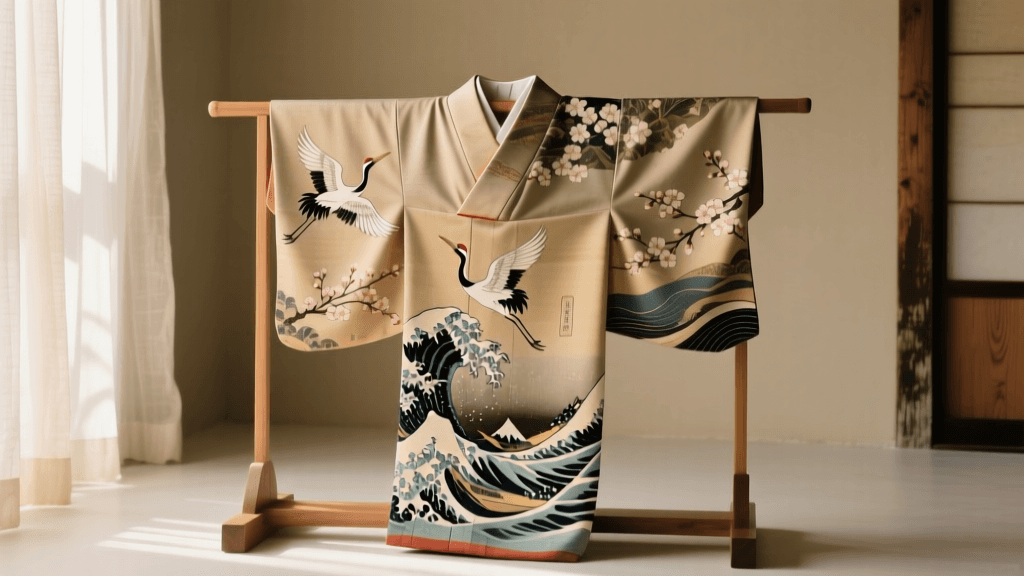
Takao Dayu leveraged this unique exemption. She popularized the use of bold, contrasting color palettes and heavily embroidered uchikake (outer robes) featuring auspicious motifs like cranes, pine trees, and flowing water. Her influence was so profound that commoner women would attempt to mimic her styles using cheaper cottons and stenciled dyeing techniques, effectively making the Oiran the trendsetters of Edo Japan.
Deconstructing the Oiran Wardrobe: Garments and Measurements
The Oiran silhouette was designed to project an aura of untouchable majesty. It was less about practical mobility and entirely about visual dominance. A full Oiran ensemble is a marvel of textile engineering and physical endurance.
- Uchikake (Outer Robe): Worn open over the base layers, this heavily padded, brocade robe often features Nishijin-ori (Kyoto brocade) woven with gold and silver threads. The hem is thickly padded with cotton or silk wadding to create a dramatic, trailing bell shape.
- Kakeshita (Under-Robe): Multiple layers of silk kimono are worn beneath the uchikake, often featuring Kanoko shibori (fawn-spot tie-dye) or Yuzen resist-dyeing. An Oiran might wear three to five layers, with the collars fanned out meticulously at the nape of the neck.
- Maru-Obi (The Sash): The most iconic element of the Oiran wardrobe. Unlike modern obi, the Maru-obi is fully patterned on both sides, heavily stiffened with brocade, and measures approximately 30 cm (12 inches) in width and 4.5 meters (15 feet) in length. It is tied in a massive, intricate knot at the front (mae-musubi) to display the wealth of the wearer's patrons.
- Koma-Geta (Wooden Clogs): To keep the trailing hems of the uchikake from touching the dirt, Oiran wore towering, three-toothed wooden clogs measuring 15 to 20 cm (6 to 8 inches) in height.
Weight Warning: A complete, historically accurate Oiran ensemble, including the wig (katsura) and hair ornaments (kanzashi), can weigh between 15 to 20 kilograms (33 to 44 lbs). Walking in the 15cm koma-geta requires a specialized, slow, sliding gait known as soto-hachimonji.
Comparative Chart: Oiran vs. Maiko vs. Modern Bride
Understanding the Oiran requires distinguishing her silhouette from other iconic figures in Japanese traditional dress. The Kyoto Costume Institute Digital Archives provides extensive visual records that highlight these structural differences.
| Feature | Oiran (Edo Period) | Maiko (Kyoto Apprentice Geisha) | Modern Japanese Bride (Shiromuku) |
|---|---|---|---|
| Obi Knot Placement | Front (Mae-musubi) | Back (Darari, long trailing tails) | Back (Bunko or Fukura-suzume) |
| Footwear | 15-20cm three-toothed Koma-geta | Flat Zori or Okobo (wooden clogs) | Flat white Zori sandals |
| Hair Styling | Heavy wig (Date-hyogo style) with tortoiseshell pins | Natural hair styled in Wareshinobu | Wig (Takashimada) with white hood (Tsunokakushi) |
| Average Outfit Weight | 15 - 20 kg | 8 - 12 kg | 10 - 15 kg |
Experiencing the Legacy: Modern Oiran Photoshoots and Rentals
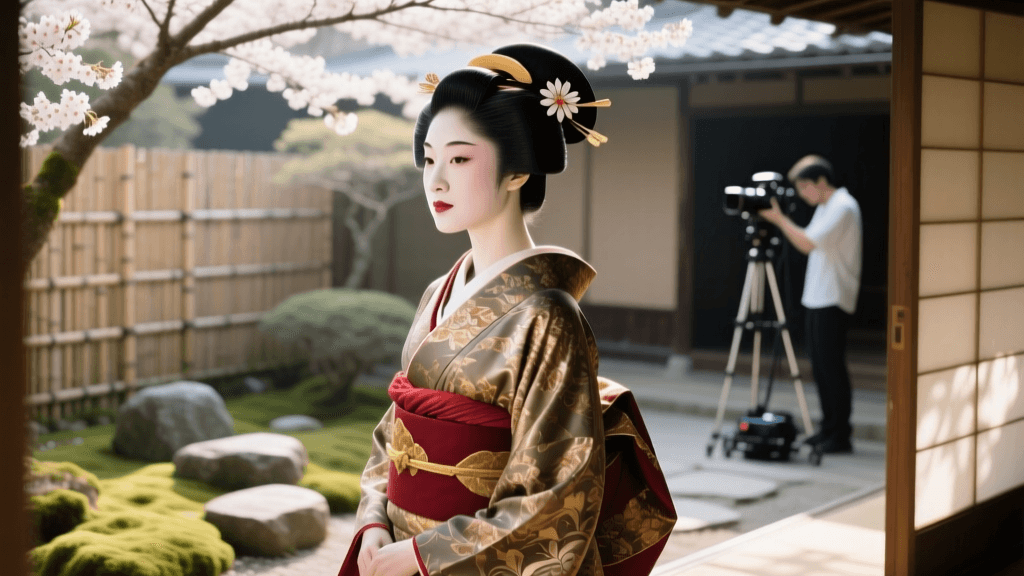
For textile enthusiasts and travelers, the legacy of Takao Dayu is highly accessible today through "Henshin" (transformation) studios. The Japan National Tourism Organization (JNTO) frequently highlights traditional dress experiences as a cornerstone of cultural tourism. If you plan to step into the shoes of an Edo-period fashion icon, here is your actionable guide to booking, preparing, and surviving an Oiran photoshoot.
1. Booking and Costs
Oiran transformations are specialized services, primarily found in Kyoto (near Yasaka Shrine or Arashiyama) and Tokyo (Asakusa district). Because the garments are rare and the dressing process requires multiple experts, you must book at least 4 to 6 weeks in advance.
- Standard Package Cost: ¥25,000 to ¥35,000 ($170 - $240 USD). Includes dressing, wig, makeup, and a 60-minute studio shoot.
- Premium/Outdoor Package: ¥40,000 to ¥60,000 ($275 - $415 USD). Includes outdoor location shooting (e.g., in a traditional garden) and an assistant to help carry the hem of your uchikake.
2. Preparation and Timing
The physical demands of the Oiran wardrobe require strategic preparation.
- Timing: Allocate a minimum of 2.5 to 3 hours for the dressing process alone. The kitsuke (kimono dressing) of an Oiran is a complex, multi-person procedure.
- Undergarments: Wear a low-cut, tight-fitting tank top and leggings. The studio will provide the hadajuban (under-kimono), but your own low neckline ensures your modern clothes do not peek out from the deeply scooped nape of the Oiran collar.
- Dietary Advice: Eat a light, high-protein meal before your appointment. The Maru-obi is pulled incredibly tight to support the 15kg weight of the front knot. A heavy meal or carbonated drinks will cause severe discomfort during the 2-hour shoot.
- Makeup: Arrive with a clean, moisturized face. Do not apply your own makeup; the studio artists will apply the traditional white oshiroi base, crimson lip tint, and dramatic eye styling specific to the Edo period.
Curating Your Own Edo-Inspired Wardrobe
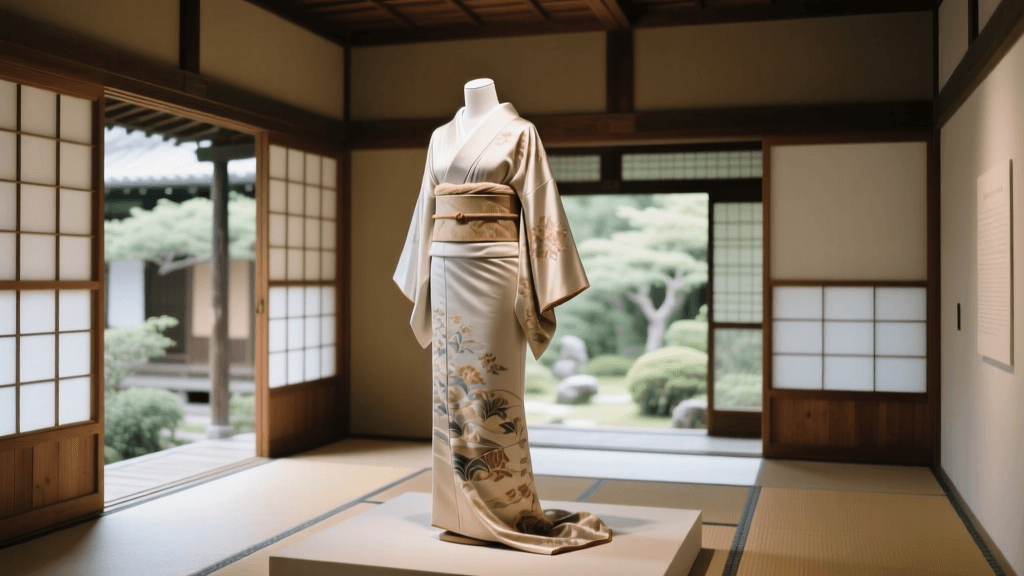
For collectors and vintage kimono enthusiasts who wish to own a piece of this legacy without the theatricality of a full Oiran costume, sourcing vintage uchikake is a rewarding pursuit. While true Edo-period Maru-obi are largely confined to museums like the KCI, mid-20th-century theatrical and bridal uchikake capture the essence of Takao Dayu's bold aesthetics.
Sourcing and Measurements
When shopping on specialized vintage textile sites or auction houses, look for Nishijin-ori brocade uchikake featuring the "Gosho-doki" (imperial palace scenery) motifs that Oiran favored. To ensure the garment can be worn or draped correctly, pay attention to two critical measurements:
- Yuki (Sleeve Length): Measured from the center back of the neck, across the shoulder, to the wrist. For a dramatic, historically inspired drape, look for a Yuki of 68 cm to 72 cm.
- Mitake (Back Length): Measured from the base of the collar to the hem. An authentic trailing uchikake will have a Mitake exceeding 160 cm (63 inches), requiring the wearer to use hands to manage the hem or have it professionally hemmed for modern indoor wear.
Expect to pay between $150 and $400 USD for a high-quality, mid-century vintage brocade uchikake in good condition, though pieces with genuine gold-leaf thread work can exceed $1,000.
Preserving the Heritage
The fashion legacy of Takao Dayu and the Oiran of Yoshiwara is a testament to the power of clothing as a tool for social subversion and artistic expression. While the restrictive sumptuary laws of the Edo period have long since vanished, the breathtaking artistry of the garments they inspired remains a vital part of Japan's cultural heritage. Whether you are studying the digital archives of the Kyoto Costume Institute, booking a transformation studio in Kyoto, or carefully sourcing a vintage Nishijin brocade, engaging with the Oiran silhouette is a profound way to honor the women who turned the streets of Edo into Asia's first great fashion runway.