Setesdal Lusekofte Sweaters 2026: Streetwear Styling
The Enduring Legacy of the Setesdal Lusekofte
As the global fashion landscape in 2026 continues to pivot toward sustainable, heritage-driven garments, the revival of European folk dress has moved from niche historical reenactment to the forefront of contemporary streetwear. Among the most striking and highly sought-after pieces in this movement is the Norwegian Lusekofte, specifically the iconic Setesdal sweater. Originally conceived as a heavy, insulating undergarment for farmers and fishermen in the rugged valleys of Southern Norway, the Lusekofte has been entirely recontextualized by modern designers and streetwear enthusiasts. Today, it stands as a masterclass in functional geometry and natural material excellence, bridging the gap between 19th-century Scandinavian folk art and 2026’s high-end gorpcore and avant-garde streetwear aesthetics.
The isolation of the Setesdal valley historically protected its unique textile traditions from rapid industrialization, allowing distinct regional patterns to survive intact. According to the Norsk Folkemuseum, the preservation of these folk costumes provides a vital link to Norway’s agrarian past. In 2026, wearing a Lusekofte is not merely a nod to history; it is a deliberate choice to invest in slow fashion, utilizing garments that are engineered to last generations while offering unparalleled weather resistance.
Anatomy of the Lusekofte: Patterns and Palette
To properly style the Lusekofte, one must first understand its visual language. The sweater is defined by its stark, high-contrast black and white palette and its meticulous geometric motifs. The body of the sweater is traditionally covered in the 'luse' pattern—small, evenly spaced white dots or crosses on a black background. The term 'luse' translates roughly to 'lice,' a humble naming convention that belies the incredible technical skill required to maintain consistent tension across thousands of stitches.
Above the luse pattern sits the 'brestebord' (chest panel) and the 'mønsturbord' (patterned yoke). These sections feature elaborate, multi-row geometric designs, including diamonds, zig-zags, and stylized floral motifs that echo the famous Selbu rose. The stark monochrome palette is what makes the Lusekofte so incredibly versatile for contemporary 2026 wardrobes; unlike the vibrant, multi-colored Fair Isle or Icelandic Lopapeysa sweaters, the black-and-white Setesdal knit slots effortlessly into minimalist, monochromatic, and tech-wear outfits.
Sourcing Authentic Norwegian Wool in 2026
The authenticity of a Lusekofte relies heavily on its fiber content. Traditional pieces are knit using wool from the Norwegian Spælsau sheep, an ancient breed known for its dual-coated fleece. The outer coat provides long, water-resistant fibers, while the inner coat offers insulating loft. This natural lanolin-rich wool is practically waterproof and retains heat even when damp, making it a superior choice for harsh winters.
When sourcing a genuine Lusekofte in 2026, buyers have two primary avenues. The first is heritage manufacturers like Dale of Norway, which produce high-quality, commercially available interpretations using premium wool blends that soften the traditional scratchiness of pure Spælsau. The second avenue is purchasing directly from independent artisans and cooperatives in the Setesdal valley, often facilitated through regional tourism boards like Visit Norway. In 2026, expect to pay between $450 and $650 USD for a commercially produced heavyweight sweater, while bespoke, hand-knit artisan pieces command upwards of $850 to $1,200 USD due to the hundreds of hours of labor involved.
Sizing and Fit: Traditional vs. Contemporary
Historically, the Lusekofte was worn as a mid-layer beneath a heavy wool coat or oilskin jacket, resulting in a boxy, slightly cropped, and wide silhouette. In 2026, contemporary styling demands a more nuanced approach to fit, depending on the desired aesthetic. Below is a comprehensive sizing and fit guide to help you select the right proportions for your wardrobe.
| Fit Profile | Chest Allowance | Shoulder Seam | Hem Length | Best For |
|---|---|---|---|---|
| Traditional Heritage | +4 to 6 inches | Natural shoulder line | Hits at the belt line | Purists, layering under coats |
| Modern Tailored | +2 to 3 inches | Set-in sleeve, tailored | Mid-fly, elongated | Smart casual, office wear |
| 2026 Streetwear Oversized | +8 to 10 inches | Dropped shoulder | Upper thigh, tunic length | Gorpcore, avant-garde layering |
For those leaning into the 2026 oversized streetwear trend, sizing up two full sizes from your standard measurement is recommended. This creates a draped, cocoon-like silhouette that pairs beautifully with wide-leg trousers and chunky footwear, allowing the intricate yoke pattern to sit lower on the chest for a relaxed, deconstructed look.
Contemporary Styling: Integrating Heritage into 2026 Streetwear
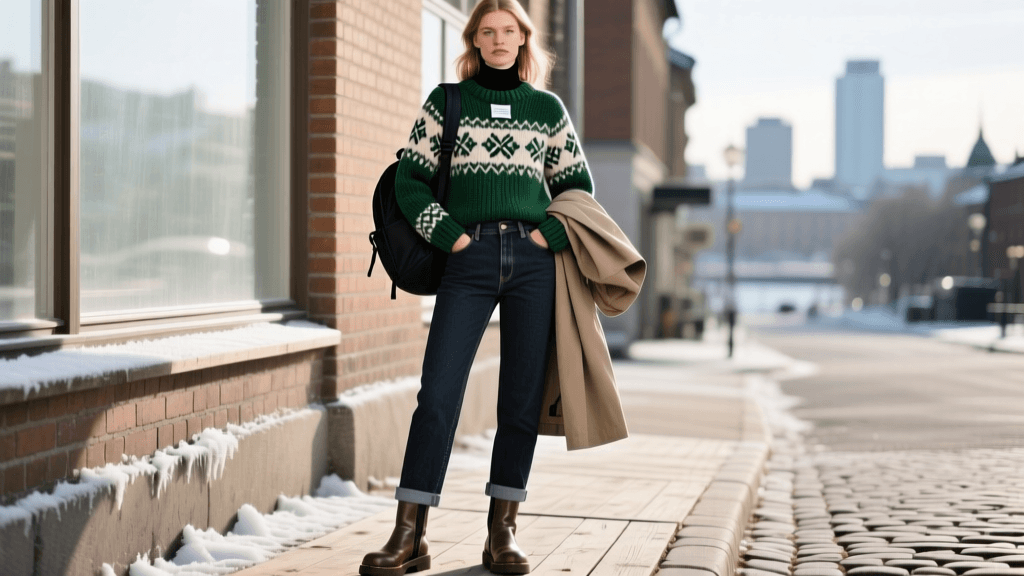
Styling a heavy, patterned folk garment requires a careful balance of proportions and textures. The goal in 2026 is to avoid looking like you are wearing a costume, instead treating the Lusekofte as a luxury statement knitwear piece. Here are three distinct styling frameworks for the modern wardrobe.
Look 1: The Gorpcore Crossover
The intersection of traditional outdoor heritage and modern technical gear is a defining trend of the decade. Pair an oversized, heavy-gauge Lusekofte with technical nylon cargo pants in olive or slate grey. Footwear should lean into aggressive trail-running or hiking silhouettes, such as the latest Salomon XT-6 or Hoka Kaha models. To bridge the gap between 19th-century wool and 21st-century synthetics, layer a lightweight, bright orange or neon yellow Gore-Tex shell jacket over the sweater, leaving it unzipped to frame the black-and-white yoke. This look honors the sweater’s utilitarian roots while firmly planting it in contemporary urban streetwear.
Look 2: Scandi-Minimalist Tailoring
For a smarter, more refined approach, lean into the Scandinavian minimalist aesthetic. Choose a Lusekofte with a modern tailored fit and a slightly lower crew neck. Layer it over a crisp, white organic cotton poplin shirt, allowing the collar to peek out just above the sweater’s ribbed neckline. Pair this with high-waisted, wide-leg wool trousers in charcoal or black, and finish with sleek leather derby shoes or minimalist white leather sneakers. The monochrome nature of the Setesdal pattern ensures it doesn't clash with the clean lines of tailored trousers, making it an excellent alternative to the standard merino V-neck for creative office environments.
Look 3: Avant-Garde Heritage Grunge
For those who favor a darker, more experimental aesthetic, the Lusekofte can be treated as a textural contrast piece. Wear a heavily distressed, oversized black denim jacket over the sweater, allowing the intricate white yoke to spill out from the collar and cuffs. Pair with washed black denim jeans and heavy, lug-sole combat boots. The key here is to let the pristine, mathematical geometry of the folk pattern contrast sharply with the rough, worn-in textures of the surrounding garments.
Accessorizing with Søljer (Traditional Silver)
No discussion of Norwegian folk dress is complete without mentioning the 'søljer'—the elaborate silver brooches and clasps traditionally used to fasten the collar of the sweater and the accompanying shirts. In the Setesdal tradition, these silver pieces were not merely decorative; they were indicators of wealth and status, often passed down through generations.
In 2026, integrating silver folk jewelry into streetwear adds a phenomenal layer of depth to an outfit. Rather than wearing a massive, traditional chest piece that might look costumey, opt for a single, medium-sized oxidized silver sølje brooch pinned to the collar of a denim jacket, or use a smaller silver clasp to pin the neckline of the Lusekofte itself. The dark, tarnished finish of oxidized silver complements the black wool perfectly, providing a subtle, gothic-tinged hardware accent that elevates the entire ensemble.
Garment Care: Preserving Lanolin and Structure
Authentic Spælsau wool requires specific care to maintain its structural integrity and water-resistant properties. The natural lanolin in the wool is easily stripped by harsh modern detergents and hot water, which will leave the sweater brittle and prone to tearing.
- Washing: Never machine wash a traditional Lusekofte. Hand wash the garment in cool water (below 30°C / 86°F) using a lanolin-enriched, no-rinse wool wash like Eucalan or Soak.
- Drying: Never wring or twist the wool. Gently press the water out, roll the sweater in a clean, dry towel to absorb excess moisture, and lay it flat on a mesh drying rack. Reshape the yoke and shoulders while damp.
- Storage: Wool is highly susceptible to moth damage. When storing the sweater during the warmer months, ensure it is freshly cleaned (moths are attracted to body oils and food scents) and store it in a breathable cotton garment bag with natural cedar blocks or dried lavender sachets.
Conclusion
The Norwegian Lusekofte is a triumph of functional folk art. As the fashion industry in 2026 continues to grapple with issues of overproduction and environmental impact, turning to heritage garments that offer lifelong durability and timeless design is a powerful sartorial statement. By understanding the anatomy, sourcing authentic materials, and applying contemporary styling techniques, the Setesdal sweater transcends its historical boundaries, proving that traditional European folk dress is not a relic of the past, but a vital, evolving component of the modern wardrobe.