Norwegian Bunad vs Ukrainian Vyshyvanka: 2026 Regional Guide
The Renaissance of Regional Identity in 2026
In 2026, the landscape of European folk dress has evolved far beyond mere historical reenactment or tourist-oriented souvenirs. Today, traditional garments are potent symbols of regional identity, sustainable fashion, and ancestral continuity. As global supply chains face ongoing disruptions and the demand for hyper-local, artisanal craftsmanship reaches an all-time high, heritage textiles are experiencing a massive renaissance. Two of the most iconic and fiercely protected regional garments in Europe are the Norwegian Bunad and the Ukrainian Vyshyvanka. While they originate from vastly different climatic and cultural zones, both represent the pinnacle of European folk artistry, utilizing complex embroidery, localized materials, and strict regional coding.
This comprehensive guide explores the distinct regional variations of these two legendary garments, providing a deep dive into their textile construction, 2026 market pricing, and actionable advice for collectors, cultural enthusiasts, and heritage fashion advocates looking to source authentic pieces.
The Norwegian Bunad: Fjord-Inspired Wool and Silver
The Norwegian Bunad is not a single uniform costume, but rather a collective term for over 450 distinct regional folk dresses. Rooted in the 18th and 19th-century rural clothing of Norway, the Bunad movement was formalized in the early 20th century and is today strictly regulated by the Norsk institutt for bunad og folkedrakt (Norwegian Institute for Bunad and Folk Costume). In 2026, the emphasis is heavily placed on historical accuracy, sustainable wool sourcing, and the preservation of local silversmithing traditions.
Hardanger: The Matriarch of Bunads
Originating from the Hardangerfjord region, the Hardanger Bunad is often considered the first modern Bunad. It is characterized by its striking color palette: a black wool bodice, a white linen apron with intricate Hardanger embroidery (a form of whitework cutwork), and a red wool skirt. In 2026, authentic Hardanger Bunads are highly sought after, with the apron alone taking master embroiderers over 300 hours to complete. The accompanying silver jewelry, known as sølv, features elaborate filigree and oxidized details that contrast beautifully against the white linen.
Telemark: Dark Wool and Floral Opulence
The Telemark Bunad is renowned for its rich, dark blue or black wool base, heavily adorned with vibrant, asymmetrical floral embroidery inspired by 18th-century Rococo motifs and local rose-painting (rosemaling). The 2026 market has seen a surge in demand for Telemark pieces dyed using traditional woad and indigo fermentation vats, a sustainable practice revived by artisan cooperatives in southern Norway. The garment is typically paired with a woven silk or wool scarf and a heavily ornate silver belt buckle.
The Ukrainian Vyshyvanka: Geometry and Ancestral Threads
The Vyshyvanka is the traditional Ukrainian embroidered shirt, a garment so deeply embedded in the national psyche that it transcends mere clothing to become a talisman of protection and a marker of regional lineage. According to the Ivan Honchar Museum National Center of Folk Culture, there are over 100 distinct regional embroidery techniques in Ukraine. In 2026, the Vyshyvanka is at the forefront of the European heritage fashion movement, with a strong focus on reviving pre-industrial natural dyeing and hand-loomed flax production.
Poltava: The Elegance of White-on-White
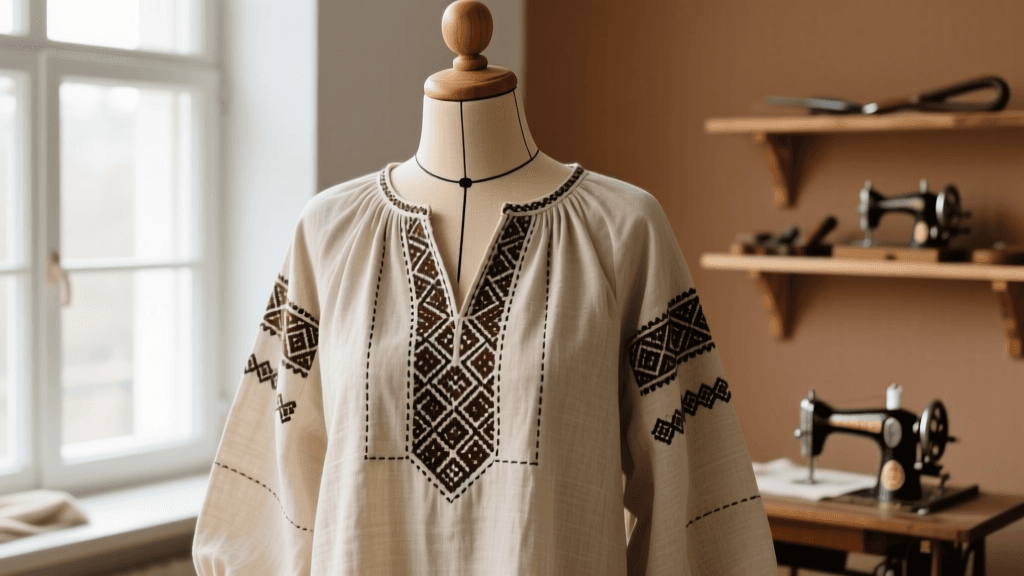
The Poltava region is famous for its billiu po bilomu (white-on-white) embroidery. This highly sophisticated technique relies on texture rather than color, utilizing over 180 different stitches, including cutwork, drawn-thread work, and satin stitch, to create subtle, shadow-like geometric and floral patterns on bleached linen. In 2026, authentic Poltava shirts are considered luxury heritage items. The flax used is increasingly sourced from organic, regenerative farms in the region, and the shirts are finished with delicate handmade lace collars.
Hutsulshchyna: Carpathian Geometry and Vibrant Dyes
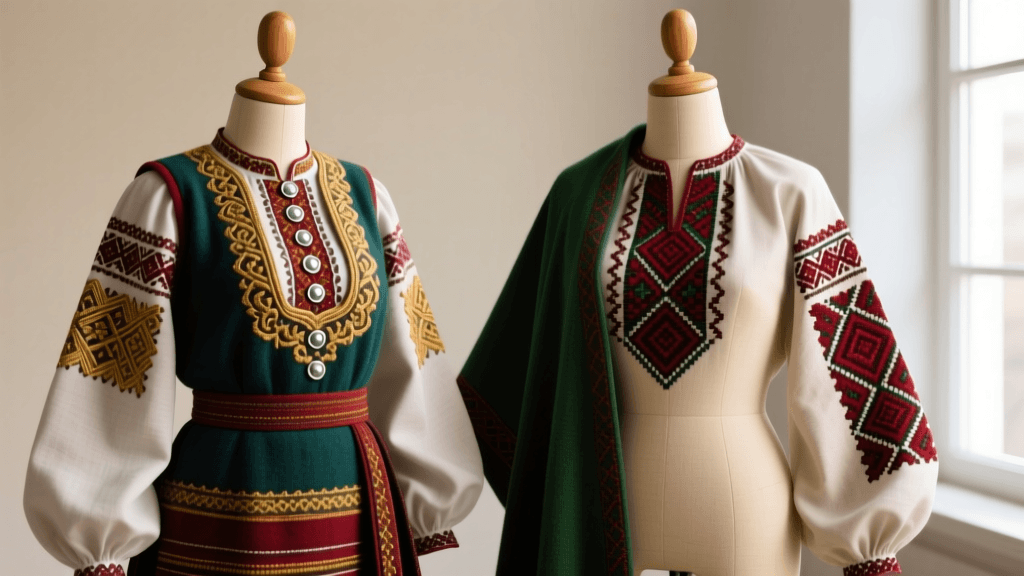
In the Carpathian Mountains, the Hutsul people created a Vyshyvanka style that is visually explosive. Hutsul embroidery is characterized by dense, intricate geometric cross-stitch patterns, predominantly using red, black, and yellow threads. Historically, these colors were derived from madder root, oak bark, and weld. Today, 2026 artisan collectives in the Ivano-Frankivsk oblast are strictly returning to these botanical dyes to meet the demands of eco-conscious consumers. The shirts are often paired with heavy, hand-tooled leather belts (cheres) and woolen keptar vests.
2026 Comparative Analysis: Textiles, Weight, and Cost
Understanding the structural and economic differences between these garments is crucial for collectors and cultural institutions. The table below outlines the core specifications and 2026 market realities for two of the most prominent regional variations.
| Feature | Norwegian Bunad (Hardanger) | Ukrainian Vyshyvanka (Hutsul) |
|---|---|---|
| Primary Fabric | 100% Heavyweight Worsted Wool & Linen | Hand-loomed Mid-weight Flax Linen |
| Embroidery Style | Whitework Cutwork, Wool Floral Appliqué | Dense Geometric Cross-stitch, Nyzynka |
| Metalwork / Accessories | Sterling Silver Filigree (Sølv), Crowns | Brass Beading, Leather Tooling, Coral |
| Average 2026 Cost (EUR) | €4,800 – €6,500 (Full ensemble + silver) | €450 – €1,200 (Shirt only, depending on stitch density) |
| Construction Time | 6 to 14 months (Waitlists for silversmiths) | 2 to 5 months (Hand-stitched by master artisans) |
| Garment Weight | Heavy (3.5 kg - 5 kg total ensemble) | Light to Medium (300g - 600g per shirt) |
Actionable Sourcing and Measurement Guide for 2026
Acquiring an authentic, regionally accurate garment in 2026 requires patience, precise measurements, and a commitment to supporting verified artisan cooperatives rather than mass-produced imitations. The UNESCO Intangible Cultural Heritage Representative List continues to emphasize the importance of supporting the living communities that maintain these textile traditions.
How to Measure for a Bespoke Bunad
Unlike standard retail clothing, a Bunad is tailored to your exact measurements and is designed to be adjusted over a lifetime. If you are commissioning a Bunad from a certified Norwegian atelier in 2026, you must provide the following precise metrics, ideally taken by a professional tailor:
- Chest (Brystvidde): Measured around the fullest part of the bust, ensuring the tape measure is level across the shoulder blades.
- Waist (Midje): Measured at the natural narrowing of the torso, usually just above the navel. The Bunad bodice must fit snugly to support the heavy wool skirt.
- Hip (Hoftevidde): Measured around the widest part of the hips and buttocks.
- Torso Length (Livlengde): Measured from the base of the neck (C7 vertebra) down to the natural waistline. This is critical for the placement of the silver brooches and the bodice's structural seams.
- Skirt Length (Skjørtelengde): Traditionally, a Bunad skirt should fall exactly to the middle of the calf, allowing the decorative stockings and silver shoe buckles to be visible.
Sizing and Sourcing the Vyshyvanka
The traditional Vyshyvanka is cut using a rectangular, zero-waste pattern based on the width of the hand-loomed linen bolt (usually 45-50 cm). Sizing is therefore more forgiving and relies on standard chest and shoulder-width measurements. When sourcing a Hutsul or Poltava shirt in 2026:
- Verify the Thread Count: Authentic hand-loomed linen will have slight irregularities. Machine-made fabrics with laser-cut embroidery are prevalent in fast-fashion markets; always request a macro-photograph of the reverse side of the embroidery. True hand-stitched work will look nearly identical on the reverse, with no messy jump threads.
- Check the Dye Origin: Ask the artisan for a certificate of botanical dyeing if purchasing a premium Hutsul piece. Madder-dyed red threads will have a slightly earthy, muted tone compared to the neon brightness of synthetic aniline dyes.
Caring for Heritage Textiles
Preserving these garments requires abandoning modern laundry habits. For the wool components of a Bunad, dry cleaning is generally discouraged due to the harsh chemicals that strip natural lanolin. Instead, brush the wool with a natural boar-bristle brush and air it out in a damp, cool environment (a traditional Norwegian method known as lufting). For the silver, use a mild, non-abrasive silver polish, being careful to avoid the oxidized crevices that give the filigree its depth.
For linen Vyshyvankas, hand washing in cold water with a pH-neutral, enzyme-free detergent is mandatory. Never wring the linen; roll it in a clean cotton towel to absorb excess moisture and lay it flat to dry away from direct sunlight, which will rapidly degrade both the natural botanical dyes and the structural integrity of the flax fibers. Ironing should only be done on the reverse side while the garment is still slightly damp, using a high-heat steam setting.
Conclusion
As we navigate the fashion landscape of 2026, the Norwegian Bunad and the Ukrainian Vyshyvanka stand as testaments to the enduring power of regional dress. They are not relics trapped in museum glass, but living, breathing textile traditions that adapt to modern sustainability standards while fiercely guarding their ancestral codes. Whether you are investing in the heavy, silver-clad wool of the Hardangerfjord or the intricate, botanical-dyed linen of the Carpathian Mountains, you are participating in a vital act of cultural preservation. By understanding the regional nuances, respecting the artisan timelines, and committing to proper garment care, collectors and enthusiasts ensure that these European folk masterpieces will continue to be worn and celebrated for generations to come.