Authentic Norwegian Bunad vs Swedish Folkdräkt 2026
The 2026 Renaissance of Nordic Folk Dress
In 2026, the global slow fashion movement and a renewed emphasis on cultural sustainability have propelled traditional European folk costumes into the spotlight. Across Scandinavia, younger generations are not merely inheriting these garments; they are actively investing in them, wearing them to weddings, national holidays, and even formal corporate events. However, while outsiders often group all Nordic traditional clothing under a single umbrella, the distinctions between neighboring countries are profound. The Norwegian Bunad and the Swedish Folkdräkt represent two entirely different philosophies of heritage, regulation, and textile artistry. For collectors, cultural enthusiasts, and those looking to commission an authentic piece, understanding these regional nuances is essential.
The Norwegian Bunad: Heritage, Identity, and Strict Regulations
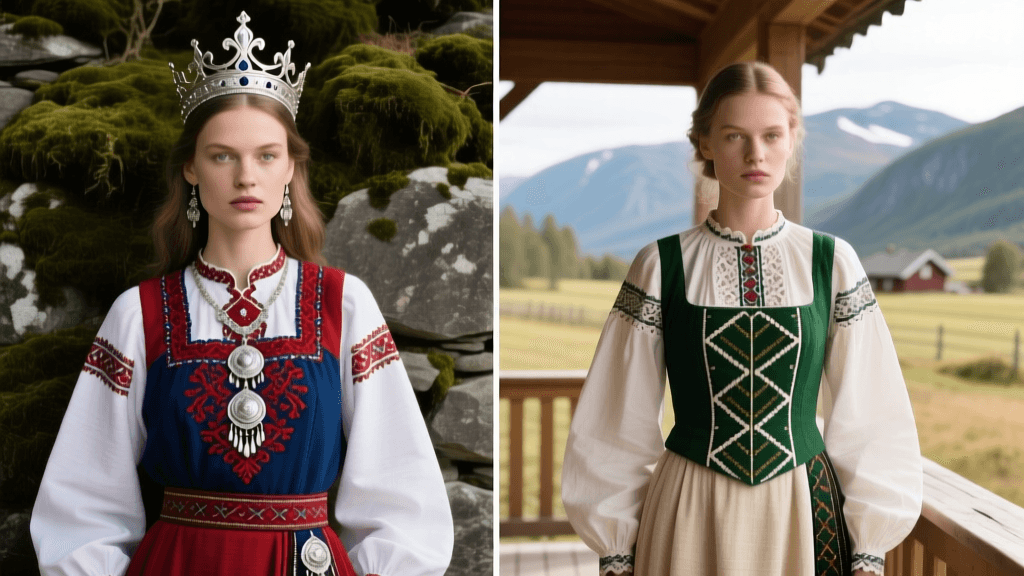
The Norwegian Bunad is arguably the most strictly regulated folk costume in Europe. Unlike generic historical reenactment clothing, a Bunad is deeply tied to a specific geographic region, valley, or fjord, serving as a wearable map of the wearer’s ancestry. According to the Norsk institutt for bunad og folkedrakt (NBF), there are over 450 distinct Bunad designs in existence today, each governed by local committees that dictate everything from the exact shade of the wool to the stitch count of the embroidery.
Key Regional Variations
- Hardanger: Often called the 'first Bunad', originating from the fjord-rich western region. It features striking black wool with intricate white linen aprons and vivid cross-stitch embroidery in red, green, and yellow.
- Setesdal: Hailing from the isolated southern valleys, this design is famous for its heavy, dark wool and extensive, ornate silver filigree work that historically indicated the wearer's family wealth.
- East Telemark: Renowned for its complex, nature-inspired embroidery (often featuring local flora) and a silhouette that has remained remarkably consistent since the 18th century.
2026 Sourcing and the Silver Shortage
Commissioning a Bunad in 2026 requires patience and a significant budget. A fully hand-embroidered, custom-tailored Bunad from a certified atelier typically costs between 40,000 and 75,000 NOK (approximately $3,800 to $7,100 USD). Furthermore, the bunadsølv (traditional silver jewelry) is currently experiencing a bottleneck. With a surge in demand and a shrinking number of master silversmiths in Norway, waitlists for hand-forged silver belts and crown pins can stretch up to 18 months. Buyers are strongly advised to purchase silver directly from registered guild members rather than relying on mass-produced imports, which violate the ethos of the garment.
The Swedish Folkdräkt: Local Identity and the Hemslöjd Revival
While the Norwegian Bunad is heavily regulated by national and regional institutes, the Swedish Folkdräkt operates on a more localized, community-driven level. In Sweden, the term encompasses both bygdedräkter (reconstructed costumes based on museum artifacts) and continuous traditions that never entirely died out. The Nordiska Museet in Stockholm houses the definitive archive of these garments, showcasing how Swedish folk dress historically shifted from parish to parish, sometimes changing style just across a single river.
Prominent Regional Styles
- Dalarna (Leksand and Rättvik): Dalarna is the heartland of Swedish folk culture. The Leksand dräkt is iconic, featuring a black skirt, a white linen blouse, and a highly structured, colorful bodice. The Rättvik variant is distinguished by its striking black-and-white striped apron.
- Skåne: In the southernmost province, the costumes reflect historical wealth and continental European influence, featuring rich, dark fabrics, heavy velvet accents, and elaborate floral embroidery.
- Hälsingland: Known for its opulent use of imported silk and intricate lace, reflecting the historical prosperity of the region's flax farmers and timber merchants.
The 2026 Folkdräkt Renaissance
The year 2026 has seen a massive boom in the Hemslöjd (handicraft) movement in Sweden. Rather than simply buying a finished Folkdräkt, many Swedes are participating in community weaving circles to create their own fabrics. The Institutet för språk och folkminnen (ISOF) has noted a significant rise in workshops teaching traditional flax processing, natural indigo dyeing, and rigid heddle weaving. This DIY approach makes the Swedish Folkdräkt more accessible financially, though it demands hundreds of hours of personal labor.
Comparative Analysis: Bunad vs. Folkdräkt
For those deciding which tradition to study, collect, or adopt, the following table outlines the primary structural and cultural differences as they stand in 2026.
| Feature | Norwegian Bunad | Swedish Folkdräkt |
|---|---|---|
| Regulatory Body | Bunad- og folkedraktrådet (Strict national oversight) | Local parish communities & Hemslöjd associations (Decentralized) |
| Primary Materials | Wool, linen, cotton, and historically painted or printed fabrics | |
| Silver & Jewelry | Mandatory, highly specific to the region, heavily regulated | Optional or varied, often featuring pewter, brass, or beadwork |
| Approx. 2026 Cost (Base) | 40,000 - 75,000 NOK ($3,800 - $7,100 USD) | 15,000 - 35,000 SEK ($1,400 - $3,300 USD) if commissioned |
| Wearing Occasions | Constitution Day (May 17), weddings, galas, confirmations | Midsummer, National Day (June 6), local parish festivals |
Footwear and Accessories in 2026
An authentic folk costume is incomplete without the correct footwear, and 2026 trends show a return to historically accurate shoemaking. For the Norwegian Bunad, wearers must use bunadsko—traditional black leather pumps with a low heel and a decorative silver or pewter buckle. Modern athletic shoes or contemporary heels are considered a major faux pas and will immediately draw criticism at formal events.
In Sweden, footwear varies wildly by region. In Dalarna, women often wear nävring (shoes made from birch bark and leather) for historical accuracy during outdoor festivals, or simple black leather flats with a rounded toe. Men’s footwear across both nations typically involves robust leather boots or knee-high breeches paired with thick, hand-knitted wool socks featuring regional color patterns.
Headwear and Modesty
Headwear is another critical differentiator. In Norway, married women wearing a Bunad traditionally cover their hair with a white linen cap or a specific regional headdress, while unmarried girls wear their hair bare, often adorned with a silver crown or floral wreath. In Sweden, the rules are similarly strict but localized. The iconic bindel (a structured, often heavily embroidered headpiece) is reserved for married women in specific parishes, serving as an immediate visual indicator of social and marital status within the community.
'A folk costume is not a costume in the theatrical sense; it is a living archive. When you wear a Bunad or a Folkdräkt, you are carrying the literal weight of your ancestors' craftsmanship, their local agriculture, and their social history on your shoulders.' — Dr. Elin Madsen, Textile Historian, 2026.
How to Care for and Store Nordic Folk Costumes
Given the immense financial and emotional investment these garments require, proper maintenance is crucial. The 2026 best practices for preservation emphasize eco-friendly, non-toxic methods over harsh chemical cleaners.
Wool and Embroidery Care
- Airing Out: Never wash the heavy wool skirts or breeches. After wearing, hang the garment outside in a shaded, well-ventilated area for 24 hours. The natural lanolin in the wool repels dirt and odors.
- Stain Removal: For localized stains, use a damp cloth with a drop of pH-neutral, lanolin-enriched wool soap. Blot gently; never rub, as this will cause the wool to felt and ruin the drape.
- Moth Prevention: Store the garments in breathable cotton bags (never plastic, which traps moisture). Use blocks of untreated cedar wood and dried lavender sachets to deter moths naturally.
Silver and Metalwork Maintenance
The silver jewelry associated with both traditions requires careful handling. In 2026, conservationists advise against using commercial silver dips, which strip the oxidation from the intricate filigree details that give the metal its depth and contrast. Instead, use a soft, untreated microfiber cloth to gently buff the high points of the silver. Store the silver in anti-tarnish flannel pouches, separated from the wool garments, as the sulfur naturally present in some wool dyes can accelerate tarnishing.
Conclusion
Whether you are drawn to the heavily regulated, silver-laden majesty of the Norwegian Bunad or the community-woven, parish-specific charm of the Swedish Folkdräkt, both traditions offer a profound connection to European textile history. In 2026, these garments are more than just museum pieces; they are vibrant, evolving expressions of regional identity. By understanding the distinct rules, sourcing authentic materials, and respecting the cultural context of these costumes, enthusiasts can ensure that the legacy of Nordic folk dress continues to thrive for generations to come.