Norwegian Bunad Silver Filigree Jewelry & Headwear 2026
The revival of European folk dress has reached new heights in 2026, with a particular spotlight on the intricate accessories that complete these historic ensembles. Among the most celebrated and meticulously preserved traditions is the Norwegian Bunad, a regional folk costume that relies heavily on its accompanying silver jewelry, known locally as sølv, and traditional headwear, or hodebunad. Unlike everyday fashion, these accessories are deeply rooted in genealogy, regional pride, and centuries-old metallurgical techniques. For collectors, cultural enthusiasts, and those inheriting or commissioning a Bunad today, understanding the nuances of these pieces is essential to honoring the heritage they represent.
In this comprehensive guide, we explore the anatomy of Norwegian Bunad silver, the symbolic meanings behind regional headwear, and actionable advice on sourcing, pricing, and maintaining these heritage pieces in the current 2026 market. Whether you are attending a spring Syttende Mai celebration or a traditional rural wedding, the correct pairing of silver and headwear elevates the garment from a mere costume to a living piece of history.
The Artistry of Bunad Silver (Sølv)
The silver jewelry worn with a Bunad is not merely decorative; it historically functioned as a portable bank account and a display of a family's wealth and social standing. Today, the craftsmanship remains a protected cultural heritage. According to the Norwegian Folk Art and Craft Association (Husfliden), the demand for locally forged, authentic silver has surged in 2026, as buyers increasingly reject mass-produced, overseas castings in favor of pieces made by certified local silversmiths. This resurgence has led to a renaissance in traditional apprenticeships across valleys like Telemark and Hardanger, ensuring that ancient techniques such as filigree twisting and granulation survive into the modern era.
The Sølje: The Crown Jewel of the Bunad
The sølje, or traditional brooch, is the centerpiece of the Bunad's silver ensemble, typically fastening the collar of the linen shirt. Traditional designs feature intricate filigree work, dangling spoons, and teardrop-shaped pendants. The number of spoons and the complexity of the filigree often dictate the price and the formality of the piece. In 2026, a high-quality, hand-forged Hardanger sølje crafted from 925 sterling silver costs between 5,500 NOK and 14,000 NOK (approximately $520 to $1,320 USD), depending on the artisan and the weight of the silver.
When measuring for a sølje, the standard diameter ranges from 45mm to 65mm. It is crucial to match the size of the brooch to the scale of the shirt's collar and the wearer's neckline. A piece too large will overwhelm the delicate linen embroidery, while one too small will fail to secure the heavy wool lapels of the overdress. Furthermore, the dangling spoons must be soldered securely to allow for the characteristic chiming sound when the wearer moves, a feature historically believed to ward off evil spirits.
Cufflinks, Belt Buckles, and Hairpins
Beyond the brooch, a complete silver set includes mansjettknapper (cufflinks), beltespenner (belt buckles), and hårnåler (hairpins). The belt buckle is often the heaviest piece, featuring repoussé or engraved motifs specific to the wearer's home valley. For example, Telemark buckles frequently incorporate acanthus leaf carvings that mirror the region's famous rose-painting (rosemaling) traditions. In 2026, artisans are increasingly utilizing ethically sourced Baltic silver and sustainable, non-toxic polishing compounds, aligning heritage crafts with modern environmental standards without compromising the historical accuracy of the final polish.
Traditional Headwear: Hodebunad and Skaut
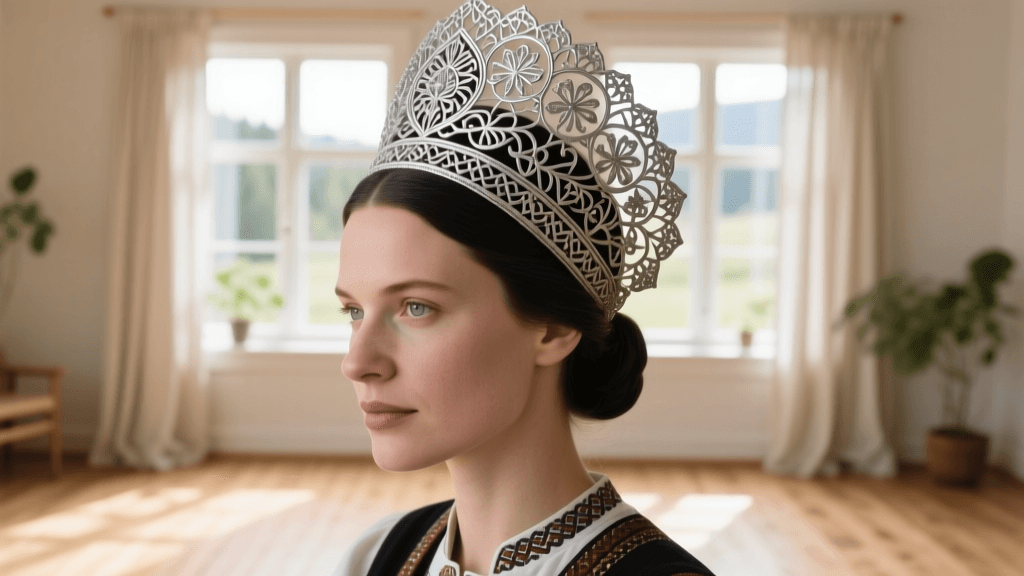
Headwear in European folk dress is heavily codified, often indicating a woman's marital status, age, and specific regional origin. The Norwegian Museum of Cultural History (Norsk Folkemuseum) notes that headwear was historically the most strictly enforced element of rural dress codes, with severe social penalties for wearing the wrong cap in public. In 2026, while the strict social rules have relaxed, the cultural commitment to wearing the correct hodebunad for ceremonies, weddings, and national holidays remains steadfast among enthusiasts and preservationists.
The Skaut vs. The Krone
The Skaut is a traditional, heavily embroidered white linen headpiece worn by married women, particularly prominent in the Hardanger region. It requires a specialized folding and pinning technique that many modern wearers learn through local Husflid workshops. The structural integrity of the Skaut relies on a hidden cardboard or wire framework, over which the pleated linen is meticulously draped and secured with silver pins. Conversely, unmarried women traditionally wear a Krone (crown) or a simple, unadorned linen cap. The Krone is often made of brass, silver, or even cardboard covered in silk and metallic threads, adorned with ribbons that trail down the back to signify youth and availability.
Regional Headwear Comparison Chart (2026)
| Region | Headwear Type | Marital Status | Primary Materials | 2026 Est. Cost (NOK) |
|---|---|---|---|---|
| Hardanger | Skaut | Married | White linen, silk threads | 3,500 - 6,000 |
| Telemark | Hodebunad (Cap) | Married | Brocade, velvet, lace | 4,000 - 7,500 |
| Gudbrandsdalen | Krone | Unmarried | Brass, silk ribbons, pearls | 2,500 - 5,000 |
| Sogn | Linlue | Married | White linen, bobbin lace | 2,000 - 4,500 |
2026 Sourcing and Pricing Guide
Acquiring authentic Bunad accessories requires navigating a specialized market. The 2026 landscape is dominated by heritage brands alongside independent master smiths who operate out of small rural workshops. When commissioning a bespoke piece, expect a lead time of 3 to 6 months, as the filigree twisting and soldering are done entirely by hand. Here is where you should look to source authentic pieces:
- Husfliden Retailers: The safest bet for verified, regionally accurate pieces. Prices are standardized but premium, ensuring you receive a product that meets the strict guidelines of the national Bunad council.
- Independent Silversmiths: Offer bespoke adjustments and restorations. Ideal for matching vintage family heirlooms or creating a custom belt buckle that incorporates specific family crests or farm motifs.
- Antique Markets and Estate Sales: Excellent for pre-1950s søljer, but require a hallmark verification to ensure the silver purity and regional accuracy. Always consult an appraiser before spending over 10,000 NOK on an unverified antique piece.
Care, Maintenance, and Storage
Silver tarnishes when exposed to sulfur in the air, a process accelerated by humidity and temperature fluctuations. To maintain the brilliant shine of your Bunad silver in 2026, avoid harsh chemical dips that can strip the intentional oxidation, or patina, from the filigree crevices. This dark contrast is essential for providing depth and highlighting the intricate wirework.
Instead, use a mild silver polishing cloth for the raised surfaces. For intricate filigree, a soft-bristled brush with a gentle, non-abrasive silver foam is recommended. When storing the accessories, wrap each piece individually in acid-free tissue paper or untreated cotton flannel, and place them in an airtight container with anti-tarnish silica strips. Never store silver in direct contact with rubber bands or newspaper, as these materials emit sulfurs that cause rapid blackening and can permanently damage the delicate dangling spoons of a vintage sølje.
Preserving a Living Heritage
The accessories of the Norwegian Bunad are far more than mere embellishments; they are the metallic and textile threads that bind modern wearers to their ancestors. As we move through 2026, the dedication of local artisans and the enthusiasm of a new generation of folk dress enthusiasts ensure that the chiming of silver spoons and the elegant drape of the Skaut will continue to grace European festivals and family gatherings for centuries to come. By investing in authentic craftsmanship and practicing proper care, you become an active steward of this magnificent European textile and metallurgical heritage.