Norwegian Bunad Sølje Silver Brooches & Headwear 2026
The Cultural Significance of Norwegian Bunad Jewelry
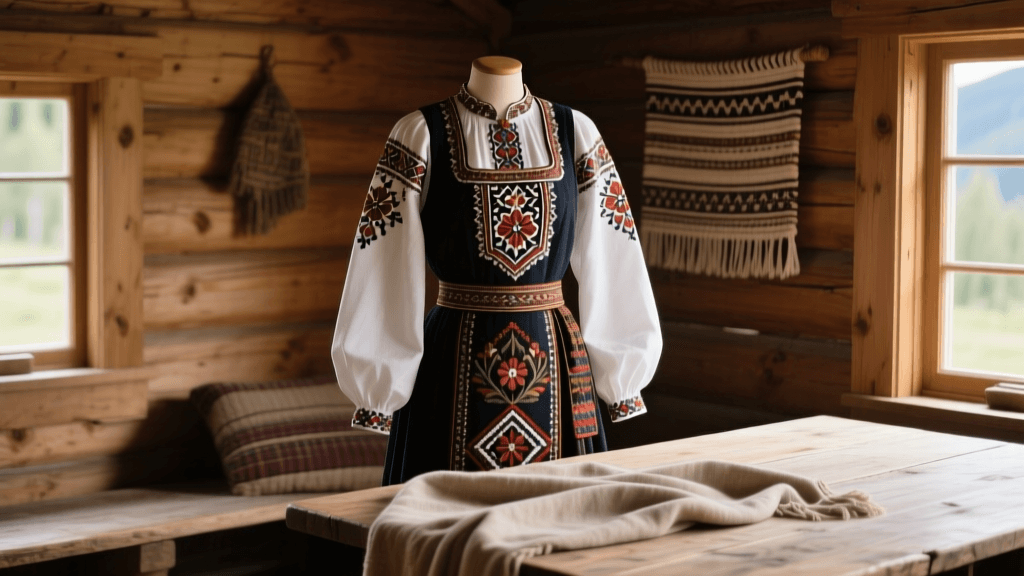
When discussing European folk dress, few traditions are as meticulously preserved and visually striking as the Norwegian Bunad. While the intricately embroidered wool garments often capture the initial attention of textile enthusiasts, it is the accompanying silver jewelry—known collectively as Sølje—and the elaborate traditional headwear that truly complete the ensemble. In 2026, the revival of historical European folk costumes has reached new heights, with a profound emphasis on historical accuracy, artisanal metallurgy, and the preservation of regional identities. The Sølje is not merely decorative; it is a profound symbol of heritage, social status, and spiritual protection, deeply rooted in Scandinavian folklore.
Historically, silver was believed to possess apotropaic qualities, capable of warding off evil spirits, the 'huldra' (forest creatures of Norse myth), and the 'evil eye.' According to archives maintained by the Norsk Folkemuseum, rural communities in the 18th and 19th centuries viewed silver brooches as essential talismans, particularly for women during vulnerable life transitions such as marriage and childbirth. Today, as modern wearers and cultural historians invest in authentic Bunad accessories, understanding the nuances of these silver pieces and their accompanying headwear is crucial for anyone looking to acquire, study, or restore these magnificent artifacts in 2026.
Anatomy of the Sølje: More Than Just Decoration
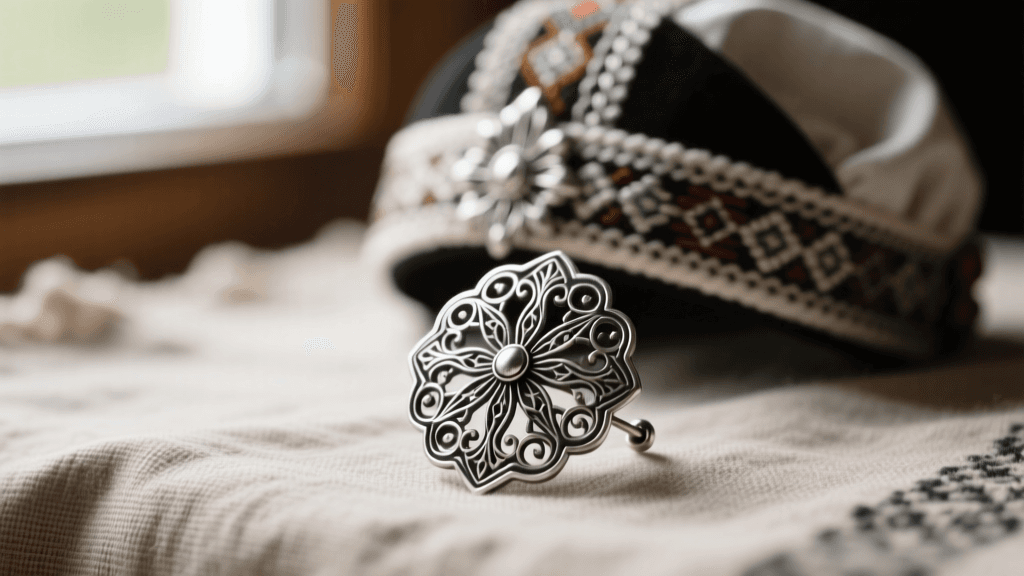
A complete traditional Norwegian silver set is a marvel of functional artistry, comprising several distinct pieces that secure the garment and denote the wearer's specific regional affiliation. The craftsmanship involved in creating these pieces ranges from intricate filigree work to cast relief and hand-engraved acanthus motifs. The core components of a traditional Sølje set include:
- Halsknapp (Neck Button): Worn at the collar of the linen shirt, this small, often domed or filigree button secures the neckline. It is typically the smallest piece in the set but features incredibly detailed wirework.
- Brystknapp (Breast Brooch): The centerpiece of the Sølje, this large, ornate brooch is worn on the chest, securing the front of the bodice or the overlapping folds of the linen shirt. It often features dangling elements known as 'spades' or 'leaves' that chime softly with the wearer's movement.
- Livknapp (Waist/Bodice Button): Used to fasten the heavy wool bodice, these buttons are robust and heavily decorated, designed to withstand the tension of the garment while displaying the family's wealth.
- Maljer (Cufflinks and Clasps): Small silver clasps used to secure the cuffs of the linen shirt and the edges of the skirt.
- Sølje Belte (Silver Belt): In certain regions like Telemark and Hardanger, a belt composed of linked silver plates or heavy silver plaques sewn onto velvet or leather is worn over the waist.
The guidelines set forth by the Norwegian Institute of Bunad and Folk Costumes emphasize that the specific motifs—whether it be the heart-shaped cutouts of Hardanger, the intricate floral filigree of Telemark, or the deep acanthus carvings of Gudbrandsdal—must strictly match the regional origin of the textile garment. Mixing regional silver styles is considered a significant breach of traditional protocol.
Traditional Headwear: The Skaut, Lin, and Bridal Krone
The headwear, or Hodebunad, is perhaps the most complex element of Norwegian folk dress, serving as a visual indicator of a woman's marital status, age, and exact geographical origin. In 2026, master milliners and textile conservators continue to pass down the highly specialized folding and starching techniques required to construct these garments.
The Hardanger Skaut
The Skaut is a striking, heavily starched white linen headdress native to the Hardanger region. It is constructed from a single, large piece of fine linen that is meticulously folded into a structured, horn-like or winged shape at the back of the head. The folding process requires precision and a deep understanding of the fabric's grain. The Skaut is secured with specialized silver pins, often featuring small dangling chains or spoons. Wearing the Skaut is a rite of passage, traditionally reserved for married women, though today it is worn by women of all ages during major cultural festivals and Constitution Day (Syttende Mai) celebrations.
The Lin and Luer
In regions like Valdres and Hallingdal, married women traditionally wear a Lin or Lue—a close-fitting linen cap that covers the hair entirely. These caps are often edged with delicate bobbin lace or embroidered tulle. The transition from a bare head (or a simple headband for young girls) to the covered head of the Lin historically marked a woman's entry into married life. Unmarried girls typically wear their hair in braids, sometimes adorned with simple silver hairpins or a woven silk ribbon.
The Bridal Krone
The most breathtaking piece of Norwegian headwear is the Brudekrone (bridal crown). Worn only on a woman's wedding day, the Krone is a towering, elaborate headdress made of silver, brass, or gilded copper, adorned with glass stones, pearls, and vibrating metal leaves that catch the light and create a soft chiming sound. In 2026, antique bridal crowns are highly sought-after museum pieces and family heirlooms, while contemporary silversmiths are commissioned to forge exact replicas using historical metallurgical techniques, with custom bridal crowns often commanding prices upwards of $15,000 USD due to the hundreds of hours of hand-forging required.
2026 Silver Market and Artisan Craftsmanship
The market for authentic Bunad silver in 2026 is heavily influenced by both the global commodities market and a renewed cultural push for sustainable, locally sourced craftsmanship. As of early 2026, the global spot price of silver has stabilized near $31 per ounce, a significant increase from the previous decade. However, the cost of a Sølje set is driven far more by the artisanal labor than the raw material weight.
Modern buyers are increasingly discerning, seeking out pieces that bear the official Norwegian hallmarking, which guarantees a minimum of 92.5% pure silver (Sterling). While some historical pieces were cast in lower alloys, contemporary master silversmiths adhere strictly to Sterling standards. Furthermore, there is a distinct preference for the traditional svidd (oxidized) finish over the highly polished pusset finish. The oxidized finish, achieved by treating the silver with sulfur compounds to darken the recesses of the filigree and carvings, provides a striking contrast that highlights the intricate three-dimensional relief of the metalwork. This finish also requires less aggressive maintenance, preserving the integrity of the silver over generations.
Regional Variations and 2026 Pricing Guide
When commissioning or purchasing a Sølje set, buyers must navigate the distinct regional styles. Below is a comparative overview of the most prominent regional silver styles and their estimated market pricing for a complete, hand-finished set (including neck button, breast brooch, bodice buttons, and cufflinks) in 2026.
| Region | Primary Motifs & Style | Standard Finish | 2026 Avg. Set Price (USD) |
|---|---|---|---|
| Hardanger | Cross, heart cutouts, dangling spades | Oxidized (Svidd) | $1,850 - $2,400 |
| Telemark | Intricate filigree wirework, floral leaves | Polished (Pusset) | $2,100 - $2,800 |
| Gudbrandsdal | Deep acanthus carvings, rose motifs | Oxidized (Svidd) | $1,600 - $2,200 |
| Voss | Geometric patterns, heavy cast relief | Oxidized (Svidd) | $1,900 - $2,500 |
| Nordland | Simpler domed buttons, engraved flora | Polished (Pusset) | $1,200 - $1,700 |
Note: Prices reflect hand-forged and cast pieces from certified Norwegian silversmiths. Mass-produced or imported castings, while cheaper, are strongly discouraged by heritage organizations due to their lack of historical accuracy and inferior metallurgical quality.
Preserving Your Heirloom: Cleaning and Storage
Proper care of Bunad silver is essential to maintain its historical and monetary value. For oxidized (svidd) silver, aggressive polishing must be strictly avoided, as it will strip the intentional dark patina from the recesses, flattening the visual depth of the design. Instead, owners should use a soft, untreated microfiber cloth to gently buff only the raised, high-relief areas of the brooches. If tarnish builds up in the crevices of polished silver, a mild silver dip can be used sparingly, followed by immediate rinsing in distilled water and thorough drying.
Storage is equally critical. Silver should never be stored in plastic bags or cardboard boxes, as the off-gassing of certain plastics and the acids in wood pulp can accelerate tarnishing and cause pitting. In 2026, the standard for heirloom storage involves wrapping each individual piece in acid-free, unbuffered tissue paper, followed by placement in a tarnish-resistant flannel pouch or a lined wooden chest treated with anti-tarnish silver-cloth. By adhering to these conservation standards, collectors and cultural practitioners ensure that these magnificent examples of European folk dress accessories remain pristine for future generations to study and admire.