Norwegian Bunad Silver Jewelry 2026: Filigree & Crown Guide
The Enduring Legacy of Norwegian Bunad Silver
In the rich tapestry of European folk dress, few accessories command the reverence, artistry, and financial investment of Norwegian bunadsølv (bunad silver). As we navigate the cultural revivals and folk festivals of 2026, the traditional silver jewelry worn alongside Norway’s regional bunads remains a profound symbol of heritage, craftsmanship, and familial continuity. Unlike mass-produced fashion jewelry, bunad silver is intrinsically tied to specific valleys, fjords, and parishes, with each filigree pattern and cast motif telling a story that stretches back centuries.
According to the Norwegian Institute of Bunad and Folk Costumes, the preservation of regional silver patterns is not merely an aesthetic choice but a vital act of cultural conservation. In 2026, a complete set of authentic bunad silver can easily rival the cost of the woolen garment itself, serving as a wearable heirloom passed down through generations. This comprehensive guide explores the essential silver accessories that define Norwegian folk dress, the mythology woven into their designs, and the current market landscape for collectors and wearers today.
Mythological Roots: Silver as Protection and Status
To understand the intricate designs of Norwegian folk jewelry, one must look to the ancient folklore of Scandinavia. Historically, silver was believed to possess powerful apotropaic qualities—meaning it could ward off evil spirits, trolls (troll), and the seductive, dangerous forest creatures known as the huldra. In rural agrarian communities, vulnerable moments such as weddings, christenings, and church attendances required spiritual armor. Silver jewelry served as this armor.
Many traditional brooches feature dangling elements that were designed to catch the light and create a soft chiming sound. Folkloric traditions suggested that the huldra and other subterranean beings were easily distracted by shiny, moving objects and the sound of clinking metal. By wearing elaborate silver, the wearer effectively confused and repelled malevolent forces. Furthermore, historical pieces preserved at the Norwegian Museum of Cultural History reveal that the sheer weight and purity of a farmer’s silver collection were direct indicators of a family’s wealth, landholdings, and social standing within the parish.
Essential Silver Accessories for the Modern Bunad
A fully accessorized bunad requires a specific suite of silver pieces, each serving a functional and decorative purpose. The exact configuration depends heavily on the specific regional bunad being worn, but several core categories remain universal across the country.
The Søljebrosje (Filigree Neck Brooch)
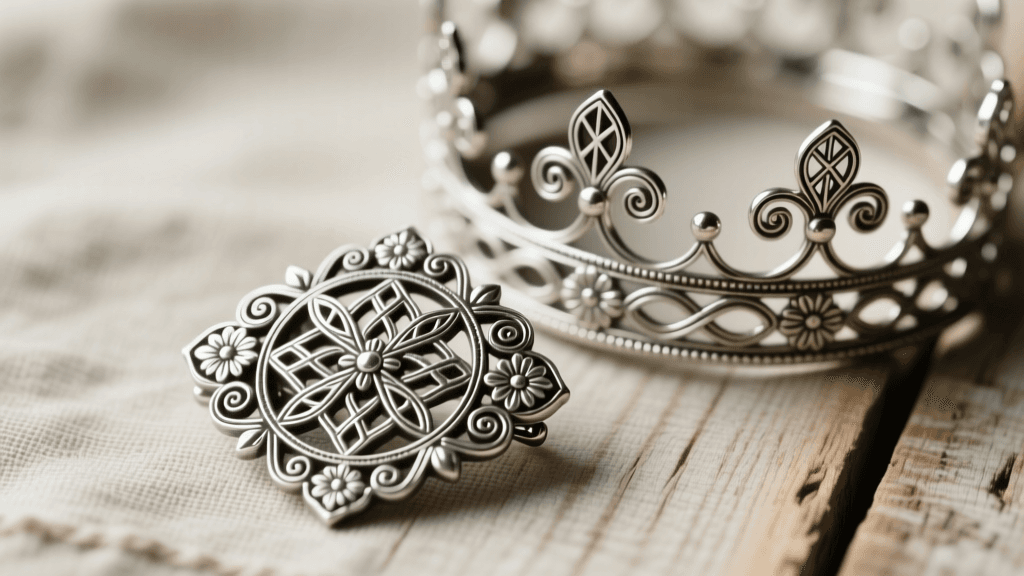
The sølje is the undisputed centerpiece of Norwegian bunad silver. Worn at the collar of the linen shirt, this large, circular brooch is a masterclass in the art of filigree (sølvfiligran). The anatomy of a traditional sølje is complex: it typically features a central raised dome, surrounded by intricate twisted silver wires soldered into floral or geometric patterns. Hanging from the outer rim are the skjeer (small, dangling spoons) and boler (small bowls or discs). In regions like Telemark and Setesdal, the sølje can be remarkably large, sometimes measuring over 8 centimeters in diameter, and is often paired with a smaller secondary brooch lower on the bodice.
The Brudekrone (Bridal Crown)
Perhaps the most breathtaking piece of European folk headwear is the Norwegian brudekrone. Worn exclusively by brides on their wedding day, these towering crowns are heavily influenced by medieval ecclesiastical art and the crowns of the Virgin Mary. In regions like Voss and Hardanger, the crowns are tall, ornate structures made of silver, brass, or gilded copper, adorned with glass stones, pearls, and intricate filigree leaves. Because a hand-forged silver bridal crown is an immense investment—often costing upwards of €4,000 to €8,000 in the 2026 market—many families opt to rent these masterpieces from local heritage societies or specialized bunad ateliers for the wedding weekend.
Beltestølv (Belt Fittings and Buckles)
For bunads that feature a leather belt, such as those from the Gudbrandsdalen and Hallingdal valleys, the beltestølv is essential. These are heavy, cast silver plates that adorn the belt strap, culminating in a massive, ornate buckle. The silver plates are often decorated with acanthus leaf motifs, a design element that became wildly popular in Norwegian woodcarving and metalwork during the Baroque period and remains a staple in folk art today.
Hekter and Cufflinks
Functional silver is just as important as the decorative pieces. Hekter are silver clasps used to fasten the apron strings or secure the bodice, while heavy silver cufflinks are used to fasten the wide, voluminous sleeves of the traditional linen shirt. These pieces, though smaller, are forged with the same attention to detail and oxidized finishing as the grand neck brooches.
2026 Market Trends: Artisan Craftsmanship and Silver Purity
The market for bunad silver in 2026 is characterized by a strong consumer preference for authenticity and artisanal transparency. With global precious metal markets experiencing significant fluctuations over the past few years, the baseline cost of raw silver has risen, pushing the retail price of hand-forged bunadsølv to premium levels. However, this has also sparked a renaissance in traditional silversmithing, with younger artisans taking up the trade to meet the demands of a new generation proud of their heritage.
Certified artisans affiliated with Norsk Flid Husfliden continue to hand-forge pieces using centuries-old techniques, including hand-twisting filigree wire and sand-casting. A critical distinction in the 2026 market is the silver purity. While international sterling silver is 925 parts per thousand, traditional Norwegian bunad silver was historically crafted in 830 silver. The 830 standard is slightly harder and more durable, making it ideal for the heavy, intricate casting required for belt buckles and crown frames. Today, discerning buyers specifically seek out the 830 stamp for historical accuracy, though 925 sterling is widely accepted for delicate filigree work.
Regional Variations: A Comparative Guide
The design, weight, and motifs of bunad silver vary drastically from one valley to the next. The table below outlines the primary differences between three of Norway's most iconic regional silver traditions as observed in the current 2026 festival season.
| Region | Signature Motifs & Style | Typical Silver Purity | Estimated 2026 Full Set Cost (EUR) |
|---|---|---|---|
| Hardanger | Delicate filigree, abundant use of red and green glass stones, intricate bridal crowns with trembling leaves. | 925 Sterling | €2,500 - €4,500 |
| Telemark | Massive, heavy sølje brooches with long dangling spoons; prominent use of black oxidation for high contrast. | 830 Traditional | €3,000 - €5,500 |
| Setesdal | Architectural and geometric patterns, heavy cast belt buckles, distinct 'kross' (cross) motifs for protection. | 830 Traditional | €2,800 - €5,000 |
Authentication and Care for Bunadsølv
Investing in bunad silver requires a commitment to proper maintenance, especially given the intentional oxidation used to highlight the intricate filigree patterns. In 2026, modern ultrasonic cleaners are widely available, but they are strictly forbidden for traditional bunad silver. Ultrasonic vibrations can easily snap the delicate, hand-soldered filigree wires and strip away the dark, oxidized patina that gives the jewelry its depth and historical character.
Instead, experts recommend using a soft, untreated microfiber cloth to gently polish only the raised, high-friction areas of the silver. The recessed, oxidized areas should be left completely untouched. When storing the silver between festival seasons, it should be wrapped in acid-free tissue paper and placed in an airtight container with anti-tarnish silica strips. Never store bunad silver in plastic bags that contain PVC, as the chemical off-gassing will cause irreversible pitting on the surface of the metal.
For those purchasing vintage or antique pieces at auction, authentication is paramount. Genuine pieces will bear the maker’s mark, the city stamp (such as the crossed hammers for Kongsberg, a historic silver mining town), and the purity stamp. As the appreciation for European folk dress continues to grow globally, Norwegian bunad silver stands out not just as an accessory, but as a wearable museum of Scandinavian artistry, mythology, and enduring cultural pride.