Scandinavian Bunad Silver Jewelry & Crowns: 2026 Guide
The revival of traditional European folk dress has reached an unprecedented zenith in 2026, with a particular spotlight on the intricate accessories that complete these historic ensembles. While the garments themselves—such as the Norwegian bunad and the Swedish folkdräkt—are masterpieces of wool and linen, it is the accompanying jewelry and headwear that truly elevate the attire from regional costume to wearable cultural heritage. For enthusiasts, collectors, and brides-to-be navigating the 2026 market, understanding the nuances of Scandinavian silverwork and bridal crowns is essential.
In 2026, the intersection of heritage craftsmanship and modern sustainability has driven a massive resurgence in demand for authentic, hand-forged folk accessories. Mass-produced cast replicas are increasingly shunned in favor of pieces crafted by certified master silversmiths who utilize traditional techniques passed down through generations. This comprehensive guide explores the anatomy, cultural significance, and current market dynamics of Scandinavian folk dress accessories, providing you with the actionable knowledge needed to invest in these timeless treasures.
The Anatomy of Norwegian Bunad Silver (Sølje)
No Norwegian bunad is considered complete without its corresponding sølje (silver jewelry). Historically, silver was believed to possess protective qualities, guarding the wearer against malevolent spirits and the "hidden people" (huldra) of Scandinavian folklore. Today, these pieces serve as profound markers of regional identity and familial lineage.
The standard suite of Bunad silver typically includes several key components:
- Halssølje (Neck Brooch): Worn at the base of the throat, this piece often features a central rosette or cross motif, surrounded by dangling silver leaves or spoons (skjeblad) that chime softly with the wearer's movement.
- Brystsølje (Chest Brooch): A larger, more elaborate piece pinned to the bodice or shirt front. In regions like Telemark, these are renowned for their intricate filigree work and oxidized backgrounds that make the silver patterns pop.
- Mansjettknapper (Cufflinks): Essential for securing the cuffs of the traditional linen shirt, often featuring simple geometric or floral designs.
- Beltespenne (Belt Buckle): Particularly prominent in the Setesdal and Valle traditions, these heavy silver buckles are cast using ancient sand-casting methods and feature interlocking knotwork.
The dangling elements, often shaped like tiny spoons or leaves, are not merely decorative. In agrarian Scandinavian societies, the spoon was a deeply personal tool, often carved by an individual and carried with them. The inclusion of silver spoons in the brystsølje symbolized abundance, hospitality, and the hope that the wearer would never know hunger. Furthermore, the gentle chiming sound produced by these dangling elements was believed to mimic the sound of running water, a known deterrent to the huldra and other forest spirits.
According to the Norges Husflidslag (The Norwegian Craft Association), the year 2026 has seen a 15% increase in apprenticeships for traditional silversmithing, ensuring that regional variations—such as the distinct blackened silver of Hardanger versus the bright, polished silver of Gudbrandsdalen—remain vibrant and authentic.
The Swedish Bridal Crown (Brudkrona) Phenomenon
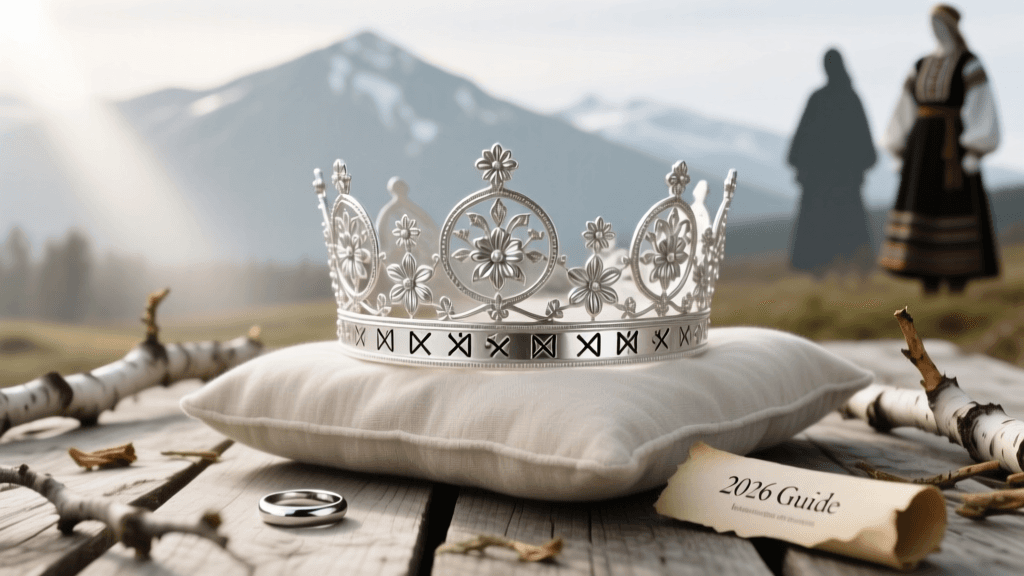
While Norway is famous for its bodice brooches, Sweden claims the brudkrona (bridal crown) as its most iconic folk accessory. Originating in the medieval period, the bridal crown was traditionally lent by the local parish church to brides on their wedding day, symbolizing the Virgin Mary and the bride's purity. By the 18th and 19th centuries, affluent farming families began commissioning their own private crowns, transforming them into highly prized family heirlooms.
A traditional Swedish brudkrona is a marvel of mixed-media metalwork. The base is typically constructed from silver or brass, heavily adorned with glass stones, faux pearls, mirrors, and sometimes even relics. The mirrors were strategically placed to reflect light and, according to superstition, to blind or confuse evil spirits attempting to curse the bride. The crown is often topped with delicate trefoils, stars, or floral sprays that tremble and catch the light as the bride walks down the aisle.
The transition of the brudkrona from church property to private wealth reflects the broader economic shifts in rural Scandinavia during the 18th century. As farming communities prospered, the display of silver became a primary method of demonstrating a family's social standing. A heavily jeweled crown was essentially a wearable bank account; in times of crop failure or financial hardship, individual elements of the crown could be removed and sold or pawned to sustain the family. This pragmatic approach to jewelry design is why many surviving antique crowns feature modular components and mismatched repair work, telling a silent story of survival and resilience.
In 2026, the brudkrona has experienced a massive revival among modern brides seeking to incorporate their heritage into contemporary weddings. Data from the Nordiska Museet in Stockholm indicates that regional heritage societies have expanded their rental archives this year, allowing brides to rent authenticated 19th-century crowns for a fraction of the cost of commissioning a new one. However, for those desiring a modern heirloom, master jewelers in Dalarna and Småland are currently accepting commissions, with waitlists extending well into 2027.
2026 Market Guide: Pricing and Authentication
Navigating the market for European folk jewelry requires a keen eye for hallmarks and an understanding of current precious metal valuations. With global silver prices experiencing volatility in the mid-2020s, the cost of authentic, hand-forged sølje has risen accordingly. When purchasing Bunad silver, buyers must look for the Norwegian silver standard mark (the crossed hammers and the letter 'S'), the maker's mark, and the municipality mark.
Below is a comparative breakdown of traditional Scandinavian folk accessories, including average market prices and regional associations for the 2026 buying season.
| Accessory Type | Traditional Region | 2026 Average Price (USD) | Primary Material | Key Symbolic Motif |
|---|---|---|---|---|
| Halssølje (Neck Brooch) | Hardanger, Norway | $450 - $850 | 830 or 925 Silver | Protective rings, crosses |
| Brystsølje (Chest Brooch) | Telemark, Norway | $700 - $1,400 | Silver, Brass accents | Filigree, hanging spoons |
| Brudkrona (Bridal Crown) | Dalarna, Sweden | $2,800+ (or $180 rental) | Silver, Pearls, Glass | Heavenly queen, purity |
| Beltespenne (Belt Buckle) | Setesdal, Norway | $350 - $600 | Silver, Iron base | Interlocking knotwork |
| Hårnål (Hair Pins) | Voss, Norway | $120 - $250 (per pair) | Silver, Gold plating | Floral rosettes |
When authenticating vintage pieces found at estate sales or antique markets, consult the digital archives provided by the Norwegian Museum of Cultural History. Their newly updated 2026 database of historical maker's marks is an invaluable tool for verifying the provenance of 19th-century folk jewelry.
Sourcing Authentic Pieces in 2026
The most critical mistake a buyer can make is purchasing "Bunad-style" jewelry from mass-market online retailers. These pieces are often cast from low-grade alloys, lack the correct regional motifs, and can actively damage delicate antique textiles due to rough finishing and improper pin mechanisms.
To source authentic pieces in 2026, follow these actionable steps:
- Verify the Artisan: Only purchase from silversmiths registered with national craft councils. In Norway, look for the Husflid certification. In Sweden, the Svensk Hemslöjd mark guarantees traditional handcraft standards.
- Request Custom Fittings: Authentic brooches must be matched to the specific weight and weave of your folk dress fabric. A heavy Telemark chest brooch requires a reinforced linen backing to prevent tearing the garment.
- Understand the Silver Content: Traditional Norwegian silver was often 830 parts per thousand (83% pure silver), which is slightly harder and more durable than the modern 925 sterling standard. Many master smiths in 2026 still offer 830 silver upon request for historical accuracy.
Preservation and Care for Heritage Metals
Proper maintenance of folk jewelry ensures it survives for future generations. The high sulfur content in modern urban environments, combined with the natural oils from human skin, causes silver to tarnish rapidly. However, aggressive commercial polishes can strip the intentional oxidation (blackening) that provides contrast in filigree work.
For routine care in 2026, conservation experts recommend the following protocol:
- Gentle Washing: Use a mild, phosphate-free dish soap and lukewarm water. Gently agitate with a soft-bristled baby toothbrush to remove dirt from intricate filigree crevices.
- Targeted Polishing: Use a treated silver polishing cloth only on the raised, high-relief areas of the jewelry. Avoid rubbing the recessed areas to preserve the dark oxidized patina that highlights the craftsmanship.
- Proper Storage: Store each piece individually in acid-free tissue paper and place them in an airtight container with activated charcoal or commercial anti-tarnish strips. Never store silver in direct contact with rubber or newspaper, as these materials accelerate tarnishing.
Conclusion
The accessories of European folk dress are far more than mere embellishments; they are the metallic soul of regional identity. Whether you are investing in a meticulously crafted Hardanger neck brooch or renting a breathtaking Dalarna bridal crown for your 2026 wedding, these pieces connect the wearer to centuries of artistry, superstition, and community. By prioritizing authentic craftsmanship, understanding regional hallmarks, and practicing careful conservation, you ensure that these magnificent examples of European textile and metalwork heritage continue to shine for generations to come.