Norwegian Bunad Silver Jewelry & Headwear Guide 2026
The Enduring Legacy of Norwegian Bunad Silver in 2026
When discussing European folk dress, few traditions are as meticulously preserved and visually striking as the Norwegian Bunad. At the heart of this sartorial heritage is the elaborate silver jewelry, known locally as sølv, and the intricate headwear that accompanies regional costumes. As we navigate through 2026, the global appreciation for heritage craftsmanship has surged, driving a renewed interest in authentic, hand-forged Bunad accessories. Younger generations in Norway and the diaspora are increasingly viewing these pieces not merely as costume accessories, but as tangible investments and vital links to their ancestral lineage.
Unlike mass-produced fashion jewelry, traditional Bunad silver is governed by strict regional guidelines and historical precedents. Every dangle, filigree wire, and oxidized groove tells a story of local geography, historical trade routes, and social status. In 2026, with the rising costs of precious metals and a shrinking pool of master silversmiths, understanding the nuances of Bunad jewelry and headwear is more critical than ever for collectors, cultural enthusiasts, and prospective buyers.
Anatomy of Authentic Bunad Jewelry: The Søljer
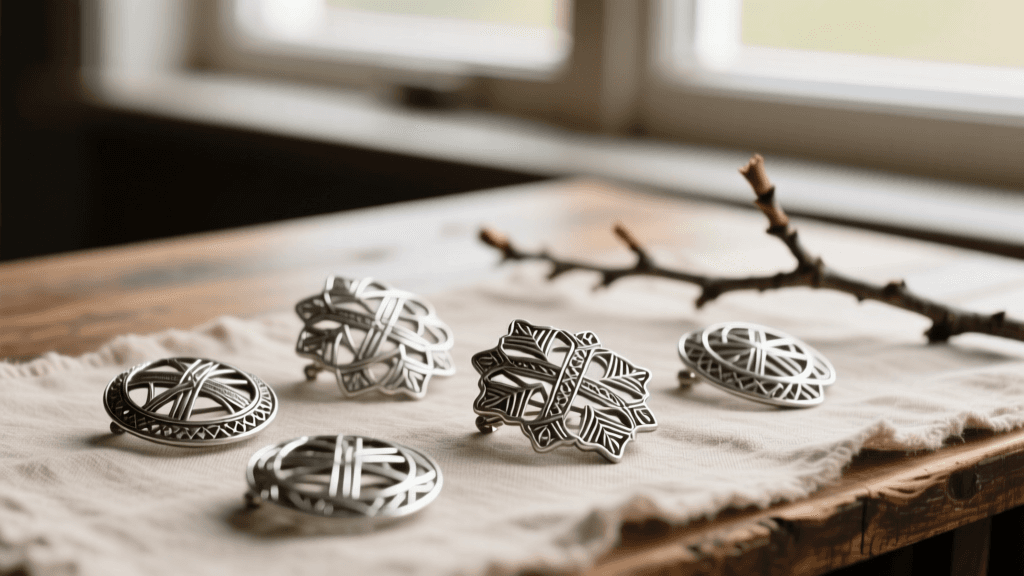
The term sølje (plural: søljer) refers to the traditional silver brooches that fasten and adorn the Bunad. A complete set typically consists of three primary pieces, each serving a distinct structural and decorative purpose. Understanding their anatomy is essential for identifying authentic pieces and ensuring proper wear.
- Halsknapp (Neck Button): This small, highly detailed brooch secures the collar of the linen shirt. Typically measuring between 30mm and 45mm in diameter, the halsknapp is often a solid dome of silver featuring intricate engraving or a central glass stone (frequently deep red or cobalt blue, depending on the region). It utilizes a simple pin and catch mechanism that must be sturdy enough to pierce thick, starched linen.
- Brystknapp (Chest Brooch): The undisputed centerpiece of the Bunad silver suite. Ranging from 60mm to over 90mm in diameter, the brystknapp is a masterclass in filigree work. It features a base plate adorned with kule (small silver balls), blad (leaf shapes), and anheng (dangling pendants). A traditional Hardanger bridal brooch can feature upwards of 50 individual dangles, designed to catch the light and create a soft, chiming sound with the wearer's movement.
- Livknapp (Waist Button): Used to fasten the bodice or vest, the livknapp is generally larger and flatter than the chest brooch, often measuring up to 100mm across. Because it sits beneath the apron and belt, it features fewer dangling elements to prevent snagging, relying instead on dense, concentric filigree patterns and bold, oxidized backgrounds for its visual impact.
The 830S Standard: Why Purity Matters
One of the most common questions asked by international collectors in 2026 is why Norwegian Bunad silver is rarely made of 925 sterling silver. The answer lies in historical precedent and practical metallurgy. Authentic Bunad silver is struck in 830S, meaning it contains 83% pure silver and 17% copper or other alloy metals.
This specific alloy was standardized in Norway centuries ago. The higher copper content provides the necessary tensile strength to support the heavy, intricate filigree work and the constant friction of the dangles without bending or warping over decades of wear. Furthermore, the 830S alloy takes on a specific, warm patina when oxidized, which is highly prized in traditional Norwegian aesthetics. When shopping for vintage or newly forged pieces today, always look for the "830S" stamp alongside the maker's mark to guarantee authenticity.
Traditional Headwear (Hodeplagg) and Silver Accents
Headwear in Norwegian folk dress is strictly codified by region, age, and marital status. The integration of silver into these garments elevates them from everyday wear to ceremonial splendor.
The Skaut and Silver Pins
The skaut is a highly structured, folded linen headpiece worn by married women in regions like Hardanger and Voss. Securing the heavy, starched linen requires specialized silver pins known as skautnåler. In 2026, a complete set of skaut pins includes one large central pin (often 60mm long with a 25mm filigree head) and two smaller side pins. These pins are not merely decorative; they are load-bearing structural elements that keep the complex folds of the skaut intact during active dancing and celebration.
The Brudekrone (Bridal Crown)
The brudekrone is the pinnacle of Norwegian folk headwear. Historically, these towering crowns were owned by the local church or wealthy farming families and rented out for weddings. Today, contemporary brides often commission or purchase bespoke silver crowns. A traditional Telemark brudekrone can weigh over 500 grams and feature hundreds of silver leaves, glass stones, and hanging chains. According to recent cultural heritage reports from the Norwegian Museum of Cultural History, the preservation and active use of regional brudekroner remains a vital, living tradition, with local historical societies actively restoring 19th-century crowns for community use in 2026.
2026 Market Guide: Pricing and Authenticity
The market for Bunad silver has evolved significantly. With raw silver prices fluctuating and the demand for master-crafted filigree rising, buyers must be prepared for premium pricing. Mass-produced, imported "Bunad-style" jewelry has flooded online marketplaces, making it crucial to understand the cost of authentic, domestically forged pieces. Below is a comparative pricing guide for authentic Norwegian 830S silver as of early 2026.
| Piece Type | Average 2026 Price (NOK) | Silver Purity | Key Identifying Feature |
|---|---|---|---|
| Halsknapp (Neck Button) | 1,800 - 3,200 NOK | 830S | Sturdy pin mechanism, solid dome base |
| Brystknapp (Chest Brooch) | 4,500 - 9,500 NOK | 830S | Complex filigree, 20+ dangles, oxidized recesses |
| Livknapp (Waist Button) | 3,800 - 7,000 NOK | 830S | Flat profile, dense wirework, heavy clasp |
| Skautnåler (Set of 3 Pins) | 2,500 - 4,800 NOK | 830S | Extra-long, thick gauge pins for heavy linen |
| Søljer Belt Buckle | 5,500 - 12,000 NOK | 830S / Leather | Interlocking silver plates, regional motifs |
Note: Prices are estimates based on 2026 retail data from master silversmiths. Custom sizing and rare regional variations (such as those from the Setesdal valley) will command a higher premium.
Sourcing Authentic Pieces: What to Look For
When investing in Bunad silver, provenance and craftsmanship are paramount. Reputable manufacturers like Sylvsmidja, based in Voss, have been hand-forging traditional silver for generations. When examining a piece, whether purchasing directly from a smith or acquiring a vintage estate piece, you must verify three distinct hallmarks stamped on the reverse:
- The Maker's Mark: A unique symbol or set of initials identifying the silversmith or foundry.
- The Purity Stamp: The numbers "830S" indicating the silver content.
- The Control Mark: Historically, a regional assay mark. In modern pieces, this may be replaced by a standardized national guarantee mark, ensuring the piece meets Norwegian metallurgical laws.
"True Bunad silver is never perfectly symmetrical. The slight variations in the filigree wire and the hand-soldered dangles are the fingerprints of the artisan. If a piece looks machine-stamped and perfectly uniform, it is likely a modern, overseas reproduction." — Master Silversmith, Voss, Norway.
Care and Maintenance for Oxidized Finishes
The striking contrast of Norwegian Bunad silver relies heavily on intentional oxidation. The recessed areas of the filigree are chemically darkened to make the raised, polished silver elements pop. This requires a specific maintenance routine that differs vastly from standard silver care.
What NOT to do: Never use commercial silver dips, ultrasonic cleaners, or abrasive polishing cloths on Bunad silver. These methods will strip the oxidation from the recesses, leaving the piece looking flat, gray, and lifeless.
The 2026 Recommended Cleaning Method:
- Fill a bowl with warm water and a few drops of mild, phosphate-free dish soap.
- Submerge the silver pieces for no more than five minutes.
- Use a very soft-bristled baby toothbrush to gently agitate dirt from the crevices, being careful not to snag the delicate dangles.
- Rinse thoroughly under lukewarm water and pat dry with a microfiber cloth.
- If the raised areas require polishing, use a specialized silver polishing cloth only on the high points, deliberately avoiding the darkened grooves.
If a vintage piece has lost its oxidation entirely due to improper cleaning by a previous owner, it can be professionally re-oxidized using a liver of sulfur solution. However, this is best left to professional jewelers who understand the specific contrast levels required for different regional styles.
Conclusion
The silver jewelry and headwear of the Norwegian Bunad represent a breathtaking intersection of utility, art, and cultural identity. As we move through 2026, the commitment to preserving these ancient techniques remains steadfast. Whether you are assembling your first complete Bunad suite, researching regional variations for academic purposes, or simply admiring the intricate filigree of a centuries-old brystknapp, understanding the materials, history, and proper care of these pieces ensures they will continue to chime and shine for generations to come.