Norwegian Bunad Guide 2026: Hardanger vs Telemark Dress
The Living Heritage of the Norwegian Bunad in 2026
The Norwegian bunad is far more than a festive costume or a simple piece of historical reenactment; it is a profound expression of regional identity, ancestral lineage, and master-level textile craftsmanship. As we navigate the cultural landscape of 2026, the bunad remains a cornerstone of Norwegian heritage, worn with immense pride at weddings, National Day celebrations (Syttende Mai), and milestone christenings. Unlike many European folk dresses that have faded into museum archives, the bunad is a living, breathing tradition. However, the modern revival has brought new standards of historical accuracy, sustainable material sourcing, and meticulous craftsmanship to the forefront of the industry.
For those looking to invest in a bunad, understanding the distinct regional variations is critical. The guidelines set forth by the Bunad- og folkedraktrådet (The National Council for Folk Costumes) ensure that these garments remain tethered to their historical roots while adapting to modern textile conservation standards. In this comprehensive guide, we will conduct a deep comparative analysis of two of Norway's most iconic and visually distinct regional costumes: the Hardanger bunad and the Telemark bunad.
The Hardanger Bunad: The Pioneer of National Romanticism
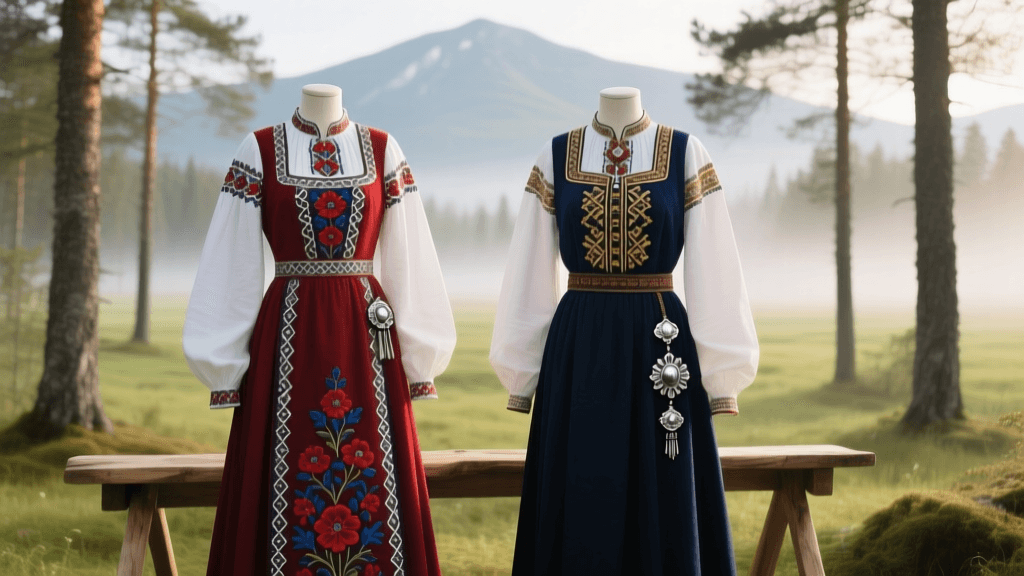
Often celebrated as the very first official bunad, the Hardanger bunad originates from the breathtaking fjord region of Hordaland in Western Norway. Its inception is deeply tied to the National Romantic movement of the late 19th and early 20th centuries, championed by cultural figures like Hulda Garborg, who sought to elevate rural peasant clothing to the status of national dress. The Hardanger bunad is characterized by its striking color contrasts, geometric precision, and intricate whitework.
Fabric, Color, and Construction
The foundation of the Hardanger bunad is a high-quality wool skirt and bodice. Historically, the colors were strictly dictated by local availability and natural dyes, resulting in deep blacks, rich forest greens, and vibrant crimson reds. In 2026, there is a massive resurgence in using locally sourced, heritage-breed Norwegian Spælsau wool. This specific wool provides a natural luster and exceptional durability that imported merino simply cannot replicate. The bodice is heavily structured, often reinforced with linen canvas, and features a deep V-neckline that showcases the underlying white linen shirt.
The Art of Hardanger-saum and Smøyg
The defining feature of this regional dress is the apron. Unlike the heavy wool aprons of other regions, the Hardanger apron is crafted from fine, bleached linen and features Hardanger-saum (a form of drawn-thread whitework embroidery) and smøyg (traditional smocking). The geometric patterns are meticulously counted and stitched, requiring hundreds of hours of labor. The cuffs and collar of the underlying linen shirt also feature delicate kvitsaum (whitework), creating a cohesive, luminous contrast against the dark wool.
The Telemark Bunad: A Masterpiece of Floral Embroidery
If the Hardanger bunad is a study in geometric precision, the Telemark bunad is a sprawling canvas of organic, floral artistry. Telemark, a region historically renowned for its master woodcarvers and rosemaling (traditional rose painting), translated these decorative arts directly into textile embroidery. The Telemark bunad is widely considered one of the most complex and expensive bunads to produce due to the sheer volume of freehand silk embroidery required.
Regional Nuances: East vs. West Telemark
When commissioning a Telemark bunad, one must specify the exact sub-region, as the variations are strictly guarded by local craft guilds. The East Telemark (Aust-Telemark) bunad typically features a dark blue or black wool base. The embroidery is executed in vibrant, multi-colored silk threads, depicting stylized roses, acanthus leaves, and scrolling vines that mirror the region's historic woodcarvings. The West Telemark variations often incorporate different color palettes in the silk thread and feature distinct cuts in the bodice and skirt pleating. In 2026, master embroiderers in Telemark are experiencing unprecedented demand, with waitlists for custom hand-embroidered bodices stretching up to eighteen months.
Comparative Analysis: Hardanger vs. Telemark
To help prospective buyers and cultural enthusiasts understand the practical and aesthetic differences between these two masterworks, we have compiled a comparative data table reflecting the 2026 market conditions, material requirements, and tailoring timelines.
| Feature | Hardanger Bunad | Telemark Bunad (East) |
|---|---|---|
| Base Fabric Color | Black, Deep Green, or Crimson | Navy Blue or Pitch Black |
| Apron Material | Bleached Linen with Whitework | Wool or Silk with Floral Embroidery |
| Primary Embroidery Style | Geometric Smocking & Drawn-Thread | Freehand Silk Rosemaling Motifs |
| Silver Jewelry Requirement | Oxidized Silver, Cross-shaped Brooches | Filigree Silver, Heart/Rose Brooches |
| 2026 Avg. Custom Cost | 38,000 - 45,000 NOK | 55,000 - 75,000 NOK |
| Tailoring Lead Time | 8 - 12 Months | 14 - 20 Months |
The Crucial Role of Bunadsølv (Silver Jewelry)
No Norwegian folk dress is complete without its specific regional silver, known as bunadsølv. The silver is not merely decorative; historically, it served as a portable display of a family's wealth and social standing. In 2026, the price of raw silver has fluctuated, making authenticated, hand-forged bunad silver a significant financial investment and a highly secure heirloom asset.
For the Hardanger bunad, the silver is typically heavily oxidized to create a dark, antique contrast against the white linen shirt. The centerpiece is the Hardangersølje, a complex, cross-shaped or starburst filigree brooch, accompanied by a belt clasp (veskjelås) and cufflinks. Conversely, the Telemark bunad requires silver that often features intricate, three-dimensional filigree work resembling blooming roses or hearts. The Telemark chest buttons (brystknapper) are notoriously large and ornate, sometimes featuring dangling spoon-shaped pendants that chime softly when the wearer moves. Sourcing these pieces requires purchasing from certified silversmiths affiliated with Norges Husflidslag to guarantee historical accuracy and metallurgical purity.
2026 Sourcing and Commissioning Guidelines
Commissioning a bunad is a deeply personal journey that connects the wearer to their ancestry. If you are planning to order a Hardanger or Telemark bunad in 2026, you must engage with your local Husflidlag (local craft association). These organizations hold the proprietary patterns and employ the master seamstresses who are legally and culturally authorized to stitch specific regional designs.
- Verify Ancestral Ties: While not strictly legally enforced, cultural etiquette dictates that you should wear a bunad from a region where you have familial roots or a deep, documented personal connection.
- Material Authenticity: Insist on 100% natural fibers. Synthetic blends are strictly forbidden by the National Council for Folk Costumes. Ensure your wool is woven at recognized Norwegian mills such as O. Vedvik or Røros Tweed.
- Fitting Sessions: A true bunad requires at least three in-person fittings. The bodice must be structured to support the heavy silver and wool without the need for modern undergarments, relying instead on traditional linen shifts and tailored canvas interlining.
Garment Care and Archival Storage
Given the immense financial and cultural value of these garments, proper maintenance in 2026 relies on a blend of traditional wisdom and modern conservation science. The heavy wool and delicate silk embroidery require vastly different care protocols.
"A bunad is never truly owned; it is merely stewarded for the next generation. How you store it today dictates whether your granddaughter will wear it tomorrow." — Proverb from the Telemark Husflidlag.
Wool and Linen Care: Never dry clean a bunad unless absolutely necessary, and only use specialists certified in historical textile conservation. For routine maintenance, air the garment outside on a cold, dry winter night. The freezing temperatures naturally kill bacteria and neutralize odors. Store the wool skirt and bodice in breathable, unbleached cotton garment bags. Never use plastic, which traps moisture and promotes mold. Utilize natural cedar blocks and dried lavender sachets to deter wool-eating moths, avoiding chemical mothballs that can tarnish the silver and degrade silk threads.
Silver Maintenance: Bunad silver should be polished sparingly. The oxidation in the crevices of the filigree is intentional and provides depth to the design. Use a non-abrasive, ammonia-free silver polish applied with a microfiber cloth, and use a soft-bristled horsehair brush to gently clean the intricate crevices. Store the silver in anti-tarnish cloth rolls, separated by region, to prevent scratching and chemical cross-contamination.
Conclusion
Whether you are drawn to the crisp, geometric elegance of the Hardanger whitework or the sweeping, colorful romance of the Telemark silk embroidery, investing in a Norwegian bunad is a commitment to preserving European folk art at its highest level. As the slow-fashion movement continues to gain momentum in 2026, these garments stand as a testament to the enduring power of regional identity, proving that true heritage never goes out of style.