Norwegian Bunad Guide 2026: Hardanger vs Telemark Regions
The Living Heritage of Norwegian Regional Dress
The Norwegian bunad is far more than a festive costume or a static museum piece; it is a living, breathing garment that connects modern wearers to their ancestral roots. Unlike many European folk dresses that faded into obscurity during the industrial revolution, the bunad experienced a massive revival during the national romanticism movement of the 19th and early 20th centuries. Today, in 2026, the tradition is stronger than ever. Over 70% of Norwegian women and a growing percentage of men own a bunad, wearing them for weddings, baptisms, folk dances, and, most notably, Constitution Day on May 17th.
However, the bunad is not a single, monolithic garment. It is strictly categorized by region, with over 450 distinct variations documented across Norway's valleys and fjords. For collectors, cultural historians, and those looking to invest in their own heritage garment, understanding the nuances between regional variations is critical. In this guide, we will deeply compare two of the most iconic and historically significant regional dresses: the Hardangerbunad and the Telemarksbunad, providing actionable sourcing, pricing, and tailoring data for the 2026 market.
Hardangerbunad: The Matriarch of Norwegian Folk Dress
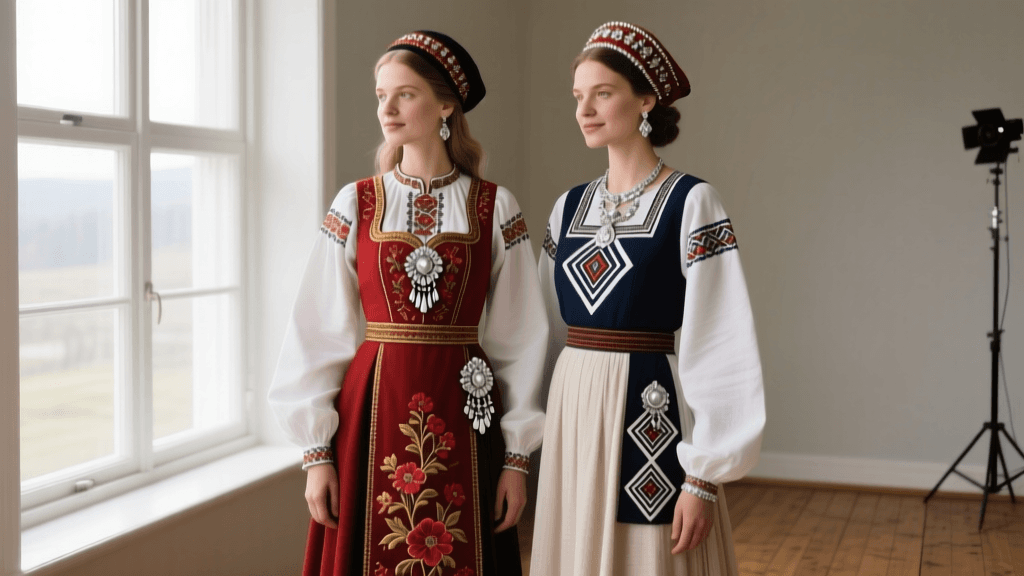
Originating from the breathtaking Hardanger region in Vestland county, the Hardangerbunad is often referred to as the "first" bunad. It was championed by Princess Maud of Wales (later Queen Maud of Norway) in the early 1900s, which catapulted the regional dress into national prominence. The traditional women's Hardangerbunad is instantly recognizable by its striking contrast: a deep black wool bodice and skirt set against a crisp white linen shirt and apron.
Fabric, Embroidery, and Construction
The foundation of the Hardangerbunad is vadmel, a dense, traditional Norwegian woven wool. In 2026, there is a massive push among heritage artisans to source wool from the native Norwegian Spælsau sheep, prized for its long, durable outer fibers and soft, insulating undercoat. The embroidery on the bodice, skirt hem, and apron is executed in a meticulous cross-stitch technique, typically utilizing vibrant threads in red, yellow, and green to create geometric and floral motifs.
The accompanying linen shirt (skjorte) features hvitsøm (Norwegian whitework embroidery) on the collar and cuffs, alongside delicate drawn-thread work. According to the Norwegian Folk Art and Craft Association (Husfliden), the strict adherence to historical patterns is paramount; modern artisans still use archived 18th-century textile fragments to ensure every cross-stitch is historically accurate.
Telemarksbunad: Rosemaling Woven into Wool
Traveling southeast to the sprawling forests and valleys of Telemark county, we encounter the Telemarksbunad, a garment that perfectly mirrors the region's famous decorative art. Telemark is the historical heartland of rosemaling (traditional Norwegian rose painting), and this swirling, asymmetrical, and highly ornate art form is directly translated into the bunad's wool embroidery.
Color Variations and Artistic Flourishes
While the Hardangerbunad is strictly black, the Telemarksbunad offers a richer palette. In 2026, buyers can commission the Telemarksbunad in deep black, navy blue, forest green, or a rich burgundy. The embroidery is incredibly complex, featuring shaded wool threads that mimic the brushstrokes of a rosemaling painter. The asymmetrical floral vines cascade down the skirt and wrap around the bodice, requiring hundreds of hours of specialized hand-embroidery.
The Norwegian Museum of Cultural History holds several original 19th-century Telemark garments that showcase how local women adapted the painted wooden motifs of their local churches and furniture into wearable textile art. Today's master embroiderers in Telemark continue to use these museum archives to grade and dye their wool threads, ensuring the colors remain vibrant and historically grounded.
2026 Comparison: Hardanger vs. Telemark Bunads
For those looking to commission a bunad in 2026, the choice between Hardanger and Telemark often comes down to aesthetic preference, budget, and patience. The table below outlines the critical differences and current market realities for both regional garments.
| Feature | Hardangerbunad (Vestland) | Telemarksbunad (Telemark) |
|---|---|---|
| Primary Fabric Colors | Black wool, white linen | Black, Navy, Green, or Burgundy wool |
| Embroidery Style | Geometric and floral cross-stitch | Asymmetrical rosemaling-inspired wool shading |
| Silver Jewelry Style | Hardangersølv (Oxidized, crown motifs) | Telemarkssølv (Elaborate filigree, large brooches) |
| 2026 Base Garment Cost | 45,000 - 55,000 NOK ($4,200 - $5,100 USD) | 50,000 - 65,000 NOK ($4,700 - $6,100 USD) |
| 2026 Full Silver Set Cost | 18,000 - 24,000 NOK ($1,600 - $2,200 USD) | 22,000 - 30,000 NOK ($2,000 - $2,800 USD) |
| Tailoring Wait Time | 8 to 14 months | 12 to 18 months |
Silver Jewelry: The Crown Jewel of the Bunad
A bunad is considered incomplete without its accompanying silver jewelry (bunadsølv). The silver pieces are not merely decorative; historically, they served as a family's portable bank account and a display of social standing. A full set for a woman typically includes a neck ring (halsring), a large chest brooch (sølje), cufflinks, a belt buckle, and ornate shoe buckles.
The silver styles are strictly regional. Hardanger silver is famous for its oxidized (darkened) finish and the iconic "Hardanger crown" motif. Telemark silver, by contrast, is highly polished, featuring intricate filigree work, dangling spoon-shaped pendants, and larger, more dominant chest brooches. In 2026, fluctuations in the global silver spot price have caused a noticeable increase in the cost of hand-forged bunad silver. Buyers are strongly advised to purchase only from registered Norske Gullsmedmestre (Norwegian Master Goldsmiths/Silversmiths) to guarantee the 925 sterling silver hallmark and historical accuracy.
Sourcing, Fitting, and the Role of the Bunad Council
If you are planning to commission a bunad in 2026, you must engage with the official regulatory bodies that protect the integrity of these garments. The Bunad- og folkedraktrådet (The National Council for Folk Costumes) works alongside local artisans to ensure that mass-produced, overseas "fantasy bunads" do not dilute the cultural heritage. As noted by Visit Norway's cultural heritage guidelines, an authentic bunad must be constructed locally using approved historical patterns and materials.
Actionable Advice for 2026 Buyers
- Book Early: Due to a nationwide shortage of certified bunad seamstresses and embroiderers, wait times in 2026 are at an all-time high. If you need a bunad for a specific wedding or milestone, book your initial consultation at least 18 months in advance.
- Seam Allowances: A true bunad is an investment meant to last a lifetime and be passed down through generations. Artisans intentionally leave generous seam allowances (often up to 5-8 centimeters) inside the bodice and skirt so the garment can be let out or taken in as the wearer's body changes over the decades.
- Choose Certified Retailers: Always purchase through your local Husfliden shop or a certified independent bunad atelier. Avoid online retailers offering "ready-to-ship" bunads at steep discounts, as these are almost always machine-embroidered imports that violate the strict guidelines of the Bunad Council.
Garment Care and Maintenance
Caring for a bunad requires a departure from modern laundry habits. Under no circumstances should a wool bunad be dry-cleaned or machine-washed. The harsh chemicals used in modern dry cleaning will strip the natural lanolin from the Spælsau wool and cause the vibrant embroidery threads to bleed or fade.
In 2026, heritage textile conservators recommend a strict regimen of airing and brushing. After wearing the bunad, hang it outside in a shaded, well-ventilated area (preferably on a crisp, dry day) to allow odors to dissipate. Use a soft-bristled natural horsehair brush to gently remove dust and dirt from the wool. For the linen shirt, hand-washing in lukewarm water with a specialized, pH-neutral wool and linen detergent is the only approved method. The silver should be stored in specialized anti-tarnish cloth rolls, separate from the garment, to prevent oxidization transfer to the white linen.
Conclusion: Investing in Generational Garments
Whether you are drawn to the stark, elegant geometry of the Hardangerbunad or the sweeping, painted vines of the Telemarksbunad, commissioning a regional Norwegian folk dress is a profound investment in cultural preservation. The 2026 market reflects a deep, national commitment to keeping these ancestral techniques alive, from the shearing of heritage sheep to the forging of filigree silver. By understanding the distinct regional characteristics, respecting the strict tailoring timelines, and committing to proper historical care, you ensure that your bunad will remain a vibrant, living piece of European folk heritage for generations to come.