Norwegian Bunads 2026: Regional Styles, Costs & Sourcing
The Enduring Legacy of the Norwegian Bunad
The Norwegian bunad is far more than a simple national costume; it is a profound expression of regional identity, genealogical pride, and master-level textile craftsmanship. As we navigate 2026, the bunad remains a vibrant, living tradition worn with immense pride at confirmations, weddings, and the beloved Constitution Day (Syttende Mai) celebrations on May 17th. Unlike many European folk dresses that have been relegated to museum displays or tourist performances, the bunad is an active, evolving garment that commands deep respect and significant financial investment in contemporary Norwegian society.
For those looking to understand, acquire, or study traditional European folk dress, the Norwegian bunad offers a masterclass in regional specialization. Each of Norway's diverse valleys and fjords boasts its own distinct variations, governed by strict historical precedents and meticulous construction techniques. In 2026, the intersection of heritage preservation and modern sustainable sourcing has created a unique landscape for collectors, cultural enthusiasts, and Norwegians alike.
The Living Tradition and Institutional Oversight
The authenticity of the bunad is fiercely protected. The Norwegian Institute of Bunad and Folk Costume (NBF) serves as the ultimate authority on historical accuracy, researching archival garments, paintings, and estate inventories to approve modern reconstructions. This rigorous oversight ensures that when you commission a bunad in 2026, you are receiving a garment that faithfully represents the textile traditions of the 18th and 19th centuries, rather than a modernized or romanticized interpretation.
The NBF's commitment to preserving regional distinctions means that a bunad is never just 'Norwegian'—it is specifically from Hardanger, Telemark, Gudbrandsdalen, or another defined district. Wearing a bunad from a region where you have no familial or residential ties is generally frowned upon in traditional circles, making the selection process a deeply personal journey into one's own ancestry.
Regional Variations: A Comparative Guide
To truly appreciate the scope of Norwegian folk dress, one must examine the distinct regional styles. Below, we explore three of the most iconic and historically significant bunads, detailing their construction, materials, and visual hallmarks.
The Hardangerbunad: The Pioneer of the Revival
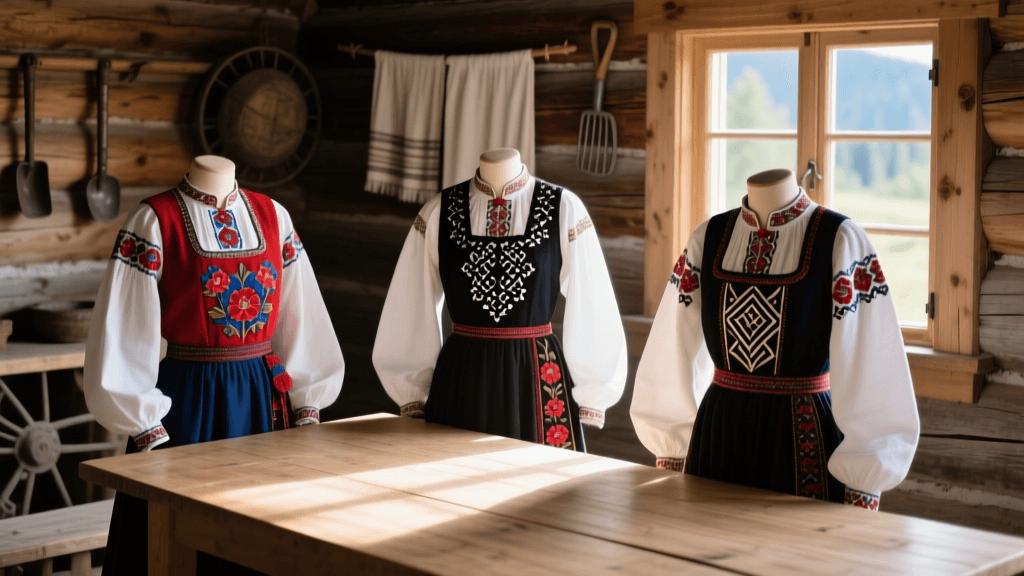
Often referred to as the 'first' bunad, the Hardangerbunad originates from the stunning Hardangerfjord region in Vestland county. Its modern revival dates back to the early 20th century, sparked by national romanticism and a desire to preserve rural crafts. The women's Hardangerbunad is instantly recognizable by its striking contrast: a dark blue or black wool bodice and skirt paired with a crisp white linen apron featuring intricate hvitsaum (whitework embroidery).
The whitework is the defining feature of this garment. Artisans spend hundreds of hours executing drawn-thread work, cutwork, and satin stitches to create geometric and floral motifs on the apron, shirt, and cap. In 2026, the demand for hand-embroidered Hardanger aprons remains incredibly high, with master embroiderers booking commissions years in advance. The men's version typically features a dark blue wool jacket, knee breeches, and a richly embroidered vest, often incorporating floral motifs in vibrant silks.
The Telemarkbunad: Rosemaling and Deep Hues
Telemark, a region famous for its dense forests and rich history of woodcarving and rosemaling (decorative folk painting), produces a bunad that reflects its rugged, artistic heritage. The women's Telemarkbunad is characterized by its deep, dark blue or black wool base, which serves as a canvas for spectacular, colorful embroidery.
Unlike the geometric whitework of Hardanger, Telemark embroidery heavily features lush, asymmetrical floral motifs, vines, and leaves rendered in vibrant reds, yellows, and greens. The bodice is often heavily structured, and the skirt may feature woven bands at the hem. The men's Telemarkbunad is equally striking, frequently featuring a short, dark jacket with elaborate silver buttons and a vest adorned with the same vivid floral embroidery found on the women's garments. The 2026 trend in Telemark has seen a renewed interest in historically accurate, naturally dyed wool threads, adding a layer of eco-conscious authenticity to the craft.
The Gudbrandsdalen Bunad: Velvet and Opulence
Traveling north into the sprawling Gudbrandsdalen valley, the folk dress takes on a more opulent, aristocratic influence, reflecting the region's historical wealth from timber and agriculture. The Gudbrandsdalen bunad is renowned for its extensive use of velvet and rich, multi-colored silk embroidery.
The women's dress typically features a black or dark blue wool skirt paired with a bodice that incorporates panels of black velvet. The embroidery is dense, featuring elaborate bouquets of flowers, acanthus leaves, and scrolling vines that cover the bodice, pockets, and hem. The sheer volume of silk thread and the complexity of the velvet appliqué make the Gudbrandsdalen one of the most expensive and time-consuming bunads to produce. For men, the region offers a striking dark wool suit with velvet-trimmed vests and intricately embroidered knee breeches, showcasing a level of sartorial elegance that rivals 18th-century court dress.
2026 Sourcing and Cost Comparison
Acquiring a genuine bunad is a significant investment, both in time and capital. The primary source for authentic, approved bunads in Norway is Norges Husflidslag (The Norwegian Handicraft Association), which operates retail stores and workshops across the country. In 2026, global supply chain shifts and the rising cost of precious metals have impacted pricing, making early commissioning essential.
| Regional Style | Primary Base Fabric | Distinctive Embroidery | 2026 Est. Starting Cost (NOK) | Artisan Lead Time |
|---|---|---|---|---|
| Hardanger (Women's) | Dark Blue/Black Wool & Linen | Hvitsaum (Whitework) | 45,000 - 55,000 | 12 - 18 Months |
| Telemark (Women's) | Dark Blue/Black Wool | Colorful Rosemaling Florals | 50,000 - 62,000 | 10 - 14 Months |
| Gudbrandsdalen (Women's) | Wool & Black Velvet | Dense Silk Floral & Acanthus | 65,000 - 85,000 | 18 - 24 Months |
| Men's Standard Suit | Wool & Linen | Regional Vest Embroidery | 35,000 - 50,000 | 8 - 12 Months |
Note: Costs listed are for the base textile garments and do not include the essential silver jewelry (bunadsølv), which can add an additional 20,000 to 40,000 NOK depending on the weight and complexity of the filigree.
For those seeking more accessible options, the second-hand market in 2026 is robust. Platforms like Finn.no and specialized vintage textile dealers offer pre-owned bunads. However, buyers must exercise caution to ensure the garments are NBF-approved patterns and have not been improperly altered, as resizing a bunad requires specialized knowledge of its unique seam allowances and historical construction methods.
The Crown Jewel: Bunadsølv (Silver Accessories)
No bunad is complete without its accompanying silver, known as bunadsølv. Historically, silver was a display of a family's wealth and served as a portable bank account that could be melted down in times of hardship. Today, it is an indispensable aesthetic component of the folk dress.
The silver pieces vary wildly by region. A Hardanger bunad requires a specific arrangement of collar pins, cufflinks, and the iconic beltestøler (ornate belt buckles) featuring oxidized silver and intricate filigree. Telemark silver is often heavier, featuring large, dramatic brooches (søljer) with dangling spoon-shaped pendants that catch the light during traditional dances. In 2026, master silversmiths in regions like Oslo and Bergen continue to cast and assemble these pieces by hand, though the rising spot price of silver has made heirloom restoration and vintage sourcing increasingly popular among younger generations.
Care, Maintenance, and Archival Storage
Given the immense financial and cultural value of these garments, proper care is paramount. The golden rule of bunad maintenance, heavily emphasized by the Norwegian Museum of Cultural History, is to avoid modern dry cleaning. The harsh chemicals used in commercial dry cleaning can strip the natural lanolin from the wool, fade historically dyed silk threads, and tarnish delicate metallic embroidery.
Instead, bunads should be spot-cleaned using gentle, specialized wool detergents and aired out thoroughly after wearing. Storage requires a breathable, acid-free cotton garment bag, kept in a cool, dark, and humidity-controlled environment to prevent moth damage and fabric degradation. Cedar blocks are preferred over chemical mothballs, which can leave a permanent odor and interact poorly with the silver accessories if stored in close proximity.
Conclusion
The Norwegian bunad stands as a testament to the power of regional identity and the enduring appeal of master craftsmanship. Whether you are studying the intricate whitework of Hardanger, the vibrant florals of Telemark, or the velvet opulence of Gudbrandsdalen, these garments offer a profound window into European folk dress. As we move through 2026, the commitment to preserving these traditions ensures that the bunad will remain not just a relic of the past, but a vibrant, wearable celebration of Norwegian heritage for generations to come.