2026 Feria De Abril: Authentic Traje De Flamenca Guide
The Living Heritage of Andalusian Folk Dress
The 2026 Feria de Abril in Seville is a spectacular celebration of Andalusian culture, drawing over a million visitors to the vibrant canvas tents of the Real de la Feria. At the heart of this festival lies a profound intersection of traditional European folk dress and dynamic folk dance: the Traje de Flamenca (also widely known as the Traje de Gitana) and the rhythmic folk dance of the Sevillanas. Unlike many regional costumes across Europe that remain frozen in time as static ceremonial wear or museum pieces, the Flamenca dress is a living, breathing garment. It evolves annually, influenced by haute couture trends, yet remains deeply anchored in the functional requirements of folk dance and regional identity.
As we prepare for the April 2026 festivities, understanding the anatomy, dance functionality, and modern sourcing of the Traje de Flamenca is essential for anyone looking to participate authentically. According to the official Seville Tourism Board, the Feria is not merely a party, but a profound expression of local heritage where the attire is as important as the music and the dance itself. Whether you are a first-time attendee or a seasoned flamenco enthusiast, this comprehensive guide will help you navigate the sartorial and kinetic demands of the 2026 festival season.
The Anatomy of the 2026 Traje de Flamenca
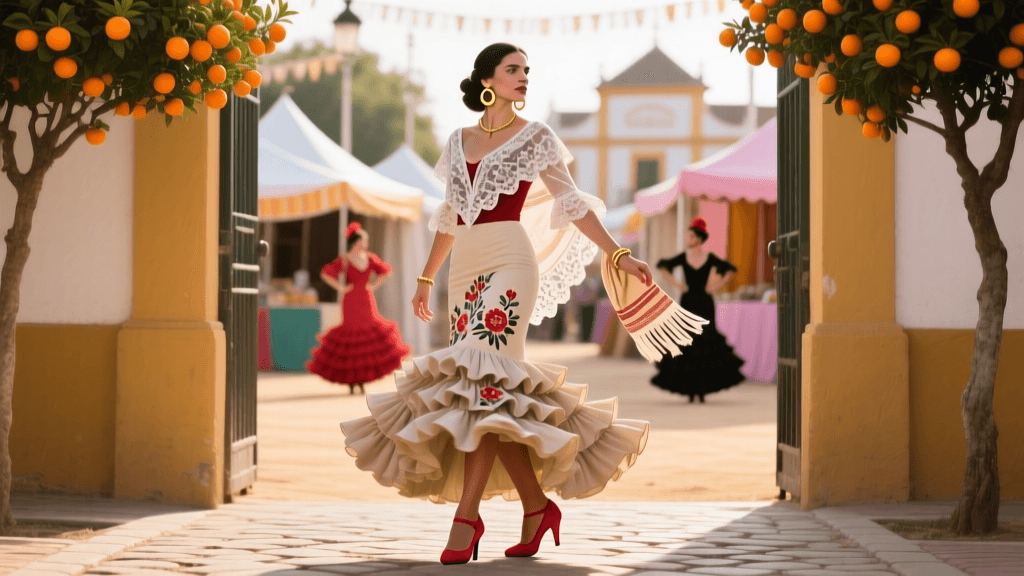
The traditional Flamenca dress is characterized by a form-fitting bodice that accentuates the posture required for flamenco dancing, and a voluminous skirt adorned with cascading ruffles, known as volantes. The dress is designed to highlight the dancer's movements, turning every stomp, turn, and sway into a visual spectacle.
The Bodice and Posture
The bodice (cuerpo) is tailored to fit like a second skin. In 2026, we are seeing a return to structured, corseted bodices that provide back support during long hours of dancing. The neckline can vary from modest round cuts to deep V-necks, often trimmed with intricate lace or smaller ruffles. Proper posture is a hallmark of Andalusian folk dance; the chest must remain lifted and the shoulders pulled back. A well-constructed bodice acts as a gentle reminder, encouraging the proud, upright carriage that defines the Sevillanas dance style.
The Skirt and Volantes
The skirt is where the true magic of the dress comes to life. The ruffles are not merely decorative; they are kinetic extensions of the dancer. When executing a vuelta (turn), the centrifugal force causes the volantes to flare outward, creating a mesmerizing bell shape. In 2026, designers are favoring lightweight, breathable cottons and sustainable viscose blends, allowing for dramatic volume without the exhausting weight of the heavy synthetic satins that dominated the early 2010s.
Skirt Cuts: Choosing the Right Silhouette for Dance
Selecting the correct skirt cut is crucial for mobility. The Sevillanas dance involves intricate footwork, sudden stops, and graceful walks. A skirt that is too restrictive will hinder your movement, while one that is too long poses a severe tripping hazard. Below is a comparison of the three primary skirt cuts favored by dancers and festival-goers in 2026.
| Skirt Cut Style | Description & Structure | Dance Mobility & Suitability |
|---|---|---|
| Corte Sirena (Mermaid) | Fitted tightly through the hips and thighs, flaring out sharply at the knee into cascading ruffles. | Moderate. Elegant and traditional, but restricts deep leg movements. Best for casual strolling and basic arm choreography rather than intense footwork. |
| Corte Canastero (Nested) | Features horizontal tiers of ruffles starting from the hip or mid-thigh, creating a nested, basket-like volume. | High. Excellent for dancing. The tiered structure allows the skirt to swing freely with hip movements and turns without wrapping around the legs. |
| Corte de Capa (Cape/Overlay) | A sleek base skirt overlaid with a long, flowing cape-like layer that opens at the front or side. | Very High. Favored by professional and advanced folk dancers. The open front allows complete freedom for complex zapateado (footwork) and dramatic kicks. |
Footwear: The Engine of Zapateado
You cannot discuss Andalusian folk dress without addressing the footwear. The rhythmic footwork, or zapateado, is the percussive heartbeat of the Sevillanas. Standard heels are entirely inappropriate and dangerous for the Feria. Authentic Flamenca shoes (zapatos de flamenco) are specially engineered with reinforced heels and toes.
In 2026, leading artisanal brands like Menkes and Bulería continue to dominate the market. These shoes feature clavos (small metal nails) driven into the wooden heel and toe block, which produce the sharp, resonant clicks required to cut through the sound of acoustic guitars and castanets. For the 2026 festival, the recommended heel height for women ranges between 4 cm and 6 cm. While higher heels exist for stage performances, the uneven, sandy terrain of the Real de la Feria demands a sturdy, lower block heel or a thick Cuban heel to ensure stability during the rapid weight shifts of the dance.
Essential Accessories and the Mantón de Manila
The Traje de Flamenca is incomplete without its traditional accessories. These elements are deeply tied to the history of the region and serve both aesthetic and functional purposes in the context of the dance. The Museo del Baile Flamenco in Seville highlights how these accessories evolved from practical Romani and working-class items into symbols of Andalusian pride.
- El Mantón de Manila (The Shawl): A large, square silk shawl featuring intricate embroidery and long fringe. The fringe (flecos) is typically 40 to 50 cm long. During the dance, the shawl is draped over the shoulders or manipulated with the arms, the heavy silk and swinging fringe amplifying the rotational energy of the dancer. In 2026, expect to pay between €150 and €600 for a quality embroidered mantón.
- La Peineta and Flores: A decorative tortoiseshell or matte-finish comb is placed at the crown of the head, often accompanied by a large fabric flower. Traditional etiquette dictates that the flower is worn on the right side if the dancer is single, and on the left if married or in a committed relationship, though modern 2026 interpretations prioritize aesthetic balance over strict adherence to this rule.
- Los Pendientes (Earrings): Long, heavy, dangling earrings are essential. They are designed to sway and catch the light during head movements and sharp turns. Coral, filigree silver, and imitation tortoiseshell are the most traditional materials.
- Las Castañuelas (Castanets): While not strictly worn on the body, carved wooden castanets are the primary percussive instrument for the arms and hands during the Sevillanas. Fiberglass or pressed canvas models (like those from Castañuelas Llobet) are preferred in 2026 for their durability and sharp acoustic resonance in outdoor festival environments.
The Sevillanas: A Dance Woven into the Garment
To truly appreciate the Traje de Flamenca, one must understand the dance it was built to serve. The Sevillanas is a folk dance derived from the Castilian seguidillas, recognized globally for its cultural significance—so much so that the broader Flamenco tradition was inscribed on UNESCO's Intangible Cultural Heritage list. The dance is divided into four distinct parts (coplas), each requiring specific movements that interact directly with the dress.
During the paseos (the stylized walking sequences), the dancer uses her hands to gracefully gather and lift the heavy volantes, preventing them from dragging in the dust while simultaneously showing off the intricate lace petticoats (enaguas) beneath. During the careos (the passing and turning sequences), the centrifugal force of the skirt creates a barrier of color and motion that defines the spatial relationship between the dancing partners. The garment is not just clothing; it is an active participant in the choreography.
2026 Sourcing, Pricing, and Sustainability Trends
The market for Flamenca fashion has shifted significantly by 2026. While fast-fashion imitations are available, there is a massive cultural push toward supporting local Andalusian artisans and sustainable textile practices. The traditional neighborhood of Triana in Seville remains the epicenter for bespoke ateliers, where dresses are made-to-measure. A custom, artisanal Traje de Flamenca in 2026 typically costs between €450 and €2,500, depending on the complexity of the lace, the origin of the silk, and the number of hand-stitched ruffles.
For those seeking sustainable options, 2026 has seen a surge in 'upcycled' and vintage Flamenca fashion. Because the dresses are built to last and follow a cyclical trend pattern (with classic polka dots, or lunares, never truly going out of style), buying second-hand or renting from established Seville boutiques is both an eco-friendly and economically sound choice. Rental packages for the Feria typically range from €120 to €300, often including the dress, petticoat, and a basic shawl.
Garment Care and Preservation
The Feria de Abril is an endurance event. The combination of Andalusian spring heat, fine dust, and spilled refreshments means that post-festival care is critical. Never machine-wash a traditional Traje de Flamenca. The structure of the ruffles and the delicate lace trims will be destroyed. Instead, the dress should be gently spot-cleaned and then taken to a dry cleaner in Seville who specializes in flamenco attire. When storing the dress for the next year, it must be hung on a padded hanger in a breathable cotton garment bag. Tissue paper should be lightly stuffed into the ruffles to maintain their shape and prevent deep creasing, ensuring the garment is ready to dance again when the guitars strike up next April.