Norwegian Bunad Regional Guide 2026: Styles, Costs & Tips
The Living Heritage of the Norwegian Bunad in 2026
When May 17th arrives each year, the streets of Norway transform into a vibrant sea of wool, silk, and silver. The Norwegian bunad is far more than a mere historical costume; it is a living, breathing garment that connects modern wearers to their specific ancestral regions. As we navigate through 2026, the demand for authentic, locally crafted bunads continues to surge, driven by a renewed cultural pride and a collective pushback against fast fashion. Understanding the distinct regional variations is essential for anyone looking to invest in, study, or appreciate these masterpieces of European folk dress.
The Authority Behind the Stitches
Unlike many traditional garments that have been loosely adapted over time, the Norwegian bunad is strictly regulated to maintain historical accuracy. The Norsk institutt for bunad og folkedrakt (Norwegian Institute for Bunad and Folk Costume) serves as the ultimate authority on regional patterns, textiles, and construction methods. In 2026, their rigorous documentation ensures that a bunad from the western fjords remains distinct from one originating in the eastern valleys, preserving the unique textile dialects of Norway's diverse topography.
Regional Deep Dive: Three Iconic Norwegian Bunads
Norway boasts over 450 distinct bunad variations. To understand the breadth of this tradition, we must examine three of the most iconic and historically significant regional styles.
1. Hardangerbunad: The 'National' Standard
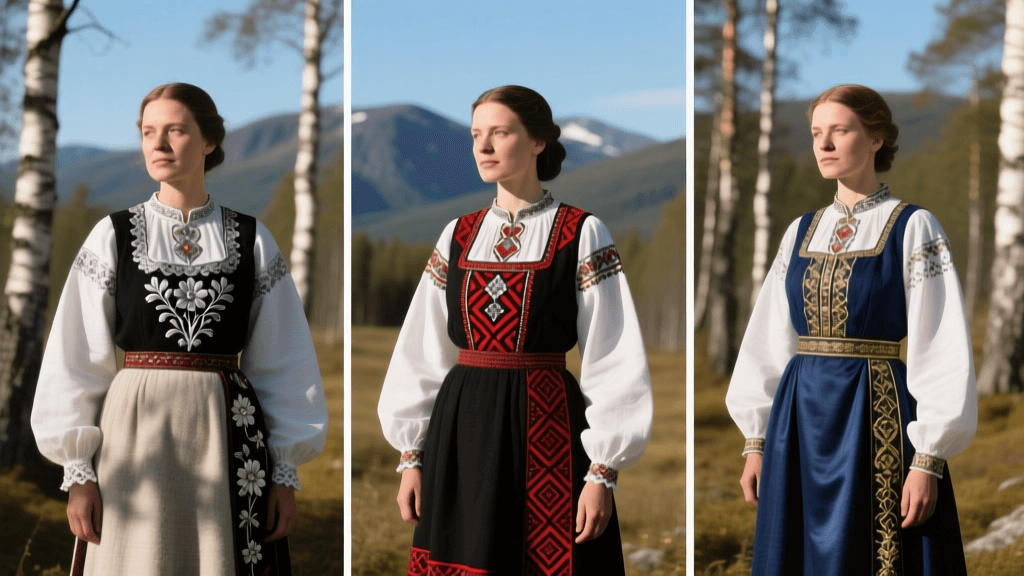
Often referred to as the 'nasjonalen' (the national one), the Hardangerbunad originates from the Hardanger fjord region and was pivotal in the early 20th-century bunad revival. The women's garment is characterized by its deep black wool bodice and skirt, contrasted sharply by a pristine white linen apron and shirt. The defining feature is the intricate smøyg (smocking) and krossting (cross-stitch) embroidery, typically executed in vibrant red, yellow, and green threads. The geometric patterns are not merely decorative; they are historical codes that denote specific parishes within the Hardanger district. In 2026, mastering the traditional smocking technique remains a rite of passage for Norwegian textile artisans.
2. Setesdalsbunad: The Unbroken Lineage
While many bunads are 20th-century reconstructions based on museum pieces, the Setesdalsbunad represents an unbroken lineage of continuous use. Originating from the isolated Setesdal valley, this garment evolved directly from the everyday work clothes of the 18th and 19th centuries. The fabric is a heavy, homespun vadmel (wool), often featuring a distinctive ribbed or striped weave. The embroidery is minimal, allowing the heavy, dark wool and the spectacular filigransølv (filigree silver) jewelry to take center stage. The silver pieces, featuring dangling spheres and intricate wirework, were historically used to display a family's wealth and social standing.
3. Sunnmørebunad: Coastal Elegance and Floral Silk
Traveling to the rugged northwest coast, the Sunnmørebunad reflects the region's historical maritime wealth and international trade connections. Unlike the geometric patterns of Hardanger, the Sunnmørebunad is famous for its lush, rococo-inspired floral embroidery. The women's bodice and skirt are typically crafted from deep blue or black broadcloth, heavily embellished with vibrant silk threads depicting blooming roses, tulips, and vines. This style highlights the coastal access to imported silk and dyes, making it one of the most visually opulent and highly sought-after regional styles in 2026.
2026 Material and Cost Comparison Chart
Investing in a bunad is a significant financial commitment. The following table outlines the current 2026 market expectations for materials and pricing when purchasing directly from certified Norwegian artisans.
| Region | Primary Fabric | Key Embroidery Style | Silver Requirements | Estimated 2026 Price (NOK / USD) |
|---|---|---|---|---|
| Hardanger | Black Wool, White Linen | Smøyg (Smocking), Cross-stitch | Modest (Cufflinks, Brooch) | 35,000 NOK / $3,300 USD |
| Setesdal | Heavy Vadmel (Homespun Wool) | Minimal / Woven Stripes | Extensive (Filigree Silver) | 55,000 NOK / $5,200 USD |
| Sunnmøre | Deep Blue/Black Broadcloth | Rococo Floral Silk Embroidery | Heavy (Ornate Belt, Brooch) | 48,000 NOK / $4,500 USD |
Note: Prices reflect the garment only. Complete silver sets (sølv) can add an additional 15,000 to 40,000 NOK depending on the complexity and weight of the filigree.
The Fight for Authenticity: Avoiding Mass-Produced Imitations
As the global appeal of European folk dress grows, so does the market for cheap, mass-produced imitations. In 2026, the cultural protection of the bunad is fiercely defended by organizations like Norges Husflidslag (The Norwegian Crafts Association). To ensure you are purchasing an authentic garment, look for the official 'Bunad' trademark and buy exclusively from certified local ateliers or regional Husfliden shops. Authentic bunads are constructed with generous seam allowances, allowing the garment to be let out or taken in as the wearer's body changes over a lifetime—a stark contrast to the rigid, unforgiving cuts of fast-fashion costumes.
Essential Accessories: The Silver (Sølv) Tradition
A bunad is considered incomplete without its accompanying silver. The sølje (traditional brooch) is the centerpiece, originally designed to pin the linen shirt at the collar. In regions like Setesdal and Telemark, the silver is heavily oxidized to create a striking contrast against the white linen, while in coastal regions, polished, bright silver is preferred. In 2026, ethical sourcing of silver has become a priority for Norwegian jewelers, with many master silversmiths now utilizing recycled precious metals to craft traditional filigree designs without compromising environmental standards.
Custom Fitting and the 2026 Ordering Timeline
If you plan to wear a bunad for a major life event, such as a wedding or a milestone graduation, you must plan well in advance. Due to the meticulous hand-embroidery required, wait times for a fully custom, locally made bunad in 2026 frequently exceed 12 to 18 months. The fitting process involves multiple sessions to ensure the wool bodice molds perfectly to the wearer's posture. Artisans will measure not just the bust and waist, but the specific slope of the shoulders and the length of the torso to ensure the heavy wool drapes flawlessly.
Garment Care and Preservation for Modern Owners
Proper care is vital for preserving these heirloom garments. Wool bunads should never be dry-cleaned with harsh modern chemicals, as this strips the natural lanolin from the vadmel. Instead, experts at the Norsk Folkemuseum recommend airing the garment outside on a damp, misty morning to naturally release odors and refresh the wool fibers. Spot cleaning with a mild, lanolin-based wool soap is preferred for minor stains. Silver should be stored in anti-tarnish cloth bags, and polished only with specialized, non-abrasive silver cloths to protect the delicate oxidization in the filigree crevices.
Conclusion
The Norwegian bunad remains one of Europe's most vibrant and strictly preserved folk dress traditions. Whether you are drawn to the geometric precision of the Hardanger, the ancient, heavy wool of the Setesdal, or the coastal floral opulence of the Sunnmøre, investing in a bunad is an investment in living history. By prioritizing authentic craftsmanship, supporting local artisans, and understanding the deep regional codes woven into every stitch, we ensure that these magnificent garments will continue to grace the streets of Norway for generations to come.