2026 Norwegian Bunad Guide: Hardanger vs Setesdal
The Living Heritage of Norwegian Regional Dress
When discussing European folk dress, few garments command as much respect, historical continuity, and contemporary relevance as the Norwegian bunad. Far from being mere museum pieces or theatrical costumes, bunads are living garments worn by a significant portion of the population during weddings, national holidays like Constitution Day (May 17th), and major family milestones. As of 2026, the bunad remains a profound expression of regional identity, with strict guidelines governing textiles, embroidery patterns, and silver jewelry based on the wearer's ancestral roots.
According to the Norsk institutt for bunad og folkedrakt (Norwegian Institute for Bunad and Folk Costume), there are over 450 distinct regional bunad variations in Norway today. Among the most iconic and historically significant are the Hardanger bunad and the Setesdal bunad. While both represent the pinnacle of Norwegian textile craftsmanship, they originate from vastly different geographical and cultural landscapes, resulting in striking differences in silhouette, color palette, and metallurgical traditions.
Hardanger Bunad: The Mother of Norwegian Folk Costumes
Originating from the dramatic fjord landscapes of Hordaland county in Western Norway, the Hardanger bunad is frequently referred to as the 'mother' of all Norwegian bunads. It was one of the first regional costumes to be revived during the national romanticism movement of the early 20th century, setting the standard for how folk dress would be reconstructed and worn moving forward.
Key Garment Components
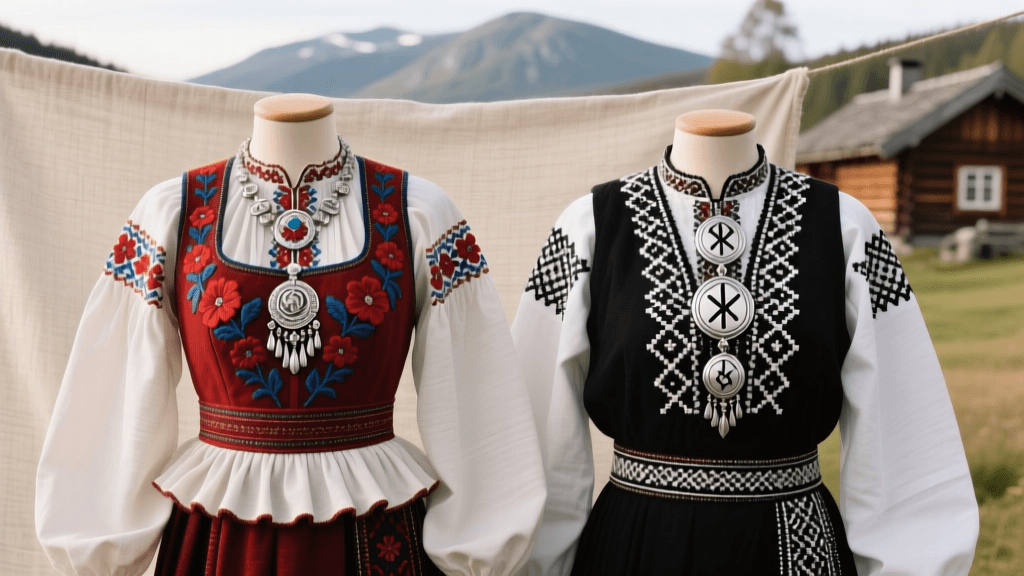
- The Stakk (Skirt): Traditionally made from heavy, black worsted wool, the skirt is pleated at the back and features a woven silk or wool band at the hem. In 2026, sustainable sourcing has become a priority, with many artisans utilizing locally sheared Spælsau wool to maintain historical accuracy while supporting eco-friendly agriculture.
- The Liv (Bodice): The bodice is typically black or deep green, featuring intricate red, yellow, and green floral embroidery. The embroidery is often concentrated on the front panels and the back seams.
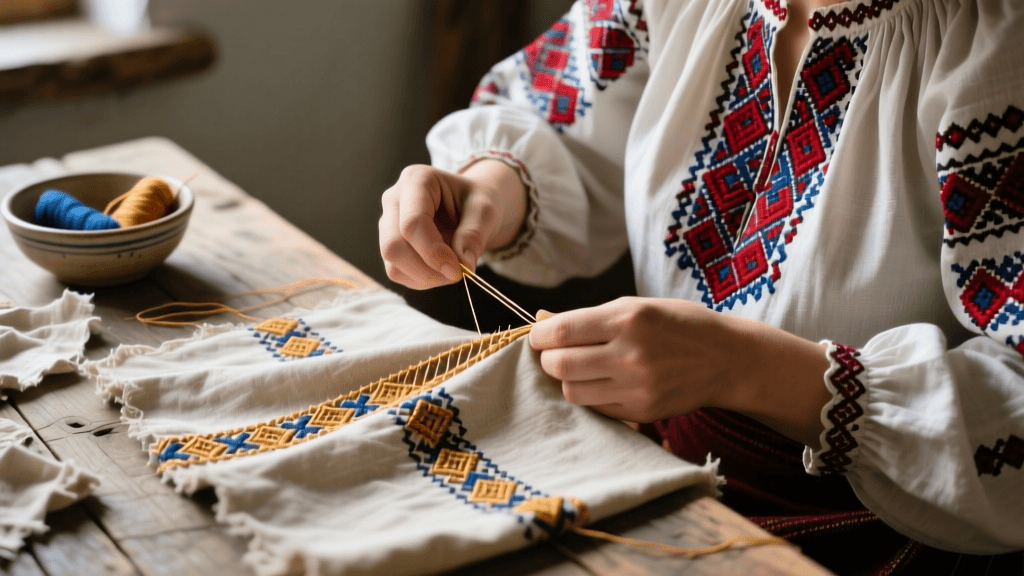
- The Skjorte (Shirt): A crisp white linen shirt featuring 'hvitsøm' (whitework embroidery) or 'hardangersøm' (drawn thread work) on the collar and cuffs. This delicate needlework requires dozens of hours of meticulous hand-stitching.
- The Belte (Belt): A woven silk or wool belt, often featuring geometric patterns that perfectly complement the bodice embroidery.
The silver jewelry associated with Hardanger is elegant and refined. The 'halssølje' (neck brooch) and 'brystsølje' (chest brooch) typically feature hanging spoons or leaf motifs, designed to catch the light against the dark wool and white linen. As noted by Visit Norway, the silver is not merely decorative; historically, it served as a portable bank account and a display of family wealth.
Setesdal Bunad: Dark Wool and Heavy Silver
Traveling south to the inland valley of Agder county, the Setesdal bunad presents a starkly different aesthetic. The Setesdal valley was historically isolated, which allowed its folk traditions to evolve without significant outside influence. The traditional daily wear of the valley seamlessly transitioned into the formal bunad worn today, preserving a remarkably unbroken lineage of design.
Key Garment Components
- The Stakk and Liv: Unlike the separated skirt and bodice of many western bunads, the Setesdal women's costume often features a unified, high-waisted dress made of dark blue or black wool. The hem is heavily adorned with vibrant cross-stitch embroidery in red, green, yellow, and white, depicting stylized floral and geometric motifs.
- The Livstykke (Bodice Overlay): Worn over the dress, this piece is often made of black velvet or wool and is heavily embroidered with woolen yarn, providing a rich, textured contrast to the smooth skirt.
- The Særk (Linen Shift): The underlying linen shift features subtle but beautiful cross-stitching at the neckline, a hallmark of the valley's needlework tradition.
The most defining feature of the Setesdal bunad, however, is its silver. The valley is famous for its heavy, intricate filigree work. The 'bringesølje' (a massive chest piece) and the 'beltestøl' (belt buckles) are substantial, multi-layered silver masterpieces. In 2026, master silversmiths in the region continue to use traditional casting and filigree techniques, though many have adopted recycled sterling silver to meet modern sustainability demands without compromising historical integrity.
2026 Sourcing, Pricing, and Tailoring Timelines
Acquiring a genuine, hand-embroidered bunad is a significant financial and temporal investment. The market in 2026 reflects both the high demand for heritage garments and the scarcity of skilled artisans. According to Norges Husflidslag (The Norwegian Folk Art and Craft Association), the cost of a complete bunad includes not just the materials, but the hundreds of hours of specialized labor required for tailoring, embroidery, and silversmithing.
For a complete women's Hardanger or Setesdal bunad, buyers in 2026 should expect to pay between 35,000 NOK and 55,000 NOK (approximately $3,300 to $5,200 USD), depending on the complexity of the silver and whether the embroidery is done by the buyer or a professional artisan. Wait times for custom-fitted garments currently range from 12 to 18 months. Silver jewelry, particularly the large Setesdal bringsøljer, often has an additional 6-month waiting list due to the limited number of certified filigree smiths operating in the region.
Comparative Analysis: Hardanger vs. Setesdal
To help enthusiasts, collectors, and heritage travelers understand the distinct differences between these two iconic garments, we have compiled a detailed comparison based on 2026 market standards and historical guidelines.
| Feature | Hardanger Bunad | Setesdal Bunad |
|---|---|---|
| Region of Origin | Hordaland (Western Fjords) | Agder (Southern Inland Valley) |
| Primary Wool Color | Black (with green/red accents) | Dark Blue or Black |
| Embroidery Style | Floral wool embroidery on bodice; Whitework on linen | Cross-stitch geometric/floral on hem; Velvet overlay |
| Silver Characteristics | Elegant, hanging spoon/leaf motifs, lighter filigree | Heavy, multi-layered filigree, massive chest pieces |
| 2026 Avg. Base Cost | 35,000 - 45,000 NOK | 40,000 - 55,000 NOK (due to heavier silver) |
| Silhouette | Separate skirt and bodice, white linen shirt visible | High-waisted unified dress, darker overall profile |
Modern Care and Eco-Friendly Maintenance in 2026
Proper maintenance is crucial for preserving these heirloom garments for future generations. The 2026 approach to bunad care heavily emphasizes eco-friendly, non-toxic methods that protect both the delicate wool fibers and the intricate silverwork.
- Wool Care: Never dry-clean a bunad unless absolutely necessary, as harsh chemicals can strip the natural lanolin from the Spælsau wool. Instead, air the garment outside in a damp, misty environment (a traditional Norwegian method) to naturally release odors and minor wrinkles. For spot cleaning, use a pH-neutral, biodegradable wool wash.
- Linen and Whitework: The linen shirt should be hand-washed in lukewarm water with a gentle, enzyme-free detergent. Avoid wringing the fabric; instead, roll it in a clean towel to absorb excess moisture and lay it flat to dry. Iron while slightly damp using a steam setting to protect the delicate drawn-thread embroidery.
- Silver Polishing: The heavy silver of the Setesdal bunad and the delicate pieces of the Hardanger bunad require different care. Use a specialized, non-abrasive silver polishing cloth. For deep filigree crevices, a soft-bristled brush with a mild, phosphate-free silver dip is recommended. Always remove silver from the garment before storing to prevent chemical reactions between the metal and the wool.
- Storage: Store the bunad flat in a breathable cotton bag. Never use plastic, as it traps moisture and invites mold. Include natural cedar blocks or dried lavender sachets to deter moths, avoiding chemical mothballs which can discolor the vibrant embroidery threads.
Whether you are drawn to the fjord-inspired elegance of the Hardanger bunad or the striking, silver-laden depth of the Setesdal bunad, investing in these garments is an investment in European textile history. By understanding the regional nuances, respecting the artisan timelines, and utilizing modern, sustainable care practices, owners ensure these magnificent examples of folk dress will continue to be worn with pride for generations to come.