Complete Guide to Chiton & Roman Toga Revival 2026
The 2026 Renaissance of Classical Antiquity Dress
The year 2026 has witnessed an unprecedented surge in classical antiquity reenactments and heritage festivals across Europe. From the modern Panathenaic Revival in Athens to the expansive Roman military and civilian encampments at Carnuntum in Austria, the demand for archaeological accuracy in ancient dress has never been higher. Modern enthusiasts, theatrical costumers, and living historians are moving away from synthetic, mass-produced costumes, opting instead for meticulously researched, historically accurate garments. This guide provides a comprehensive overview of reconstructing the ancient Greek chiton and the Roman toga and stola, complete with 2026 textile sourcing strategies, accurate measurements, and authentic dyeing techniques.
The Foundations of Hellenic Dress: Chiton and Peplos
According to the World History Encyclopedia, ancient Greek clothing was fundamentally based on the draping of rectangular fabrics rather than complex tailoring. The two primary garments were the chiton (a tunic) and the peplos (a heavy woolen garment worn primarily by women). The beauty of Hellenic dress lay in its proportional draping, secured by pins and belts, creating elegant folds known as a kolpos when bloused over a girdle.
Doric vs. Ionic Chiton: Understanding the Differences
When reconstructing a chiton for a 2026 heritage event, it is vital to distinguish between the two primary styles:
- The Doric Chiton: Traditionally made of heavy wool, this garment was folded over at the top to create an apoptygma (an overfold). It was pinned at the shoulders with a single large fibula (brooch) on each side and left open or partially sewn along the side seam. It is best suited for cooler weather and portrays a more austere, martial, or archaic aesthetic.
- The Ionic Chiton: Made of lightweight, finely woven linen or silk, the Ionic chiton featured no overfold. Instead, it was exceptionally wide, gathered into multiple small pleats, and pinned along the entire length of the arm to create false sleeves. This style requires significantly more fabric and delicate bronze or gold pins, reflecting the wealth and trade connections of the Ionian Greeks.
Roman Complexity: The Toga and Stola
While Greek dress emphasized fluid draping, Roman clothing was highly codified, serving as a visual indicator of citizenship, social rank, and gender. As detailed by the World History Encyclopedia, the toga was the ultimate symbol of Roman male citizenship, while the stola was the defining garment of the respectable Roman matron.
The Engineering of the Toga Virilis
The modern misconception of the toga is that it is a simple bedsheet wrapped around the body. In reality, the Imperial Roman toga was a massive, complex elliptical garment that required the assistance of a slave (a vestiplicus) to drape correctly. For a historically accurate 2026 reconstruction, the toga should be cut as a semi-circle or an ellipse with a curved hem. The standard toga virilis (the plain white toga of an adult male citizen) measures approximately 5.5 to 6 meters in length and 3.5 meters at its widest point. The draping process involves creating the sinus (a deep pouch-like fold across the chest) and the umbo (a decorative knot of fabric pulled up from the lower hem to weigh down the front drape).
The Stola and the Palla
Roman women of citizen status wore the stola over a basic linen tunica interior. The stola was a sleeveless, floor-length dress suspended from the shoulders by straps or a network of pins, often featuring an instita (a woven decorative border) at the hem. When venturing outdoors, women draped a palla (a large rectangular mantle) over their shoulders and head, functioning similarly to the Greek himation.
2026 Textile Sourcing Guide and Cost Comparison
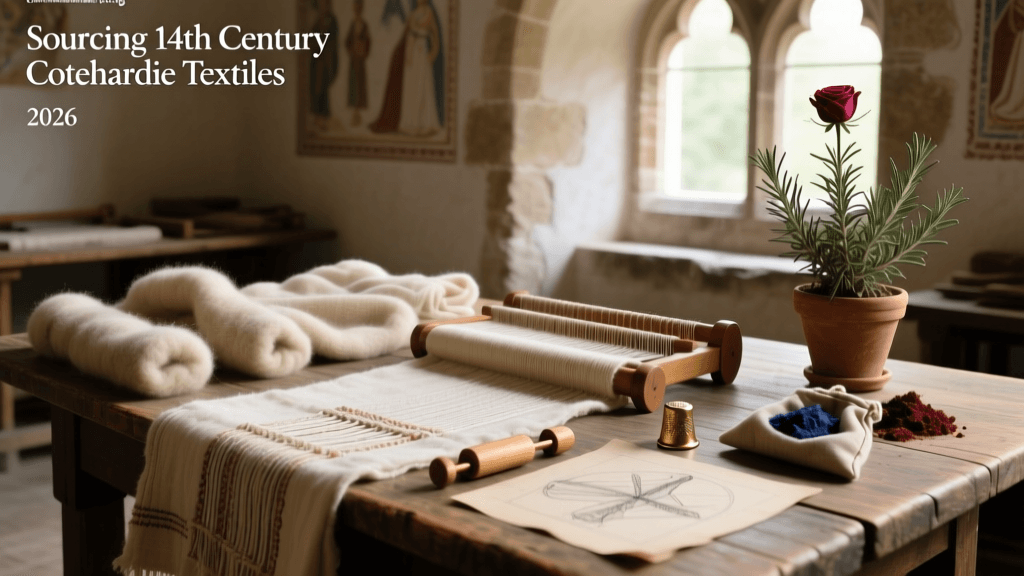
Sourcing archaeologically accurate textiles is the most critical step in garment reconstruction. In 2026, the European artisan weaving market has expanded, offering exceptional handwoven options that mimic the thread count and weave structures of antiquity. Below is a comparison of current market options for historical reenactors.
| Fabric Type | Weave Structure | 2026 Avg. Cost (per meter) | Historical Accuracy Rating | Best Use Case |
|---|---|---|---|---|
| Commercial Bleached Linen | Plain Weave (Machine) | €18 - €25 | Moderate | Theatrical costumes, budget Ionic chitons |
| Artisan Handwoven Linen | Tabby Weave (Handloom) | €65 - €90 | Exceptional | Museum-quality Ionic chitons, Roman tunics |
| Commercial Wool Flannel | Twill (Machine) | €22 - €35 | Low | Winter cloaks (avoid for togas/chitons) |
| Handwoven Tabby Wool | Plain Weave (Handloom) | €80 - €120 | Exceptional | Doric chitons, peplos, Roman toga |
| Raw Silk Noil | Plain Weave | €40 - €55 | High (for elite) | Elite Ionic chitons, patrician stolas |
Authentic Dyes and Coloration Techniques
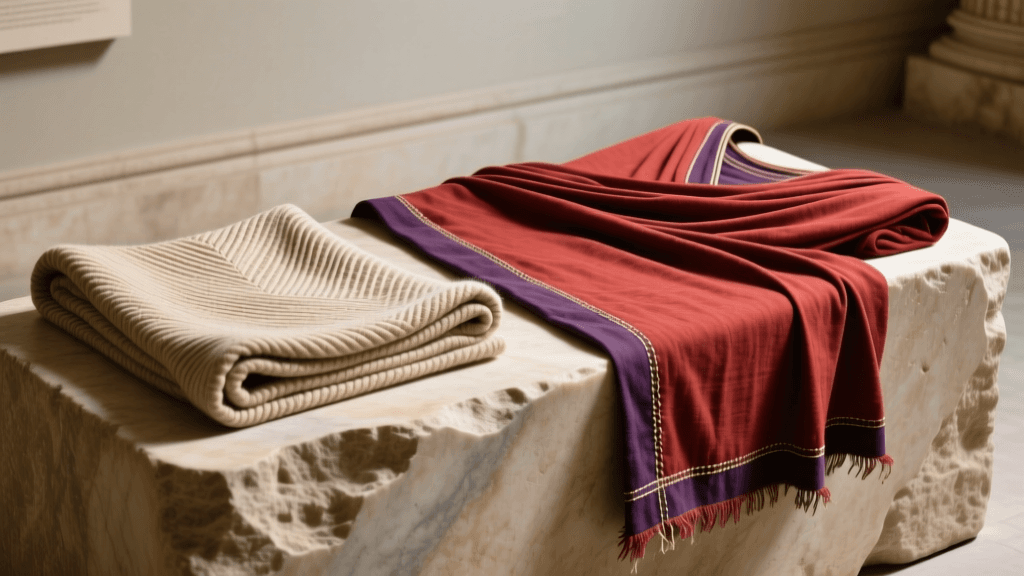
The pristine white of a Roman toga was achieved through laborious bleaching processes involving sulfur smoke and fuller's earth, while the Greek chiton was frequently dyed in vibrant hues. In 2026, historical dyers have perfected the use of botanical and mineral mordants to achieve colorfast, authentic shades without relying on modern synthetic aniline dyes.
- Saffron and Weld: Used to achieve the brilliant yellows and golden tones favored by Greek brides and priestesses. Weld (Reseda luteola) is highly colorfast when mordanted with alum and provides a historically accurate mustard-yellow for Ionic chitons.
- Madder Root: The primary source of red in antiquity. By manipulating the temperature and the mordant (using calcium-rich water or chalk), dyers can extract shades ranging from pale peach to deep brick red, perfect for Roman military tunics and civilian borders.
- Tyrian Purple Alternatives: True Tyrian purple, extracted from the Murex sea snail, remains prohibitively expensive and ecologically restricted. Modern master dyers in 2026 achieve the imperial purple hue through a meticulous double-dyeing process: overdyeing madder-red wool with woad (Isatis tinctoria) or natural indigo, creating a rich, colorfast violet that perfectly mimics the status symbols of Roman senators.
Essential Accessories: Fibulae and Footwear
No ancient garment is complete without the proper hardware and footwear. The fibula (brooch) was not merely decorative; it was the structural engineering that held the chiton and peplos together. For 2026 reconstructions, avoid cheap cast zinc alloys. Instead, commission or purchase sand-cast bronze or brass fibulae based on archaeological typologies, such as the arc-bow or plate fibulae. Ensure the pin mechanism uses a proper spring coil and catch-plate, as this provides the tension necessary to hold heavy wool without slipping.
Footwear must also match the garment. Greek citizens and Roman civilians typically wore soleae (leather sandals) indoors, while outdoor wear required the calceus (an enclosed leather shoe). Roman soldiers and rural workers wore caligae (hobnailed sandals). Modern historical cobblers now offer custom-fit caligae with authentic iron hobnails, which provide the necessary traction on dirt and stone surfaces at outdoor heritage sites.
Step-by-Step: Constructing an Ionic Chiton for Modern Wear
For those looking to create their first highly accurate garment this year, the Ionic chiton is an excellent starting point. Follow these actionable steps:
- Calculate Fabric: Measure your arm span from wrist to wrist. Add 30 centimeters for ease and draping. This is your fabric width. The height should be your measurement from the shoulder to the floor, plus 20 centimeters for the kolpos (blousing).
- Hem and Finish: Hand-stitch all four edges using a rolled hem or a blanket stitch. Ancient textiles were woven to size on a warp-weighted loom, meaning the side and bottom edges often featured the natural selvedge or tablet-woven borders. Adding a tablet-woven trim to the bottom hem elevates the historical accuracy significantly.
- Pinning the Shoulders: Fold the fabric in half widthwise. Starting at the neck opening (leave about 15 cm for the head), use small bronze safety pins or authentic replica fibulae to pin the front and back together at intervals of 5 to 7 centimeters along the top edge, stopping at the elbow or wrist, depending on desired sleeve length.
- Belt and Blouse: Tie a woven wool or leather cord around the waist. Pull the fabric up and over the belt to create the kolpos, adjusting the length so the hem falls gracefully at the ankles. For a more authentic silhouette, add a second belt just under the bust, creating a double-bloused effect.
Conclusion
The revival of ancient European folk and classical dress in 2026 is a testament to the enduring legacy of Greek and Roman textile arts. By prioritizing handwoven natural fibers, botanical dyes, and historically accurate draping techniques, modern enthusiasts can bridge the millennia, bringing the vibrant, living history of the ancient Mediterranean to life with unprecedented authenticity and respect.