Scottish Kilt Knife Pleat Construction & Sett Guide 2026
The Enduring Art of Scottish Kilt Construction
The traditional Scottish Highland kilt is far more than a symbol of Celtic heritage; it is a masterclass in zero-waste geometric folding, structural tailoring, and precision mathematics. As we navigate the slow fashion and heritage craft revivals of 2026, the demand for bespoke, hand-felled kilts has surged. Modern enthusiasts and historical costumers alike are moving away from machine-stitched, glued-in pleats, returning instead to the rigorous construction techniques that have defined Highland dress for centuries. According to The Scottish Tartans Authority, a genuine 8-yard kilt requires not only premium worsted wool but an intimate understanding of the tartan's underlying geometry, known as the sett.
Constructing a kilt is an exercise in spatial reasoning. Unlike standard garment sewing, which relies on cutting curved panels to fit the human form, kiltmaking utilizes a single, unbroken length of tartan fabric. The shaping is achieved entirely through the precise calculation of knife pleats, the strategic placement of darts within the pleated section, and the tension of the hand-fell stitching. This guide breaks down the exact construction patterns, fabric requirements, and sett-matching techniques necessary to draft and build an authentic Scottish kilt in 2026.
Fabric Selection: 2026 Worsted Wool Standards
The foundation of any authentic kilt is the tartan wool. For traditional construction, you must use single-width (approx. 27-29 inches) or double-width (approx. 54-60 inches) worsted wool woven in a 2/2 twill weave. The twill diagonal is crucial, as it provides the necessary drape and allows the fabric to hold a razor-sharp pleat edge when pressed. In 2026, premium mills like Lochcarron of Scotland continue to produce heritage-weight wools that meet the strict standards of the Scottish Kiltmakers' Association.
Choosing the correct fabric weight is paramount for the garment's longevity and movement. Below is a comparison of the standard kilt weights available on the market today:
| Wool Weight | Construction Characteristics | Best Use Case | 2026 Average Cost (per meter) |
|---|---|---|---|
| 13oz (Lightweight) | Drapes easily, cooler in warm weather, requires careful pressing to hold sharp pleat edges. | Highland dancing, summer wear, indoor formal events. | £38 - £48 |
| 16oz (Heavyweight) | The gold standard. Holds a crisp edge, swings beautifully, highly durable, and molds to the body over time. | Everyday wear, outdoor events, traditional Highland games, pipe bands. | £55 - £70 |
| 18oz (Regimental) | Extremely thick and rigid. Difficult to hand-fell, requires heavy-duty needles and immense pressing heat. | Military regimental dress, historical reenactment, extreme weather. | £75 - £95 |
For a standard 8-yard kilt, you will need exactly 8 yards (288 inches) of single-width fabric, plus an additional half-yard for the fringe and waistband overlap. If using double-width fabric, you need 4 yards, which is then cut in half lengthwise and sewn together selvedge-to-selvedge to create the 8-yard length.
Decoding the Tartan Sett
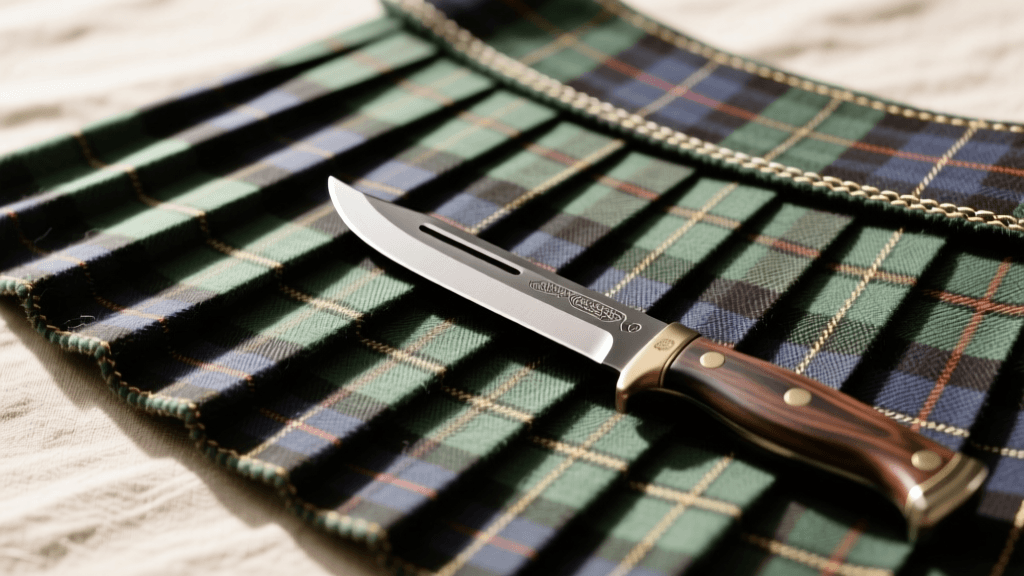
Before cutting or folding, the kiltmaker must map the tartan sett. The sett is the repeating thread count and color sequence that creates the tartan pattern. A kilt can be pleated in two primary ways: pleating to the sett (where the pattern on the pleated back matches the flat aprons) or pleating to the stripe (where a single dominant vertical stripe is centered on each pleat, creating a distinct geometric effect on the back).
As highlighted by the extensive textile archives at National Museums Scotland, pleating to the sett is the most common and visually complex method. To achieve this, the maker must identify the 'pivot point'—the exact thread where the pattern reverses or repeats. Every single knife pleat must be folded so that the visible face of the pleat perfectly aligns with the next iteration of the sett, creating an optical illusion of an unbroken pattern across the back of the kilt.
Drafting the 8-Yard Standard: The Mathematics of Pleating
The construction of the kilt is divided into three distinct horizontal sections: the under-apron, the pleated section, and the over-apron. The mathematical drafting of these sections is what ensures the kilt wraps securely around the body without gaping or twisting.
- The Under-Apron: Typically 10 to 12 inches wide, this flat panel wraps around the wearer's left side and fastens at the right hip.
- The Over-Apron: Usually 12 to 14 inches wide, this panel crosses the front from right to left, fastening at the left hip with leather straps and buckles.
- The Pleated Section: This consumes the vast majority of the 8-yard fabric. If the combined aprons equal 24 inches, you are left with 264 inches of fabric dedicated solely to the pleats.
To calculate the pleat depth, the kiltmaker measures the wearer's hip circumference at the widest point across the buttocks. Let us assume a hip measurement of 40 inches. Subtracting the 24 inches of the aprons leaves 16 inches for the visible back of the kilt. If the sett size is 5 inches, the maker will plan for approximately 28 to 30 pleats. Dividing the 264 inches of remaining fabric by 30 pleats means each pleat consumes roughly 8.8 inches of hidden fabric, while showing only 0.5 to 0.75 inches on the surface. This massive ratio of hidden-to-visible fabric is what gives the kilt its iconic, heavy swing.
Step-by-Step Knife Pleating to the Sett
Knife pleats are folds where all the fabric is turned in a single direction. In kiltmaking, the pleats are folded to the wearer's right (from the perspective of looking at the back of the kilt). The process requires a large, padded pressing board, heavy tailor's chalk, and a steam iron.
- Marking the Pivot: Using the mapped sett, mark the exact pivot thread on the wrong side of the fabric with chalk. This line will become the outer edge of the pleat.
- Folding the Return: Fold the fabric back on itself, hiding the bulk of the 8+ inches of material inside. The visible edge must perfectly align with the corresponding color sequence of the next sett.
- Tapering the Pleat (Darting): Because the human waist is smaller than the hips, the top 4 to 6 inches of each pleat must be tapered. This is achieved by folding a microscopic dart into the top of the hidden pleat return, gradually reducing the visible width from 0.75 inches at the hip to 0.5 inches at the waist.
- Basting and Pressing: Each pleat is hand-basted with heavy linen thread to hold the geometry in place, then subjected to high-heat steam pressing. The twill weave locks the fibers into a permanent, razor-sharp edge.
Structural Interfacing and Hand-Fell Stitching
A common misconception is that a kilt is merely folded cloth. In reality, the top half of the pleated section is a complex, multi-layered structural corset. Without internal stabilization, the heavy wool would sag, pulling the pleats open at the waist and ruining the garment's silhouette.
In 2026, traditional kiltmakers continue to use a heavy, woven cotton canvas or haircloth stiffener. This interfacing is cut to span from the top of the kilt down to the hipline (usually about 7 to 9 inches deep). The canvas is pad-stitched directly to the inside of the pleat returns. This ensures that the pleats can swing freely from the hip downward, while remaining rigidly anchored to the waist.
The outer edge of each pleat is then secured using a fell stitch. This is a microscopic, nearly invisible hand-stitch that catches only one or two threads of the outer tartan face and the underlying pleat return. The fell stitch must be pulled with exact tension; too tight, and the fabric will pucker; too loose, and the pleat will flap open. A master kiltmaker will execute thousands of these stitches across the hip and waist area, a process that takes upwards of 20 hours of continuous hand-sewing per garment.
Essential Tools for the Modern Kiltmaker
To achieve authentic construction standards, specific tools are required. While modern sewing machines can construct the aprons and waistband, the pleating and structural work remains entirely manual.
- Kiltmaker's Chalk: A sharp, clay-based chalk that brushes off worsted wool without leaving oily residue.
- Heavy-Duty Linen Thread: Waxed with pure beeswax to prevent tangling and increase tensile strength during fell stitching.
- Clapper and Tailor's Ham: A wooden clapper is essential for trapping steam and forcing the thick wool fibers to flatten and hold the knife pleat edge.
- Leather Strapping Awl: For piercing the heavy wool and canvas layers when attaching the waist buckles and leather straps without tearing the twill weave.
Conclusion: Preserving the Geometry of Heritage
The construction of a traditional Scottish kilt is a testament to the ingenuity of European folk dress patterns. It relies not on the destruction of fabric through cutting, but on the mathematical manipulation of a single continuous plane. As the appreciation for sustainable, heirloom-quality garments continues to grow throughout 2026, mastering the techniques of sett-matching, darting, and hand-fell stitching ensures that this iconic piece of Highland heritage remains a living, breathing craft rather than a static museum artifact.