Norwegian Bunad and Bavarian Tracht: 2026 Cost Guide
The Resurgence of Authentic European Folk Dress in 2026
In 2026, the global conversation surrounding fashion has decisively pivoted toward slow fashion, cultural preservation, and heritage garments. Nowhere is this more evident than in the realm of traditional European folk dress. Far from being static museum relics, regional folk costumes are living, breathing expressions of local identity. Among the most meticulously preserved and highly sought-after traditions are the Norwegian Bunad and the Alpine Tracht (encompassing the Bavarian and Austrian Dirndl and Lederhosen).
For enthusiasts, collectors, and those reconnecting with their ancestry, understanding the construction, regional variations, and current market costs of these garments is essential. This comprehensive guide breaks down the textile traditions, artisan pricing, and strict etiquette surrounding these iconic European costumes in the current 2026 season.
The Norwegian Bunad: Regional Identity Woven in Wool and Silver
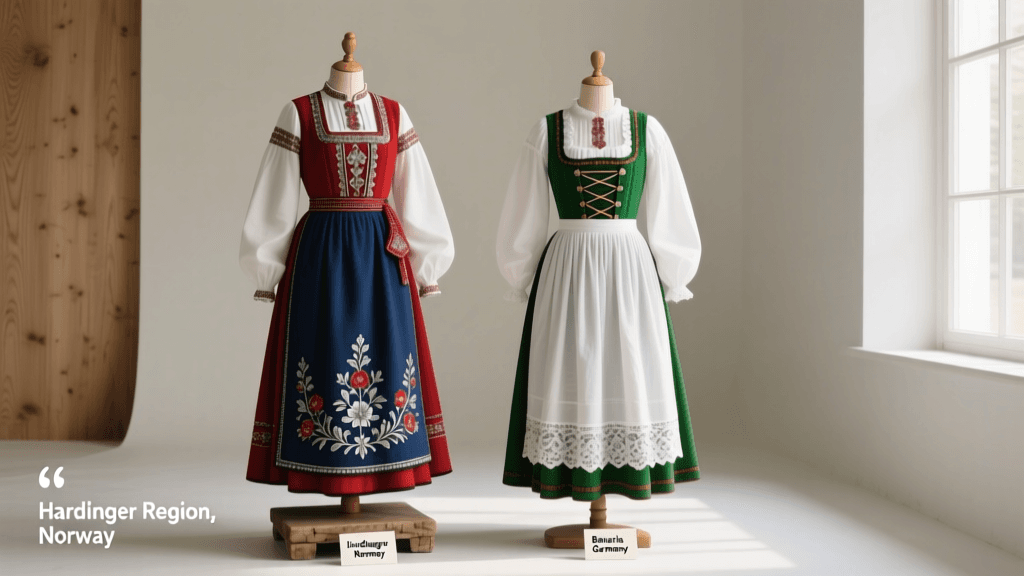
The Norwegian Bunad is not a single, monolithic costume. According to the Norwegian Institute for Bunad and Folk Costume (NBF), there are over 400 distinct regional Bunad designs, each rooted in the specific agricultural and cultural history of its respective valley or fjord. Unlike theatrical costumes, a Bunad is a formal garment worn for weddings, confirmations, and Norway’s Constitution Day (17th of May).
Key Regional Variations
- Hardangerbunad: Often considered the first Bunad, originating from the Hardanger fjord region. It is famous for Hardangersøm, a meticulous whitework embroidery technique involving cutwork and drawn thread work on linen aprons and shirts.
- Telemarksbunad: Hailing from the Telemark region, this design is renowned for its vibrant, intricate floral embroidery (rose painting motifs translated to thread) set against deep blue or black wool.
- Setesdalsbunad: One of the oldest and heaviest designs, featuring dark, un-dyed wool, striking white and black geometric embroidery, and an abundance of heavy, oxidized silver jewelry.
2026 Pricing and Material Sourcing
Authentic Bunads are custom-tailored to the wearer's exact measurements. In 2026, the cost of raw materials—particularly high-grade Norwegian wool and artisan-forged silver—has seen a steady increase due to inflation and a renewed emphasis on ethical, local sourcing.
A complete women’s Bunad (including the wool skirt, bodice, linen shirt, embroidered apron, and silver belt) from a recognized region like Telemark now averages between $4,800 and $6,500 USD. The silver jewelry alone (soljer, brooches, and crowns) can add $1,500 to $3,000 USD to the total investment. Men’s Bunads, while featuring less embroidery, require heavy wool breeches and vests, typically costing between $3,500 and $5,000 USD.
Bavarian and Alpine Tracht: Beyond the Tourist Souvenir
While the world often associates Bavarian dress with the mass-produced, synthetic costumes sold at tourist shops, authentic Tracht is a highly regulated, deeply respected sartorial tradition. The Bavarian National Museum houses extensive archives demonstrating how Alpine workwear evolved into the formal regional dress seen at 2026 cultural festivals and high-society weddings.
The Anatomy of Authentic Tracht
Authentic Tracht is divided into specific regional categories, such as the Miesbacher Tracht and the Werdenfelser Tracht. The distinction lies in the cut of the bodice, the specific shade of the wool, and the embroidery patterns on the accessories.
- Lederhosen (Men): Authentic Lederhosen are never made from cowhide or synthetic leather. True Alpine Lederhosen are crafted from Hirschleder (deer leather) or Sämischleder (chamois leather tanned using traditional brain-tanning or oil-tanning methods). This makes the leather incredibly soft, breathable, and washable. The embroidery (Weißstickerei) is done by hand using silk or linen thread, often featuring motifs like edelweiss, oak leaves, or alpine hunters.
- Dirndl (Women): A traditional Dirndl consists of a bodice, blouse, full skirt, and apron. High-end 2026 Dirndls utilize natural fibers such as raw silk, linen, and fine merino wool. The bodice is often reinforced with horn or mother-of-pearl buttons, and the apron is hand-pleated.
2026 Market Costs for Alpine Tracht
The market for bespoke Tracht has surged in 2026, driven by younger generations rejecting fast fashion. A pair of authentic, hand-embroidered Kniebundhosen (knee-breeches) made from ethically sourced Alpine deer leather now ranges from $1,400 to $2,800 USD, factoring in the 80+ hours of hand-stitching required. A bespoke, silk Dirndl from a master tailor in Munich or Salzburg, complete with a hand-woven linen blouse and silk apron, typically costs between $900 and $2,200 USD.
2026 Cost and Material Comparison: Bunad vs. Tracht
To help you navigate your investment in European folk dress, the table below compares the Norwegian Bunad and the Bavarian Tracht across several critical metrics for the 2026 market.
| Feature | Norwegian Bunad | Bavarian / Alpine Tracht |
|---|---|---|
| Primary Materials | Heavy woven wool, linen, oxidized silver | Deer/chamois leather, raw silk, linen, horn |
| Base Garment Cost (2026) | $3,500 - $6,500 USD | $900 - $2,800 USD |
| Accessories Cost | $1,500 - $3,000+ USD (Silver jewelry) | $200 - $600 USD (Hats, suspenders, shoes) |
| Tailoring Wait Time | 8 - 14 months | 3 - 6 months |
| Regional Strictness | Extremely High (Bunad Police) | Moderate (Flexible within regional guidelines) |
| Primary Embroidery | Cutwork, floral wool thread, geometric | Whitework, alpine motifs, silk thread |
Navigating the Rules: Authenticity and Etiquette in 2026
Wearing traditional European folk dress comes with a strict set of unwritten (and sometimes written) rules. In 2026, cultural societies are more vocal than ever about preserving the dignity of these garments against the tide of cheap, sexualized party costumes.
The 'Bunad Police' and Norwegian Etiquette
The colloquial term 'Bunad Police' refers to the cultural guardians who ensure the garment is worn correctly. If you wear a Bunad in 2026, you must adhere to the following:
- Footwear: Only traditional Bunad shoes (Bunad-sko) with silver buckles are acceptable. Modern sneakers or high heels are considered highly disrespectful to the garment.
- Grooming: Hair should be tied back or styled conservatively. Heavy, modern makeup and flashy contemporary jewelry (like smartwatches or diamond earrings) are strictly forbidden while wearing the Bunad.
- Outerwear: If it is cold, you must wear a traditional woven shawl or a specific regional coat. Modern puffer jackets or synthetic raincoats will immediately draw the ire of traditionalists.
Tracht Etiquette and the Apron Code
For those attending events like the 2026 Munich Oktoberfest, the Official Oktoberfest Munich guidelines and local Tracht associations emphasize the importance of the Dirndl apron bow (Schleife). The placement of the bow is a traditional code signaling the wearer's relationship status:
- Bow on the Left: Single and open to meeting people.
- Bow on the Right: Married, engaged, or in a committed relationship.
- Bow in the Center: Traditionally signifies virginity, though in modern 2026 contexts, it is sometimes worn by young women who prefer not to disclose their status.
- Bow on the Back: Widowed, or alternatively, worn by waitresses and staff working at the event.
Furthermore, authentic Tracht requires specific footwear, such as Haferlschuhe (traditional Bavarian shoes) for men, and leather Tracht shoes with a low, sturdy heel for women. Modern accessories should be kept to an absolute minimum.
Sourcing and Commissioning Your Garment
If you are looking to commission a Bunad or a bespoke Tracht in 2026, patience is paramount. Authentic Bunads are rarely kept in stock; they are made-to-measure by certified artisans. You must first determine your region of ancestral or residential connection, as wearing a Bunad from a region you have no ties to is frowned upon. Contact certified ateliers early in the year, as the rush for 17th of May fittings begins as early as January.
For Alpine Tracht, master tailors in Bavaria, Tyrol, and Salzburg offer bespoke services. When commissioning Lederhosen, insist on viewing the leather sourcing certificates to ensure the deer leather is ethically culled from managed Alpine populations, a standard that has become strictly enforced by 2026 environmental and cultural regulations. Investing in these garments is not merely a purchase; it is an act of participating in a centuries-old European textile legacy.