Viking Hangeroc & Kyrtil: Authentic Sewing Guide 2026
The Resurgence of Norse Textile Arts in 2026
The year 2026 has witnessed an unprecedented revival in historical European folk dress, particularly within the realm of Celtic, Nordic, and Viking traditional garments. As modern practitioners, reenactors, and heritage crafters seek deeper authenticity, the demand for historically accurate construction methods has surged. Moving away from the costumed approximations of the past decade, today's makers are turning to archaeological textile reports, experimental archaeology, and traditional fiber arts to recreate the wardrobe of the Norse people. At the forefront of this movement are two foundational garments: the Hangeroc (commonly known as the apron dress) and the Kyrtil (the under-tunic). This comprehensive guide will walk you through the authentic sourcing, natural dyeing, and zero-waste construction techniques required to build a historically accurate Viking ensemble in 2026.
Anatomy of the Viking Wardrobe: Hangeroc and Kyrtil
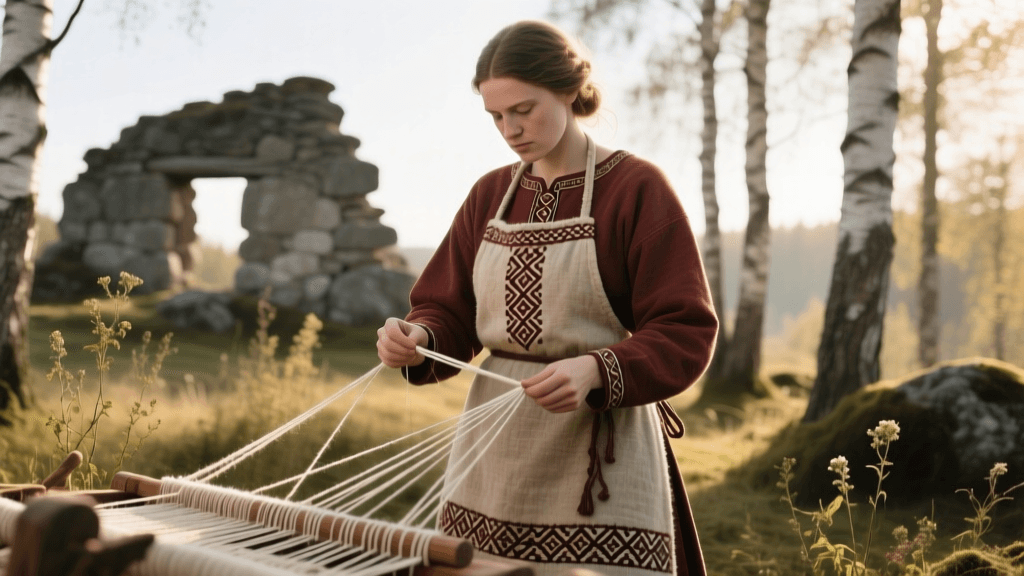
The Norse wardrobe was highly functional, layered, and deeply indicative of social status and regional identity. The foundation of the female Viking dress was the Kyrtil, a long, sleeved tunic worn closest to the body. Over this was suspended the Hangeroc, an apron-like dress held in place by a pair of oval tortoise brooches at the shoulders. According to the National Museum of Denmark, the preservation of these garments in bog finds and high-status burials, such as those at Køge and Birka, reveals a sophisticated understanding of tailoring, weaving, and dyeing that rivals later medieval European centers.
For men and women alike, the Kyrtil was the workhorse of the wardrobe. While modern replicas often rely on simple T-tunic patterns, archaeological evidence from sites like Hedeby suggests that Norse tailors utilized complex gore inserts and gussets to provide mobility and conserve fabric. The Hangeroc, meanwhile, was not merely a decorative overlay but a highly functional garment that provided core warmth, protected the underlying linen or fine wool tunic from soil and wear, and served as a canvas for displaying wealth through imported silks, silver wire embroidery, and intricate tablet-woven trims.
Sourcing Historically Accurate Fabrics
To achieve true authenticity in 2026, one must abandon modern commercial cottons and synthetic blends. The Norse relied primarily on sheep's wool and flax linen. For the Hangeroc, the gold standard is a diamond twill or herringbone twill wool, woven from worsted yarns. This specific weave structure provides excellent water resistance, durability, and the distinct textured aesthetic seen in high-status Viking Age burials. For the Kyrtil, a medium-weight tabby weave linen (for summer or base layers) or a fine, tightly woven tabby wool (for cooler climates) is appropriate.
Sourcing these textiles has become significantly easier in 2026, with specialized heritage mills in the UK, Scandinavia, and the Baltic states producing historically accurate yardage. When purchasing, always look for fabrics that are undyed if you plan to use natural dyes, and ensure the thread count and weave structure match archaeological textiles. A standard diamond twill wool suitable for an apron dress typically features around 12 to 16 threads per centimeter in the warp and weft.
Natural Dyeing: Madder Red and Woad Blue
Color was a potent status symbol in the Viking Age. While the majority of everyday clothing was left in the natural shades of the sheep (white, grey, brown, and black), high-status garments were vibrantly dyed. The two most iconic Norse dyes are Madder (Rubia tinctorum) for rich reds and oranges, and Woad (Isatis tinctoria) for deep blues. Experimental archaeology data published by the Viking Ship Museum in Roskilde highlights the complex chemistry required to achieve colorfast results using these historical plants.
The Madder Dyeing Process:
- Scouring: Wash the raw wool fabric thoroughly using a gentle, pH-neutral soap or historical alternatives like fermented urine or soapwort to remove natural lanolin and spinning oils.
- Mordanting: Soak the fabric in a bath of aluminum potassium sulfate (alum) and cream of tartar. This step is non-negotiable, as madder will not bind to the fiber without a metallic mordant. Heat the bath to 80°C (176°F) and hold for one hour, then let it cool overnight.
- The Dye Bath: Use high-quality madder root extract or ground roots. Maintain the temperature strictly between 60°C and 70°C (140°F - 158°F). Exceeding 75°C will extract brown tannins from the root, resulting in a muddy brick color rather than a vibrant, clear red.
- Oxidation: Once the desired depth of color is achieved, remove the fabric and hang it in the open air. The oxygen interaction deepens and sets the final hue.
Working with Woad: Woad requires a completely different, alkaline, oxygen-deprived (reduction) vat. In 2026, many heritage dyers use a fructose-based reduction vat, which eliminates the need for harsh, historically inaccurate chemical reducers while maintaining the traditional chemical process of the indigo-bearing plant. The fabric emerges from the vat a pale yellow-green and magically turns deep blue as it reacts with the oxygen in the air.
Construction and Zero-Waste Pattern Cutting
Viking Age tailors were masters of zero-waste cutting. Loom widths were generally narrow, often between 50 and 80 centimeters, dictated by the reach of the weaver's arms. Therefore, patterns were constructed using rectangles, squares, and triangles to ensure not a single scrap of valuable hand-woven cloth was wasted.
Drafting the Kyrtil:
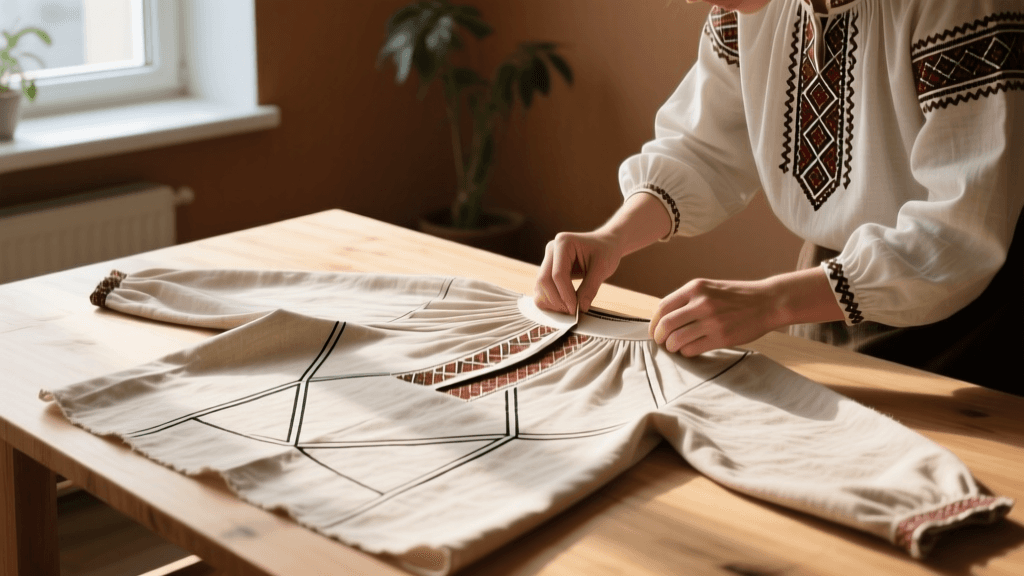
Begin with a central rectangular body panel that runs from the shoulder to the hem, with a slit for the head. To provide mobility without adding bulk to the shoulders, insert square gussets under the arms. For the skirt, use long triangular gores inserted into the side seams and the center front and back. This creates a sweeping, flared hem that allows for long strides and physical labor while maintaining a fitted upper body. All seams should be sewn using a historical running stitch with waxed linen thread, followed by folding the raw edges inward and securing them with a whip stitch to prevent fraying.
Drafting the Hangeroc:
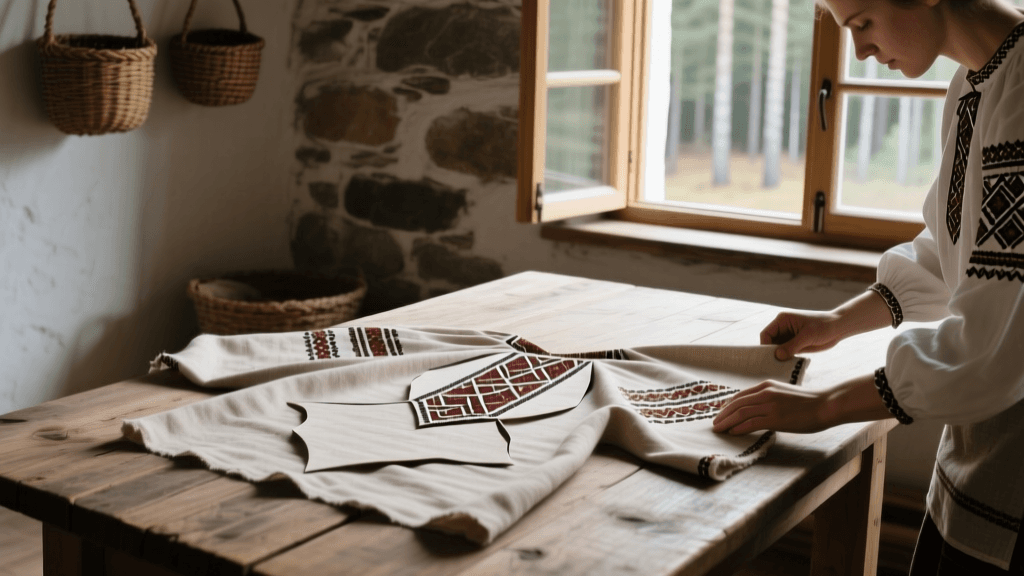
The most widely accepted pattern for the Hangeroc, based on the Køge husfæller find, is a wrapped or paneled design. It consists of a front panel, a back panel, and side gores that flare out from the waist. The top edge is folded over to create a casing or hem, through which woolen loops are passed. These loops are then pinned by the tortoise brooches. Ensure the hem falls anywhere from mid-calf to the ankle, depending on the wearer's height and the intended working environment.
Tablet Weaving: The Signature Norse Trim
No Viking garment is complete without tablet-woven trim. Used to reinforce necklines, cuffs, and the hems of the Hangeroc, tablet weaving produces incredibly strong, dense, and patterned bands. The Oseberg ship burial yielded numerous examples of complex tablet weaving, some incorporating imported silk and silver wire.
For a standard woolen trim, use 4-hole tablets threaded with worsted wool yarn. By threading the holes in alternating 'S' and 'Z' directions and turning the tablets continuously forward or backward, you can create intricate geometric patterns, such as the classic Norse ram's horn or interlacing knotwork motifs. In 2026, 3D-printed and laser-cut wooden tablets are widely available and provide the exact tension and durability required for long weaving sessions without the warping issues associated with cheap cardboard alternatives.
2026 Material Cost and Sourcing Table
Below is a comprehensive breakdown of the estimated material costs and sourcing requirements for a complete, historically accurate female Viking ensemble (Hangeroc, Kyrtil, and woven trim) as of early 2026. Prices reflect the premium placed on heritage, small-batch textiles.
| Material Component | Historical Specification | 2026 Avg. Cost (USD) | Yardage / Quantity |
|---|---|---|---|
| Diamond Twill Wool (Hangeroc) | 100% Wool, 2/2 Twill, 60" width | $55.00 / meter | 3.5 meters |
| Tabby Linen (Kyrtil Base) | 100% Flax, Medium Weight, Undyed | $28.00 / meter | 4.0 meters |
| Worsted Wool Yarn (Trim & Loops) | 2-ply, historically dyed (Madder/Woad) | $18.00 / 100g skein | 3 skeins |
| Waxed Linen Sewing Thread | Unbleached, high-tensile strength | $12.00 / 50m spool | 2 spools |
| Oval Tortoise Brooches | Cast bronze, historically accurate motifs | $85.00 / pair | 1 pair |
| Wooden Tablet Weaving Cards | Laser-cut hardwood, 4-hole, 5cm x 5cm | $25.00 / set of 20 | 1 set |
Note: Prices are estimates based on 2026 heritage textile market averages. Sourcing directly from Scandinavian or Baltic mills may incur additional international shipping fees, though the authenticity of the weave structure is vastly superior to modern commercial woolens.
Finishing Techniques and Historical Seams
The final hallmark of an authentic Norse garment lies in the finishing. Modern sergers and zigzag stitches are strictly forbidden in high-level historical reenactment. Instead, the raw edges of the wool must be singed carefully with a candle or lighter to prevent fraying before being folded and stitched down. Alternatively, the edges can be bound with narrow strips of fine linen or silk. The necklines and cuffs should be edged with a narrow, contrasting tablet-woven band, which not only adds a pop of color and displays the maker's skill but also reinforces areas of high friction and wear.
By adhering to these rigorous standards of material selection, natural dye chemistry, and zero-waste pattern drafting, modern crafters can create a Viking Hangeroc and Kyrtil that are not merely costumes, but living, breathing extensions of Northern European heritage. The garments produced through these methods in 2026 stand as a testament to the enduring ingenuity and artistry of the Norse textile tradition.