Traditional European Folk Shirt Zero-Waste Patterns 2026
The Renaissance of Zero-Waste European Folk Dress
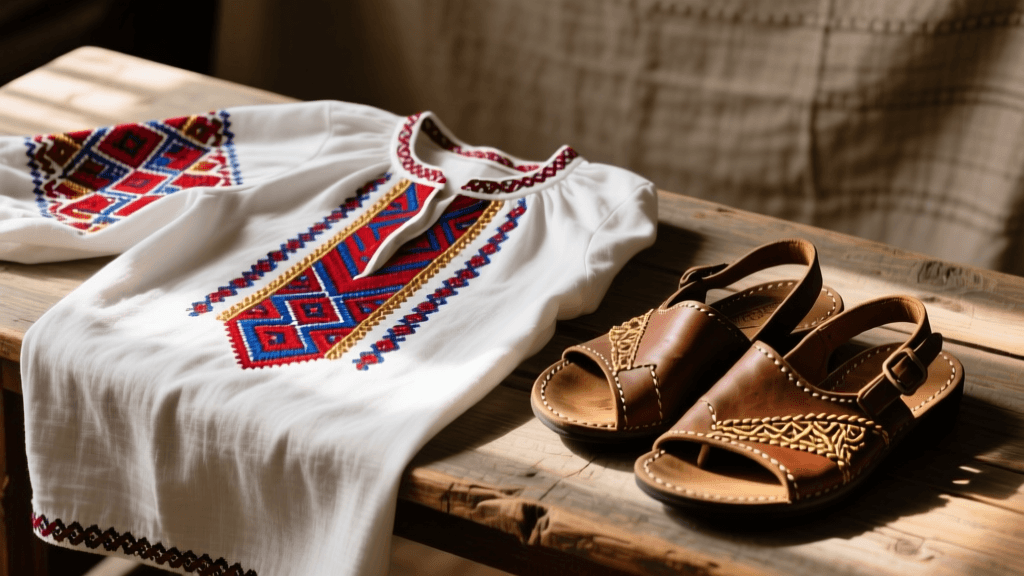
As the global fashion industry navigates the strict sustainable textile mandates of 2026, modern designers and historical costumers are increasingly looking to the past for solutions. Long before the concept of "zero-waste" was coined as a modern environmental movement, European peasant cultures were practicing it out of sheer necessity. The traditional Slavic and Balkan folk shirt—known variously as the rubakha, vyshyvanka, or košulja—represents a masterclass in orthogonal pattern cutting. Because hand-woven linen was incredibly labor-intensive to produce, wasting even a single scrap of fabric was unthinkable.
In this comprehensive 2026 guide, we will explore the geometric construction patterns and techniques of the traditional European folk shirt. Whether you are a historical reenactor, a sustainable fashion student, or a textile enthusiast, mastering these zero-waste techniques will allow you to create beautiful, historically accurate garments without generating any fabric offcuts.
The Geometry of the Traditional Folk Shirt
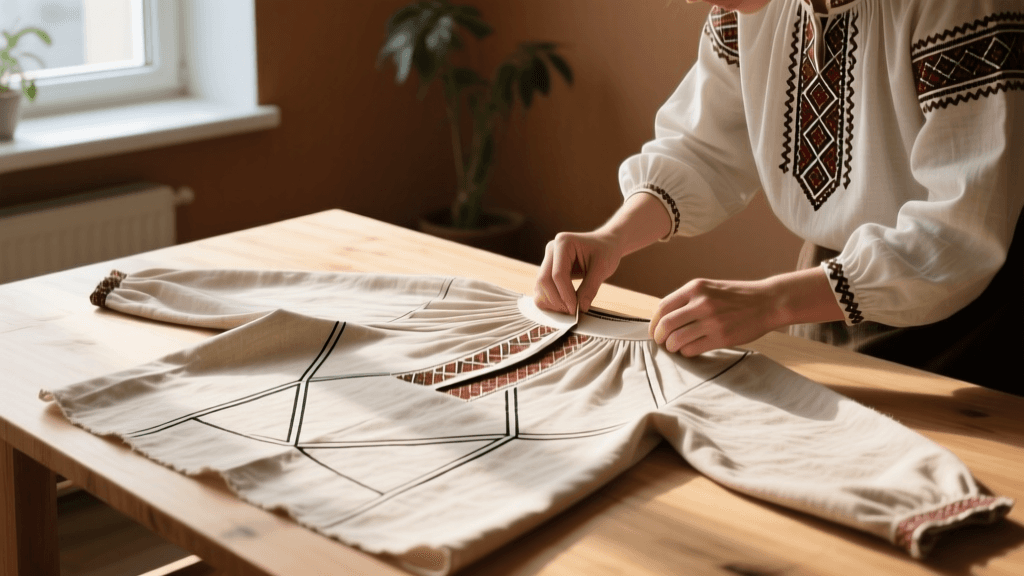
Unlike modern commercial patterns that rely on curved armholes, shaped side seams, and princess lines to contour the body, the traditional folk shirt is entirely orthogonal. It is constructed exclusively from rectangles, squares, and triangles. This geometric approach is directly tied to the mechanics of the traditional warp-weighted or horizontal loom.
Historically, looms produced narrow fabric widths, typically between 14 and 18 inches (35 to 45 cm). The pattern pieces were designed to utilize these exact widths without any cutting along the length of the fabric, preserving the structural integrity of the selvedge edges. According to research published in the Journal of Dress History, this orthogonal cutting method not only conserved material but also ensured that the warp and weft threads remained perfectly aligned with the body's vertical and horizontal planes, reducing stress on the hand-woven fibers during heavy agricultural labor.
In 2026, most commercially available linen comes in much wider widths, typically 54 to 60 inches. To adapt the zero-waste folk shirt pattern for modern fabric, we use a technique called "marker nesting," where the rectangular pieces are laid out to perfectly fill the wider fabric width, ensuring zero scraps remain after cutting.
Essential Measurements & Fabric Yield
Because the garment relies on gathering and draping rather than tailored shaping, the measurement list is refreshingly simple. You do not need to draft complex bust darts or waist contours. To draft your 2026 zero-waste marker, record the following measurements:
- Bust/Chest Circumference: Used to calculate the total width of the body panels and sleeves.
- Shoulder Drop: From the base of the neck to the tip of the shoulder.
- Arm Length: From the shoulder tip to the wrist bone, plus 2 inches for blouse gather.
- Bicep Circumference: To ensure the sleeve rectangles are wide enough for movement.
- Wrist Circumference: For sizing the cuff bands.
- Desired Hem Length: From the base of the neck to the desired tunic length (usually mid-thigh or knee).
Fabric Allocation Chart: Standard Zero-Waste Folk Shirt
The following table outlines the exact pattern pieces required for a standard medium-sized folk shirt. When cutting from 54-inch wide linen in 2026, these pieces can be nested perfectly to yield zero waste.
| Pattern Piece | Dimensions (Inches) | Quantity | Function & Placement |
|---|---|---|---|
| Main Body Panel | 24 x 40 | 2 | Front and back torso (folded over shoulder or seamed) |
| Sleeve Panel | 22 x 24 | 2 | Rectangular sleeves, gathered into cuffs |
| Underarm Gusset | 6 x 6 | 2 | Square gusset for arm mobility (lastovitsa) |
| Side Godet | 12 x 20 (Triangle) | 2 | Triangular inserts for hem flare and walking ease |
| Collar Band | 16 x 3 | 1 | Stand collar to gather the neckline |
| Cuff Bands | 10 x 3 | 2 | Wrist closures for gathered sleeves |
Step-by-Step Construction Techniques
Constructing a folk shirt requires specific historical sewing techniques that prioritize durability and mobility. The preservation guidelines from the Textile Museum of Canada Collection highlight that surviving 19th-century peasant shirts often outlasted modern garments due to these robust seam finishes and structural inserts.
The Gusset (Lastovitsa)
Because the body panels and sleeves are simple rectangles, joining them at a 90-degree angle would severely restrict arm movement and tear the fabric under tension. The solution is the underarm gusset, or lastovitsa. This small square piece of fabric (usually 5 to 6 inches) is inserted at the intersection of the side seam and the underarm seam. It acts as a pivot point, allowing the wearer to raise their arms fully without pulling the entire shirt upward. In 2026, we recommend reinforcing the corners of the gusset with a small bar tack or hand-whipped knot to prevent fraying at high-stress points.
The Godet and Side Seam Flare
To allow for walking and bending, the lower half of the side seams are left open, and a triangular godet is inserted. This transforms the straight, tubular silhouette of the upper body into a flared, A-line tunic. When inserting the godet, use a run-and-fell seam. This involves sewing the pieces together, trimming one seam allowance, folding the other over it, and whipping it down to the fabric. This creates a flat, incredibly strong seam that will not unravel, even if the linen is subjected to rigorous hand-washing.
Neline Gather and Collar Band
The neckline is created by cutting a simple horizontal slit in the center front of the main body panel, sometimes extended with a short vertical placket. The excess fabric of the wide body panels is tightly gathered using heavy linen or hemp thread and secured into a narrow stand collar. Traditional techniques often utilize "cartridge pleating" or tightly spaced running stitches to create dense, uniform gathers that distribute the tension evenly across the collar band.
Modern 2026 Tools for Historical Accuracy
While the garments are historical, the tools we use to plan them in 2026 are highly advanced. Digital pattern drafting software like Seamly2D and CLO 3D has become indispensable for zero-waste pattern makers. By inputting your specific body measurements and the exact width of your 2026 linen purchase into these programs, you can generate a digital marker that mathematically guarantees zero fabric waste.
Furthermore, CLO 3D's updated 2026 fabric physics engine allows you to simulate the drape of medium-weight linen (5.3 oz to 7.1 oz). You can visually test how the rectangular sleeves will gather into the cuffs and how the side godets will flare during movement before making a single cut. This digital prototyping saves hours of physical muslin-making and aligns perfectly with the zero-waste ethos.
Sourcing Authentic Materials in 2026
The success of a traditional folk shirt relies heavily on the textile. Synthetic blends or lightweight, sheer cottons will not yield the correct drape or historical accuracy. The Victoria and Albert Museum Fashion Department notes that the structural integrity of folk dress is intrinsically linked to the use of bast fibers like flax and hemp.
In 2026, the cost of premium, 100% European flax linen has stabilized at approximately $32 to $48 per yard, depending on the weight and whether it is enzyme-washed. For a standard folk shirt, you should source a medium-to-heavy weight linen (between 5.3 oz/yd² and 7.1 oz/yd²) in an undyed, natural, or bleached white colorway. Avoid linens with a high slub (thick, uneven threads) if you plan to do intricate cross-stitch embroidery, as the uneven weave will distort your stitch count.
For embroidery, traditional wool or silk threads have seen a massive revival in 2026. Sourcing naturally dyed madder root (red) and woad (blue) wool floss will elevate your garment from a simple reproduction to a museum-quality piece. When laying out your pattern, remember that the embroidery is often counted directly from the fabric's weave, meaning your zero-waste cutting lines must perfectly align with the warp and weft threads to ensure your cross-stitch borders remain perfectly straight.
Conclusion
The traditional European folk shirt is a testament to the ingenuity of historical makers who viewed fabric as a precious resource. By adopting orthogonal pattern cutting, utilizing gussets and godets for mobility, and employing robust seam finishes, you can create garments that are both historically authentic and perfectly aligned with the zero-waste sustainability goals of 2026. Whether you are drafting by hand or utilizing modern 3D simulation software, the geometry of the folk shirt remains a timeless masterclass in efficient, beautiful garment construction.