Niuean Tapa Embossing And Fern Ink Dyeing Traditional Processes
Rooted in Volcanic Soil and Ocean Winds
Niue, a raised coral atoll encircled by dramatic limestone cliffs and fringed with reef, sustains one of the most distinctive yet under-documented textile traditions in the Pacific: tapa cloth embossing using native ferns and natural dyeing with *Pteris tremula* (tō’ā). Unlike the barkcloth traditions of Tonga or Samoa—where *Broussonetia papyrifera* (paper mulberry) dominates—Niuean tapa relies almost exclusively on the inner bast of *Ficus prolixa*, locally known as *fā* or *fāpō*. This species grows abundantly in Niue’s inland forests, its fibrous bark yielding a dense, resilient sheet when pounded with traditional wooden mallets (*tō’ā*) carved from *Cordyline fruticosa* wood. The process begins with harvesting during the lunar phase *Tāua*, observed strictly between the 12th and 18th day of the lunar cycle—a protocol maintained by elders in the village of Alofi to ensure fibre pliability and dye uptake.
The Embossing Technique: Patterns Pressed by Hand
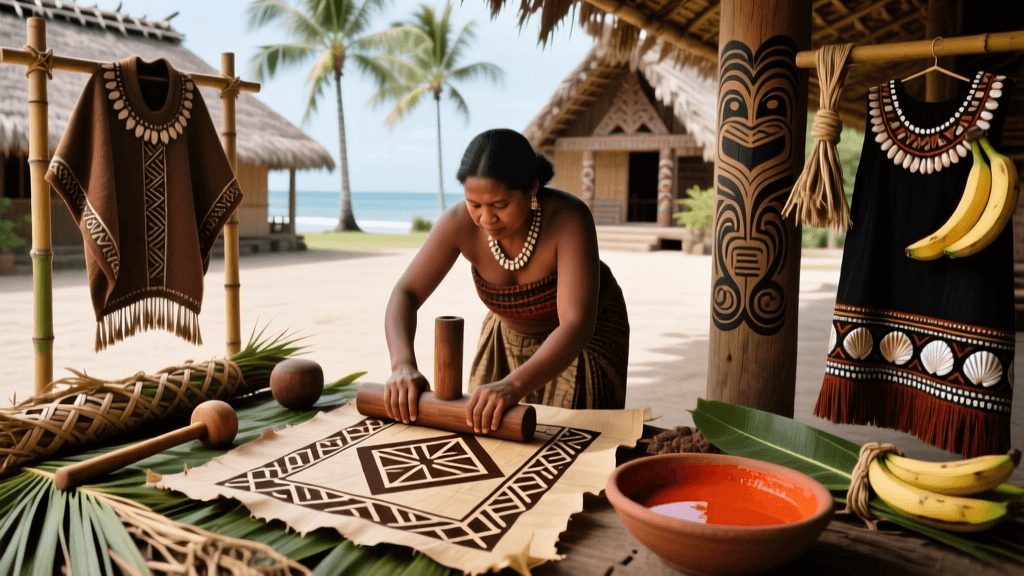
Embossing in Niue is not applied with carved boards like Fijian *masi* but through direct hand-pressing using dried fronds of *Asplenium oblongifolium*, a native fern whose veined underside creates subtle, raised relief patterns. Each frond is pressed onto damp tapa for precisely 47 seconds—timed using a calibrated coconut-shell water clock (*tō’ā tō’ā*)—before being lifted and repositioned. A single 1.2-metre-square cloth may require 320–360 individual pressings to achieve full coverage. The pressure must be consistent: 18–22 kilopascals measured via calibrated bamboo pressure gauges used at the Niue National Museum’s conservation lab. This technique produces tactile motifs representing ocean currents (*tāmū*), reef fish (*kanae*), and ancestral navigation paths (*tā’u tā’u*), each pattern governed by genealogical rights held by specific families in villages such as Avatele and Hakupu.
Material Sourcing Protocols
Harvesting *Ficus prolixa* follows strict protocols codified in *Lēlē*, Niue’s customary land tenure system. Only male elders of the *Motu* lineage may fell trees within designated *fānua tapu* (sacred groves) near the Togo Chasm. Trees are selected based on girth: minimum 24 cm at breast height, ensuring mature fibre development without compromising regrowth. Bark is stripped only in the dry season (May–October), and each tree yields no more than two strips per year. The outer bark is removed with obsidian-edged knives, while the inner bast is soaked in freshwater pools at the base of the Mutalau Falls for exactly 72 hours—monitored by temperature logs kept since 1998 at the Niue Department of Culture and Youth.
Fern Ink Dyeing: From Spore to Shade
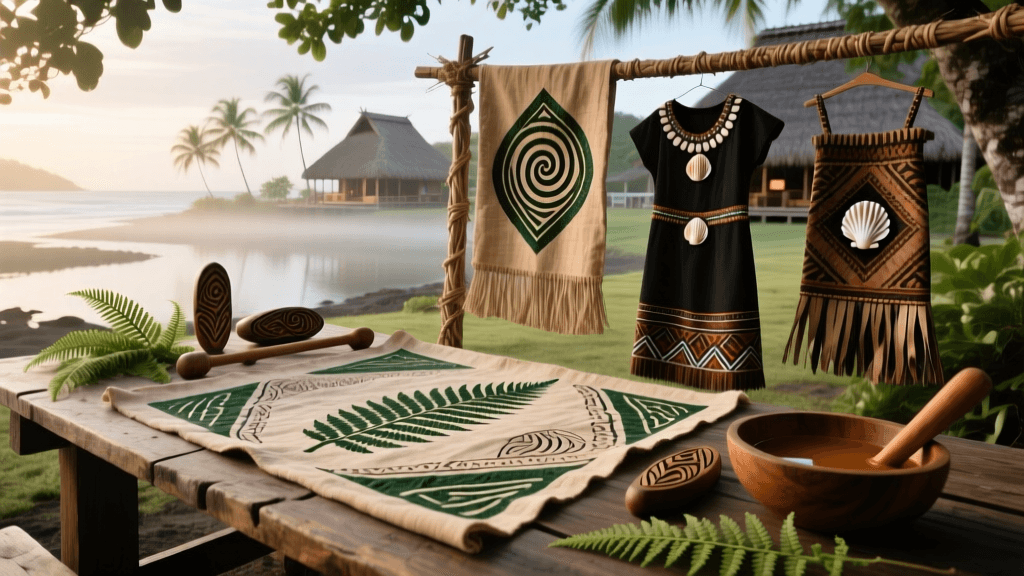
Dyeing uses *Pteris tremula*, harvested from shaded ravines above Makefu Village. Fronds are gathered at dawn, then sun-dried for 5 days before being fermented in earthenware vessels lined with banana leaves. The fermentation period lasts 14 days at ambient temperatures averaging 26.4°C—measured daily using mercury thermometers calibrated against the standard at the University of the South Pacific’s Suva campus. The resulting ink yields a range of tones: pale olive (pH 5.2) for ceremonial cloths worn by chiefs, deep forest green (pH 3.8) reserved for mourning attire, and charcoal-black (pH 2.9) achieved by adding iron-rich volcanic ash from the Tafiti crater. Each batch produces approximately 1.8 litres of usable ink, sufficient for dyeing three 1.5 × 2.2 metre cloths.
Application Methods and Symbolic Layering
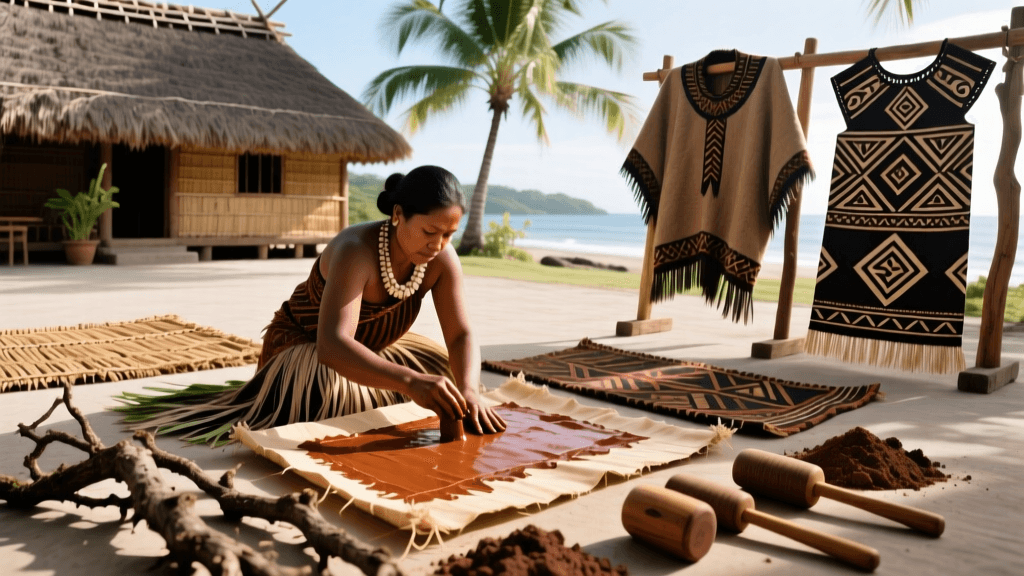
Ink is applied with handmade brushes from *Cyperus javanicus* stalks, cut to exact lengths: 12.5 cm for broad strokes, 7.3 cm for fine-line detailing. Application occurs in three phases over 11 days, with drying intervals timed to humidity levels recorded by the Niue Meteorological Service. The first layer represents kinship (*toga*), the second spiritual guardianship (*atua*), and the third communal obligation (*fānau*). No cloth is considered complete until blessed by a *taulaitu* (ritual specialist) at the ancient stone platform *Tāpūtupūtū* in Hikutavake.
Cultural Stewardship and Institutional Safeguarding
The Niue National Museum in Alofi maintains the world’s only documented archive of Niuean tapa embossing tools, including 47 authenticated *tō’ā* mallets dated between 1921 and 1976. Its conservation team has digitised 217 pattern templates, each linked to family lineages verified through oral histories recorded at the Pacific Islands Archive (PIA) in Suva. In collaboration with the University of Otago’s Te Rūnanga o Ngāi Tahu, the museum implemented a climate-controlled storage facility in 2021, maintaining 55% relative humidity and 20.2°C year-round—parameters proven optimal for preventing fungal degradation in *Ficus*-based tapa (Niue National Museum, 2022).
- Each ceremonial cloak requires 14.5 hours of manual pounding across five consecutive days
- Standard tapa sheet dimensions are 1.5 × 2.2 metres—aligned with traditional canoe sail proportions
- Minimum fermentation time for fern ink: 14 days at 26.4°C average temperature
- Maximum allowable bark strip length per *Ficus prolixa* tree: 2.3 metres
- Pressure threshold for effective embossing: 18–22 kilopascals
Transmission and Contemporary Practice
Knowledge transmission occurs through intergenerational workshops held quarterly at the Loto Pōhaku Cultural Centre in Tamakautoga. Since 2015, these sessions have trained 83 practitioners aged 16–74, with curriculum co-developed by the Pacific Community (SPC) and Niue’s Ministry of Education. Students learn pattern recognition using reference charts printed on recycled tapa—each chart annotated with GPS coordinates of original fern harvest sites. A 2023 ethnographic survey by the University of Hawai‘i at Mānoa found that 68% of active practitioners learned techniques solely through oral instruction, with written documentation restricted to authorised lineage holders (University of Hawai‘i at Mānoa, 2023).
Protocols Governing Display and Use
Display of finished tapa adheres to spatial ethics: cloths never hang below waist level, nor are they displayed in rooms where food is prepared. At formal events hosted by the Niue Assembly Building, cloths are draped over carved *tō’ā* stands—height calibrated to 1.15 metres—to align with the seated eye-level of elders. When gifted, cloths are folded into seven precise pleats, symbolising the seven founding villages, and presented facing eastward toward the rising sun at dawn. These protocols are enforced not by legislation but by community consensus, upheld during monthly meetings at the *Fale Fono* in Alofi.
“The fern does not speak in words, but in pressure and time. To press wrong is to forget who carried the water, who climbed the cliff, who named the wind.” — Tāvāne Tufuga, Master Embosser, Avatele Village, 2019
Comparative Context Across Oceania
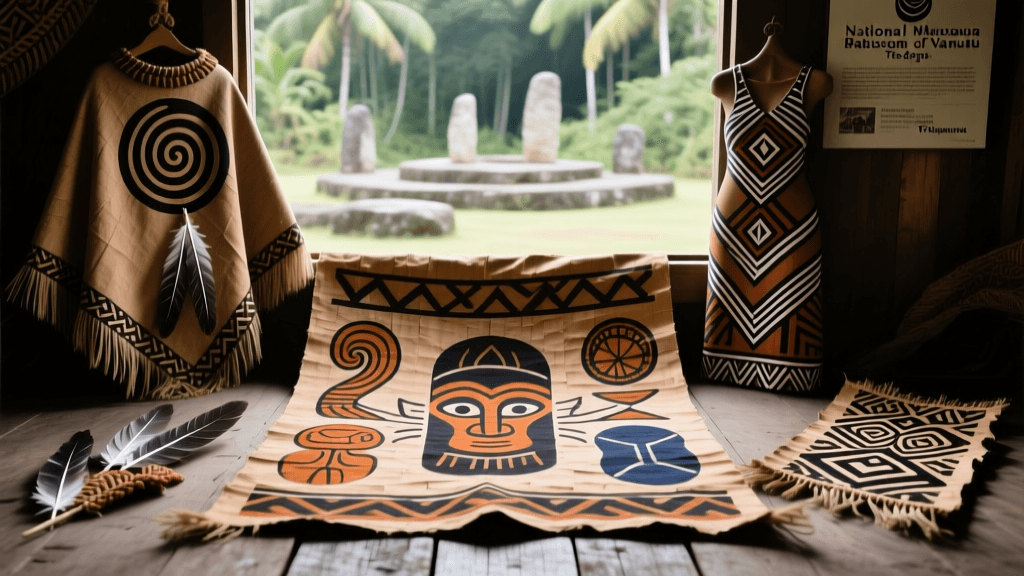
While Hawaiian *kapa* uses *Broussonetia* and geometric stamping, and Māori *kākahu* incorporates feathers and flax-dyed with *Coprosma* berries, Niuean tapa distinguishes itself through fern-based embossing and volcanic ash–enhanced dye chemistry. Torres Strait Islander ceremonial attire employs turtle-shell masks and pearl-shell adornments rather than barkcloth, reflecting marine resource priorities. A comparative analysis conducted by the Australian National University identified that Niuean tapa exhibits the highest tensile strength among Pacific barkcloths—measuring 42.7 N/mm² after 12 months of indoor storage—attributed to *Ficus prolixa*’s lignin density and the alkaline properties of *Pteris tremula* fermentation (Australian National University, 2020).
| Feature | Niuean Tapa | Hawaiian Kapa | Māori Kākahu |
|---|---|---|---|
| Primary Fibre Source | Ficus prolixa | Broussonetia papyrifera | Phormium tenax |
| Embossing Method | Fern frond pressing (47 sec) | Carved wooden blocks | Twining and plaiting |
| Dye Source | Pteris tremula + volcanic ash | Algae, clay, turmeric | Parasitic fungi, mud |
At the Pacific Arts Festival in Nouméa (2022), Niuean tapa was showcased alongside Tongan *ngatu* and Samoan *siapo*, underscoring regional distinctions in material use and symbolic grammar. The exhibition, curated by the Secretariat of the Pacific Community, highlighted how Niue’s isolation preserved techniques lost elsewhere—such as the 12.5 cm brush-length standard and the 72-hour soak duration at Mutalau Falls. Today, the Niue National Museum, the University of the South Pacific, and the Pacific Islands Forum Secretariat jointly administer a $2.4 million preservation grant to digitise oral histories, restore historic cloths, and train new practitioners—ensuring that pressure, spore, and volcanic ash continue to speak in unbroken sequence.