Nishijin-Ori vs Yuzen Silk: 2026 Kimono Fabric Guide
The Intersection of Heritage and Modernity in 2026
The landscape of traditional Japanese garments in 2026 is a fascinating intersection of ancestral craftsmanship and contemporary lifestyle demands. As global interest in sustainable, slow fashion continues to surge, the kimono has experienced a remarkable renaissance among younger demographics and international collectors. However, when selecting a silk kimono, buyers, stylists, and enthusiasts inevitably face the ultimate textile dilemma: choosing between Nishijin-Ori (woven silk) and Yuzen (dyed silk). Both represent the zenith of Japanese textile arts, yet they offer vastly different aesthetic, tactile, and practical experiences.
Understanding the nuances of these two legendary fabrics is essential for anyone looking to invest in authentic Japanese garments this year. In this comprehensive 2026 guide, we will dissect the construction, pricing, climate adaptability, and styling applications of Nishijin-Ori and Yuzen silk, ensuring you make an informed and culturally respectful choice.
Nishijin-Ori: The Woven Masterpiece
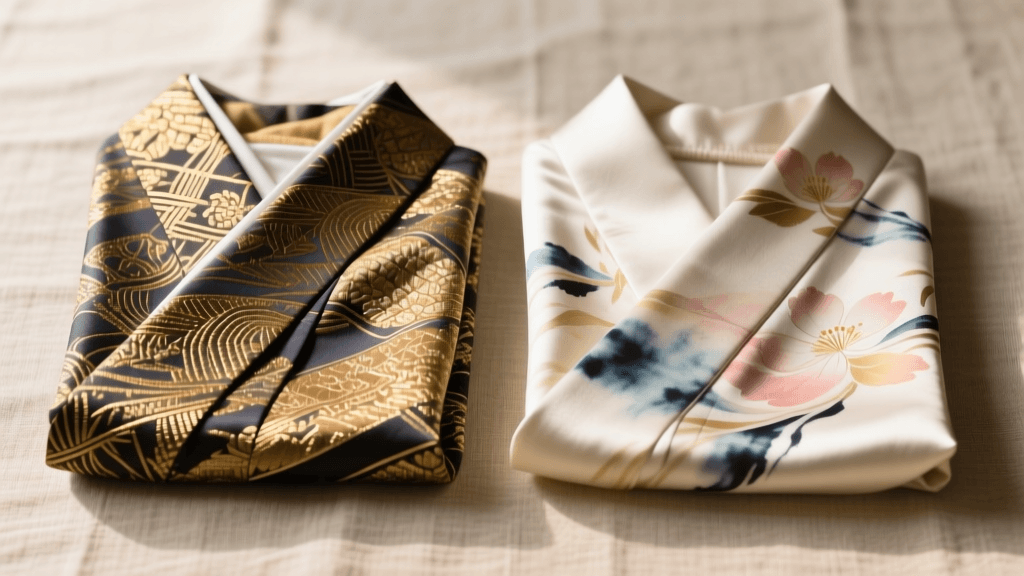
Originating in the Nishijin district of Kyoto, Nishijin-Ori is not merely a fabric; it is an architectural marvel of threads. Unlike fabrics that are dyed after weaving, Nishijin-Ori utilizes the sakizome (pre-dyeing) technique. Every single silk thread is meticulously dyed before it is loaded onto the loom. According to The Metropolitan Museum of Art's historical archives on Japanese textiles, this method of weaving complex patterns directly into the fabric structure dates back over a millennium, evolving significantly during the Edo period.
In 2026, authentic Nishijin-Ori is predominantly woven using advanced Jacquard looms, though the most prestigious, museum-grade pieces are still hand-woven. The resulting fabric is characterized by its incredible density, structural stiffness, and opulent three-dimensional patterns. It frequently incorporates kinran (gold leaf thread) and ginran (silver leaf thread), giving the textile a heavy, luxurious drape that catches the light dynamically.
2026 Market Realities: The artisan shortage in Kyoto has reached a critical point this year. Consequently, the price for a standard tan (a bolt of fabric measuring approximately 36 centimeters wide and 12 meters long) of genuine Nishijin-Ori now averages between ¥380,000 and ¥850,000 ($2,500 to $5,700 USD, based on 2026 exchange rates). It is primarily used for obi (sashes) and highly formal outer garments like the uchikake (wedding overcoat).
Yuzen Silk: The Canvas of Dyeing
If Nishijin-Ori is architecture, Yuzen is a painting. Yuzen is a resist-dyeing technique applied to woven silk fabric (atokizome). The most famous variants are Kyo-Yuzen (from Kyoto) and Kaga-Yuzen (from Kanazawa). The artisan uses a cone-shaped applicator to draw intricate designs with a rice-paste resist (itome-nori). This paste acts as a dam, preventing dyes from bleeding into one another when the fabric is hand-painted or stencil-dyed.
The Victoria and Albert Museum (V&A) notes that Yuzen revolutionized Japanese fashion in the late 17th century because it allowed for pictorial, free-flowing designs that were previously impossible with woven textiles. In 2026, Yuzen silk remains the gold standard for the main body of the kimono (kosode). The silk used for Yuzen is typically a high-quality crepe (chirimen) or smooth satin (shusu), providing a fluid, soft drape that contours beautifully to the body.
2026 Innovations: This year has seen a massive shift toward eco-conscious Yuzen production. Many Kyoto ateliers have replaced traditional chemical mordants with botanical fixatives and closed-loop water filtration systems to protect the Kamo River. A hand-painted Kyo-Yuzen kimono bolt currently ranges from ¥250,000 to ¥650,000 ($1,600 to $4,300 USD).
Head-to-Head: 2026 Comparison Chart
To help you decide which textile aligns with your wardrobe needs, budget, and climate, consult the structured comparison below:
| Feature | Nishijin-Ori (Woven) | Yuzen Silk (Dyed) |
|---|---|---|
| Primary Technique | Sakizome (Pre-dyed threads, Jacquard woven) | Atokizome (Resist-dyeing on woven silk) |
| Weight & Drape | Heavy, stiff, structural, sculptural | Lightweight, fluid, soft, contoured |
| Breathability | Low (dense thread count traps heat) | High (especially on chirimen crepe silk) |
| 2026 Avg. Price (USD) | $2,500 - $5,700+ per tan | $1,600 - $4,300 per tan |
| Primary Garment Use | Obi (sashes), formal Uchikake, Haori jackets | Kimono body, Juban (undergarments), Haori |
| Formality Level | Peak formality (especially with gold/silver) | Variable (depends on motif and crest count) |
| Maintenance | Spot clean only; highly susceptible to snagging | Requires professional Maruarai (full washing) |
Authentication and Sourcing in 2026
With the rise of AI-generated textile prints and mass-market synthetic knockoffs flooding e-commerce platforms, authenticating your silk is more critical than ever in 2026. When sourcing genuine Nishijin-Ori or Yuzen, always look for the official Dento-teki-kogei-hin (Traditional Craft Product) mark. As outlined by the Ministry of Economy, Trade and Industry (METI), this gold foil sticker guarantees that the item was handcrafted by certified artisans in its historic region using traditional materials and methods.
When purchasing from antique markets in Kyoto (like the monthly Toji Temple market) or high-end Ginza boutiques, request the shikomi (preparation) documentation. For Yuzen, this may include the original shitae (underdrawing) sketches by the master dyer. For Nishijin-Ori, reputable dealers will provide a punch-card or digital Jacquard file history proving the complexity of the weave.
Climate Adaptability: Dressing for Modern Seasons
Japan's climate has shifted noticeably, with 2026 recording some of the most intense and prolonged heatwaves in East Asian history. This reality drastically impacts how traditional garments are worn.
- Winter & Early Spring: Nishijin-Ori shines here. Its dense weave acts as an excellent windbreaker, and the heavy silk provides substantial insulation when worn over multiple layers.
- Summer (Hitoe & Natsumono): Standard Nishijin-Ori is entirely unsuitable for summer. Instead, Yuzen techniques are adapted to ro (gauze) and sha (leno weave) silks. These sheer, breathable fabrics feature Yuzen dyeing that looks like floating watercolors, offering both cooling properties and high aesthetic value.
- The Monsoon (Tsuyu): High humidity can cause the metallic threads in Nishijin-Ori to tarnish or the stiffening agents to degrade. Yuzen crepe silk handles moisture better but requires immediate airing out to prevent mildew.
Modern Styling: The Art of the Mix
The golden rule of modern kimono styling in 2026 is contrast. You rarely wear a Nishijin-Ori kimono with a Nishijin-Ori obi; the outfit would be overwhelmingly heavy, both visually and physically. Instead, the contemporary aesthetic relies on the interplay between the two textiles.
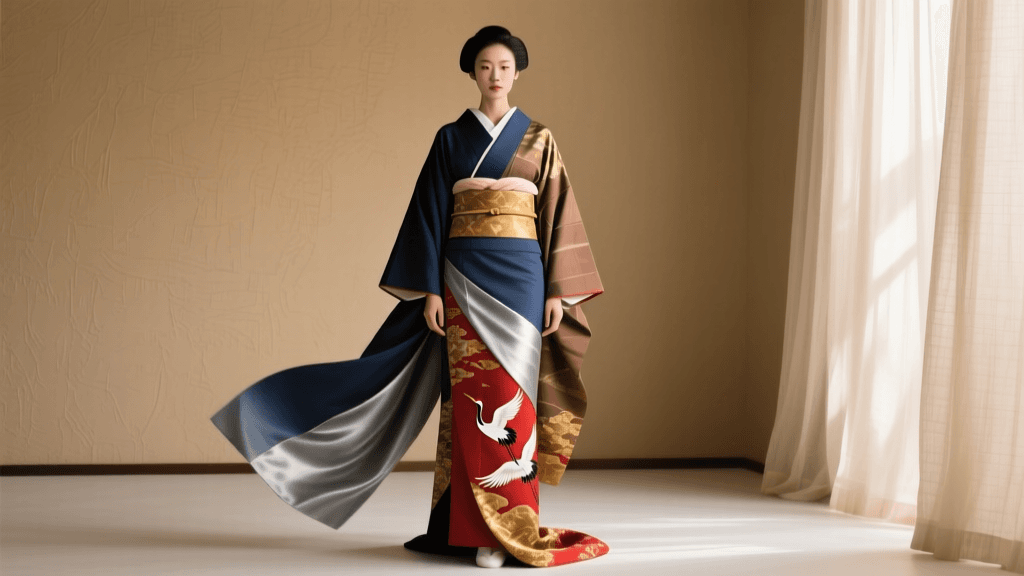
The Classic Formal Pairing: A fluid, hand-painted Kyo-Yuzen kimono featuring a subtle, flowing motif (like weeping willows or cranes) is grounded by a stiff, heavily brocaded Nishijin-Ori fukuro obi (double-fold sash). The Yuzen provides the artistic canvas, while the Nishijin-Ori provides the structural anchor and a flash of metallic brilliance at the waist.
The 2026 Trend - 'Neo-Classic': Younger wearers are increasingly pairing vintage, subdued Nishijin-Ori haori (jackets) with minimalist, solid-colored Yuzen-dyed kimonos. This allows the intricate woven geometry of the jacket to pop without clashing with a busy dyed pattern underneath.
Care and Longevity: Protecting Your Investment
Silk is a protein fiber, making it highly susceptible to sweat, UV light, and improper storage. In 2026, the standard for high-end kimono maintenance is Maruarai, a specialized full-immersion washing technique using gentle, pH-neutral enzymes that remove deep-set stains without stripping the Yuzen dyes or crushing the Nishijin weave.
For routine care, never hang your silk garments on standard wire or wooden hangers, as the weight of the Nishijin-Ori can warp the shoulder seams. Use wide, padded bamboo hangers. Store both textiles in tatoushi (traditional acid-free paper wrappers) inside a paulownia wood chest (kiri-tansu), which naturally regulates humidity and repels insects. Avoid plastic garment bags entirely; they trap the off-gassing chemicals from dry cleaning and trap moisture, leading to rapid silk rot.
Conclusion
Choosing between Nishijin-Ori and Yuzen silk is not about determining which is superior, but rather understanding their distinct roles within the sartorial ecosystem of the kimono. Nishijin-Ori offers unparalleled structural majesty and woven opulence, making it the undisputed king of formal sashes and ceremonial outerwear. Yuzen silk, with its painterly fluidity and breathable grace, remains the essential canvas for the kimono itself. By respecting the unique properties, care requirements, and 2026 market realities of both textiles, you ensure that these magnificent examples of Asian heritage continue to thrive in the modern wardrobe.