Nishijin Ori Weaving Workshops: A Guide to Kyoto's Kimono Textiles
The Legacy of Nishijin-ori: Japan’s Premier Textile Craft
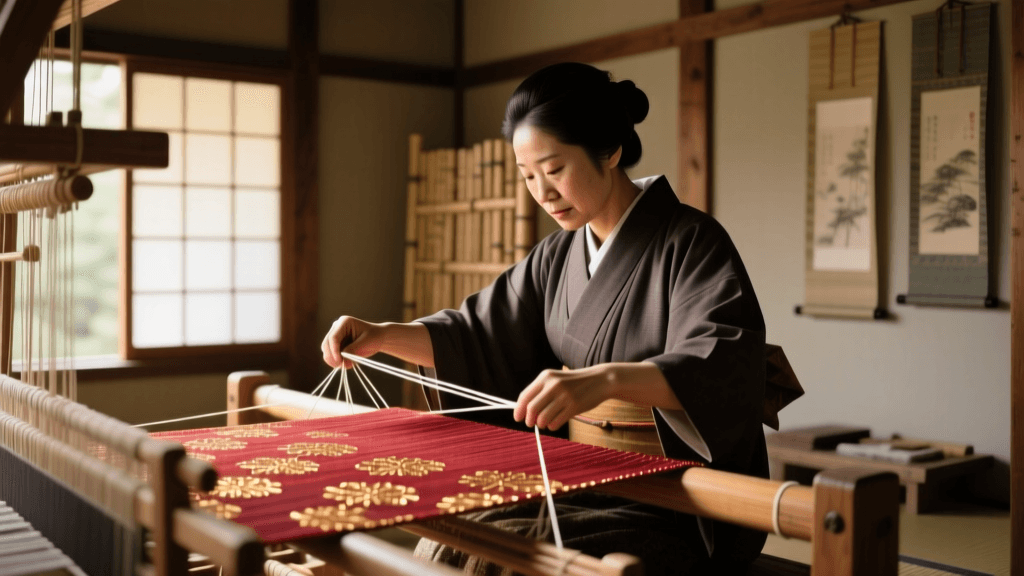
Kyoto is globally revered as the cultural heart of Japan, and nowhere is this more evident than in the historic Nishijin district. For over twelve centuries, this neighborhood has been the epicenter of Japan’s most luxurious and complex textile weaving tradition: Nishijin-ori. Originating in the Heian period (794-1185) and formalized after the Onin War in the 15th century, Nishijin weaving is characterized by its intricate patterns, vibrant yarn-dyed silk threads, and the lavish use of gold and silver leaf. Today, experiencing a Nishijin-ori artisan workshop offers an unparalleled glimpse into the meticulous world of Japanese traditional crafts, where mathematics, art, and generational skill intersect to create the world’s most exquisite kimono and obi (sashes).
Understanding the Craft: Saki-Zome and the Tanmono
To fully appreciate a weaving workshop, one must understand the foundational techniques that define Nishijin-ori. Unlike many other Japanese textiles that utilize ato-zome (piece-dyeing, where the fabric is woven first and dyed later), Nishijin-ori relies almost exclusively on saki-zome (yarn-dyeing). Artisans dye the raw silk threads before they are mounted on the loom. This allows for the creation of highly complex, multi-colored woven patterns that are reversible and incredibly durable.
The weaving process is bound by the strict dimensions of the tanmono, the standard kimono bolt. A traditional tanmono measures exactly 38 centimeters in width and roughly 12 meters in length. Master weavers must calculate thread tension and account for the precise shrinkage that occurs during the final yudanoshi (water-straightening) finishing process. For the most intricate tapestry weaves, known as tsuzure-ori, an artisan using a traditional handloom (sorabata) may produce a mere two to three centimeters of fabric per hour. A single, hand-woven fukuro obi (a formal double-layered sash measuring 31 cm wide and 4.2 meters long) can take anywhere from three to six months to complete, easily commanding retail prices between 500,000 JPY and 2,000,000 JPY.
Materials, Seasonality, and Artisan Techniques
Nishijin artisans adapt their weaving structures to Japan’s distinct seasons. For winter and formal occasions, weavers utilize chirimen (silk crepe) or heavy brocades interwoven with kinkaku (gold leaf thread). The gold leaf is painstakingly applied to specialized paper, cut into micro-millimeter strips, and wrapped around a silk core thread. Conversely, for summer garments, artisans shift to ro and sha weaving techniques. These are highly specialized gauze weaves that require the warp threads to be twisted and crossed over one another, creating a breathable, semi-transparent fabric that provides cooling ventilation while maintaining structural integrity for the kimono silhouette.
Top Artisan Workshops and Experiences in Kyoto
For textile enthusiasts, fashion historians, and travelers seeking authentic cultural immersion, Kyoto offers several avenues to witness and participate in Nishijin weaving. Below are the premier locations to experience this heritage craft firsthand.
1. Nishijin Textile Center (Nishijin Ori Kaikan)
As the most accessible entry point for international visitors, the Nishijin Textile Center serves as both a museum and a living workshop. Located in the heart of the weaving district, the center features daily kimono fashion shows and live demonstrations on both traditional handlooms and modern Jacquard looms. For hands-on experiences, visitors can book short workshops to weave their own small items, such as coasters or table runners, using miniature table looms. These sessions typically last 45 to 60 minutes and are guided by English-speaking instructors.
2. Hosoo Flagship Store and Gallery
Founded in 1688, Hosoo is one of the most prestigious Nishijin weaving houses, historically supplying textiles to the Imperial Court and elite tea ceremony families. While their flagship store on Muromachi Street is primarily a luxury retail space and gallery, it is an essential destination for understanding the modern evolution of Nishijin-ori. Hosoo has successfully adapted traditional kimono weaving techniques to create high-end interior fabrics, wall coverings, and contemporary fashion accessories. While they do not offer daily public weaving classes, their gallery exhibitions and occasional private artisan talks provide profound insights into the business and preservation of high-level Japanese crafts.
3. Private Machiya Artisan Studios
For a deeply immersive and professional experience, booking a private tour of a working machiya (traditional wooden townhouse) studio is highly recommended. Platforms specializing in Japanese cultural tourism often partner with independent, multi-generational weaving families. In these intimate settings, visitors can hear the deafening, rhythmic clack of the wooden sorabata handlooms and observe the hikibata (drawloom) technique, where a master weaver and an apprentice must work in tandem—one operating the pedals and shuttle, the other manually pulling the complex pattern harnesses from the second floor. These private sessions require advance booking and a higher budget but offer unparalleled access to the realities of artisan life.
Workshop Comparison Chart
| Venue Type | Duration | Estimated Cost (JPY) | Best For | Booking Lead Time |
|---|---|---|---|---|
| Nishijin Textile Center | 45 - 60 mins | 1,500 - 3,000 | Beginners, families, quick cultural overview | 1 - 2 weeks |
| Hosoo Gallery Tour | 60 - 90 mins | Free (Exhibition) / Private tours vary | Design professionals, luxury textile enthusiasts | 1 month (for private) |
| Private Machiya Studio | 2 - 3 hours | 15,000 - 30,000 | Textile students, serious collectors, photographers | 2 - 3 months |
Practical Advice: Booking, Costs, and Artisan Etiquette
When planning a visit to Nishijin weaving workshops, proper preparation ensures a respectful and rewarding experience. According to the Kyoto Official Travel Guide, the traditional craft industry relies heavily on seasonal rhythms and strict production schedules, meaning walk-in access to active, high-end studios is virtually nonexistent.
- Booking and Language: Always book private studio tours at least two months in advance. If you do not speak Japanese, ensure your booking includes a specialized craft translator. Translating technical weaving terminology (such as warp tension, shuttle mechanics, and silk grades) requires specific linguistic expertise.
- Photography Rules: Flash photography is strictly prohibited in almost all workshops, as sudden bright lights can distract weavers operating dangerous, heavy machinery. Furthermore, the intricate pattern drafts and punch cards used for Jacquard looms are considered closely guarded intellectual property. Always ask explicit permission before photographing design blueprints.
- Studio Etiquette: Working machiya studios are often compact and filled with delicate silk threads that can easily snag or absorb moisture. Avoid wearing heavy perfumes, dangling jewelry, or rough fabrics that might catch on the looms or the finished textiles. Maintain a quiet demeanor, as weavers must count threads and maintain intense concentration.
- Purchasing Authentic Pieces: If you wish to purchase an authentic Nishijin-ori obi or textile, be prepared for the investment. The Japanese government’s Ministry of Economy, Trade and Industry (METI) strictly regulates the 'Traditional Craft Product' designation. Look for the official gold foil certification seal on the fabric's packaging, which guarantees the item was hand-woven in the Nishijin district using traditional methods and natural silk.
Preserving the Future of Japanese Weaving
The Nishijin textile industry currently faces significant challenges, including an aging artisan population and a decline in everyday kimono wear. However, the integration of traditional weaving into modern global fashion, interior design, and experiential tourism is breathing new life into the district. By participating in artisan workshops and supporting authentic heritage brands, visitors play a direct role in sustaining the economic viability of these master weavers. Experiencing the rhythmic pulse of the wooden loom and the blinding shimmer of woven gold leaf is not merely a tourist activity; it is a vital engagement with one of Asia’s most sophisticated and enduring textile traditions.