Kimono Textile Trade Routes: 2026 Historical Imports
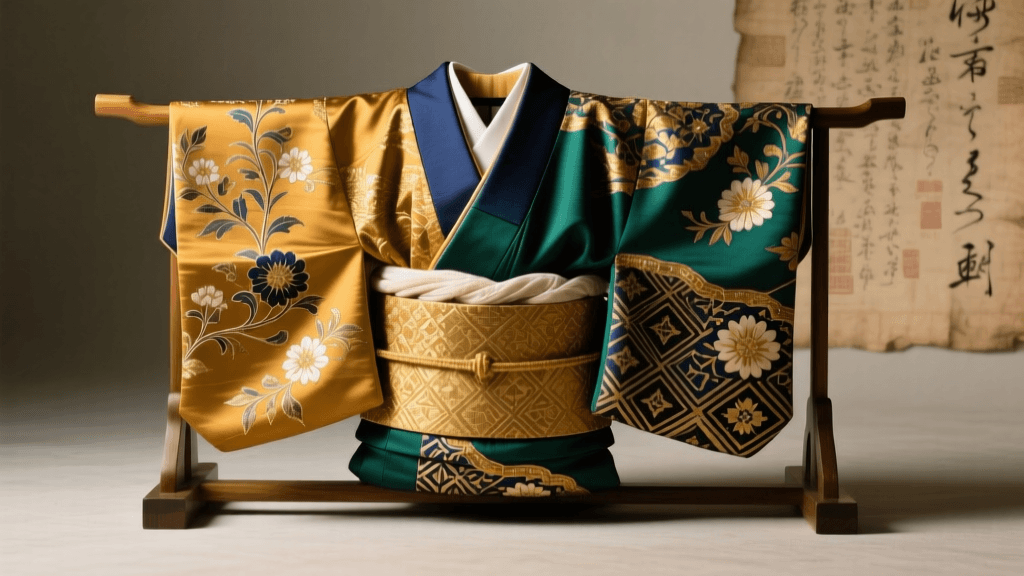
The Silk Road's Thread: How Imports Shaped the Kimono
When we envision the traditional Japanese kimono, it is easy to imagine it as an isolated cultural artifact, born entirely from the island nation's indigenous traditions. However, the truth is far more expansive and deeply intertwined with global commerce. The kimono is, in many ways, a canvas of ancient globalization. In 2026, a renewed fascination with 'Silk Road' kimono textiles has sparked a massive revival among antique collectors, fashion historians, and contemporary artisans. Understanding the historical trade routes that brought foreign dyes, weaving techniques, and motifs to Japan is essential for anyone looking to appreciate, collect, or preserve these garments today.
The foundation of Japan's textile imports can be traced back to the Nara and Heian periods (710–1185 CE). During this era, the Silk Road served as the ultimate conduit for luxury goods, connecting the Roman Empire, Persia, India, and China to the Japanese archipelago. According to the UNESCO Silk Roads Programme thematic archives, the exchange of textiles was not merely transactional; it was a profound transfer of technology, aesthetics, and cultural philosophy. The imperial court in Japan eagerly consumed these imported luxuries, using them to signify rank, spiritual devotion, and worldly sophistication.
The Shosoin Repository: A Time Capsule of Early Imports
To understand the historical imports that eventually influenced kimono textiles, one must look to the Shosoin repository in Nara. This 8th-century storehouse contains thousands of artifacts, including exquisite textiles that never existed natively in Japan. Among these are Persian weft-faced compound twills, Chinese brocades, and Indian cottons. The motifs found on these ancient imported fabrics—such as the roundel, the hunting scene, and the stylized lotus—were meticulously copied by Japanese weavers. Over centuries, these foreign designs were abstracted and refined, eventually becoming the foundational patterns seen on the kimono of the Edo period and the haute couture kimono of 2026.
Key Historical Imports in Kimono Textile Making
Persian Motifs and Tang Dynasty Influences
Two of the most recognizable patterns in Japanese textile history are direct descendants of Silk Road imports. The karakusa (arabesque) motif, characterized by its interlacing, scrolling vines, originated in Hellenistic Greece, traveled through Persian art, and arrived in Japan via Tang Dynasty China. Similarly, the shippo tsunagi (interlocking circles or 'seven treasures') pattern has roots in Islamic and Persian geometric art. In 2026, contemporary kimono designers are deliberately highlighting these historical lineages, creating 'neo-classical' obi sashes that explicitly celebrate the Persian and Chinese origins of these beloved Japanese motifs.
Imported Dyes and Metallic Threads
The vibrant palette of the traditional kimono relies heavily on historical imports. While indigenous plants like ai (indigo) were widely used, luxury colors required foreign materials. Safflower (benibana), which produces a brilliant and highly prized crimson, was imported from China and the Middle East before being successfully cultivated in Japan. Furthermore, the creation of Nishijin-ori (the luxurious brocade weaving of Kyoto) was revolutionized by the importation of metallic threads. Early Japanese weavers relied on imported gold and silver leaf applied to paper or animal hide, a technique heavily influenced by continental methods. Today, the 2026 market for vintage Nishijin-ori obi sashes with original, historically imported metallic threads is at an all-time high.
2026 Market Trends: Sourcing Historical Trade-Route Kimonos
For collectors and enthusiasts in 2026, identifying and acquiring kimono and obi that feature these historical trade-route motifs and techniques requires a discerning eye. The market has shifted heavily toward provenance and historical accuracy. Buyers are no longer just looking for beautiful garments; they are seeking wearable history that tells the story of global exchange. According to recent market analyses highlighted by the Victoria and Albert Museum's comprehensive guide on Kimono history, the appreciation for the cross-cultural origins of Japanese dress has elevated the value of specific textile types in the secondary market.
| Textile / Motif | Historical Trade Origin | 2026 Avg. Vintage Market Price (USD) | Collector Rarity |
|---|---|---|---|
| Nishijin-ori (Gold Brocade) | China / Persia | $1,200 - $3,500 | High |
| Karakusa Motif Yuzen | India / Persia / China | $400 - $850 | Medium |
| Shippo Tsunagi Brocade | Islamic World / China | $900 - $2,200 | High |
| Benibana (Safflower) Dyed Silk | Middle East / China | $600 - $1,500 | Very High |
Authentication and Sourcing in 2026
If you are sourcing these garments in 2026, authentication has become highly scientific. Reputable dealers in Kyoto and Tokyo now routinely use portable UV and spectral analysis tools to verify the age and origin of metallic threads and natural dyes. When purchasing a vintage Nishijin-ori obi claiming to feature historical gold leaf techniques, always request a spectral report to ensure the metallic elements are not modern synthetic replacements introduced in the late 20th century. For the best sourcing, the antique textile markets at the Kitano Tenmangu shrine in Kyoto remain the premier destination, particularly the specialized dealer stalls that focus exclusively on Edo and Meiji period trade-influenced textiles.
Where to Experience Trade-Route Kimono Textiles in 2026
The year 2026 has proven to be a landmark year for museum exhibitions focusing on the global origins of Japanese fashion. Institutions worldwide are moving away from presenting the kimono as a purely isolated phenomenon, instead contextualizing it within the broader narrative of Asian and Eurasian trade.
- The Kyoto National Museum: Their ongoing 2026 special exhibition, 'Threads of the Continent,' features side-by-side comparisons of 8th-century Shosoin textile fragments and 19th-century kimono that utilize the exact same Persian-derived motifs.
- Tokyo National Museum (Honkan): The newly updated textile wing in 2026 includes interactive digital looms that allow visitors to see how complex Chinese brocade patterns were adapted into Japanese jacquard weaving techniques.
- The Victoria and Albert Museum (London): Continuing its legacy of groundbreaking textile exhibitions, the V&A's 2026 curation highlights the maritime trade routes that brought Indian cottons and mordants to Japan, fundamentally altering the daily wear of the Edo-period commoner.
Preserving the Legacy: Modern Artisans and 2026 Revivals
Preservation in 2026 is not just about locking garments in climate-controlled vaults; it is about keeping the techniques alive. In the Nishijin weaving district of Kyoto, a new generation of artisans is combining historical research with modern technology. Using AI-assisted loom programming, these weavers are reconstructing lost 8th-century Persian-inspired patterns that were previously too complex or time-consuming to recreate by hand. By feeding high-resolution scans of Shosoin fragments into their digital jacquard systems, they are producing limited-run kimono and obi that are historically accurate down to the warp and weft.
Furthermore, natural dye revivalists in 2026 are re-establishing the ancient trade routes in a botanical sense. Agricultural cooperatives in Japan are partnering with botanical gardens in Central Asia to source heritage safflower and madder seeds, ensuring that the exact chemical profiles of ancient imported dyes can be replicated in modern artisanal kimono production. This dedication to historical authenticity ensures that the legacy of the Silk Road continues to be worn, celebrated, and preserved.
Conclusion
The kimono is a masterpiece of Japanese aesthetics, but its DNA is undeniably global. From the scrolling arabesques of Persia to the brilliant crimson dyes of the Middle East, the historical imports that shaped Japanese textiles are a testament to the enduring power of cultural exchange. As we navigate the 2026 collector's market and witness the incredible museum exhibitions of this year, we are reminded that true tradition is not static. It is a living, breathing tapestry woven from the threads of the entire world.