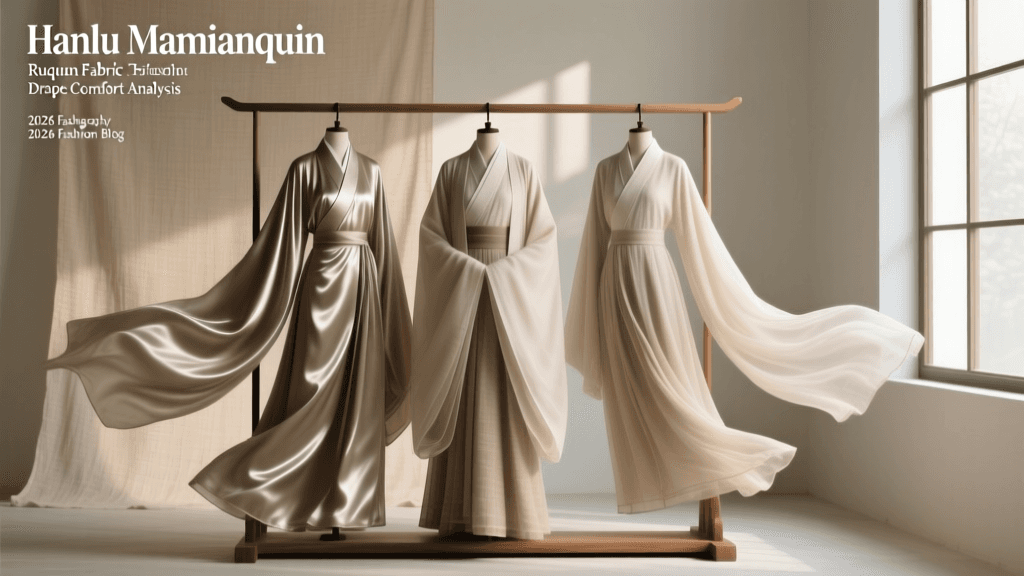
Han Dynasty Silk Drape Analysis: 2026 Academic Research Guide
The Evolution of Chinese Fashion History Education in 2026
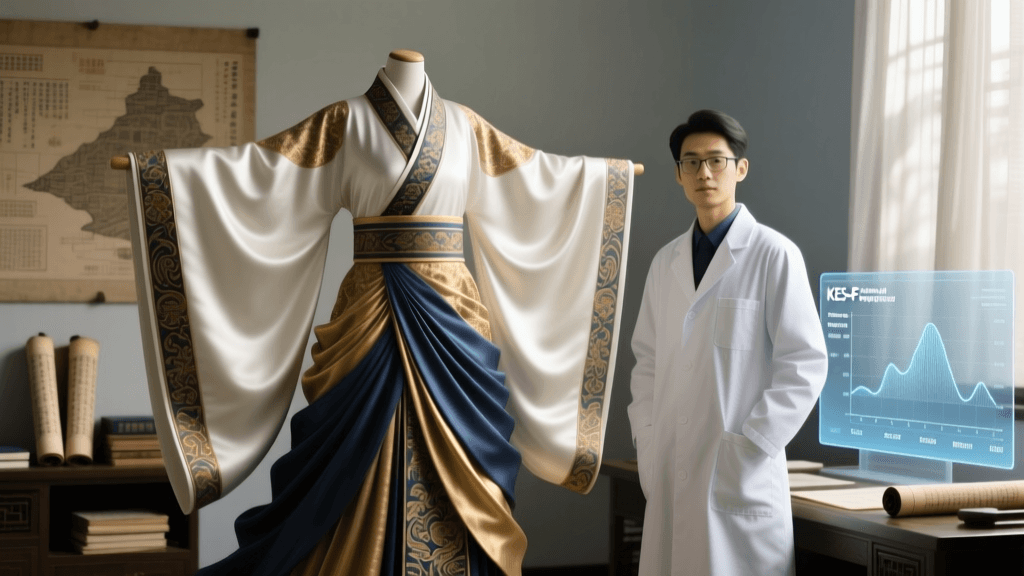
In the academic landscape of 2026, the study of Chinese fashion history has transcended traditional 2D sketching, static museum displays, and speculative pattern drafting. Today, leading institutions such as Donghua University and the Beijing Institute of Clothing Technology (BIFT) have fully integrated 3D physics-based drape analysis into their core curricula. This methodological shift allows researchers and students to virtually reconstruct ancient garments with unprecedented accuracy, analyzing how historical textiles interacted with the human body in motion. By combining archaeological data with advanced digital simulation, scholars are unlocking the secrets of ancient Chinese tailoring, providing a rigorous scientific foundation for both historical preservation and contemporary design.
The Xin Zhongshi Movement and the Demand for Accuracy
The explosive growth of the Xin Zhongshi (新中式), or 'New Chinese Style', movement has fundamentally altered the commercial and academic fashion landscape in 2026. Modern consumers and designers are no longer satisfied with superficial aesthetic borrowings; they demand structural and material authenticity. This market pressure has driven academic research to focus heavily on the precise drape, weight, and movement of historical fabrics. When a contemporary designer creates a Xin Zhongshi collection inspired by the Han dynasty, they now rely on peer-reviewed digital drape analyses to ensure the garment behaves exactly as its ancient counterpart would have. This synergy between rigorous academic research and the commercial fashion sector has made digital textile reconstruction one of the most vital and well-funded areas of Asian traditional garment studies.
Core Software and Hardware for Textile Reconstruction
To achieve millimeter-accurate simulations, researchers in 2026 rely on a combination of industry-leading software and precision hardware. The cornerstone of digital reconstruction is CLO3D, which has become the standard in global fashion academia. The 2026 iteration of the software features an AI-driven fabric scanning module that allows researchers to map the complex weave structures of ancient silks directly into the simulation engine. However, digital simulation is only as accurate as the physical data feeding it. Therefore, academic labs pair CLO3D with the KES-F (Kawabata Evaluation System for Fabrics). The KES-FB4 tester, specifically designed for shear and bending properties, measures the exact mechanical behavior of replica textiles, generating the raw data required to calibrate the digital avatars.
Case Study: The Mawangdui Han Tomb Silk Gauze
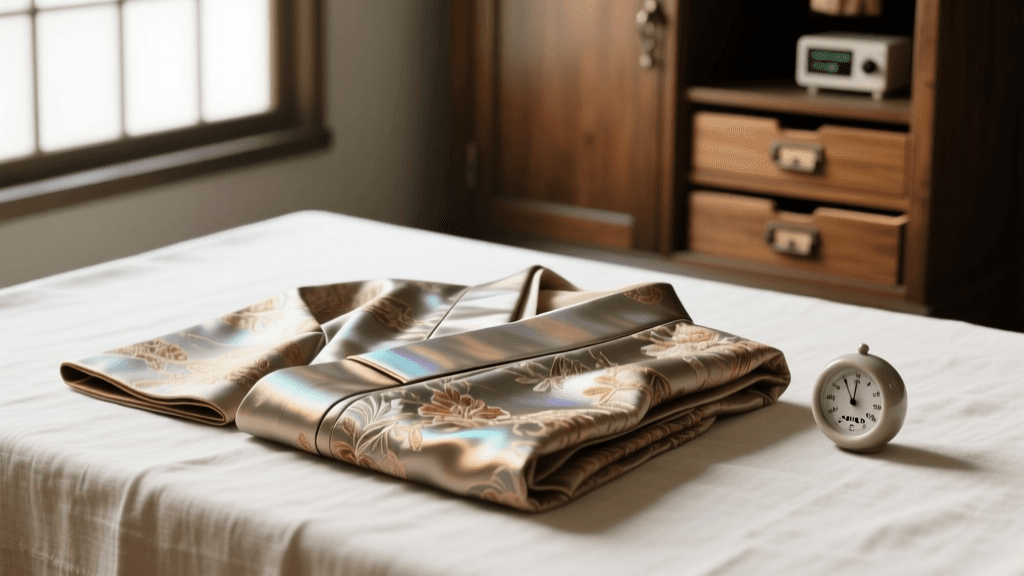
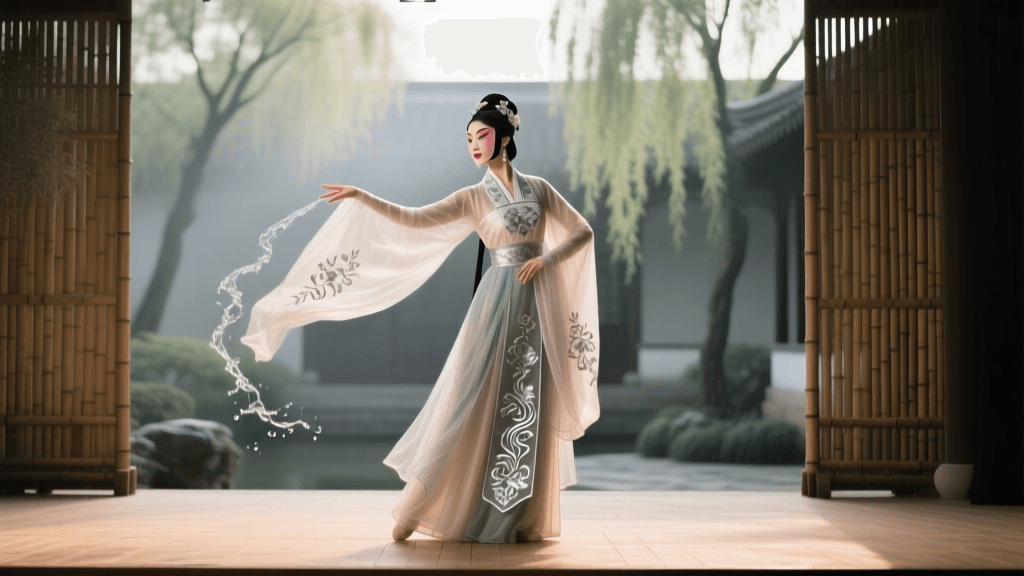
One of the most intensely studied artifacts in the 2026 academic syllabus is the plain-weave silk gauze gown (素纱襌衣, Su Sha Dan Yi) excavated from the Mawangdui Han Tombs. Weighing a mere 49 grams in total, with a fabric weight of approximately 15.4 g/m², this garment represents the zenith of ancient Chinese sericulture and weaving. Reconstructing its drape presents a unique challenge: the fabric is so lightweight that even the micro-currents of air generated by the wearer's movement drastically alter its silhouette. Supported by initiatives like the UNESCO Silk Roads programme, which continues to promote the preservation and study of ancient textile exchanges, researchers have created 1:1 physical replicas of the Mawangdui silk to feed into the KES-F testing apparatus, ensuring the digital twin behaves with the same ethereal fluidity as the 2,000-year-old original.
Step-by-Step Academic Workflow for Han Dynasty Shenyi
Reconstructing a traditional Han dynasty Shenyi (deep robe) with a right-over-left cross collar (交领右衽) requires a meticulous, multi-step workflow that bridges archaeology and digital engineering.
- Step 1: Artifact Data Collection and Pattern Drafting. Researchers begin by analyzing high-resolution photogrammetry of excavated garments. Because ancient textiles often suffer from warp distortion over centuries, scholars use algorithmic correction tools to deduce the original 2D pattern shapes, accounting for the characteristic bias-cut sleeves and curved hems of the Han era.
- Step 2: Digital Material Calibration. Using the KES-F data from physical replicas, researchers input the bending rigidity, shear stiffness, and tensile elongation into the CLO3D 2026 material editor. For the Mawangdui silk gauze, the particle distance is set to an ultra-fine 5mm to capture the micro-folds that a standard 20mm particle distance would miss.
- Step 3: Avatar Morphology Adjustment. Modern 3D avatars do not reflect the physiological realities of ancient populations. Researchers adjust the digital avatar's shoulder slope, torso length, and posture to match skeletal data from Han dynasty tombs, ensuring the garment drapes over a historically accurate body type.
- Step 4: Dynamic Simulation and Stress Mapping. The garment is simulated in motion—walking, kneeling, and bowing. The software generates stress maps highlighting areas of high tension, revealing how ancient tailors strategically placed seams to reinforce the delicate silk without disrupting the fluid drape.
Data Table: Physical vs. Digital Drape Metrics of Han Silk
The following table illustrates the correlation between physical KES-F testing of a Mawangdui replica and the CLO3D 2026 simulation metrics, as published in recent methodologies within the Textile Research Journal. This data is critical for validating the accuracy of digital historical reconstructions.
| Fabric Parameter | KES-F Physical Test (Replica) | CLO3D 2026 Simulation | Variance (%) |
|---|---|---|---|
| Bending Rigidity (B) | 0.042 gf·cm²/cm | 0.044 gf·cm²/cm | 4.7% |
| Shear Stiffness (G) | 0.85 gf/cm·deg | 0.82 gf/cm·deg | 3.5% |
| Tensile Elongation (Warp) | 3.2% | 3.1% | 3.1% |
| Weight (g/m²) | 15.4 g/m² | 15.4 g/m² | 0.0% |
Challenges in Academic Reconstruction
Despite the technological leaps of 2026, researchers face significant hurdles. The primary challenge is the degradation of organic fibers. Excavated silks have often undergone chemical changes, losing their original elasticity and sericin coating. To counter this, academic labs use predictive AI models trained on modern, unaged silk to 'reverse-engineer' the mechanical properties the fabric would have possessed on the day it was woven. Another challenge lies in the historical context of wear. Ancient garments were rarely worn as single layers; they were part of complex, multi-layered ensembles. Simulating the friction and inter-layer drag between a linen undergarment, a padded silk robe, and an outer gauze layer requires immense computational power, pushing the limits of even the most advanced university rendering farms.
Impact on the Global Fashion and Academic Community
The rigorous academic research being conducted in 2026 is not confined to university laboratories. The open-source sharing of these digital drape files and calibrated material presets has created a global renaissance in historical garment reproduction. Museums are utilizing these 3D simulations to create interactive, augmented reality exhibits where visitors can see how fragile, light-sensitive artifacts would have moved when worn by their original owners. Furthermore, the data is actively informing the sustainable fashion sector, as designers look to the zero-waste pattern-cutting techniques and efficient fabric utilization inherent in traditional Chinese tailoring. By understanding the exact drape and structural integrity of ancient weaves, modern manufacturers can develop new, lightweight, high-performance textiles that mimic the brilliance of Han dynasty sericulture.
Conclusion
The integration of 3D drape analysis and AI-driven material simulation has fundamentally revolutionized Chinese fashion history education in 2026. By treating ancient textiles not merely as static artifacts, but as dynamic, physics-based structures, researchers are preserving the intangible heritage of Asian traditions with scientific precision. As the Xin Zhongshi movement continues to bridge the gap between antiquity and modernity, the academic frameworks established today will ensure that the elegance, engineering, and cultural depth of traditional Chinese garments endure for generations to come.