2026 Hanfu Fabric Drape & Comfort: Best Textiles Guide
The Evolution of Hanfu Textiles in 2026
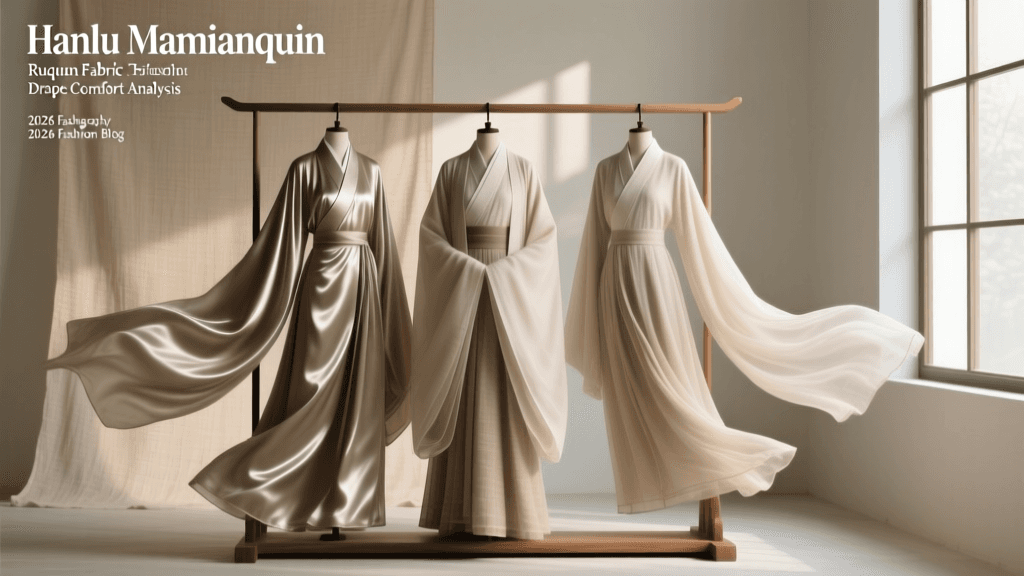
The global resurgence of traditional Chinese clothing has entered a highly sophisticated phase in 2026. Driven by the Xin Zhongshi (New Chinese Style) movement, modern wearers are no longer satisfied with mere visual accuracy; they demand exceptional textile performance, ergonomic comfort, and dynamic drape. Whether you are attending a formal tea ceremony in a Ming Dynasty Aoqun or navigating a bustling city street in a lightweight Tang Dynasty Ruqun, the fabric you choose dictates both the silhouette and the sensory experience. This comprehensive analysis breaks down the physics of fabric drape, the tactile comfort of natural and semi-synthetic fibers, and how to select the perfect textile for your Hanfu wardrobe this year.
Understanding Drape Coefficient and Bending Length
In textile engineering, drape is not just a subjective visual quality; it is a measurable physical property. The drape coefficient, often measured using a Cusick Drape Tester, indicates how a fabric folds and falls under its own weight. A high drape coefficient means the fabric is stiff and holds its shape, while a low coefficient indicates a fluid, clingy, and ethereal fall. Equally important is the bending length, which measures how far a fabric can extend horizontally before it bends under its own weight. For Hanfu, which relies heavily on flat-pattern cutting and wide sleeves rather than tailored darts and seams, these two metrics are the absolute foundation of the garment's aesthetic success.
In 2026, advanced textile milling has allowed for precise manipulation of these metrics. Weavers can now engineer a single bolt of fabric to have a crisp bending length at the waistband for structural support, while maintaining a fluid drape coefficient at the hem for elegant movement. Understanding these metrics allows enthusiasts to move beyond generic terms like "silky" or "heavy" and make data-driven purchasing decisions.
Comprehensive 2026 Hanfu Fabric Analysis
Mulberry Silk (Sang Can Si): The Gold Standard of Fluidity
Mulberry silk remains the undisputed champion of traditional Hanfu, but the market in 2026 offers highly specialized weaves. The weight of silk is measured in momme (mm). For summer garments like the Qixiong Ruqun, a 12 to 16 momme silk chiffon or georgette provides an ethereal, low-drape-coefficient fall that catches the wind beautifully. However, for structured garments, a 30-momme silk crepe or heavy charmeuse is essential. The sensory comfort of high-grade mulberry silk is unparalleled; its triangular prism-like fiber structure refracts light for a natural luster while its protein composition allows it to regulate body temperature, keeping the wearer cool in high humidity and warm in dry air.
Ramie and Xia Bu: Structured Breathability
Ramie, often referred to historically as Xia Bu (Summer Cloth), is experiencing a massive renaissance in 2026 due to its eco-friendly cultivation and exceptional structural properties. Unlike silk, ramie has a very low drape coefficient and a high bending length, meaning it is naturally crisp. This makes it the ultimate fabric for garments that require sharp, unyielding pleats without the need for synthetic interlinings. Modern enzymatic washing techniques introduced over the last two years have significantly reduced the traditional "scratchiness" of ramie, yielding a fabric that is crisp against the skin but softens beautifully with wear while maintaining its architectural drape.
Cupro and Tencel Blends: The 2026 Vegan Innovations
For those seeking the drape of silk without the animal-derived origins or the high maintenance, Cupro and Tencel (lyocell) blends have dominated the 2026 Xin Zhongshi market. Cupro, a regenerated cellulose fiber derived from cotton linter, mimics the low bending length and slippery hand-feel of silk charmeuse at a fraction of the cost. Tencel, known for its high tensile strength and moisture-wicking properties, is frequently blended with linen or cotton to create medium-drape fabrics perfect for everyday Hanfu. These semi-synthetics offer excellent thermal regulation and are machine-washable on gentle cycles, a massive leap forward for daily wearability.
Fabric Performance & Comfort Matrix
To help you make informed decisions, we have compiled a performance matrix based on 2026 textile testing data. This table correlates fabric types with their physical properties and ideal Hanfu applications.
| Fabric Type | GSM Range | Drape Characteristic | Breathability | Ideal Hanfu Style | 2026 Avg Cost/Meter |
|---|---|---|---|---|---|
| 16mm Silk Chiffon | 45-60 | Extremely Fluid | High | Tang Ruqun, Pibo (Shawls) | $35 - $50 |
| 30mm Silk Crepe | 110-130 | Heavy, Fluid Fall | Medium | Ming Aoqun, Formal Mamianqun | $85 - $120 |
| Enzyme-Washed Ramie | 120-150 | Crisp, Structured | Very High | Summer Mamianqun, Song Ku | $25 - $40 |
| 100% Cupro Satin | 100-120 | Fluid, Clinging | High | Everyday Ruqun, Lining | $20 - $30 |
| Tencel-Linen Blend | 140-160 | Medium Structure | Very High | Beizi (Cloaks), Banbi | $30 - $45 |
Matching Textiles to Traditional Silhouettes
The Mamianqun (Horse-Face Skirt)
The Mamianqun is a masterclass in structural engineering. It relies on deep, overlapping pleats that must remain sharp at the waist but flare out elegantly at the hem. If the fabric is too fluid (like a lightweight silk chiffon), the pleats will collapse, and the skirt will lose its iconic architectural shape. If the fabric is too stiff (like heavy canvas), the skirt will bell out awkwardly, resembling a lampshade. In 2026, the optimal choice for a Mamianqun is a 22 to 28 momme silk crepe, a heavy jacquard weave, or a densely woven Tencel-linen blend. These fabrics provide the necessary GSM (Grams per Square Meter) to weigh the pleats down, ensuring they swing beautifully with the wearer's stride while maintaining their folded integrity.
Tang Dynasty Qixiong Ruqun
The chest-high Ruqun of the Tang Dynasty demands extreme fluidity and volume. The skirt is typically gathered heavily at the chest and falls to the floor, requiring a fabric with a very low drape coefficient to avoid adding bulky volume at the bodice. A 12 to 16 momme silk georgette or a high-quality Cupro blend is ideal here. These fabrics gather tightly without adding thickness to the waistband and create a cascading, waterfall-like effect that is essential for the romantic, ethereal silhouette of the Tang era.
Ming Dynasty Aoqun (Jacket and Skirt)
The Ming Dynasty Ao (jacket) features distinct structural elements, such as the Pipa (lute) sleeves and stiff, high collars. To achieve the correct historical silhouette, the fabric must have a high bending length. Woven silk brocades, heavy damasks, or even structured wool-blend textiles for winter wear are required. The fabric must be capable of holding the gentle curve of the Pipa sleeve without collapsing, which requires a medium-to-high GSM and a crisp hand-feel.
Sensory Comfort and Skin Contact
Beyond visual drape, the microscopic texture of the fiber dictates all-day comfort. Silk fibroin is incredibly smooth, reducing friction against the skin and preventing irritation, which is vital for garments worn directly against the body without modern undergarments. However, in high-humidity environments, pure silk can sometimes cling uncomfortably. This is where the 2026 advancements in Tencel processing shine. Tencel fibers have a smooth surface but possess microscopic fibrils that wick moisture away from the skin at a rate significantly faster than cotton or silk, making Tencel-linen blends the ultimate choice for summer Hanfu worn in tropical or subtropical climates.
Preservation of Drape and Texture
Maintaining the engineered drape of your Hanfu requires meticulous care. The structural integrity of silk and ramie can be permanently altered by improper washing and heat. According to guidelines established by The Metropolitan Museum of Art's Textile Conservation department, protein-based fibers like silk are highly susceptible to alkaline degradation and thermal shock. Therefore, Hanfu should only be washed using pH-neutral detergents specifically formulated for delicates. Never wring silk or ramie; instead, roll the garment in a clean, dry towel to press out excess water, and always dry flat or on a padded hanger to prevent the bias grain from stretching and distorting the drape coefficient.
Furthermore, understanding the historical context of these textiles enhances our appreciation for their modern iterations. The exchange of weaving techniques and fiber technologies has been a cornerstone of Asian cultural history for millennia. As documented by the UNESCO Silk Roads programme, the movement of textiles across continents not only influenced global fashion but also drove early advancements in material science and cross-cultural diplomacy. Today, when we select a specific weave for our Hanfu, we are participating in a living continuum of that ancient material exchange.
Final Thoughts on 2026 Textile Selection
The modern Hanfu enthusiast is equipped with more textile options than at any point in history. By understanding the interplay between drape coefficient, bending length, and fiber composition, you can curate a wardrobe that is not only historically resonant but also supremely comfortable and tailored to your modern lifestyle. Whether you favor the crisp architecture of enzyme-washed ramie or the liquid luxury of 30-momme silk crepe, the right fabric is the true foundation of the Xin Zhongshi aesthetic.