Mastering Nishijin-ori: Kyoto's Traditional Silk Workshops
The Heartbeat of Kyoto: Understanding Nishijin-ori
When discussing the pinnacle of Japanese traditional garments, the conversation inevitably turns to the exquisite textiles that compose them. At the very zenith of this hierarchy sits Nishijin-ori, the legendary brocade weaving tradition of Kyoto. Originating in the Nishijin district over 1,200 years ago, this craft is the lifeblood of high-end kimono and obi (sash) production. According to The Metropolitan Museum of Art's Heilbrunn Timeline of Art History on Japanese Textiles, the sophisticated weaving techniques developed in this region have historically dictated the aesthetic standards of Japanese aristocratic and formal dress.
Unlike mass-produced fabrics, authentic Nishijin-ori is characterized by its intricate, multi-layered patterns and the use of premium silk threads, often incorporating gold and silver leaf. For textile enthusiasts and cultural travelers, visiting the artisan workshops where these masterpieces are born offers a profound glimpse into the dedication required to sustain Japan's sartorial heritage.
Saki-Zome: The Yarn-Dyed Distinction
To truly appreciate Nishijin-ori, one must understand the fundamental difference between saki-zome (yarn-dyed) and ato-zome (piece-dyed) textiles. Famous Kyoto styles like Kyo-yuzen are ato-zome, meaning the design is painted or dyed onto the fabric after it has been woven. Nishijin-ori, however, is strictly saki-zome.
In this painstaking process, individual silk threads are dyed specific colors before they ever touch a loom. The artisan must calculate the exact placement of every colored thread to ensure the pattern emerges perfectly as the weaving progresses. This requires a mastery of color theory, tension, and mathematical precision. The resulting fabric is reversible, incredibly durable, and possesses a deep, resonant luster that painted textiles simply cannot replicate.
The Artisan Process: From Thread to Textile
The creation of a single Nishijin obi is not the work of one person, but rather a symphony of over twenty specialized artisans. The division of labor is strictly maintained to ensure the highest quality at every micro-stage of production:
- Thread Preparation: Raw silk is degummed, twisted, and sorted by thickness.
- Dyeing: Master dyers color the threads using natural and synthetic dyes, matching precise pantone-like historical color palettes.
- Warping and Sizing: Thousands of warp threads are aligned and treated with a natural starch to prevent snapping under loom tension.
- Pattern Programming: Historically done via hand-punched Jacquard cards, modern studios often use digital equivalents, though the physical setup of the harness remains a manual, days-long task.
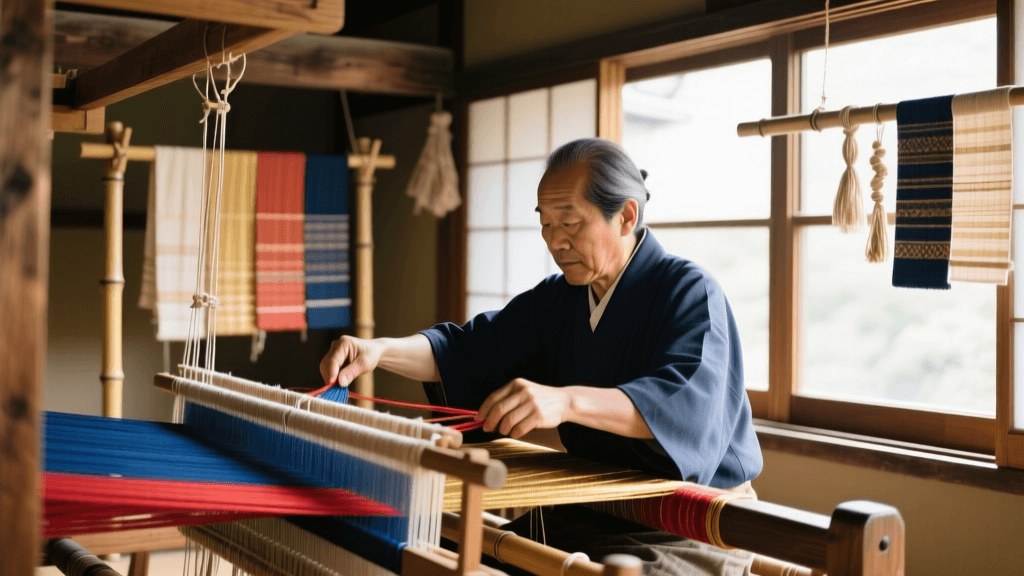
- Weaving: Using traditional hand-thrown shuttle looms or semi-automated Jacquard looms, the weaver interlaces the weft threads. The rhythmic 'gacha-gacha' sound of the looms is the historic soundtrack of the Nishijin district.
Comparing Nishijin-ori Weaving Techniques
Nishijin-ori is an umbrella term for several distinct weaving methods. Below is a comparison of the most prominent techniques used in kimono and obi production, detailing the time investment and market costs associated with each.
| Technique | Description & Characteristics | Time to Weave (1 Obi) | Average Cost (USD) | Best Kimono Pairing |
|---|---|---|---|---|
| Tsuzure-ori (Fingernail Weaving) | A tapestry-like technique where the weft is packed tightly using the weaver's fingernails. Highly detailed, pictorial designs. | 2 to 6 months | $4,000 - $15,000+ | Uchikake (Wedding) or Furisode |
| Hon-bukuro-obi | A double-sided, tubular weave with no wrong side. The pattern is visible on both the front and back. | 3 to 5 weeks | $800 - $2,500 | Tomesode or Homongi (Formal) |
| Mon-ori (Brocade) | Utilizes a Jacquard loom to create raised, repeating geometric or floral patterns with metallic threads. | 1 to 2 weeks | $300 - $900 | Komon or Tsumugi (Semi-formal) |
| Kasuri-ori | Integrates pre-dyed, blurred threads to create a soft, rustic, and slightly irregular pattern. | 2 to 3 weeks | $400 - $1,200 | Edo-Komon or everyday silk |
Actionable Guide: Visiting Artisan Workshops in Kyoto
For those looking to move beyond museum displays and witness the craft in action, Kyoto offers several accessible avenues to engage with Nishijin artisans. According to Japan Guide's profile on the Nishijin Textile Center, the district remains highly active and welcomes respectful cultural tourism.
1. The Nishijin Textile Center
Located in the heart of the weaving district, this multi-story facility is the best starting point. While it functions as a showroom and museum, it also hosts daily kimono fashion shows and live weaving demonstrations on traditional Jacquard looms. Cost: Free entry; demonstrations are complimentary. Time needed: 1.5 to 2 hours.
2. Orinasu-kan (Nishijin Weaving Museum)
Housed in a beautifully preserved Edo-period merchant's house, Orinasu-kan offers a more intimate look at the craft. They feature a working atelier where you can watch master weavers at work. They also offer hands-on workshops where visitors can weave their own small items, such as coasters or table runners, using miniature table looms. Cost: Museum entry is roughly $4 USD; weaving workshops range from $25 to $45 USD depending on the item. Booking: Reserve workshops at least two weeks in advance via their official website.
3. Independent Artisan Studios (Machiya)
For a deeply authentic experience, several independent studios open their machiya (traditional wooden townhouses) to small groups. Organizations like the Kyoto City Tourism Association can help arrange guided studio tours. These tours often include a tea ceremony and a detailed explanation of the Jacquard card punching process. Cost: Expect to pay between $50 and $100 USD per person for a private guided studio tour.
Workshop Etiquette and Preparation
When visiting active artisan workshops, observing proper etiquette is crucial to respect the working environment and the delicate materials.
- Footwear: You will be required to remove your shoes before entering the weaving floors or traditional tatami rooms. Wear clean socks and easily removable slip-on shoes.
- Fragrances: Avoid wearing strong perfumes, colognes, or scented lotions. Silk is highly absorbent, and foreign odors can taint the expensive threads being handled in the studio.
- Photography: Always ask for explicit permission before photographing artisans, their looms, or their pattern drafts. Many designs are closely guarded intellectual property.
- Noise Levels: The weavers rely on the sound and rhythm of their looms to detect thread breaks. Keep conversations quiet and silence your mobile devices.
Purchasing Authentic Nishijin-ori
If you intend to purchase a Nishijin obi, kimono fabric, or accessories as an investment, verifying authenticity is paramount. The Japanese government strictly regulates the use of the 'Nishijin-ori' designation. As outlined by The Association for the Promotion of Traditional Craft Industries, authentic pieces must bear the official gold 'Traditional Craft Product' mark issued by the Ministry of Economy, Trade and Industry (METI).
When shopping, look for this specific certification sticker on the packaging or the fabric bolt. Be wary of 'Nishijin-style' textiles sold at steep discounts in tourist trap souvenir shops; these are often mass-produced in overseas factories using synthetic rayon blends. Authentic Nishijin-ori will feel substantial, possess a distinct structural rigidity, and feature a complex interplay of light across the silk and metallic threads. By investing in certified pieces, collectors directly support the livelihoods of the master artisans keeping this千年 (millennia-old) tradition alive.