Exploring Nishijin-ori: Kyoto's Premier Silk Weaving Workshops
The Legacy of Nishijin-ori: Kyoto’s Silk Masterpiece
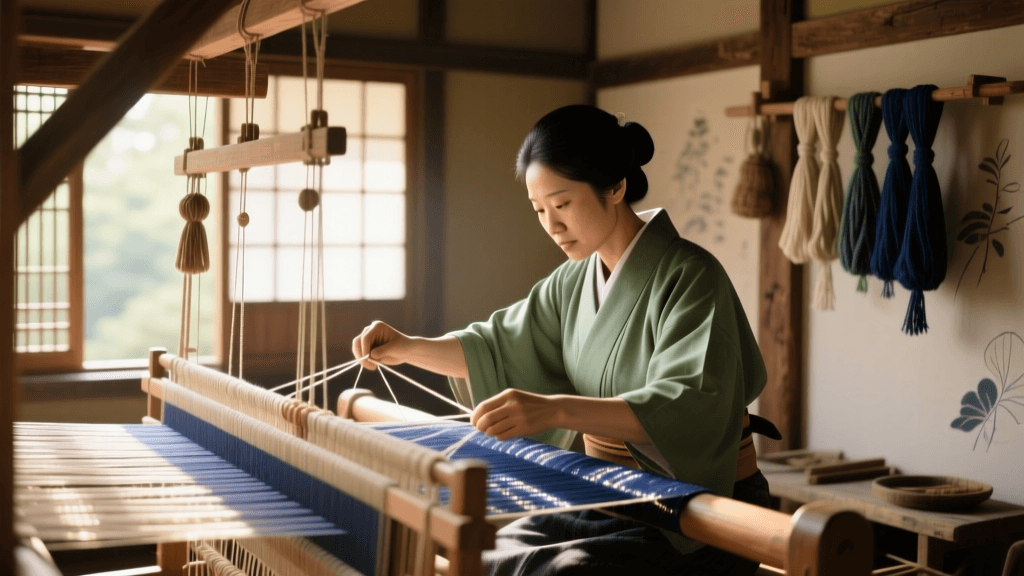
Walking through the historic streets of Kyoto’s Kamigyo Ward, you may hear a rhythmic, percussive clacking echoing from behind wooden lattices. This is the legendary “sound of Nishijin,” the auditory heartbeat of Nishijin-ori, one of Japan’s most prestigious and complex silk weaving traditions. For over five centuries, the Nishijin district has been the epicenter of luxury textile production, supplying the imperial court, shoguns, and high-ranking aristocrats with breathtaking brocades and intricately patterned silks.
Unlike many traditional crafts that are defined by a single artisan’s hand, Nishijin-ori is a highly specialized, collaborative industry. It is defined by its extraordinary division of labor, requiring over twenty distinct artisanal steps to produce a single kimono or obi (sash). Today, visiting the artisan workshops of Nishijin offers a rare glimpse into a world where ancient techniques meet meticulous precision, preserving a vital pillar of Japanese sartorial heritage.
Historical Roots: From the Ashes of the Onin War
The origins of Nishijin-ori are deeply intertwined with Kyoto’s turbulent history. During the devastating Onin War (1467–1477), Kyoto was largely reduced to ashes, and the city’s master weavers fled to the safety of the western provinces. When the conflict finally ended, these artisans returned to the western part of the capital, an area that became known as “Nishijin” (meaning “western position”).
Under the patronage of the Ashikaga shogunate and later the imperial court, the weavers rebuilt their industry. They incorporated advanced techniques brought back from the mainland, including the use of gold and silver threads, and complex brocade patterns. According to the Ministry of Economy, Trade and Industry (METI), Nishijin-ori was officially designated as a Traditional Craft Product of Japan, cementing its status as a national treasure that requires strict adherence to historical methods and materials.
The Anatomy of a Nishijin Kimono: A 20-Step Process
To truly appreciate the value of a Nishijin textile, one must understand the staggering complexity of its creation. The process is so specialized that a single master weaver rarely completes a piece from start to finish. Instead, the work is passed through a network of highly trained specialists.
Key Stages of Production
- Zuan (Design): The process begins with a master designer who paints the pattern on specialized graph paper, calculating the exact warp and weft thread intersections.
- Ito-guri (Thread Preparation): Raw silk is twisted and prepared. For luxury obi, artisans may wrap silk threads in ultra-thin sheets of pure gold or silver leaf.
- Senshoku (Dyeing): Threads are dyed using both natural and synthetic pigments to achieve the vibrant, colorfast hues required for formal wear.
- Mon-ishi (Jacquard Programming): Historically, complex patterns were programmed using wooden punch cards. Today, while computerized Jacquard looms are common, master artisans still manually verify the digital punch codes to ensure absolute perfection.
- Shokunin (Weaving): The final weaving is done on specialized looms. A single formal maru-obi (the most luxurious type of sash) can take an experienced weaver several months to complete, yielding only a few centimeters of fabric per day.
Top Artisan Workshops to Visit in Kyoto
For textile enthusiasts, cultural travelers, and fashion historians, visiting a Nishijin workshop is an essential Kyoto experience. According to the Japan Guide, the Nishijin district offers several venues where the public can observe these master craftsmen at work.
1. Nishijin Textile Center
Operating as both a museum and a promotional hub, the Nishijin Textile Center is the most accessible entry point for international visitors. Here, you can watch daily demonstrations of hand-weaving, thread twisting, and traditional kimono dressing. The center also features a gallery of historical garments and a shop where you can purchase authentic, certified Nishijin textiles directly from the weavers’ cooperatives.
2. Orinasu Kan (Tatsumura Textiles)
For a deeper dive into imperial history, Orinasu Kan is the workshop and museum of Tatsumura Textiles, a prestigious house founded in 1893. Tatsumura is famous for restoring the ancient textiles of the Shoso-in imperial repository. Visitors can tour their traditional wooden weaving studios, observe the use of antique Jacquard looms, and view breathtaking reproductions of 8th-century silk brocades. This workshop focuses heavily on the preservation of lost weaving techniques.
3. Hosoo Flagship Store and Studio
Hosoo represents the avant-garde future of Nishijin-ori. Founded in 1688, the company has recently pivoted to apply traditional kimono weaving techniques to modern interior design, fashion, and contemporary art. Their flagship store in Kyoto features an open studio where you can watch weavers creating textiles that incorporate unconventional materials like peacock feathers and metallic films, proving that traditional crafts can evolve without losing their soul.
Workshop Experience Comparison
To help you plan your itinerary, here is a structured comparison of the primary Nishijin-ori workshop experiences available in Kyoto.
| Workshop Name | Primary Focus | Tour Type | Approx. Cost | Best For |
|---|---|---|---|---|
| Nishijin Textile Center | General overview, retail, daily shows | Self-guided museum & live demos | Free entry (shows ~1,000 JPY) | First-time visitors, families |
| Orinasu Kan | Imperial restoration, antique looms | Guided historical studio tour | 1,500 - 3,000 JPY | History buffs, textile scholars |
| Hosoo Flagship | Modern innovation, interior textiles | Open studio & gallery viewing | Free entry (retail varies) | Designers, modern art lovers |
Practical Guide: Commissioning and Purchasing Nishijin-ori
If you are looking to acquire a piece of Nishijin-ori, it is crucial to understand the market, pricing, and authentication processes. The Association for the Promotion of Traditional Craft Industries emphasizes that authentic traditional crafts must meet strict regional and material standards.
Pricing and Lead Times
Authentic Nishijin-ori is an investment. Because of the intense labor and high-quality silk used, prices reflect the artisanal mastery involved.
- Nagoya Obi (Semi-formal sash): Typically ranges from 150,000 JPY to 400,000 JPY ($1,000 – $2,700 USD).
- Fukuro Obi (Formal sash): Ranges from 300,000 JPY to over 1,500,000 JPY ($2,000 – $10,000+ USD), depending on the inclusion of gold leaf and complexity of the brocade.
- Custom Commissions: If you wish to commission a bespoke pattern or colorway, expect a lead time of 4 to 8 months. Artisans must custom-dye threads and reprogram the Jacquard looms specifically for your order.
Verifying Authenticity
When purchasing, always look for the official Nishijin-ori certification label. This small, woven or paper tag guarantees that the textile was woven in the Nishijin district of Kyoto using approved traditional methods and pure silk threads. Beware of mass-produced synthetic imitations sold in generic tourist souvenir shops outside the designated craft districts.
Care and Maintenance of Nishijin Textiles
Owning a Nishijin obi or kimono requires meticulous care to preserve the structural integrity of the silk and metallic threads.
Artisan Care Tip: Never attempt to wash a Nishijin brocade at home. The tension of the metallic threads can warp if exposed to water. Always entrust the garment to a specialized Japanese dry cleaner (kimono arai) who understands the specific structural needs of brocaded silks. Store the garment flat, wrapped in acid-free tatoushi paper, alongside natural camphor to deter silk moths.
Preserving the Craft: How Travelers Can Help
The Nishijin weaving industry, like many traditional Japanese crafts, faces a severe shortage of young apprentices. The grueling nature of the work and the long years required to master the loom deter many from entering the profession. By visiting these workshops, paying for guided tours, and purchasing directly from the artisan cooperatives, international travelers provide vital economic support. Furthermore, sharing the stories of these master weavers helps elevate the global appreciation for Nishijin-ori, ensuring that the rhythmic sound of the looms continues to echo through the streets of Kyoto for generations to come.