Kimono Trade Textiles: 2026 Artisan Revivals & Museum Exhibits
The Intersection of Global Trade and Japanese Garments
The history of the kimono is often viewed through the lens of insular Japanese tradition, yet the garment's evolution is deeply intertwined with global commerce. From the ancient Silk Road to the maritime trade routes of the 16th and 17th centuries, foreign textiles have profoundly influenced Japanese weaving, dyeing, and fashion customs. In 2026, there is a massive resurgence of interest in these cross-cultural garments, driven by global museum exhibitions and a new generation of artisans reviving historical import techniques.
During the Nanban (Southern Barbarian) trade period and the subsequent Sakoku (isolation) era, restricted but highly lucrative trade with Portuguese, Dutch, and Chinese merchants introduced revolutionary materials to Japan. These imports did not merely supplement domestic production; they fundamentally altered the aesthetic and structural DNA of the kimono. Today, as collectors and fashion historians navigate the 2026 vintage and artisan textile markets, understanding these historical trade routes is essential for authenticating, valuing, and preserving these unique garments.
Key Historical Imports That Shaped Kimono Fashion
The integration of foreign textiles into Japanese dress required immense adaptation. Local artisans meticulously studied imported fabrics, eventually developing domestic techniques to replicate or reinterpret them. Three major categories of imported textiles left an indelible mark on the kimono.
Sarasa (Indian Chintz and Calico)
Originating from the Portuguese word saraça, sarasa refers to Indian chintz and calico cottons imported via Dutch and Portuguese trading ships. Prized for their vibrant, colorfast botanical motifs and intricate geometric patterns, these cottons were initially so expensive that they were cut into small pieces and used for tsugihagi (patchwork) on precious garments or crafted into luxurious obi sashes and tea ceremony accessories. By the mid-Edo period, Japanese dyers had mastered wa-sarasa (domestic sarasa), utilizing rice-paste resist dyeing to mimic the imported Indian aesthetics.
Birodo and Rasha (Dutch Velvet and Wool)
The Portuguese introduced velvet, which the Japanese termed birodo (derived from veludo). Later, Dutch traders at the Dejima outpost brought heavy woolen broadcloth, known as rasha (from the Dutch laken). Because Japan lacked a native tradition of weaving pile fabrics or heavy wool, these materials were highly coveted for winter haori jackets, tabi socks, and formal outerwear for the samurai class. The deep, light-absorbing sheen of imported birodo became a status symbol, often embroidered with heavy gold threads to contrast the dark velvet base.
Kinran and Ginran (Chinese Brocades)
Gold and silver brocades (kinran and ginran) imported from Ming and Qing dynasty China were initially reserved for Buddhist vestments and the highest echelons of the aristocracy. The complex supplementary weft techniques required to weave these luminous textiles eventually inspired the weavers of Kyoto’s Nishijin district. The establishment of the Nishijin-ori weaving guild was heavily accelerated by the desire to domestically produce these opulent Chinese trade goods.
Historical Imports vs. 2026 Artisan Replicas
The table below outlines how historical trade textiles compare to the modern artisan revivals available in the 2026 market, including current pricing for collectors.
| Textile Type | Historical Origin | Traditional Use | 2026 Revival Application | Estimated 2026 Market Price (USD) |
|---|---|---|---|---|
| Sarasa (Chintz) | India / Southeast Asia | Obi, patchwork, tea bags | Kyo-yuzen dyed cotton kimono | $450 - $1,200 (New Artisan) |
| Birodo (Velvet) | Portugal / Netherlands | Winter haori, formal outerwear | Embroidered silk-velvet haori | $800 - $2,500 (Vintage/Revival) |
| Rasha (Wool) | Netherlands | Samurai outerwear, tabi | Modern tailored wool kimono coats | $300 - $900 (Contemporary) |
| Kinran (Gold Brocade) | China | Noh theater costumes, obi | Nishijin-ori formal maru obi | $1,500 - $4,500 (New Handwoven) |
2026 Museum Exhibitions and Preservation Efforts
The year 2026 has been designated as a landmark year for the study of global textile trade routes, with several major institutions hosting comprehensive exhibitions. The Kyoto National Museum has launched a highly anticipated 2026 spring exhibition focusing specifically on the transition of imported Nanban textiles into domestic Edo-period fashion. This exhibit features rare, surviving examples of 17th-century birodo jinbaori (surcoats) worn by daimyo, showcasing the meticulous gold-leaf embroidery applied to imported Dutch velvet.
Similarly, the National Museum of Japanese History (Rekihaku) is currently running an interactive digital and physical archive detailing the Dejima trade manifests. Visitors in 2026 can view high-resolution macro scans of imported sarasa fragments, revealing the microscopic differences between Indian mordant-dyed cotton and early Japanese imitation attempts. For international collectors, the Metropolitan Museum of Art's Asian Art Department continues to update its online database with newly conserved trade-route textiles, providing an invaluable, free resource for authenticating Edo-period import motifs from anywhere in the world.
Modern Artisans Reviving Trade-Inspired Techniques in 2026
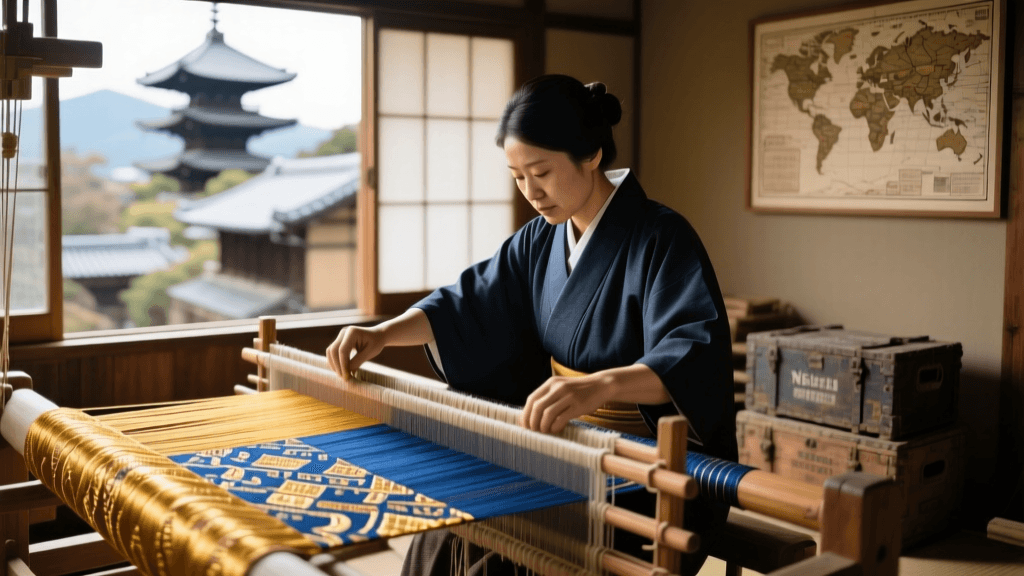
In Kyoto’s Nishijin weaving district, 2026 has seen a deliberate pivot toward historical revivalism. Master weavers are collaborating with international textile historians to recreate the exact tension and supplementary weft structures of early Ming dynasty kinran. Unlike the mass-produced synthetic brocades of the late 20th century, these 2026 artisan revivals utilize genuine metallic threads wrapped around mulberry paper, paired with raw, un-degummed silk to replicate the stiff, sculptural drape of historical Chinese imports.
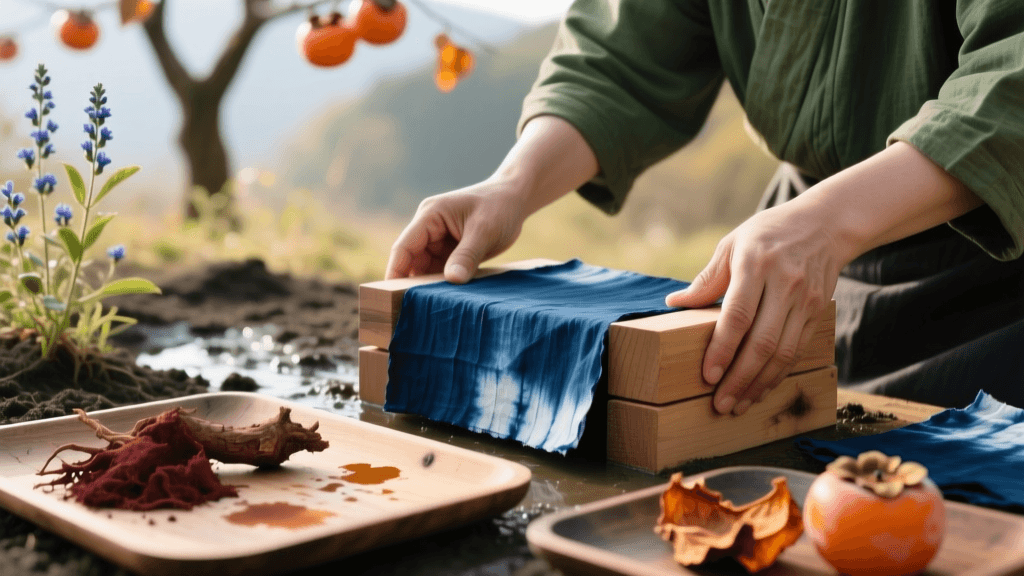
Meanwhile, in the realm of dyeing, Kyo-yuzen artisans are experiencing a renaissance of wa-sarasa patterns. Driven by a 2026 consumer demand for sustainable, botanically dyed garments, modern dyers are using traditional Indian madder and indigo techniques on domestically grown Japanese cotton. These contemporary sarasa kimono are highly sought after for casual summer wear and tea ceremony gatherings, bridging the gap between historical homage and modern, breathable comfort.
How to Identify, Collect, and Care for Trade-Influenced Kimono in 2026
For collectors and enthusiasts navigating the 2026 vintage kimono market, identifying genuine historical imports versus later domestic reproductions requires a keen eye and an understanding of material science.
- Examine the Weave Structure: True imported birodo (velvet) from the Edo period features a silk pile that is often uneven by modern standards. If the velvet is perfectly uniform and backed with synthetic fibers, it is a post-1960s reproduction.
- Check the Dye Penetration: Authentic Indian sarasa utilizes mordant dyeing, meaning the color penetrates entirely through the cotton fiber. Early Japanese imitations often used surface-level pigment painting, which will show significant cracking or fading on the reverse side of the fabric.
- Assess the Metallic Threads: Historical kinran brocades imported from China or woven in early Nishijin used gold leaf applied to lacquered paper. Under a jeweler's loupe, you will see the fibrous texture of the paper. Modern 2026 mass-market replicas use extruded polyester films coated in metallic paint.
Preservation and Storage Guidelines
Caring for these hybrid garments requires specific environmental controls. While standard silk kimono can be stored in traditional tatou (paper wrappers) inside paulownia wood chests, garments incorporating imported wool (rasha) or velvet (birodo) require different humidity management. In 2026, conservationists recommend maintaining a strict relative humidity of 45-50% for velvet and wool kimono to prevent the pile from crushing or the wool from attracting moisture-loving pests. Never fold birodo garments along the pile; instead, roll them around acid-free, unbuffered tissue tubes to preserve the three-dimensional integrity of the velvet fibers.
As the appreciation for globalized historical fashion continues to grow throughout 2026, the kimono stands as a testament to Japan's remarkable ability to absorb, adapt, and elevate foreign influences into enduring domestic art forms. Whether you are acquiring a newly woven Nishijin brocade or preserving an Edo-period velvet haori, you are actively participating in the ongoing legacy of the great Asian textile trade routes.