Kyoto Nishijin-Ori Luxury Collaborations: 2026 Trends
The Renaissance of Nishijin-Ori in Global Luxury
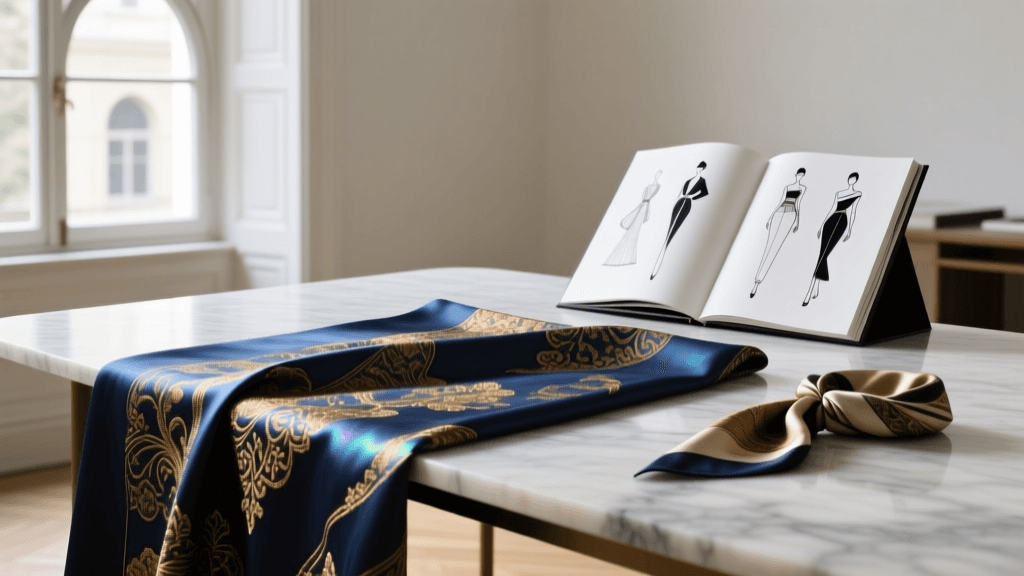
In the ever-evolving landscape of global haute couture, the year 2026 has marked a definitive turning point for traditional Japanese textiles. No longer content with merely drawing superficial inspiration from Eastern aesthetics, Europe’s most prestigious luxury houses are now engaging in deep, structural collaborations with the master weavers of Kyoto. At the very center of this movement is Nishijin-ori, the legendary brocade weaving technique that has defined Japanese aristocratic fashion for over a millennium. As the 2026 Spring and Summer collections hit the runways in Paris and Milan, the integration of Nishijin-ori into Western luxury accessories, ready-to-wear, and bespoke couture represents a fascinating intersection of ancient heritage and cutting-edge international design.
Nishijin-ori is not merely a fabric; it is a complex, multi-layered art form characterized by its intricate jacquard weaving, vibrant dyed silk threads, and the lavish use of metallic yarns. Historically reserved for the kimonos of the imperial court and high-ranking samurai, this textile is now being reimagined for the modern global elite. The 2026 fashion landscape has seen a massive pivot toward 'hyper-provenance' and 'quiet luxury,' driving a surging demand for textiles that carry a verifiable, centuries-old lineage. European conglomerates are actively securing exclusive contracts with Kyoto ateliers, ensuring that the garments they produce are not just manufactured, but meticulously co-created.
The 2026 Shift: From Inspiration to Co-Creation
In previous decades, international designers might visit Japan, purchase bolts of vintage fabric, and tailor them into Western silhouettes. The 2026 paradigm is fundamentally different. Today, luxury houses are embedding their lead textile designers in Kyoto’s Nishijin district for six-month residencies. These designers work side-by-side with master weavers to develop entirely new thread compositions and loom configurations. This collaborative approach respects the structural integrity of the traditional craft while pushing the boundaries of what Nishijin-ori can physically achieve.
For instance, the 2026 'Heritage Tech' movement has seen the introduction of sustainable bio-silks and recycled precious metal threads woven on antique wooden looms. By merging modern material science with Edo-period weaving techniques, these collaborations produce textiles that are visually breathtaking, environmentally conscious, and structurally suited for the rigorous demands of European luxury tailoring. This synergy ensures that the final products are authentic hybrids, reflecting both the meticulous discipline of Japanese artisanship and the avant-garde vision of European fashion houses.
Hosoo and the European Avant-Garde
No discussion of Nishijin-ori in international fashion is complete without examining the pioneering role of Hosoo. Founded in 1688, Hosoo has evolved from a traditional kimono fabric supplier into a global luxury textile powerhouse. In 2026, Hosoo’s collaborative capsule collections with leading Parisian couture houses have dominated the fashion press. By utilizing their proprietary techniques for flattening gold and silver leaf onto delicate washi paper before slicing it into micro-threads, Hosoo has created brocades that possess a liquid, metallic sheen without the heavy stiffness traditionally associated with metallic weaving.
These 2026 collaborations have heavily featured 'urushi' (Japanese lacquer) coated threads, which provide a deep, mirror-like finish that is highly sought after for luxury handbags and evening clutches. The ability of Hosoo’s artisans to adapt their 19th-century jacquard looms to handle these highly specialized, modern luxury materials is a testament to the living, breathing nature of the Nishijin tradition. Their workshops operate not as museums, but as high-tech artisanal laboratories where the past and future are woven together on a daily basis.
Technical Innovation Meets Centuries-Old Craft
The physical act of weaving Nishijin-ori is notoriously complex, often requiring the coordination of multiple artisans to operate a single loom. In 2026, the integration of subtle, non-invasive technology has revolutionized the atelier environment without compromising the handmade ethos. Artisans now utilize AI-assisted tension monitors attached to the warp beams of their traditional wooden looms. These sensors provide real-time haptic feedback, alerting the weaver to microscopic fluctuations in thread tension that could lead to breakage when working with high-tensile, experimental luxury yarns.
Furthermore, the dyeing processes that precede the weaving have seen significant international collaboration. European luxury houses have shared their proprietary, eco-friendly botanical dye formulas with Kyoto artisans, resulting in a completely new 2026 color palette for Nishijin-ori. Deep, synthetic-free burgundies, midnight blues, and iridescent greens are now being achieved using a hybrid of Japanese indigo techniques and European organic chemistry, creating hues that are entirely unique to these collaborative collections.
2026 Market Impact and Artisan Preservation
The most critical impact of these international collaborations is economic and cultural preservation. The Nishijin weaving district has faced a severe demographic crisis over the last twenty years, with the average age of master weavers climbing steadily. The influx of capital and global prestige from European luxury houses in 2026 has directly funded the 'Kyoto Heritage Guild Initiative.' This program offers lucrative, multi-year apprenticeships to young textile graduates from across Asia and Europe, ensuring that the highly specialized knowledge of loom programming, thread twisting, and gold-leaf application is passed down to a new generation.
According to broader cultural preservation frameworks supported by the Ministry of Economy, Trade and Industry (METI), the commercialization of traditional crafts through high-end international partnerships is currently the most viable model for sustaining these art forms. The luxury market’s willingness to pay a premium for authentic, hand-woven Nishijin-ori provides the financial bedrock necessary to maintain the massive, labor-intensive wooden looms and support the artisanal ecosystem of the Nishijin district.
Comparative Analysis: Traditional vs. 2026 Collaborative Textiles
To understand the evolution of this craft, it is helpful to compare the specifications of traditional domestic Nishijin-ori with the specialized textiles produced for 2026 European luxury collaborations.
| Feature | Traditional Nishijin-ori (Domestic) | 2026 Luxury Collaborative Nishijin-ori |
|---|---|---|
| Primary Material | 100% Mulberry Silk, traditional metallic threads | Bio-silk blends, recycled precious metals, urushi-lacquered threads |
| Loom Technology | Manual Jacquard, wooden hand-looms | Wooden hand-looms retrofitted with AI tension-monitoring sensors |
| Design Motifs | Classic auspicious symbols (cranes, pine, chrysanthemum) | Abstract geometric, avant-garde florals, European house monograms |
| Production Time | 1 to 3 months per bolt | 4 to 6 months per bolt (due to complex experimental yarns) |
| Market Price (2026) | ¥300,000 - ¥800,000 per bolt | €1,200 - €3,500 per linear meter (exclusive luxury runs) |
A Collector’s Guide to Sourcing and Authentication
For collectors, archivists, and luxury consumers looking to acquire pieces from these 2026 collaborations, authentication is paramount. The secondary market for Japanese textile-infused haute couture is highly active, and verifying the origin of the brocade is essential. First, buyers should look for the official 'Nishijin-ori' certification mark, a physical seal or woven label that guarantees the textile was produced within the designated Kyoto district using approved methods.
Secondly, a major innovation introduced in late 2025 and standardized across 2026 luxury collaborations is the integration of NFC-embedded selvedge threads. These microscopic, woven-in digital tags can be scanned with a smartphone, instantly revealing the entire provenance of the garment: the specific atelier, the names of the master weavers, the origin of the silk, and the exact date the loom was threaded. When sourcing vintage or secondary market pieces from these collections, always request a scan of the digital selvedge to ensure the textile is a genuine collaborative product rather than a mass-produced imitation.
Pricing and Investment Value in 2026
Investing in collaborative Nishijin-ori pieces in 2026 requires a significant financial commitment, but the value retention is exceptional. Ready-to-wear jackets featuring collaborative Nishijin-ori panels from major European houses currently retail between €8,000 and €15,000. Bespoke evening gowns and limited-edition luxury trunks lined with custom Hosoo brocades can easily exceed €45,000. Because the production capacity of authentic Nishijin-ori is physically limited by the number of operating traditional looms and the speed of the human weavers, these pieces are inherently scarce. As the global appreciation for verifiable, artisanal heritage continues to grow, these garments are increasingly viewed by collectors as wearable assets.
The Future of Wearable Heritage
The 2026 international design collaborations surrounding Nishijin-ori represent a triumph of cultural diplomacy and sustainable luxury. By treating traditional Japanese weavers not merely as suppliers, but as equal creative partners, European fashion houses have helped secure the future of one of Asia's most magnificent textile traditions. Institutions like the Victoria and Albert Museum have long documented the historical influence of Japanese textiles on Western fashion, but the current era of co-creation is entirely unprecedented. As we look toward the future of global fashion, the intricate, shimmering brocades of Kyoto stand as a powerful reminder that true luxury is found in the meticulous, human endeavor of preserving and evolving our shared cultural heritage.