Nishijin-Ori vs Hakata-Ori: 2026 Kimono Obi Fabric Guide
The Soul of the Silhouette: Understanding the Obi in 2026
In the intricate world of Japanese traditional garments, the kimono provides the canvas, but the obi provides the soul. As we navigate the evolving landscape of heritage fashion in 2026, the demand for authentic, high-quality textiles has reached a fever pitch. Modern collectors and practitioners are no longer satisfied with synthetic blends or mass-produced imitations; they seek the structural integrity, historical resonance, and unparalleled craftsmanship of genuine silk weaves. When it comes to selecting the perfect obi, two legendary textiles dominate the conversation: Nishijin-ori and Hakata-ori. Understanding the distinct material properties, weaving techniques, and current market values of these two fabrics is essential for anyone building a serious kimono wardrobe in 2026.
Nishijin-Ori: Kyoto’s Masterpiece of Brocade
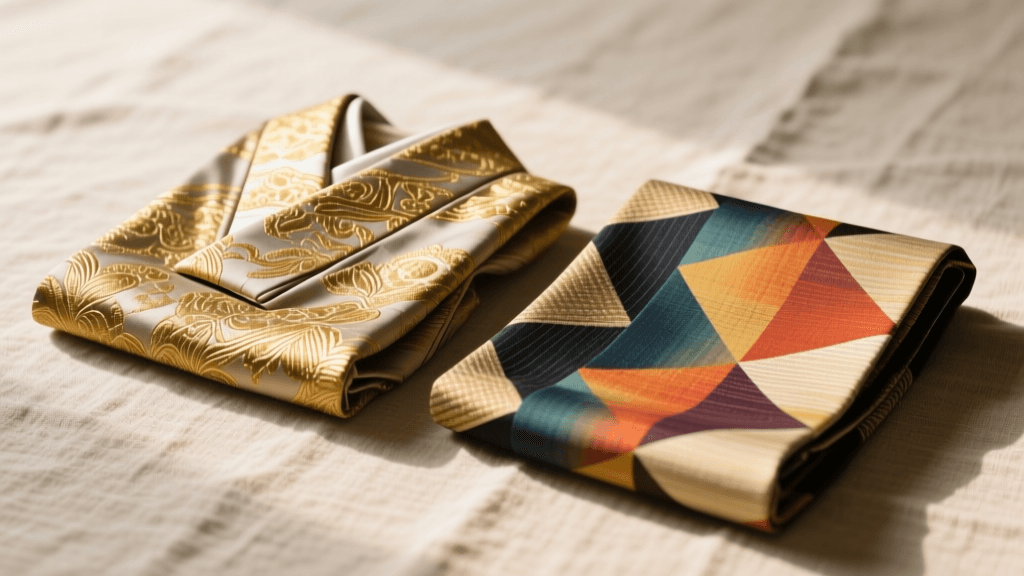
Originating from the Nishijin district of Kyoto, Nishijin-ori is not a single weave but a collective term for a variety of highly complex, multi-colored brocades and tapestry weaves. The hallmark of Nishijin textiles is their opulent surface, often featuring intricate motifs woven with metallic threads, gold leaf applied to washi paper, and vibrant, dyed silk yarns. According to the Metropolitan Museum of Art's Heilbrunn Timeline of Art History, the development of these complex jacquard techniques allowed Kyoto weavers to achieve pictorial depth that rivals fine painting.
In 2026, the Nishijin textile industry faces a critical juncture. The aging population of master weavers has led to a severe bottleneck in the production of hand-loomed kara-ori (Chinese-style brocade) and tsuzure-ori (tapestry weave). Consequently, the market has seen a sharp bifurcation in pricing. A genuine, hand-woven Nishijin fukuro obi (the most formal double-fold obi) now commands between ¥650,000 and ¥1,400,000 in 2026. Conversely, power-loomed Nishijin textiles, which still maintain rigorous quality control and authentic silk origins, remain accessible, typically ranging from ¥120,000 to ¥280,000. For the modern wearer, Nishijin-ori offers an unmistakable luxury, characterized by a heavy, supple drape and a visually striking, raised surface texture.
Hakata-Ori: The Structural Marvel of Fukuoka
Traveling south to Fukuoka Prefecture, we encounter Hakata-ori, a textile with a radically different philosophy and physical structure. First introduced from China in the 13th century and refined over generations, Hakata-ori is defined by its warp-faced weave. Unlike Nishijin, which relies on thick, decorative weft threads to create patterns, Hakata-ori uses an exceptionally high density of tightly packed warp threads, beaten down forcefully against a thicker, softer weft. This creates a distinct, ribbed surface texture that is both visually subtle and tactually profound.
The true genius of Hakata-ori lies in its structural utility. The ribbed texture generates a natural, high-friction surface that grips the silk of the kimono beneath it. This makes Hakata-ori the undisputed champion of complex obi knots. When tying a taiko musubi (drum knot) or a fukura-suzume (sparrow knot), a Hakata obi will hold its shape impeccably without slipping or sagging throughout the day. Furthermore, the tight weave produces a signature acoustic property: a crisp, satisfying rustling sound known as kinu-nari (the cry of silk) when the fabric moves. As of 2026, a standard Hakata-ori nagoya obi (the pre-folded, semi-formal obi) is priced very reasonably, generally falling between ¥45,000 and ¥95,000, making it an essential, high-value workhorse for any kimono wardrobe.
2026 Textile Comparison Chart: Nishijin vs. Hakata
To help you make an informed purchasing decision this year, we have compiled a direct comparison of the physical and market attributes of these two heritage textiles.
| Feature | Nishijin-Ori (Brocade) | Hakata-Ori (Ribbed Weave) |
|---|---|---|
| Primary Origin | Kyoto (Nishijin District) | Fukuoka Prefecture |
| Weave Structure | Weft-faced / Jacquard Brocade | Warp-faced / Tight Ribbed Weave |
| Surface Texture | Heavy, raised, ornate, supple | Firm, ribbed, high-friction, crisp |
| Best Suited For | Formal events, visual impact, drape | Complex knots, daily wear, structural hold |
| 2026 Avg. Price (Fukuro Obi) | ¥350,000 - ¥1,400,000 | ¥80,000 - ¥180,000 |
| 2026 Avg. Price (Nagoya Obi) | ¥120,000 - ¥300,000 | ¥45,000 - ¥95,000 |
| Knot Security | Moderate (requires careful pinning) | Exceptional (grips naturally) |
| Formality Level | Semi-Formal to Highest Formal | Casual to Semi-Formal (rarely highest formal) |
Selecting the Right Fabric for Your 2026 Wardrobe
Choosing between Nishijin and Hakata is not merely a matter of budget; it is a matter of sartorial harmony and functional necessity. The Victoria and Albert Museum's Asian Collections frequently highlights how the structural relationship between the undergarment, the outer robe, and the sash dictates the overall silhouette of traditional Asian dress. In Japanese fashion, the obi must complement the formality and fabric of the kimono it accompanies.
Pairing with Formal Silks (Kurotomesode, Homongi, Tsukesage)
When attending weddings, tea ceremonies, or formal galas in 2026, your kimono will likely be a glossy, patterned silk such as a homongi or a crested kurotomesode. For these garments, a Nishijin-ori fukuro obi is virtually mandatory. The metallic threads and raised brocade patterns of Nishijin elevate the ensemble, providing the necessary visual weight and luxury required for high-formality occasions. A Hakata obi, while beautiful, is generally considered too subdued and structurally rigid for the highest echelons of formal wear.
Pairing with Everyday and Matte Silks (Komon, Tsumugi, Ro)
For daily outings, theater visits, or casual dining, you will likely wear a komon (all-over pattern) or a tsumugi (slubbed, matte pongee silk). Here, Hakata-ori shines brilliantly. The crisp, ribbed texture of a Hakata nagoya obi provides a stunning tactile contrast to the soft, matte surface of tsumugi. Furthermore, because Hakata obis are easier to tie and hold their shape without excessive padding or stiffeners, they are the preferred choice for modern practitioners who value comfort and ease of movement during long days of wear. During the humid Japanese summers of 2026, an open-weave Hakata sha (gauze) obi is also highly sought after for its breathability when paired with sheer ro silk kimonos.
Sourcing Authentic Textiles and Avoiding Imitations
As the global appetite for traditional Asian garments grows, the market has seen an influx of synthetic, power-loomed imitations from overseas. To ensure you are investing in genuine heritage textiles, you must look for official certification. Authentic Nishijin textiles will feature a woven or paper label from the Nishijin Textile Industrial Association, detailing the specific weave type and material composition. Similarly, genuine Hakata-ori will bear the official Hakata-Ori trademark tag, often featuring the iconic bonbori (paper lantern) motif.
When shopping online or at vintage markets, always request macro-photographs of the reverse side of the fabric. As noted in the Encyclopedia Britannica's Textile Guide, the structure of the weave on the reverse side is the most reliable indicator of a textile's authenticity and quality. A true Nishijin brocade will show a complex, often messy interlacing of threads on the back, whereas a printed or embroidered fake will show a flat, uniform surface. A genuine Hakata obi will display a tightly packed, ribbed reverse that mirrors the front, proving the high warp density.
Climate-Adaptive Care for Heritage Silk in 2026
Preserving these investment pieces requires adapting to modern environmental realities. The climate shifts of 2026 have brought more severe humidity spikes and unpredictable temperature fluctuations to many regions. Proper storage is no longer optional; it is a critical preservation strategy.
- Paulownia Storage: Always store your Nishijin and Hakata obis in a kiri-bako (paulownia wood box). Paulownia naturally regulates internal humidity and repels insects. Ensure the box is lined with unbleached cotton or acid-free tatou paper.
- Avoid Chemical Mothballs: Never use naphthalene or camphor-based mothballs near Nishijin-ori. The chemical fumes will react with the metallic threads and gold leaf, causing irreversible blackening and tarnishing. Use natural cedar blocks or dried neem leaves instead.
- The Airing Process: Twice a year, ideally during the dry, crisp days of late autumn or early spring, remove your obis from their boxes. Unfold them and let them breathe in a shaded, well-ventilated room for 48 hours. This prevents the silk fibers from trapping moisture, which can lead to mold or the permanent setting of fold lines.
- Professional Cleaning: Never attempt to wash a silk obi at home. If a Hakata obi becomes soiled, or a Nishijin obi suffers a spill, take it immediately to a certified kimono arai (kimono cleaning specialist) who understands the specific tension requirements of jacquard and warp-faced weaves.
Conclusion
The choice between Nishijin-ori and Hakata-ori is a choice between two distinct philosophies of Japanese craftsmanship. Nishijin offers the pinnacle of decorative artistry, transforming silk into a wearable canvas of brocade and gold. Hakata offers the triumph of structural engineering, providing the perfect, reliable foundation for the art of kimono dressing. By understanding the unique properties, current 2026 market values, and proper care requirements of these exceptional textiles, you can curate a kimono collection that is not only visually breathtaking but built to last for generations to come.