Nigerian Aso Oke Weaving Tools And Pattern Meanings
Origins and Cultural Context of Aso Oke
Aso Oke, meaning “top cloth” in Yoruba, is a handwoven textile indigenous to the Yoruba people of southwestern Nigeria. Its origins trace back to the 15th century in Iseyin, Oyo State—a town still recognized as the epicenter of authentic Aso Oke production. Historically reserved for royalty and titled chiefs during coronations, weddings, and funerals, Aso Oke functions as both ceremonial regalia and social identifier. Unlike kente cloth (Ashanti, Ghana) or adire (Yoruba resist-dyed cloth), Aso Oke is distinguished by its loom-woven structure, metallic thread inlays, and rigid, stiff drape achieved through starching. The fabric’s prestige is reinforced by its inclusion in the permanent collection of the Museum of African Art at the Smithsonian Institution since 2012.
Weaving Tools: Precision Instruments of Tradition
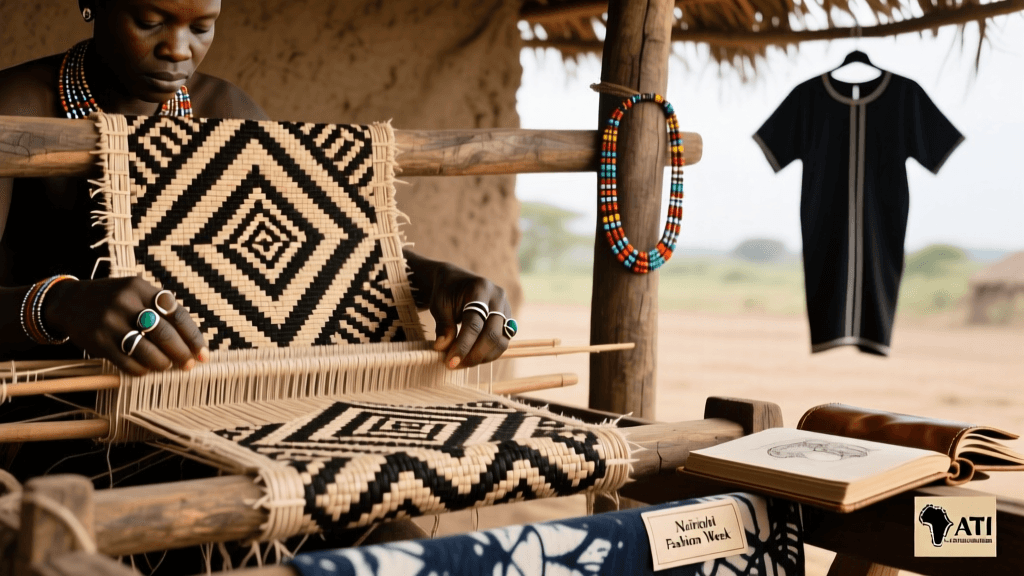
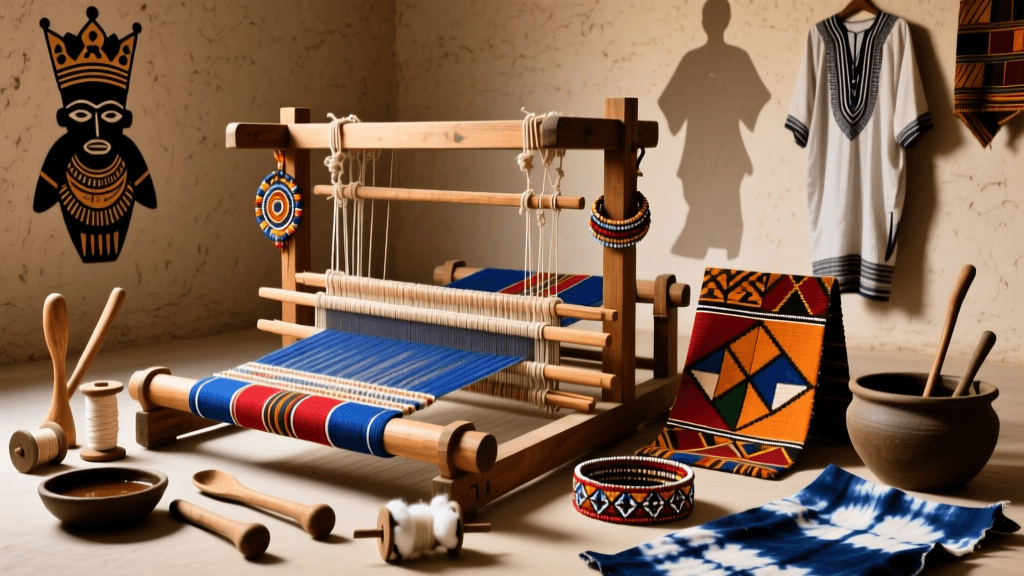
The creation of Aso Oke relies on a set of specialized, non-mechanized tools passed down through generations. The primary instrument is the horizontal narrow-strip loom—typically measuring 1.2 meters in length and 0.3 meters in width—constructed from iroko wood and tensioned with leather straps. Weavers use a shuttle weighing precisely 180 grams, carved from mahogany and polished with shea butter to reduce friction. A comb-like beater, known as *agbo*, is made from 27 interlocking bamboo slats spaced at 0.8 mm intervals to ensure consistent weft density. Additional tools include brass-weighted heddle rods (each weighing 420 g) and a wooden warp beam that holds up to 1,200 warp threads per meter.
Warp and Weft Specifications
The warp consists exclusively of hand-spun cotton or silk yarns, prepared using a drop spindle that rotates at approximately 120 rpm during spinning. Weft threads incorporate supplementary metallic elements—usually silver-coated copper wire or aluminum foil strips cut to exact widths of 0.5 mm. These metallic inlays are inserted manually after every 16–20 weft passes, contributing to the fabric’s signature shimmer and structural rigidity. Each 1-meter length of finished Aso Oke contains an average of 4,800 warp threads and requires 2,100 weft insertions.
Pattern Symbolism and Social Semiotics
Every Aso Oke motif encodes layered meanings tied to Yoruba cosmology, proverbs, and lineage. The *Etu* pattern—characterized by indigo-dyed warp stripes alternating with white weft bands—represents humility and spiritual vigilance; it is traditionally worn by initiates of the Ifá priesthood. *Sanyan*, woven entirely from wild silk and featuring subtle honeycomb textures, signifies wealth and ancestral blessing, historically restricted to Obas of Ile-Ife. *Aran*, distinguished by bold gold or silver brocade motifs, conveys authority and is reserved for kings and high-ranking chiefs. According to research conducted by the Centre for Black Culture and International Understanding (CBCIU, 2019), over 63 documented patterns exist, each governed by strict usage protocols rooted in oral tradition rather than written codex.
Color Symbolism in Ritual Context
- Deep indigo: Associated with wisdom, introspection, and the deity Oshun; derived from fermented leaf vats aged 14–21 days
- Crushed coral red: Symbolizes vitality and sacrifice; sourced from ground *Pterocarpus osun* bark, requiring 3.2 kg of bark per 100 g of dye
- Unbleached off-white: Represents purity and new beginnings; achieved without chemical bleaching, relying solely on sun exposure for 72 consecutive hours
Institutional Preservation and Contemporary Practice
The National Museum of Unity in Ibadan houses Nigeria’s largest publicly accessible archive of pre-1960 Aso Oke samples—including a 1947 coronation cloth for Aláàfin Adéyemí III, woven with 98% pure silver thread. In 2021, the Yoruba Heritage Foundation launched the Aso Oke Documentation Project, digitizing 142 master weaver interviews across 11 towns in Oyo and Osun States. The project confirmed that only 37 certified master weavers remain active in Iseyin, with an average age of 68 years. Lagos-based fashion incubator *The Lagos Space Initiative* has partnered with UNESCO’s Intangible Cultural Heritage program to establish apprenticeship stipends—providing ₦120,000 monthly support for 12 emerging artisans under age 30.
Technical Constraints and Material Authenticity
Authentic Aso Oke must meet stringent physical criteria defined by the Nigerian Standard for Textiles (NS 57:2020). Fabric weight must fall between 320–380 g/m²; tensile strength must exceed 42 N in warp direction and 36 N in weft; and metallic thread content cannot exceed 12% by mass. Deviations trigger rejection by the Lagos State Ministry of Culture’s certification panel. A comparative analysis published by the University of Ibadan’s Department of Textile Science (2022) found that machine-made imitations lack the characteristic 1.8 mm warp crimp amplitude and fail thermal stability tests above 78°C—where genuine Aso Oke maintains integrity due to natural starch binder application.
“The loom does not speak—but the cloth remembers every hand that touched it, every prayer whispered while weaving, every ancestor whose name was woven into the rhythm of the beat.” — Chief Adebayo Ogunleye, Master Weaver, Iseyin (quoted in CBCIU, 2019)
Fashion Integration and Global Recognition
Aso Oke has moved beyond ceremonial use into contemporary African fashion design. Designer Lisa Folawiyo incorporated handwoven Aso Oke panels into her Spring/Summer 2023 collection, partnering with 17 Iseyin-based cooperatives to produce 210 meters of custom-dyed fabric. The fabric’s architectural drape influenced silhouette construction at the Dakar Fashion Week 2022, where six Nigerian labels showcased garments using Aso Oke fused with organic linen. At the British Museum’s 2023 exhibition Threads of Power, Aso Oke shared display space with Ashanti kente and Maasai beadwork—highlighting regional distinctions in symbolic coding. Notably, the exhibition catalogue documented that Aso Oke’s metallic thread density averages 17.4 threads/cm², compared to kente’s 12.2 threads/cm² and Maasai beadwork’s 3.8 beads/cm².
Geographic Production Hubs
- Iseyin, Oyo State – Primary center for silk-based Aso Oke (82% of national output)
- Ibadan, Oyo State – Hub for cotton-dominant variants and dye innovation
- Osogbo, Osun State – Specializes in ritual-specific patterns for Ogboni society rites
The Yoruba Cultural Centre in Abeokuta maintains a live demonstration loom operational since 1974, offering daily public weaving sessions. Visitors observe how each 1.5-meter strip takes 12–14 working days to complete—factoring in yarn preparation, warping, weaving, and post-weave starching with cassava paste diluted to 14% solids concentration. This labor intensity underscores why a single full-length Aso Oke wrapper (measuring 2.2 meters × 1.1 meters) commands prices ranging from ₦450,000 to ₦1.2 million depending on metallic content and pattern complexity. Conservation efforts continue through the Nigerian Institute of Textile Technology in Enugu, which in 2020 introduced a digital warp calculator app calibrated to traditional Iseyin loom dimensions and tension parameters.
| Pattern Name | Primary Color Scheme | Minimum Warp Threads/m | Ritual Use | Origin Town |
|---|---|---|---|---|
| Etu | Indigo & white | 1,150 | Ifá initiation | Iseyin |
| Sanyan | Beige & gold | 1,080 | Ooni coronation | Ile-Ife |
| Aran | Black & silver | 1,200 | Obaship investiture | Oyo |
Contemporary designers such as Deola Sagoe and Mai Atafo have reinterpreted Aso Oke’s structural logic—deconstructing its rigid geometry into fluid drapes while retaining symbolic color palettes. Their work appears regularly in the annual Lagos Fashion Week, now recognized by the International Council of Fashion Industry Associations (ICFIA) as a Tier-1 heritage platform since 2021. Despite global demand, strict adherence to material provenance remains non-negotiable: all certified Aso Oke must bear a holographic seal issued by the Oyo State Ministry of Culture, verifying origin, fiber composition, and artisan lineage. This regulatory framework ensures continuity—not commodification—of one of Africa’s most technically demanding textile traditions.