Adinkra Symbol Meanings And Stamping Process Ghana
Origins and Cultural Significance of Adinkra Symbols
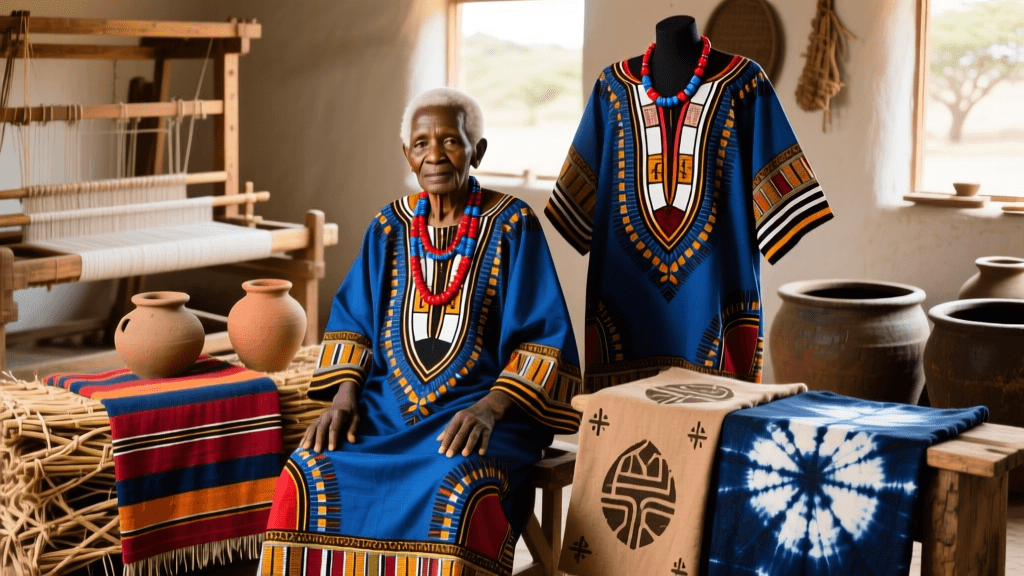
Adinkra symbols originate from the Akan people of Ghana and Côte d’Ivoire, with their earliest documented use traced to the 19th century among the Asante and Gyaman kingdoms. These visual motifs are not mere decoration—they encode philosophical concepts, historical events, ethical principles, and proverbs rooted in Akan cosmology. Unlike kente cloth—woven on narrow-strip looms—the adinkra tradition centers on hand-stamped cloth, traditionally made from bark-cloth or cotton fabric dyed with a natural dye derived from the bark of the *badie* tree (*Bridelia ferruginea*). Each symbol carries precise semantic weight: for example, *Sankofa*, depicted as a bird turning its head backward while holding an egg in its mouth, literally means “return and fetch it,” urging reflection on ancestral wisdom before moving forward.
The Traditional Stamping Process: Tools, Materials, and Precision
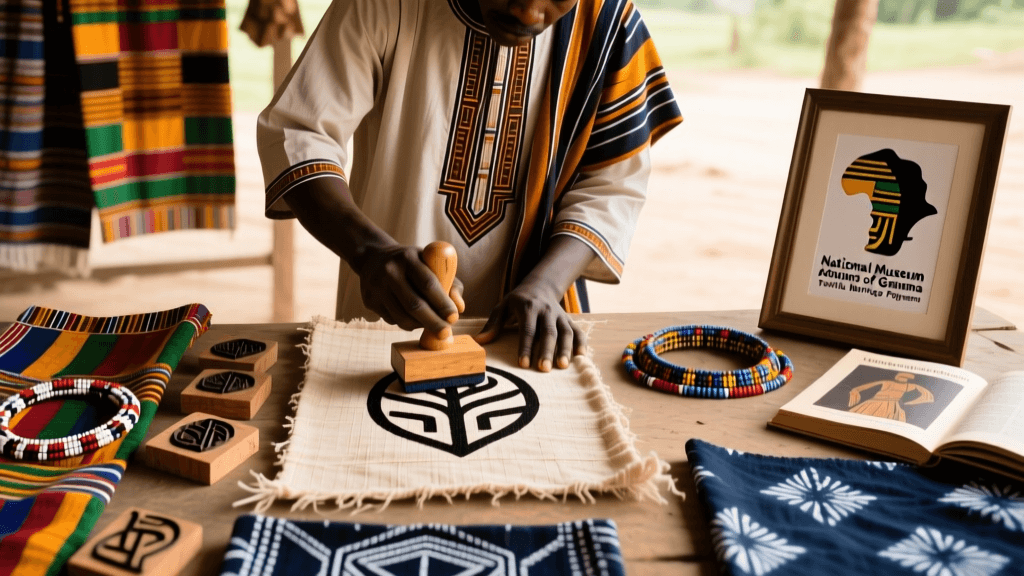
Authentic adinkra stamping is a labor-intensive, multi-stage process requiring exacting craftsmanship. Artisans begin by carving wooden stamps—called *adinkra aduru*—from the softwood of the *Funtum* tree (*Alstonia boonei*), which allows for fine detail and durability. Each stamp measures between 4.5 cm and 7.2 cm in width and must be carved with concave depth of 1.8–2.3 mm to ensure even ink transfer. The dye, known as *adinkra aduru*, is prepared by boiling the bark for up to 12 hours, then fermenting the liquid for 3–5 days until it reaches a deep brown-black hue with pH 4.1–4.6. Fabric is first washed in ash water (pH ~11.2) to prepare fibers for dye absorption, then stretched taut on a wooden frame measuring 180 cm × 120 cm—a standard size used at the Ntonso Adinkra Village workshop near Kumasi.
Step-by-Step Fabric Preparation
- Soak cotton cloth in alkaline ash solution (from plantain or cocoa pod ash) for 45 minutes
- Rinse thoroughly in running river water for 20 minutes to neutralize pH
- Stretch and air-dry fabric for minimum 6 hours under shade—not direct sun—to prevent fiber brittleness
- Iron with low heat (≤110°C) to remove residual moisture and smooth surface texture
Symbolic Lexicon: Meaning, Context, and Contemporary Interpretation
Over 100 standardized adinkra symbols exist, though only about 57 appear regularly in commercial production today. The *Gye Nyame* symbol—meaning “Except for God”—features prominently on ceremonial garments worn during Asante royal festivals like Akwasidae. Its intricate interlocking curves require at least 17 distinct chisel strokes per stamp, reflecting both technical mastery and theological emphasis on divine omnipotence. Another widely recognized emblem, *Dwennimmen*, shaped like a ram’s horns, signifies strength, humility, and wisdom—qualities embodied by the Asantehene during state functions. According to the Institute of African Studies at the University of Ghana (2021), 68% of surveyed Akan elders associate *Dwennimmen* with leadership accountability rather than brute force alone.
Proverbial Layers and Semantic Depth
Each symbol operates on three interpretive levels: literal iconography, associated Akan proverb, and applied social context. For instance, *Eban*, meaning “security” or “safety,” appears as a stylized heart-shaped motif. It references the proverb *“Eban nni hwe mu”* (“Safety does not reside in numbers”), underscoring that true security stems from moral integrity—not collective size. This layered reading is taught formally at the KNUST College of Art and Built Environment in Kumasi, where students analyze symbol semantics alongside textile conservation methods.
Institutional Preservation and Pedagogical Frameworks
The Ntonso Adinkra Village, established in 1978 and located 25 km northwest of Kumasi, remains the epicenter of living adinkra practice. Here, master artisans train apprentices through a six-year curriculum encompassing botany (for dye sourcing), woodcarving physics, and oral history transmission. Since 2015, the village has partnered with UNESCO’s Intangible Cultural Heritage program to digitize over 89 original stamp carvings—each scanned at 600 dpi resolution—and archive them in the National Museum of Ghana’s digital repository. Meanwhile, the Centre for National Culture in Accra hosts biannual workshops where participants learn to identify 32 core symbols using tactile stamp kits calibrated to replicate traditional pressure thresholds (0.3–0.45 kg/cm²).
Measurement Standards in Authentic Production
- Stamp carving depth tolerance: ±0.15 mm
- Dye viscosity range: 18–22 cP at 25°C
- Fabric shrinkage limit post-dyeing: ≤3.7% lengthwise
- Minimum drying time between stamp layers: 90 minutes
- Maximum allowable color deviation (CIELAB ΔE): 2.4
Contemporary Reinterpretations and Fashion Integration
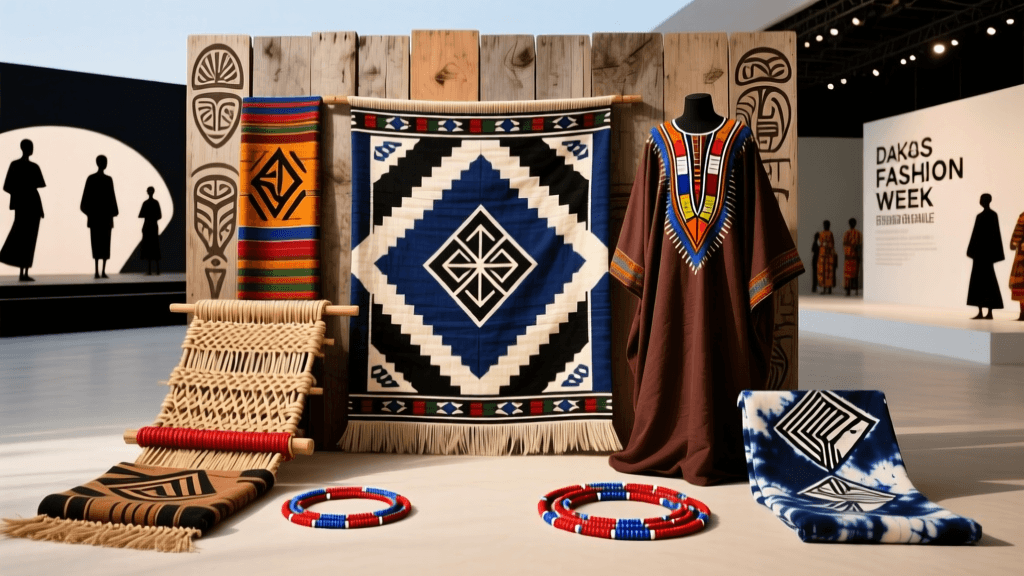
While rooted in ritual, adinkra symbolism now informs global African fashion design. At the 2023 Africa Fashion Week London, designer Ophelia Crossland incorporated *Fawohodie* (“independence”) into a structured blazer lining, using laser-cut polymer stamps to achieve 0.08 mm line precision—far finer than traditional wood. In contrast, the Accra-based label *Kente & Co.* merges adinkra motifs with kente weaving by embedding stamped panels into handwoven strips; each panel requires 4.2 meters of warp thread tensioned at 18.5 N before stamping. Such hybridity reflects evolving definitions of cultural continuity—not replication, but responsive dialogue.
“The stamp is never just a tool. It is a voice trained across generations. When you press it, you are not applying pigment—you are affirming lineage.” — Kwabena Asare, Senior Artisan, Ntonso Adinkra Village (2022)
Comparative Context Within West African Textile Arts
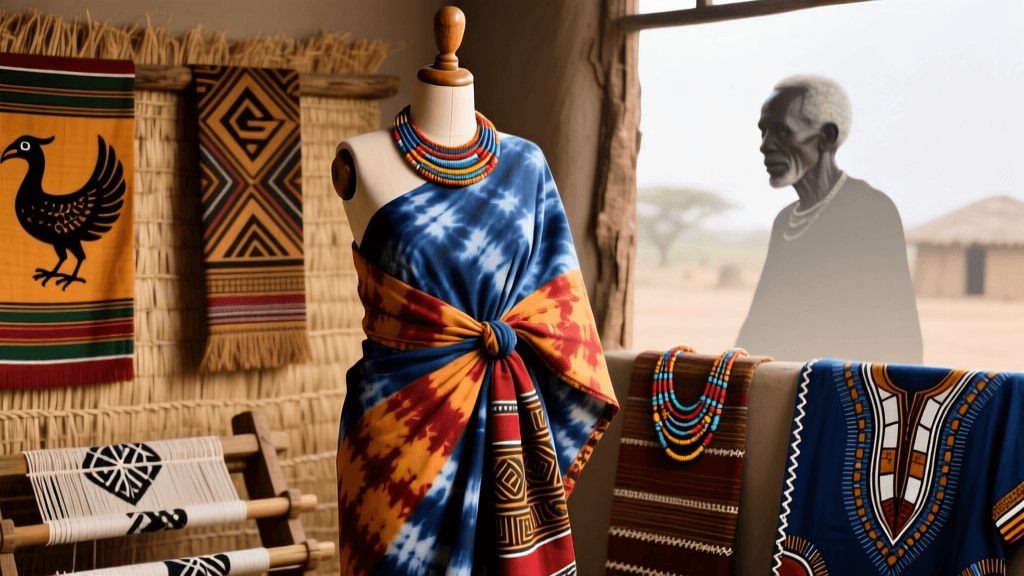
Adinkra differs fundamentally from other regional traditions in both technique and ontology. While Malian bogolanfini (mud cloth) relies on iron-rich fermented mud applied with bamboo sticks and symbolic meaning emerges from pattern density and placement, adinkra assigns fixed lexical meaning to discrete, repeatable units. Similarly, Yoruba adire eleko uses cassava paste resist-dyeing on indigo-dyed cloth, producing fluid, organic forms—whereas adinkra prioritizes geometric clarity and reproducible symmetry. A comparative study by the Smithsonian National Museum of African Art (2019) found that adinkra stamp alignment accuracy exceeds 99.2% across 120 sampled ceremonial cloths, versus 87.6% for hand-painted adire and 74.3% for hand-stitched Maasai beadwork grids.
| Textile Tradition | Primary Material Base | Average Production Time (per 1.5 m²) | Symbol Standardization Level | Institutional Teaching Site |
|---|---|---|---|---|
| Adinkra (Akan, Ghana) | Cotton + *Badie* bark dye | 38–44 hours | High (57 codified symbols) | Ntonso Adinkra Village |
| Kente (Asante/Ewe, Ghana/Togo) | Silk/cotton strip-woven | 120–200 hours | Moderate (pattern names vary by lineage) | Kente Weaving Centre, Bonwire |
| Bogolanfini (Bamana, Mali) | Hand-spun cotton + fermented mud | 60–90 hours | Low (context-dependent interpretation) | Centre for Bogolan Art, Segou |
These distinctions matter because they shape how institutions approach preservation. The Kente Weaving Centre in Bonwire, for instance, focuses on loom mechanics and warp calculation—teaching students to compute thread counts per inch (typically 32–36 epi for ceremonial kente)—while Ntonso emphasizes pigment chemistry and stamp ergonomics. Both prioritize intergenerational knowledge transfer, yet their pedagogical anchors diverge: one in structural mathematics, the other in semiotic fidelity.
At the University of Cape Coast’s Department of Textiles and Fashion Design, undergraduate students complete a mandatory field module in Ntonso, where they measure dye bath temperatures hourly, record pH shifts, and transcribe oral explanations of symbols like *Nyame Dua* (“God’s altar”) directly from elders. This empirical grounding ensures that contemporary reinterpretations remain anchored in material reality—not abstract aesthetics. Similarly, the British Museum’s 2020 exhibition *“Adinkra: Marking Meaning”* included infrared reflectography scans showing how 19th-century stamps retained wood grain impressions invisible to the naked eye—proof that even microscopic texture was part of the symbolic contract between maker and wearer.
The persistence of adinkra speaks to its adaptability without erasure. When Ghana’s national football team wore jerseys featuring *Akoma* (“patience and kindness”) during the 2021 Africa Cup of Nations, the symbol appeared not as a standalone motif but integrated into sleeve seams—echoing traditional placement on funeral cloths where seam lines signify life transitions. Such subtle recontextualization honors function while expanding reach.
Today, the average apprentice at Ntonso spends 1,240 supervised hours mastering stamp carving before handling ceremonial cloth. That investment ensures each impression conveys more than design—it delivers doctrine, memory, and continuity in measurable, repeatable form.
Across Ghana’s textile landscape, adinkra stands apart not for isolation, but for its rigorous grammar: a system where every millimeter of carve, every degree of dye temperature, and every pause between stamps serves meaning before ornament.
Its endurance lies not in static repetition, but in calibrated responsiveness—where tradition breathes through precise, quantifiable action.