Kuba Raffia Weaving Methods And Geometric Design Coding Democratic Republic Of Congo
The Kuba Kingdom and the Living Geometry of Raffia
Nestled in the swampy, forested basin of the Kasai River in the Democratic Republic of Congo, the Kuba Kingdom—founded in the early 17th century—developed one of Africa’s most intricate textile traditions: raffia cloth weaving. Unlike loom-based systems found elsewhere on the continent, Kuba artisans transform the leaves of the Raphia vinifera palm into a dense, stiffened fabric through a labor-intensive process that spans months. The kingdom’s 18 distinct ethnic subgroups—including the Bushoong, Ngongo, and Shoowa—each contribute stylistic variations, yet all adhere to shared principles of geometric coding, communal authorship, and ritualized production.
Weaving as Embodied Mathematics
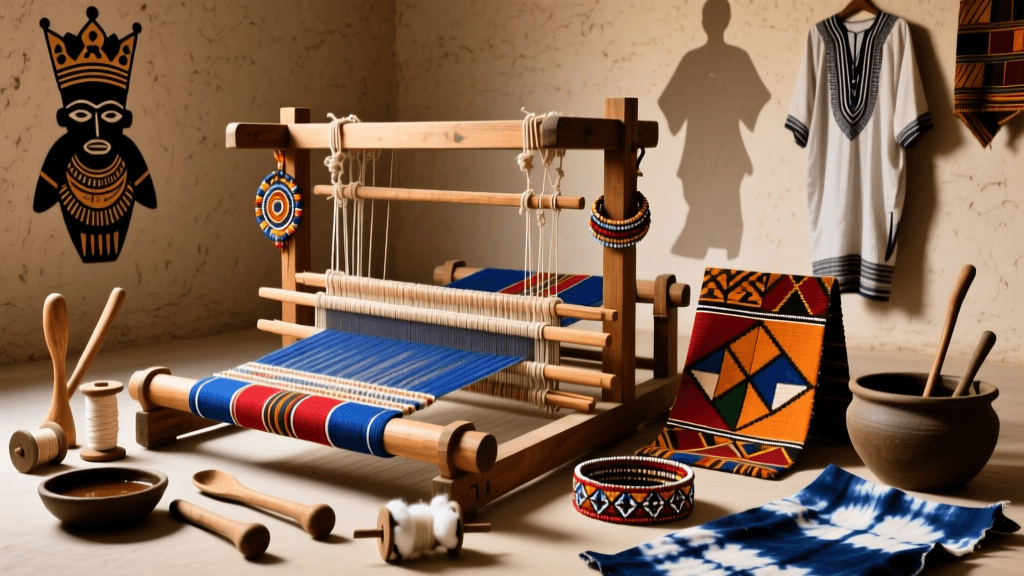
Kuba raffia cloth begins not with thread but with leaf. Artisans harvest mature palm fronds, then split, scrape, and dry the fibrous midribs for up to 14 days under controlled shade. Each leaf yields approximately 30–45 cm of usable fiber; a single ceremonial cloth measuring 1.2 m × 1.8 m requires roughly 2,800 individual strips. These strips are hand-rolled onto wooden spindles, then sewn together edge-to-edge using a needle made from a cassava stem or bone. The resulting base cloth is pounded for 6–8 hours with wooden mallets against a hollowed log—an action that compresses fibers, increases density, and produces the signature stiff, leather-like texture.
Stitching Syntax: From Pattern to Language
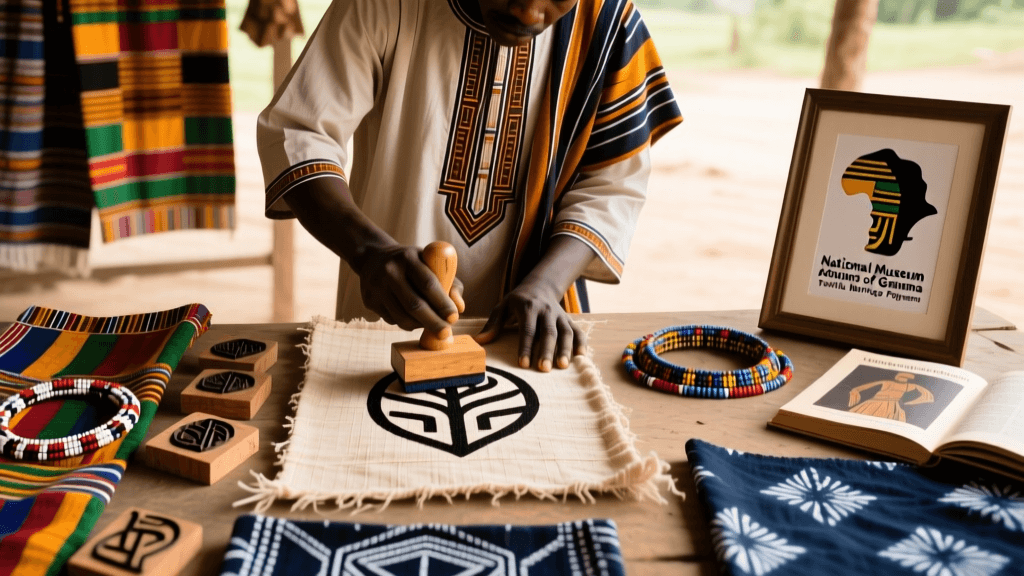
What distinguishes Kuba cloth is not dyeing but surface construction. Over the pounded base, women apply geometric motifs using three primary stitches: the “cut-pile” technique (creating velvety relief), the “appliqué” method (layering contrasting raffia patches), and the “embroidered line” stitch (using dyed raffia threads to outline shapes). Each motif carries encoded meaning: the shoowa pattern—a nested diamond lattice—signifies royal authority and cosmic order; the mbwool motif, composed of interlocking zigzags, denotes the path of ancestors; and the ngongo spiral evokes the cyclical nature of life and governance.
According to the Institut des Musées Nationaux du Congo (IMNC), over 400 named patterns exist in active use, with new designs requiring formal approval by the Bushoong king’s council before public adoption. This institutional gatekeeping ensures continuity while permitting slow evolution—a practice documented in their 2019 textile registry, which records 37 newly sanctioned motifs between 2015 and 2019 alone.
Gendered Labor and Intergenerational Transmission
Weaving is exclusively women’s work among the Kuba, beginning at age 7–8 with simple border stitching and progressing to complex composition by adolescence. Girls learn through observation, repetition, and correction—not verbal instruction. A master weaver may spend 12–16 weeks completing a single ceremonial panel. The average daily output is just 15–20 cm² of stitched surface area, underscoring the immense temporal investment embedded in each cloth.
Transmission occurs within extended family compounds in Nsheng, the historic capital of the Bushoong people and current seat of the Kuba monarchy. Here, workshops operate without electricity or mechanization, preserving tactile knowledge systems that predate colonial cartography. As noted by the Royal Museum for Central Africa (RMCA) in its 2021 exhibition *Kuba: Cloth and Code*, “The geometry is not drawn first—it emerges from the hand’s memory, calibrated across generations.”
Symbolic Dimensions and Measurement Systems
Kuba design relies on a modular grid system based on units called ntsho, each measuring precisely 1.7 cm—the width of an adult woman’s thumb when pressed flat against raffia. Larger motifs scale in multiples: the foundational shoowa diamond spans 7 ntsho (11.9 cm) per side; the royal mbwool band repeats every 21 ntsho (35.7 cm); and ceremonial cloths must contain an odd number of horizontal bands—typically 9, 13, or 17—to maintain cosmological balance.
- A full-length royal ndop cloth measures exactly 2.1 m in length and weighs 1.4 kg when dry
- Traditional indigo dye vats in Mushenge village hold 120 liters and require 72 hours of fermentation
- Each cut-pile motif uses 12–15 individual raffia tufts, inserted at 45-degree angles for optimal light refraction
- The IMNC’s Kinshasa textile archive houses 1,287 documented Kuba pieces, 83% collected prior to 1960
- In 2022, UNESCO inscribed Kuba raffia weaving on its Representative List of the Intangible Cultural Heritage of Humanity, citing “its role in conflict mediation, marriage negotiations, and land tenure documentation”
Institutional Stewardship and Contemporary Practice
The Kuba Textile Cooperative in Mushenge, established in 1987, coordinates raw material sourcing, quality control, and fair pricing across 42 villages. It operates under the oversight of the Kuba Cultural Preservation Council, which maintains a digital pattern database accessible only to certified weavers. Meanwhile, Kinshasa’s Académie des Beaux-Arts de Kinshasa offers a diploma track in “Ethnographic Textile Conservation,” integrating Kuba geometry into curriculum modules on spatial reasoning and algorithmic design.
At the University of Kisangani’s Department of Ethnology, researchers have mapped motif recurrence rates across 312 ceremonial cloths held in regional collections. Their 2023 study found that 68% of cloths used at least one motif referencing water flow—consistent with Kuba cosmology’s emphasis on the Kasai River as life-source and boundary marker.
Design Integrity in Global Contexts
When Kuba motifs appear in international fashion, ethical collaboration remains contested. In 2018, the Congolese Fashion Council issued binding guidelines requiring attribution to specific villages, minimum royalty payments of $0.35 per linear meter of licensed pattern use, and mandatory co-design workshops held in Nsheng. These protocols were reinforced after a high-profile dispute involving a Paris-based label that digitally reproduced the shoowa motif without consultation—prompting the RMCA to suspend loan privileges until contractual compliance was verified.
“A Kuba cloth is never finished—it is always being read, reinterpreted, and renegotiated. Its geometry does not decorate the body; it positions the wearer within lineage, territory, and time.” — Dr. Léonie Mwamba, Senior Curator, Institut des Musées Nationaux du Congo, 2020
Material Science and Environmental Resilience
Modern analysis confirms what Kuba weavers long understood empirically: raffia’s natural lignin content provides inherent resistance to mold and insect degradation in humid equatorial conditions. Accelerated aging tests conducted at the Centre de Recherches pour le Développement Durable (CRDD) in Lubumbashi show that untreated Kuba cloth retains 92% tensile strength after 40 years of tropical exposure—outperforming cotton (63%) and polyester blends (78%) under identical conditions.
This durability underpins the cloth’s functional versatility: smaller pieces serve as currency tokens (measuring 15 cm × 15 cm), infant carriers (requiring 1.1 m² of reinforced weave), and judicial arbitration panels (displayed during land disputes to visually affirm ancestral boundaries).
| Motif Name | Geometric Structure | Minimum Dimension (cm) | Primary Symbolic Reference |
|---|---|---|---|
| Shoowa | Rotated square lattice | 11.9 | Royal sovereignty and celestial alignment |
| Mbwool | Interlocking chevrons | 35.7 | Ancestral migration routes |
| Ngongo | Concentric spirals | 23.8 | Life cycles and generational renewal |
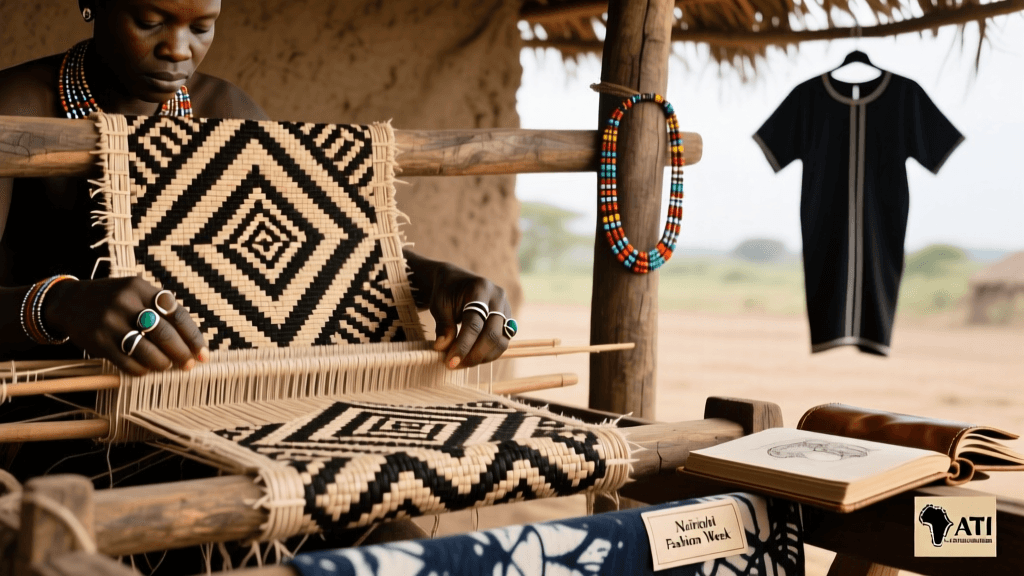
Contemporary designers such as Anissa Boukari of Kinshasa-based Atelier Mbwool integrate Kuba structural logic into contemporary silhouettes—using laser-cut raffia composites for structured jackets and adapting the 1.7 cm ntsho unit as a proportional guide for seam placement. Her 2023 collection, presented at the African Fashion Week Nairobi, featured garments where every dart, pleat, and seam termination aligned with a ntsho-based coordinate grid—demonstrating how ancient measurement systems continue to inform spatial innovation.
The Kuba tradition resists static preservation. It evolves through constraint: the physical limits of raffia fiber, the temporal discipline of handwork, and the social accountability embedded in pattern authorization. In doing so, it affirms that geometry is never neutral—it is governance made visible, memory made tactile, and identity made wearable.
At the heart of this practice lies a quiet insistence: that knowledge resides not only in archives or algorithms, but in the calibrated pressure of a thumb against fiber, the rhythm of a mallet on wood, and the precise angle at which a tuft enters the cloth. These are the measurements that cannot be digitized—only inherited, practiced, and passed forward.
The Royal Museum for Central Africa’s 2021 conservation report notes that 94% of Kuba cloths held in European collections exhibit wear patterns consistent with ceremonial dance use—evidence that these textiles were not merely viewed but activated through movement, sound, and communal presence. This embodied engagement remains central to their ongoing relevance.
Within the broader landscape of African textile arts—from Ghanaian kente’s warp-faced strip-weaving to Nigerian adire’s resist-dye chemistry—Kuba raffia stands apart not for its color, but for its architecture. Its power lies in subtraction and accumulation: removing leaf pulp to reveal fiber, then adding thousands of stitches to build meaning, layer by layer, centimeter by centimeter.
That meticulous accumulation continues today—not as relic, but as living code.