The Neo-Qipao: A Guide to Modern Cheongsam Fusion
The Guochao Movement and the Rise of the Neo-Qipao
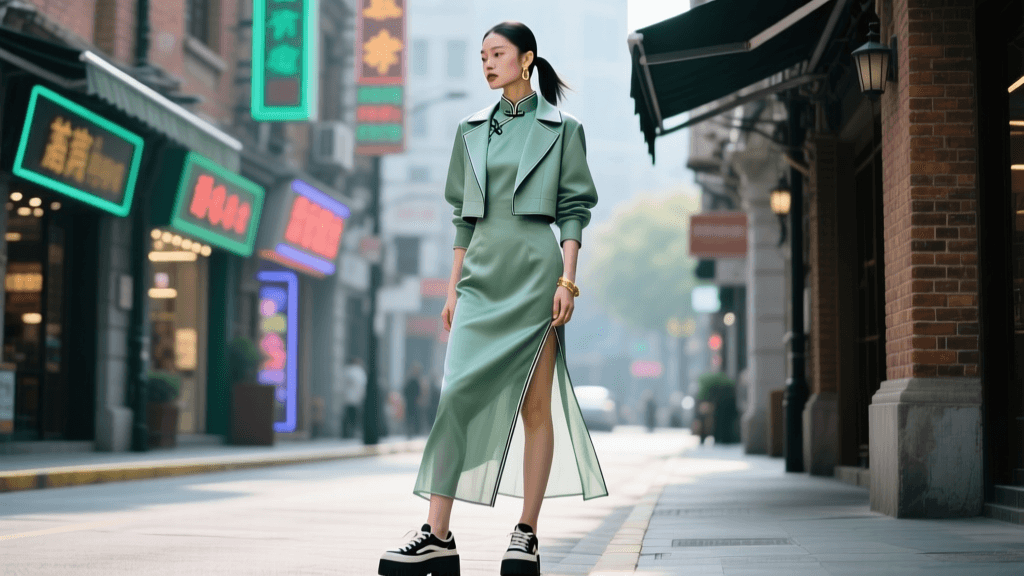
In the ever-evolving landscape of global fashion, the traditional Chinese cheongsam (qipao) has undergone a radical transformation. No longer confined to formal banquets or historical reenactments, the garment has been reborn as the neo-qipao—a fusion of heritage tailoring and contemporary streetwear. This revival is deeply intertwined with the Guochao (national trend) movement, where young Chinese consumers and global designers alike are reclaiming and modernizing domestic cultural symbols. As noted by Jing Daily, the Guochao trend has fundamentally shifted how heritage garments are consumed, moving them from ceremonial wear to daily, expressive streetwear.
The neo-qipao deconstructs the rigid, body-conforming silhouettes of the 1930s Shanghai era, introducing relaxed fits, unconventional fabrics, and modular styling. It is a garment that speaks to a generation that values both cultural rootedness and sartorial rebellion.
Deconstructing the Silhouette: Key Design Elements
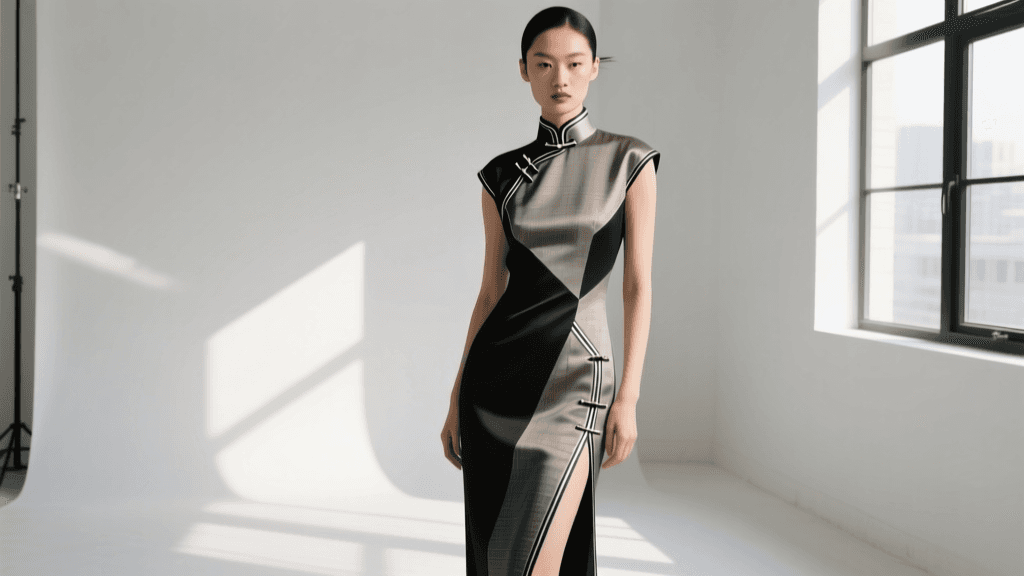
To understand the neo-qipao, one must understand how designers are subverting its traditional codes. According to the Metropolitan Museum of Art's Heilbrunn Timeline of Art History, the classic qipao was defined by its high mandarin collar, asymmetrical front flap, and form-fitting cut. The modern adaptation challenges these very pillars:
- The Mandarin Collar: Traditional stiff, high collars (often 4-5 cm) are replaced with softer, lower bands (2-3 cm), or entirely deconstructed into open-neck V-slits for breathability and layering.
- Pankou (Knot Fasteners): Once purely functional, hand-woven silk knots are now used as exaggerated decorative hardware, sometimes replaced by industrial metal zippers, snap buttons, or utilitarian carabiners in techwear adaptations.
- The Slit: The classic thigh-high slit, originally designed for mobility, is reimagined. Modern iterations feature asymmetrical hemlines, front-zip slits, or dropped side-slits that sit below the knee to accommodate layering over trousers.
Practical Tailoring: Commissioning a Custom Neo-Qipao
While fast-fashion retailers offer mass-produced approximations, the true essence of the neo-qipao lies in bespoke or semi-bespoke tailoring. When commissioning a modern piece, the approach to ease (the extra room built into a garment beyond the body's exact measurements) is critical.
A traditional 1930s cheongsam requires minimal ease (2-4 cm) to create a second-skin effect. The neo-qipao, designed for layering and movement, requires 8-12 cm of ease through the bust and waist. This allows the wearer to layer the qipao over turtlenecks in winter or pair it with heavy outerwear without restricting movement.
Essential Measurement Chart for Modern Fits
When submitting measurements to a tailor for a fusion piece, provide the following specifications to ensure a modern, streetwear-ready silhouette:
| Measurement Point | Traditional Approach | Neo-Qipao / Fusion Approach |
|---|---|---|
| Bust Ease | +2 to 4 cm | +8 to 12 cm (Allows for layering) |
| Waist Ease | +2 to 3 cm | +6 to 10 cm (Boxy or A-line drop) |
| Collar Height | 4.5 to 6 cm (Stiff interfacing) | 2 to 3 cm (Soft cotton/linen band) |
| Shoulder Seam | Exact shoulder point | Dropped 2-4 cm for relaxed drape |
| Hollow to Hem | Calf or ankle length | Micro (mid-thigh) or Midi (knee) |
Fusion Styling Formulas for the Modern Wardrobe
Styling a neo-qipao requires abandoning the notion that it must be worn as a standalone dress. The most compelling modern adaptations treat the qipao as a modular component within a broader streetwear or avant-garde wardrobe. Here are three actionable styling formulas:
1. Urban Techwear (The Cyberpunk Silhouette)
The Formula: Short-sleeve denim or neoprene neo-qipao top + black cargo trousers + chunky footwear.
Actionable Details: Source a qipao top made from 12oz raw denim with gunmetal hardware instead of silk pankou. Pair it with technical cargo pants (such as those from Acronym or Nike ACG) that feature adjustable drawstring hems. Finish with Dr. Martens 1460 boots or Balenciaga Track sneakers. The contrast between the heritage collar and utilitarian lower half creates a striking, futuristic tension.
2. Corporate Edge (The Office-to-Evening Transition)
The Formula: Linen-blend midi neo-qipao + oversized structured blazer + wide-leg trousers.
Actionable Details: Choose a sleeveless, knee-length qipao in a breathable linen-cotton blend (ideal for climate-controlled offices). Leave the bottom three pankou knots unfastened to create a deep front slit. Layer over Uniqlo U wide-leg pleated trousers. Top with an oversized, masculine-cut blazer (e.g., from COS or Acne Studios) draped over the shoulders. This look respects professional environments while maintaining a sharp, cultural edge.
3. Avant-Garde Evening (Texture and Volume)
The Formula: Velvet or Xiangyunsha silk qipao dress + leather harness/belt + asymmetrical outerwear.
Actionable Details: For evening wear, opt for Xiangyunsha (gambiered Canton gauze), a heritage silk dyed with river mud and plant extracts that yields a rich, leather-like texture. Cinch the relaxed waist with a thick, Western-style leather corset belt to artificially create structure. Pair with sheer black tights and pointed-toe Chelsea boots. The Victoria and Albert Museum frequently highlights how the juxtaposition of delicate Chinese silks with harsh, industrial accessories reflects the dualities of modern urban life.
Traditional Cheongsam vs. Neo-Qipao: A Quick Comparison
| Feature | Traditional Cheongsam | Neo-Qipao Fusion |
|---|---|---|
| Primary Fabrics | Brocade, heavy silk, satin | Denim, neoprene, linen, tech-nylon |
| Fasteners | Hand-tied silk pankou knots | Metal zippers, snaps, exaggerated knots |
| Wearability | Standalone formal dress | Layered top, tunic, or modular dress |
| Care Instructions | Dry clean only, delicate handling | Machine washable (often pre-shrunk) |
Sourcing, Costs, and Timelines
Acquiring a high-quality neo-qipao requires navigating a diverse market ranging from digital storefronts to heritage tailoring districts. Below is a practical breakdown of where to source your garments, what to expect in terms of pricing, and the typical production timelines.
- Etsy & Independent Digital Tailors: Many independent designers in Shanghai and Guangzhou operate via Etsy or Instagram, offering semi-custom neo-qipaos. Cost: $80 - $180 USD. Timeline: 3 to 5 weeks (including international shipping). Best for: Unique fabric choices like vegan leather or upcycled denim.
- Shanghai Bespoke (e.g., Xikang Road District): For true craftsmanship, visiting or remotely commissioning from Shanghai's heritage tailors who have adapted to modern trends is unparalleled. You can supply your own tech-wear fabrics and request traditional finishing. Cost: $250 - $600+ USD. Timeline: 2 to 3 weeks. Best for: Perfect fit, complex structural modifications, and heirloom-quality construction.
- Fast Fashion & Taobao (Guochao Brands): Domestic Chinese platforms feature hundreds of 'Guochao' brands producing ready-to-wear neo-qipaos. Use proxy shopping services (like Superbuy or Wegobuy) to access these. Cost: $25 - $60 USD. Timeline: 1 to 2 weeks. Best for: Trend-hopping, seasonal pieces, and experimenting with bold, avant-garde cuts without a massive financial commitment.
Stylist's Tip: When ordering from Asian domestic markets, always size up by one or two increments if you plan to wear the neo-qipao over winter layers. Asian ready-to-wear sizing is traditionally cut for a much closer fit than Western streetwear standards.
Conclusion
The neo-qipao is not merely a costume; it is a living, breathing garment that adapts to the rhythm of modern life. By understanding the mechanics of its tailoring, experimenting with unconventional fabrics, and embracing fusion styling, you can integrate this iconic piece of Asian heritage into a forward-thinking, global wardrobe. Whether you are commissioning a bespoke denim tunic or layering a linen midi over wide-leg trousers, the modern cheongsam offers endless possibilities for sartorial storytelling.