Southwest Indigenous Dress: Navajo and Hopi Textiles in 2026
The Enduring Legacy of Southwest Indigenous Textiles
The American Southwest holds some of the most complex, spiritually significant, and visually stunning textile traditions in the world. When examining Indigenous North American dress traditions by tribe and region, the Southwest stands out for its stark contrasts and deep historical continuity. In 2026, the intersection of ancestral Indigenous garment creation and contemporary fashion has reached a pivotal moment. Collectors, museums, and a new generation of Indigenous designers are re-evaluating how traditional garments like the Diné (Navajo) wearing blanket and the Hopi cotton kilt are preserved, worn, and adapted for the modern era.
Understanding these garments requires looking beyond mere aesthetics. For the Indigenous peoples of the Southwest, textiles are living entities, imbued with prayers, cultural protocols, and a profound connection to the land. As we navigate the 2026 market for Indigenous art and apparel, distinguishing between authentic, tribally-made regalia and mass-produced appropriations is more critical than ever. This guide explores the distinct weaving traditions of the Diné and Hopi peoples, the evolution of their garments, and how to respectfully source and appreciate these masterworks today.
Diné (Navajo) Weaving: The Upright Loom and the Biil
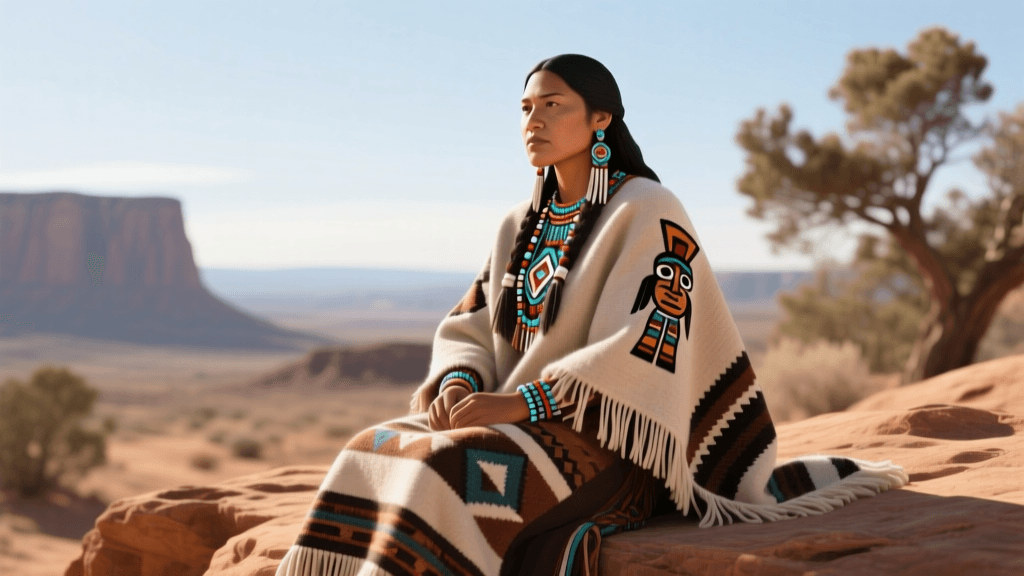
Diné weaving is deeply rooted in the cosmological teachings of Spider Woman (Na'ashjé'ii Asdzáá), who is said to have taught the Diné people how to weave using the sky, earth, and sunlight as their first loom. Historically, the foundational garment of the Diné people was the biil (a two-piece wearing blanket) and the manta (a woven wrap-around dress). Unlike the horizontal looms used by neighboring Pueblo tribes, the Diné utilize a vertical upright loom, a technology adapted from their Pueblo neighbors but perfected to create large, continuous-warp textiles without a top or bottom hem.
The primary material for traditional Diné garments is the wool of the Navajo-Churro sheep, a heritage breed that nearly faced extinction in the 20th century but has seen a massive conservation and breeding renaissance leading into 2026. Churro wool is prized for its long staple, low lanolin content, and ability to take natural dyes brilliantly. In 2026, master weavers who still process their own fleece, spin their own yarn using traditional drop spindles, and dye using foraged botanicals command the highest tier of the textile market.
Natural dyeing remains a hallmark of high-end Diné wearable art. Weavers utilize Navajo tea (Thelesperma) for vibrant yellows, wild walnut hulls for deep browns, and imported indigo or cochineal for blues and reds. While the traditional biil is rarely worn as daily attire today, its structural elements, geometric motifs, and tapestry-weave techniques have heavily influenced contemporary Indigenous fashion designers. In 2026, it is common to see Diné weavers collaborating with modern apparel designers to create woven vests, tailored coats, and structured skirts that incorporate traditional continuous-warp techniques into modern silhouettes.
Hopi Cotton Weaving: The Horizontal Loom and Ceremonial Kilts
In sharp contrast to the Diné tradition, Hopi weaving is traditionally the domain of men, and the primary fiber is cotton rather than wool. The Hopi utilize a horizontal Pueblo loom, which is tied to the rafters of a kiva or a specialized weaving room. This loom structure dictates a different approach to garment creation, resulting in textiles that often feature distinct top and bottom borders and a different structural integrity.
The most iconic Hopi garment is the white cotton ceremonial kilt, worn by male dancers during sacred Katsina ceremonies. These kilts are woven from cotton that, historically, was cultivated in the arid Southwest. Today, while some Hopi farmers are reviving heirloom Gossypium hopi seed cotton, many weavers source high-grade organic cotton to meet the demands of ceremonial calendars. The weaving of a ceremonial kilt is not merely a craft; it is a religious duty. The weaver must maintain a state of spiritual purity, and the garment is often imbued with specific prayers for rain, agricultural fertility, and community balance.
Alongside the kilts, Hopi weavers create elaborate embroidered sashes and mantas. The embroidery, often done by specialized artisans, features complex geometric and symbolic motifs representing clouds, rain, and the underworld. In 2026, the preservation of Hopi cotton weaving is heavily supported by tribal cultural initiatives aimed at teaching the younger generation the intricate mechanics of the horizontal loom and the spiritual responsibilities that accompany the creation of ceremonial regalia.
Contemporary Indigenous Fashion: The 2026 Renaissance
The year 2026 has seen a remarkable surge in the integration of Southwest Indigenous textiles into high fashion and contemporary streetwear, driven entirely by Indigenous-owned brands. Events like the Santa Fe Indian Market and the Heard Museum's Indian Fair & Market have expanded their fashion categories, showcasing designers who use traditional Diné and Hopi weaving as the foundation for modern apparel.
Rather than appropriating sacred patterns, contemporary Diné and Hopi designers are creating new, proprietary motifs that honor their ancestral techniques. For example, modern Diné designers are weaving custom Churro wool textiles specifically cut and tailored into contemporary winter coats, blending the extreme durability and weather-resistance of the traditional wearing blanket with modern urban aesthetics. Similarly, Hopi-inspired embroidery is being adapted into everyday collared shirts and denim jackets, allowing Indigenous youth to wear their cultural heritage in daily life without violating the strict protocols surrounding ceremonial garments.
2026 Buyer’s Guide: Sourcing Authentic Southwest Regalia
For collectors, museums, and enthusiasts looking to acquire Southwest Indigenous garments in 2026, understanding the market landscape is essential. The prices for authentic, hand-woven textiles have risen significantly due to the immense time investment and the scarcity of heritage materials like Navajo-Churro wool. Below is a structured overview of the current market for Southwest Indigenous garments.
| Garment Type | Tribe / Origin | Primary Material | 2026 Avg. Market Price | Typical Lead Time |
|---|---|---|---|---|
| Biil (Wearing Blanket) | Diné (Navajo) | Hand-spun Churro Wool | $4,500 - $12,000+ | 6 - 14 Months |
| Ceremonial Cotton Kilt | Hopi | Organic / Heirloom Cotton | $1,800 - $3,500 | 3 - 6 Months |
| Embroidered Sash | Hopi | Cotton base, Wool yarn | $600 - $1,200 | 2 - 4 Months |
| Contemporary Woven Vest | Diné / Hopi | Churro Wool / Cotton Blends | $800 - $2,500 | 1 - 3 Months |
| Manta (Wrap Dress) | Diné / Pueblo | Wool / Cotton | $3,000 - $7,500 | 4 - 8 Months |
Verifying Authenticity and Avoiding Appropriation
The market for Indigenous textiles is unfortunately plagued by counterfeit goods, often mass-produced overseas and falsely marketed as Native American-made. In the United States, the Indian Arts and Crafts Act makes it illegal to misrepresent goods as being made by Native Americans. When purchasing Southwest garments in 2026, buyers must demand documentation of tribal enrollment and the artist's specific community affiliation.
According to the Indian Arts and Crafts Board (IACB), consumers should look for written guarantees of authenticity and purchase directly from tribal enterprises, reputable Native-owned galleries, or established institutions like the Wheelwright Museum of the American Indian in Santa Fe, which maintains strict ethical sourcing guidelines for its textile collections. Furthermore, buyers must understand cultural boundaries; certain Hopi ceremonial garments are restricted for tribal use only and should never be sold to or worn by non-tribal members. Respecting these protocols is a fundamental aspect of ethical collecting and cultural appreciation.
Preservation and the Future of Southwest Dress
The survival of Indigenous North American dress traditions relies on the continuous transmission of knowledge from elders to the youth. In 2026, tribal colleges and cultural centers across the Navajo Nation and the Hopi Reservation are heavily investing in weaving apprenticeships. These programs not only teach the mechanical skills of loom construction, fiber processing, and weaving but also the associated language, songs, and prayers that give the garments their spiritual life.
Institutions like the Smithsonian National Museum of the American Indian (NMAI) have also shifted their 2026 exhibition strategies, moving away from treating Indigenous garments as static relics of the past. Instead, contemporary exhibitions highlight living weavers, demonstrating how the Diné biil and the Hopi kilt continue to evolve. By supporting Indigenous weavers directly and respecting the profound cultural weight these garments carry, we ensure that the vibrant textile traditions of the American Southwest will continue to be woven into the fabric of the future.