The Living Colors of History: A Global Guide to Natural Dye Traditions
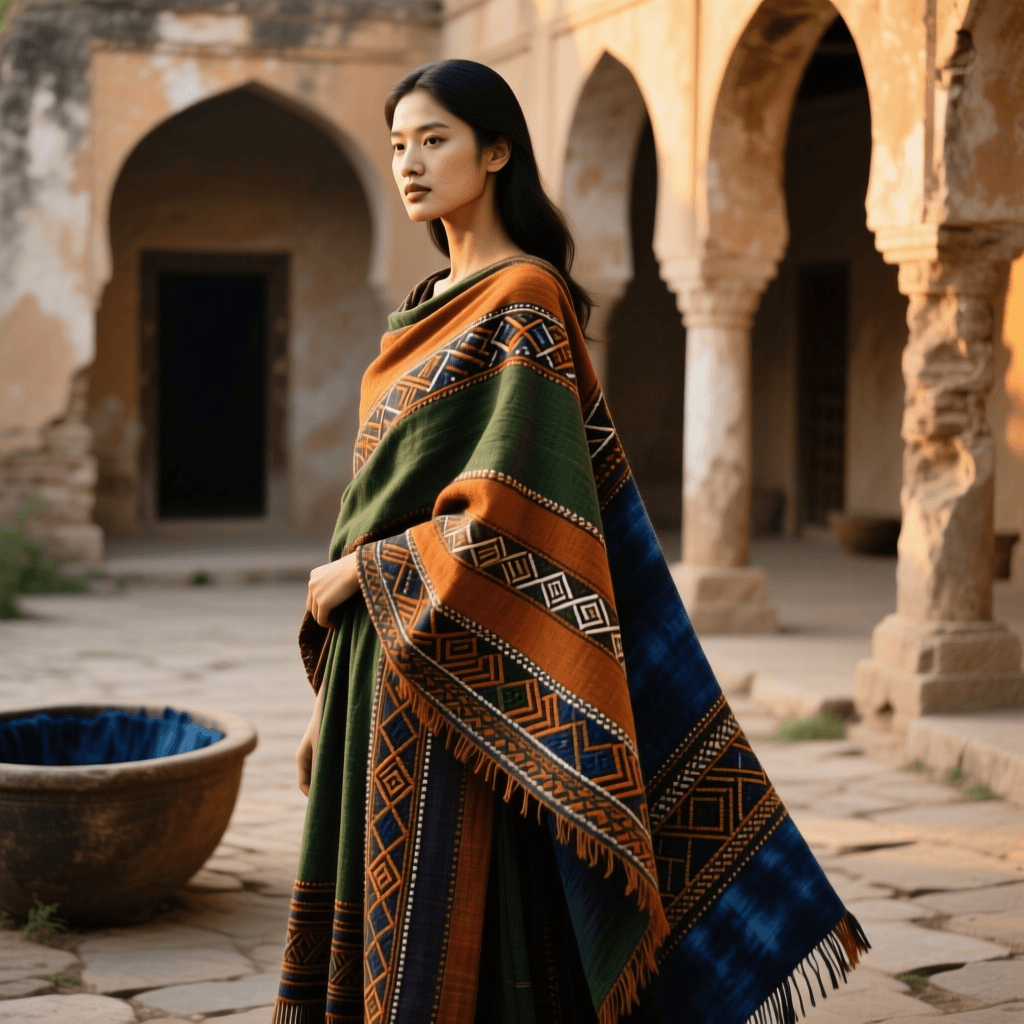
Long before the advent of synthetic chemistry and the mass production of fast fashion, color was a profound luxury, an alchemical miracle drawn directly from the earth. The history of human civilization is inextricably woven with the quest for vibrant hues. From the deep, oceanic blues of fermented indigo to the brilliant, blood-reds of crushed cochineal insects, natural dye traditions represent one of the oldest and most complex forms of human craftsmanship. To wear a naturally dyed garment is to wear a piece of living history, a textile that breathes, shifts, and ages alongside its owner.
At The Garment Atlas, we believe that understanding the origins of our clothing deepens our connection to what we wear. The journey from a humble root, leaf, or mineral to a vibrant piece of fabric requires immense knowledge, patience, and a profound respect for the natural world. In this comprehensive guide, we explore the global heritage of natural dyeing, examining the cultural significance, the meticulous craftsmanship, the stunning regional variations, and the modern renaissance of these ancient practices.
The Cultural Significance of Botanical Colors
In the ancient and pre-industrial world, color was never merely decorative; it was a powerful language. The ability to extract and fix vibrant pigments onto the warp & weft of textiles was often viewed as a magical or divine process. Because natural dyes were difficult to source and labor-intensive to produce, colored garments became immediate markers of social status, spiritual authority, and cultural identity.
Consider the legendary Tyrian purple of the Roman Empire, extracted drop by painstaking drop from the glands of Murex sea snails. It was so valuable that sumptuary laws strictly forbade anyone but the Emperor from wearing it, making color a literal instrument of political power. Similarly, in Mesoamerica, the vibrant reds derived from the cochineal insect were reserved for royalty and the gods, symbolizing life, blood, and the sun. When the Spanish conquistadors arrived, they recognized the immense economic value of this red dye, establishing a global monopoly that rivaled silver and gold in its profitability.
Beyond status, natural colors held deep spiritual and protective significance. In many West African traditions, indigo was believed to possess protective qualities, guarding the wearer from malevolent spirits. In parts of Asia, turmeric-dyed garments were worn during sacred rituals and weddings to invite prosperity and ward off disease. The colors were not superficial coatings; they were imbued with the life force of the plants and minerals from which they were born. This deep cultural reverence stands in stark contrast to the disposable, trend-driven color palettes of the modern fast-fashion industry, reminding us that true beauty in clothing is often rooted in meaning & ritual.
The Alchemy of Craftsmanship: Mordants, Vats, and Time
The transformation of raw botanical matter into colorfast fabric is a masterclass in organic chemistry. Unlike modern synthetic dyes, which are engineered to bond instantly and uniformly with synthetic fibers, natural dyes require a cooperative relationship with the textile. This relationship is built on the foundation of time, temperature, and the crucial use of mordants.
A mordant—derived from the Latin word mordere, meaning 'to bite'—is a metallic salt or organic tannin that acts as a chemical bridge between the dye molecule and the fiber. Without a mordant, most plant-based colors (known as adjective dyes) would wash away or fade rapidly in the sun. Artisans throughout history have utilized locally available mordants: alum gathered from volcanic soils, iron rust scraped from old tools, and tannins extracted from oak galls, pomegranate rinds, or myrobalan nuts. The choice of mordant not only fixes the color but can dramatically alter it; an iron mordant will 'sadden' a bright yellow into a deep olive green, while tin can make a madder red blaze with fiery intensity.
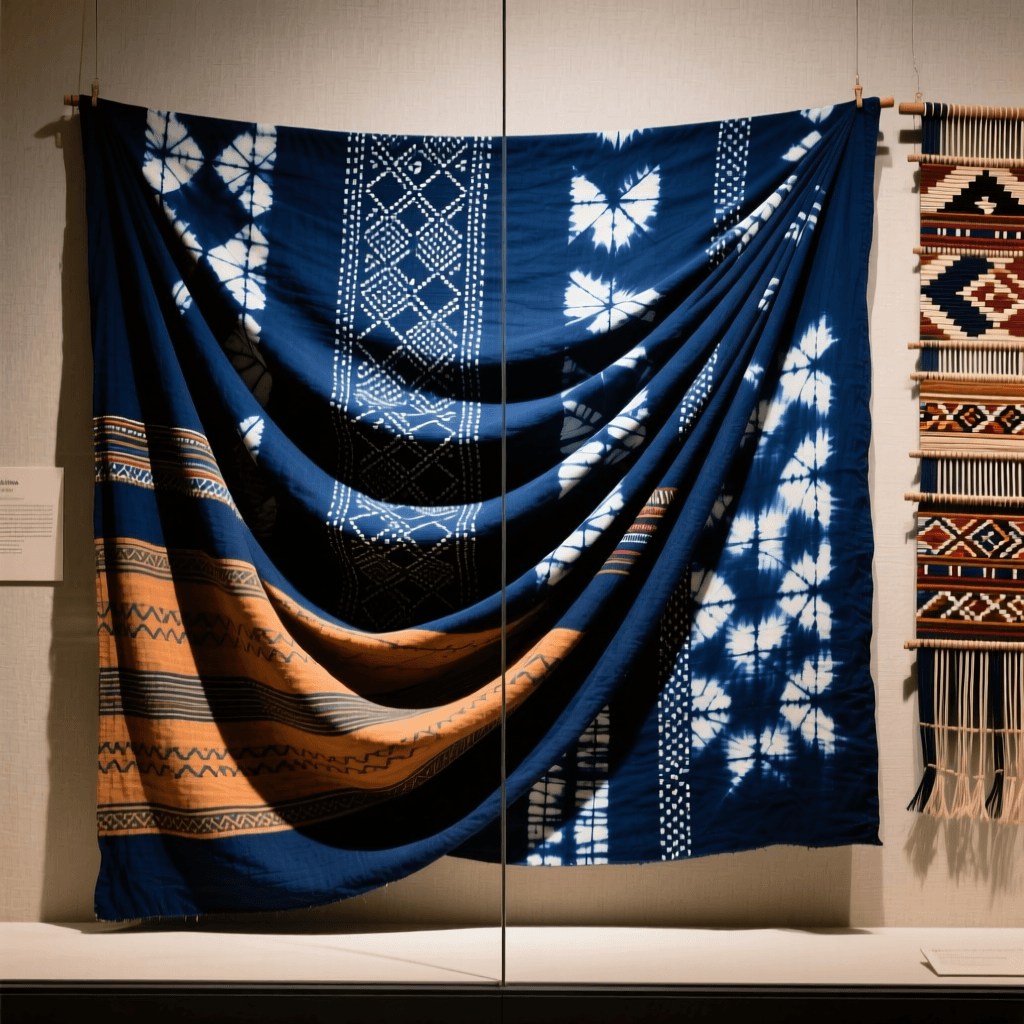
The most famous and complex of all natural dyeing methods is vat dyeing, used primarily for indigo. Indigo leaves do not yield their blue pigment through simple boiling. Instead, the leaves must be fermented in an alkaline, oxygen-deprived environment to reduce the indigotin into a soluble, yellowish-green liquid. When the dyer submerges a piece of cotton, wool, or silk into the vat and then pulls it out into the air, a miraculous oxidation occurs. The fabric emerges green, but as it breathes in the oxygen of the atmosphere, it slowly blooms into a rich, profound blue. This process of dipping & oxidizing must be repeated dozens of times to achieve the deep, dark shades prized in heritage garments, such as those found in our selvedge denim guides.
This slow, deliberate craftsmanship means that no two naturally dyed batches are ever exactly alike. Variations in soil quality, rainfall, harvest time, and the mineral content of the local water supply all leave their invisible fingerprints on the final hue. This inherent variability is not a flaw; it is the hallmark of true artisanal heritage.
Regional Variations: A Global Tapestry of Hues
Because natural dyers could only work with the flora, fauna, and minerals native to their immediate environments, distinct regional dyeing traditions emerged across the globe. These traditions are deeply tied to the local ecology and the cultural heritage of their creators.
Japan: The Depths of Aizome
In Japan, natural indigo dyeing is known as aizome, a craft that reached its zenith during the Edo period. The Japanese indigo plant (Polygonum tinctorium) is processed into a dried, fermented compost called sukumo. Master dyers, known as aishi, tend to the sukumo and the dye vats with the same reverence a sake brewer applies to their mash. Aizome is deeply intertwined with Japanese workwear heritage, as the indigo was prized not only for its beauty but for its ability to strengthen cotton fibers, repel insects, and mask sweat and dirt. The subtle, uneven fading of vintage aizome garments is highly celebrated, embodying the aesthetic of wabi-sabi—finding beauty in imperfection & transience.
West Africa: Mud and Tannins
In Mali, the Bamana people create Bogolanfini, widely known as mud cloth. This extraordinary tradition relies on a complex chemical reaction between tannins and iron. Artisans first dye handwoven cotton strips yellow using a bath rich in tannins, extracted from the leaves of the n'gallama tree. Once dried, the cloth is meticulously painted with patterns using fermented, iron-rich mud harvested from riverbeds. Where the mud meets the tannin, a permanent, deep black color is formed. The yellow background is then bleached out using caustic solutions derived from groundnuts or millet, leaving striking black & white geometric patterns that tell stories of local mythology, social status, and historical events.
The Americas: The Crimson Treasure of Cochineal
While the Old World relied heavily on madder root for reds, the indigenous peoples of Oaxaca and the Andes cultivated the cochineal insect (Dactylopius coccus), which feeds exclusively on the pads of the nopal cactus. When dried and crushed, these tiny insects yield carminic acid, a pigment of astonishing brilliance and lightfastness. The tradition of cochineal dyeing survived centuries of colonial exploitation and remains a vital part of the cultural and economic fabric of indigenous weaving cooperatives in Mexico and Peru today. The vibrant reds, pinks, and purples derived from cochineal continue to be a defining feature of traditional Andean textiles & Zapotec rugs.
India: The Masters of Madder and Resist
India has long been considered the historical epicenter of textile dyeing and printing. The Indian subcontinent is the native home of Rubia tinctorum (madder root), which has been used for millennia to produce a spectrum of reds, from soft peach to deep burgundy. Indian artisans mastered the art of combining madder with complex resist-dyeing and block printing traditions. In the Kutch region of Gujarat, the Ajrakh printing process involves up to sixteen distinct steps of washing, mordanting, printing with resist pastes, and dyeing with madder and indigo. The resulting fabrics are a testament to the staggering mathematical precision and botanical knowledge of Indian master dyers.
Modern Preservation and the Slow Fashion Renaissance
The invention of synthetic aniline dyes in the mid-19th century fundamentally fractured the natural dye tradition. Suddenly, brilliant, uniform colors could be produced cheaply and rapidly in a laboratory. While this democratized colorful clothing, it came at a devastating environmental and cultural cost. Today, the synthetic dyeing industry is one of the largest polluters of global waterways, relying on petrochemicals, heavy metals, and vast quantities of fresh water, often resulting in toxic runoff that devastates local ecosystems.
In response to the ecological and ethical crises of fast fashion, a profound renaissance in natural dyeing is underway. A new generation of designers, chemists, and artisans are looking backward to move forward, reviving heritage techniques and integrating them into the modern earth-tone wardrobe. This revival is not merely an exercise in nostalgia; it is a vital component of the sustainable fashion movement.
Modern natural dye preservation focuses on three key pillars: ecological regeneration, cultural equity, and consumer education. Forward-thinking brands are partnering directly with indigenous farming cooperatives, ensuring that the cultivation of indigo, madder, and marigold supports biodiversity and soil health rather than depleting it. By utilizing agricultural byproducts—such as onion skins from food markets, avocado pits from restaurants, or fallen eucalyptus leaves—urban dyers are also pioneering circular waste-to-color systems.
However, scaling natural dyes to meet global demand remains a complex challenge. It requires vast amounts of land to grow dye plants, and the slow, batch-dependent nature of the craft resists the hyper-accelerated timelines of modern retail. Therefore, the preservation of these traditions relies heavily on a shift in consumer mindset. It requires us to value the 'living' nature of botanical colors—to appreciate that a naturally dyed linen shirt will soften, shift, and fade in response to the sun & the sea, developing a unique patina that tells the story of the wearer's life. For those looking to maintain these beautiful, living garments, proper maintenance is essential, which we detail extensively in our garment care guides.
FAQ: Understanding Natural Dye Heritage
What is the difference between natural and synthetic dyes?
Natural dyes are derived from organic sources such as plants, insects, and minerals, and their molecular structures are complex and multifaceted. This complexity gives natural dyes a unique visual depth and a slightly uneven, luminous quality that synthetic dyes struggle to replicate. Synthetic dyes, on the other hand, are petroleum-based chemicals engineered in laboratories to produce uniform, highly saturated, and extremely colorfast results. While synthetics offer consistency and lower costs, they often rely on toxic fixatives and contribute heavily to microplastic and chemical water pollution.
Why do naturally dyed garments fade over time?
Natural dyes are often described as 'living colors.' Because they are derived from organic matter, they remain sensitive to their environment. Prolonged exposure to ultraviolet light, changes in pH (such as sweat or acidic detergents), and friction will cause the colors to slowly shift and soften over time. Rather than viewing this as a defect, heritage enthusiasts celebrate this fading process. Much like the evolution of raw denim or the patina on full-grain leather, the fading of a naturally dyed garment is a beautiful record of its use, reflecting the life & travels of the person wearing it.
Are natural dyes completely eco-friendly?
While natural dyes are biodegradable and free from the toxic petrochemicals found in synthetic alternatives, they are not without environmental impact. Traditional mordants like alum and iron must be mined, and some historical mordants (like chrome and tin) are highly toxic and should be avoided by modern eco-conscious dyers. Furthermore, cultivating dye plants requires land, water, and agricultural labor. True sustainability in natural dyeing requires regenerative farming practices, the use of non-toxic mordants, and the responsible treatment of wastewater. When executed thoughtfully, however, natural dyeing can be a net-positive practice that supports soil health and local biodiversity.
How should I care for naturally dyed clothing?
Caring for naturally dyed textiles requires a gentle, mindful approach to preserve the integrity of the botanical pigments. Always wash these garments by hand or on a delicate machine cycle using cold water. Avoid harsh, alkaline detergents or optical brighteners, which can strip the color or alter the pH balance, causing dramatic color shifts (for instance, turning a soft turmeric yellow into a muddy brown). Instead, use a pH-neutral, eco-friendly soap. Dry the garments in the shade, as direct, intense sunlight can rapidly fade botanical hues. By treating your naturally dyed garments with care & respect, you ensure their colors will age gracefully and beautifully.
Ultimately, the tradition of natural dyeing is a testament to humanity's enduring desire to adorn ourselves with the beauty of the natural world. It is a craft that demands patience, rewards curiosity, and connects us to the very soil beneath our feet. As we navigate the future of fashion, looking back to these ancient, earth-born colors offers a profound blueprint for a more thoughtful, sustainable, and beautiful way to dress.