Mastering Yunjin Drawloom Weaving Techniques in 2026
The Resurgence of the Tihua Drawloom in 2026
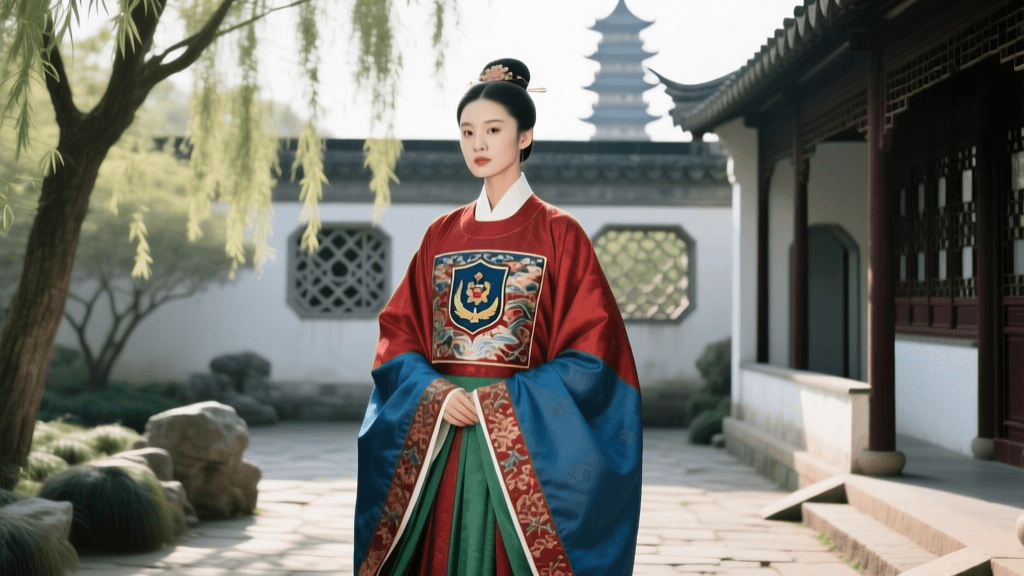
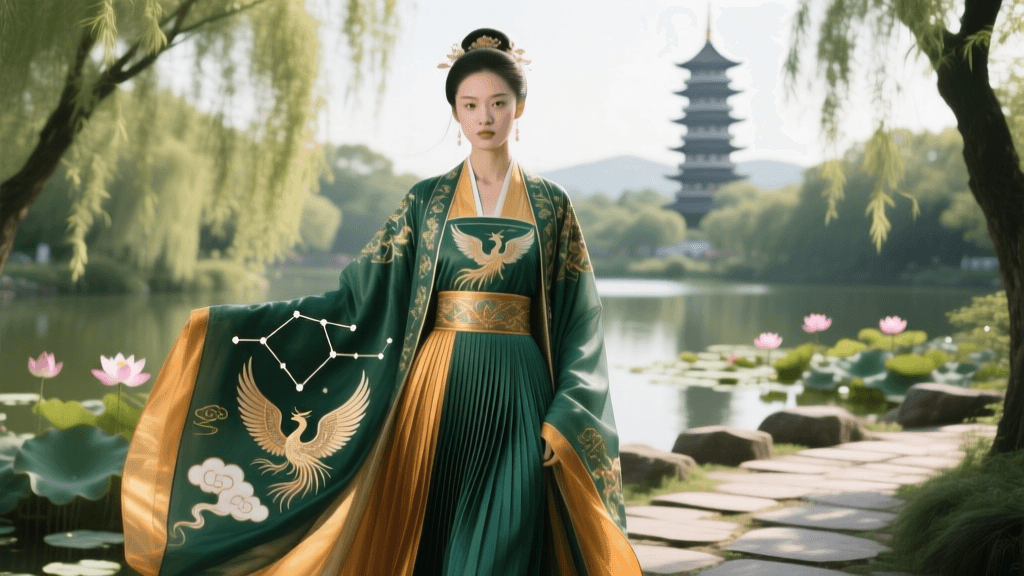
The global fashion landscape in 2026 has witnessed an unprecedented surge in the Xin Zhongshi (New Chinese Style) movement, a cultural renaissance that seamlessly blends ancient sartorial traditions with contemporary silhouettes. At the very pinnacle of this movement lies Nanjing Yunjin, or "Cloud Brocade," a textile so intricate and labor-intensive that it remains impossible to fully replicate with modern machinery. As designers and collectors increasingly demand authenticity, the ancient Tihua drawloom—a massive, multi-story wooden weaving apparatus—has moved from the realm of museum artifacts back into the spotlight of high-end artisanal production.
Recognized for its immense cultural and historical value, the Yunjin weaving technique was inscribed on the UNESCO Intangible Cultural Heritage list, cementing its status as a protected human treasure. Today, understanding the mechanics of the Tihua loom is essential for anyone involved in Asian textile preservation, luxury fashion sourcing, or the academic study of ancient engineering. This guide explores the anatomy, operation, and 2026 market realities of China's most prestigious traditional loom.
The Architecture of the Tihua Drawloom
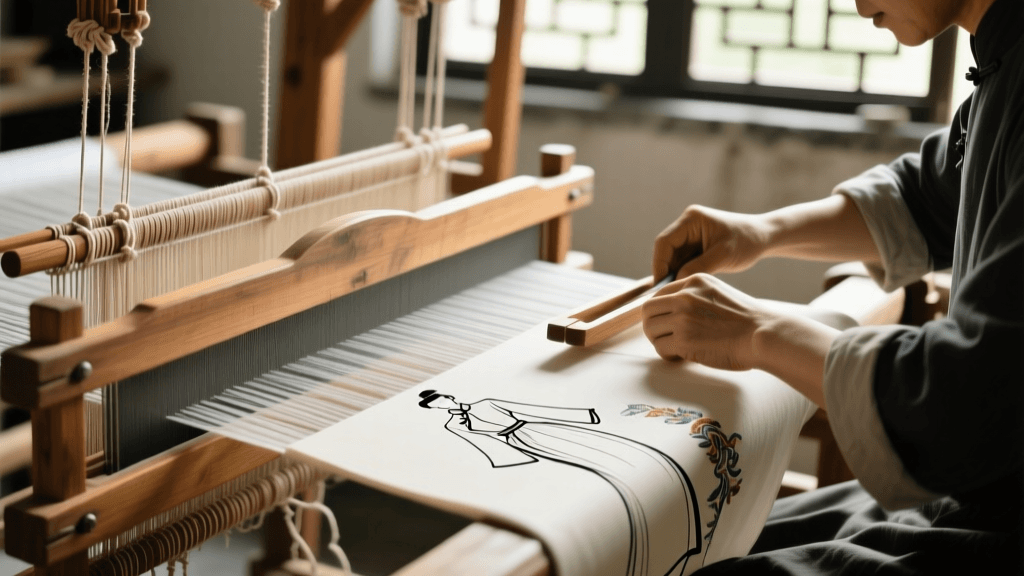
To understand the complexity of Yunjin brocade, one must first understand the machine that creates it. The traditional Tihua drawloom is a colossal structure, typically measuring 5 meters in length, 1.4 meters in width, and an imposing 4 meters in height. Unlike the compact backstrap looms or single-operator pedal looms used for simpler silks, the Tihua loom requires a two-story operational setup. It is constructed entirely from interlocking wood, utilizing traditional mortise and tenon joinery without a single iron nail, allowing the frame to flex slightly under the immense tension of the silk warps.
The loom is divided into two primary workstations. The lower station is where the master weaver sits, managing the shuttle, the beat (the reed that pushes the weft threads tightly together), and the foot pedals that control the ground warp. The upper station, perched nearly three meters in the air, is occupied by the "drawboy" (or draw-puller), whose sole responsibility is to manipulate the complex system of harness cords that lift specific pattern warp threads. This vertical separation of labor is what allows for the creation of Yunjin's signature multi-colored, three-dimensional motifs.
Huaben: The Ancient Binary Code of Silk
Long before the invention of the Jacquard punch card in 19th-century France, Chinese weavers developed the Huaben, an intricate pattern-programming system made entirely of silk cords. In 2026, while digital archiving is used to preserve these patterns, the physical Huaben remains the operational "software" of the Tihua loom.
Creating a Huaben for a new Xin Zhongshi design can take a master programmer several months. The design is first painted on grid paper, where every single square represents one intersection of warp and weft. Artisans then translate this grid into a series of knotted cords. Each knot corresponds to a specific warp thread that must be raised during the weaving process. When the draw-puller at the top of the loom reads the Huaben, they are essentially executing an ancient form of binary code, pulling the exact combination of threads required to reveal the pattern row by row. Historical textile exchanges along the Silk Road helped disseminate early versions of these pattern-binding techniques across Eurasia, a fascinating evolution detailed in Encyclopedia Britannica's extensive archives on brocade.
The Weaving Duet: Passing the Warp and Picking the Weft
The actual weaving of Yunjin is described by the traditional idiom "passing the warp and picking the weft" (tong jing duan wei). Because Yunjin features patterns that are discontinuous—meaning a vibrant crimson peony might only appear in one corner of the fabric, while a gold dragon occupies another—the weaver cannot simply throw a single shuttle across the entire width of the loom.
Instead, the master weaver uses dozens of small, boat-shaped shuttles, each loaded with a different colored silk or metallic thread. As the draw-puller lifts the specific pattern warps from the top of the loom, the weaver below meticulously "picks" the correct colored shuttle and passes it only through the exact width of the pattern motif. This technique, known as zhuanghua (swapping colors), allows for an unlimited color palette within a single row of weaving, a feat that standard power looms still cannot achieve without creating messy, floating threads on the reverse side of the fabric.
The materials used in 2026 are as luxurious as they were during the Ming Dynasty. Authentic Yunjin incorporates not just premium mulberry silk, but also threads wrapped in genuine 24-karat gold leaf and, for the most exclusive commissions, spun peacock feather yarn. The peacock yarn is created by wrapping the iridescent barbs of the feather around a silk core, giving the fabric a shifting, jewel-toned luminescence that changes depending on the angle of the light.
2026 Market Analysis: Handwoven vs. Power Loom
As the Xin Zhongshi market matures in 2026, consumers and designers are becoming highly educated about the differences between authentic handwoven Yunjin and its mass-produced imitations. Below is a comparative analysis of the current market offerings.
| Feature | Authentic Handwoven Yunjin (Tihua Loom) | Modern Jacquard Power Loom Brocade | Digital Sublimation Print on Silk |
|---|---|---|---|
| 2026 Avg. Price (per meter) | $1,800 - $4,500 USD | $90 - $180 USD | $25 - $60 USD |
| Daily Output | 5 - 6 centimeters | 50 - 80 meters | Unlimited (Roll-to-Roll) |
| Material Composition | Mulberry silk, real gold leaf, peacock yarn | Synthetic blends, rayon, metallic foil yarns | 100% Silk or Polyester base |
| Texture & Drape | Heavy, sculptural, highly breathable, reversible motifs | Uniform, lighter weight, floating threads on back | Flat, lacks structural drape, single-sided |
| Primary 2026 Use Case | Haute couture, museum archives, bridal heirlooms | Ready-to-wear Xin Zhongshi, commercial fashion | Fast fashion, theatrical costumes, linings |
Sourcing Authentic Yunjin in the Modern Era
For designers and collectors sourcing authentic Tihua-woven textiles in 2026, provenance is everything. The Nanjing Yunjin Institute and affiliated master workshops have adopted advanced technology to protect their artisans' work. Today, authentic handwoven yardage and finished garments are embedded with microscopic NFC (Near Field Communication) threads woven directly into the selvedge. Scanning the garment with a smartphone reveals the blockchain-verified history of the piece, including the names of the weaver and draw-puller, the exact dates of production, and the specific Huaben pattern ID.
When integrating Yunjin into modern wardrobes, designers are moving away from full-length, overwhelming brocade gowns. The 2026 trend favors strategic placement: using handwoven Yunjin for structural mandarin collars, wide cuff accents, and oblong sashes, allowing the heavy, sculptural drape of the brocade to contrast beautifully against lightweight, matte silk crepes and linens. For deeper visual references on how historical Asian textiles are constructed and displayed, The Metropolitan Museum of Art's Asian Art collection provides invaluable structural insights.
Preservation and Care for Drawloom Textiles
Owning a piece of handwoven Yunjin requires strict adherence to traditional preservation methods, updated with modern climate control. Because the fabric relies on the tension of the silk and the delicate adhesion of the gold leaf wrapping, improper care can lead to irreversible degradation.
- Climate Control: Store garments in a climate-controlled environment maintaining exactly 45% to 55% relative humidity. Fluctuations cause the silk core to expand and contract, which can snap the brittle gold leaf wrapping.
- Light Exposure: Peacock feather yarn and natural plant dyes are highly photosensitive. Display pieces must be kept under UV-filtered glass with lux levels kept below 50.
- Storage Mechanics: Never hang Yunjin garments on standard hangers; the heavy weight of the brocade will distort the warp threads over time. Instead, roll the textile around an acid-free, archival-grade honeycomb tube, interleaving the layers with unbuffered tissue paper, and store it horizontally in a camphor wood chest to naturally deter pests without the use of harsh chemical mothballs.
- Cleaning: Dry cleaning is strictly forbidden, as solvents will dissolve the natural sericin of the silk and strip the gold leaf. Surface dust should be removed using a soft, natural-bristle brush, working strictly in the direction of the warp.
Conclusion
The survival of the Tihua drawloom in 2026 is a testament to the enduring value of slow, deliberate craftsmanship in an era of hyper-accelerated production. As the Xin Zhongshi movement continues to redefine global luxury, the ancient binary code of the Huaben and the synchronized duet of the weaver and draw-puller remind us that true innovation often lies in the meticulous preservation of the past. By understanding the mechanics, market realities, and care requirements of Nanjing Yunjin, modern enthusiasts ensure that this cloud-like brocade will continue to grace the world for centuries to come.