Best Hanfu Styles for Qigong and Meditation in 2026
The Intersection of Traditional Chinese Dress and Somatic Wellness
In 2026, the global wellness industry has fully embraced the concept of "somatic dressing"—the practice of wearing clothing that actively supports the nervous system, breathwork, and physical movement. For practitioners of Qigong, Tai Chi, and traditional Chinese meditation, this means a massive return to authentic Hanfu. Unlike modern activewear, which often compresses the body and restricts the subtle flow of Qi (vital energy), traditional Chinese garments are engineered around the body’s natural meridian lines. The intersection of ancient sartorial elegance and holistic wellness has reached new heights this year, with wellness retreats from Hangzhou to Bali mandating loose, natural-fiber Hanfu for their morning meditation sessions.
According to the World Health Organization's guidelines on traditional medicine, integrating traditional practices into daily life requires an environment—and attire—that supports holistic balance. When you practice Qigong, your diaphragm must expand fully, and your joints must rotate without resistance. The structural genius of Hanfu, particularly styles originating from the Song and Ming dynasties, provides exactly this unrestricted environment. This comprehensive guide explores the best Hanfu silhouettes, natural fabrics, and color theories to optimize your meditation and Qigong practice in 2026.
Top Hanfu Silhouettes for Breathwork and Meridian Flow
Choosing the right silhouette is critical for maintaining the physical alignments required in internal martial arts and seated meditation. Here are the top three Hanfu styles dominating the 2026 wellness market.
1. The Daopao (Taoist Robe)
The Daopao is the undisputed champion of Qigong apparel. Characterized by its wide sleeves, cross-collar (jiaoling youren), and side slits, the Daopao allows for complete shoulder rotation and hip mobility. The cross-collar naturally aligns with the Ren Mai (Conception Vessel) meridian that runs down the center of the chest, encouraging a straight spine and open heart center during seated meditation. In 2026, modern artisanal tailors have introduced slightly weighted hems to the Daopao, which provides a subtle grounding effect, helping practitioners feel more connected to the earth during standing Zhan Zhuang (post-standing) exercises.
2. The Shenyi (Deep Robe)
The Shenyi, specifically the Zhiduo variation, is a one-piece robe that connects the upper and lower garments at the waist without a restrictive seam. For practitioners focusing on deep abdominal breathing (Dan Tian breathing), the Shenyi is ideal. It features a flowing skirt with side pleats that expand when you sit cross-legged or in a lotus position, ensuring no fabric pulls against the knees or hips. The wide, structured sleeves also create a micro-climate of circulating air around the arms, preventing overheating during vigorous Tai Chi forms.
3. The Song-Style Beizi (Pleated Jacket)
For outdoor morning Qigong in cooler climates, layering is essential. The Song dynasty Beizi is a long, open-front jacket with side slits that reach up to the armpit. Worn over a simple linen inner robe, the Beizi provides warmth to the lower back (the Mingmen, or "Gate of Life" in Traditional Chinese Medicine) while leaving the front open to allow for unrestricted chest expansion. Its elegant, elongated lines also help practitioners maintain visual symmetry and balance during slow, deliberate movements.
Natural Fabrics: The 2026 Market Guide for Qi Cultivation
Synthetic fabrics create static electricity, which is believed in traditional Chinese wellness circles to disrupt the body’s bioelectric field and scatter Qi. In 2026, the most sought-after Hanfu for meditation are woven from natural, plant-based, or cruelty-free fibers. The National Center for Complementary and Integrative Health notes that physical comfort and temperature regulation are vital for maintaining the deep focus required in mindfulness and meditation practices. Natural fibers excel in this regard.
| Fabric Type | Weight & Drape | Breathability | Best Practice Application | 2026 Avg Price (USD) |
|---|---|---|---|---|
| Ramie (Xia Bu) | Medium, structured | Exceptional | Summer Tai Chi, active Qigong | $180 - $250 |
| Peace Silk (Ahimsa) | Light, fluid | High | Seated meditation, Yin Yoga | $220 - $350 |
| Organic Hemp Blend | Heavy, grounding | Moderate | Winter Zhan Zhuang, grounding | $150 - $200 |
| Bamboo Linen | Light, crisp | Very High | Indoor breathwork, Pranayama | $120 - $180 |
Ramie (Xia Bu): Hand-woven ramie from Jiangxi province has seen a massive resurgence in 2026. It is naturally antibacterial, highly breathable, and possesses a crisp drape that keeps the fabric away from the skin, allowing air to circulate over the meridians.
Peace Silk (Ahimsa Silk): Unlike traditional silk, peace silk is harvested after the moth has naturally emerged from the cocoon. It is incredibly soft, temperature-regulating, and carries a gentle, nurturing energy, making it the top choice for deep, restorative meditation sessions.
Wu Xing (Five Elements) Color Theory for Meditation
In Chinese wellness traditions, color is not merely aesthetic; it is a frequency that interacts with the body’s internal organs. When selecting your Hanfu for 2026 wellness retreats, consider the Wu Xing (Five Elements) theory to target specific health outcomes:
- Wood (Green/Teal): Associated with the Liver and Gallbladder. Wearing naturally dyed indigo or green Hanfu promotes the smooth flow of Qi, reducing stress and frustration. Ideal for morning Qigong aimed at emotional release.
- Fire (Red/Crimson): Associated with the Heart. Madder-root dyed red garments stimulate circulation and joy. Best worn during active, dynamic Tai Chi forms to boost cardiovascular energy.
- Earth (Yellow/Ochre): Associated with the Spleen and Stomach. Earth tones ground the practitioner and aid in digestion and deep thought. Perfect for seated mindfulness and walking meditation.
- Metal (White/Silver): Associated with the Lungs. Undyed, pure white linen or silk supports deep respiratory work and grief processing. The ultimate choice for Pranayama and deep breathwork.
- Water (Black/Deep Blue): Associated with the Kidneys. Dark, naturally dyed garments conserve essence (Jing) and promote deep rest. Highly recommended for evening meditation and Yoga Nidra.
Sash Tying and Protecting the Dan Tian
One of the most common mistakes modern practitioners make when wearing Hanfu for Qigong is tying the sash (waist belt) too tightly. The lower Dan Tian, located about two inches below the navel, is the body’s primary energy reservoir. According to Harvard Health Publishing, the deep, diaphragmatic breathing utilized in Tai Chi and Qigong is essential for reducing cortisol and improving core stability. If your Hanfu sash compresses the lower abdomen, you physically block the diaphragm from descending, forcing shallow chest breathing and stifling the cultivation of Qi.
Actionable Advice for 2026: Use a wide, unstructured silk or soft cotton sash. Tie it at the level of the hips (the Kua), rather than the natural waist. This secures the robe while leaving the entire abdominal cavity completely free to expand in all 360 degrees during inhalation. Ensure the knot is placed slightly off-center or at the side, as a bulky knot at the front can press against the abdomen when bowing or leaning forward in meditation.
Conclusion: Building Your 2026 Wellness Wardrobe
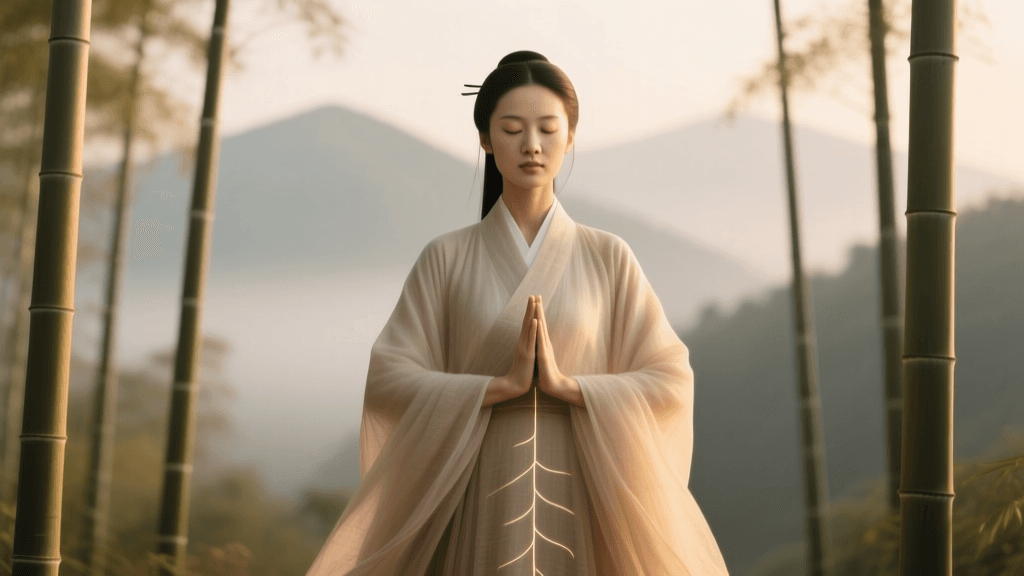
As the boundaries between traditional culture and modern wellness continue to dissolve, investing in high-quality, historically informed Hanfu is an investment in your physical and energetic health. By selecting the flowing silhouettes of the Daopao and Shenyi, prioritizing natural, static-free fabrics like ramie and peace silk, and aligning your garment colors with the Five Elements, you transform your clothing from a mere covering into an active tool for Qi cultivation. Whether you are practicing standing meditation in a misty bamboo forest or engaging in seated breathwork in your living room, the right Hanfu will support your journey toward ultimate harmony in 2026 and beyond.