Dressing the Divine: Recreating Mythological Hanfu Garments
The Intersection of Myth and Textile
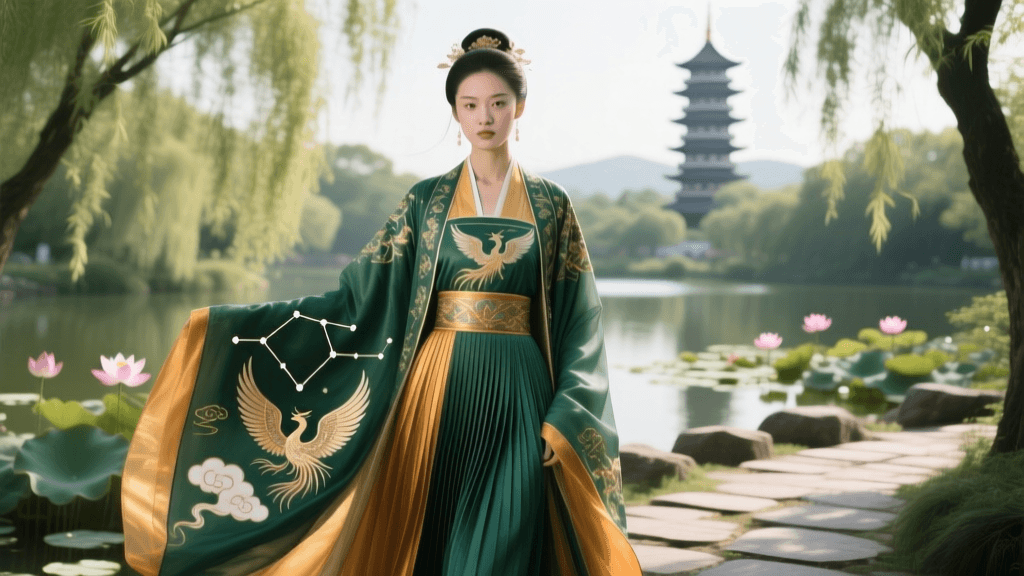
The modern Hanfu movement has transcended historical reenactment, evolving into a vibrant medium for storytelling and cultural expression. Among the most captivating subgenres is "Shenhua" (mythological) Hanfu, which draws direct inspiration from ancient Chinese mythology, folklore, and classical texts like the Shanhaijing (Classic of Mountains and Seas). Dressing as a deity, celestial immortal, or legendary spirit requires more than just wearing traditional clothing; it demands an understanding of symbolic color theory, ethereal fabric manipulation, and exaggerated proportions that bridge the gap between mortal fashion and divine aesthetics.
According to comprehensive overviews of Chinese mythology and folklore, the visual language of gods and spirits is deeply tied to natural elements, cosmic balance, and moral archetypes. When recreating these looks for cultural festivals, photography, or cosplay, enthusiasts must carefully select textiles and silhouettes that convey otherworldly grace. This guide provides actionable advice on how to design, measure, and source mythological Hanfu garments, transforming ancient legends into wearable art.
Decoding Mythological Archetypes in Hanfu Design
Every mythological figure in Chinese lore possesses a distinct visual signature. Translating these signatures into Hanfu requires selecting the correct base garment and modifying it for theatrical or ethereal effect. Below is a comparison chart detailing three popular mythological archetypes, their core garment types, recommended fabrics, and estimated costs for custom commissions.
| Mythological Figure | Core Garment Type | Recommended Fabric | Estimated Custom Cost (USD) |
|---|---|---|---|
| Chang'e (Moon Goddess) | Da Xiu Shan (Large Sleeve Robe) with Pibo (Silk Stole) | Silk Chiffon, Pearl-encrusted Organza, Lining in White/Chrome | $180 - $280 |
| Nine-Tailed Fox (Huli Jing) | Aoqun (Jacket & Skirt) with Detachable Fur Mantle | Heavy Brocade, Faux Fox Fur, Gold-threaded Damask | $250 - $400 |
| Dragon King (Longwang) | Yuanlingpao (Round Collar Robe) with Cloud Shoulders | Zhuanghua (Heavy Silk Brocade), Kesi Tapestry Accents | $350 - $600 |
The Moon Goddess (Chang'e)
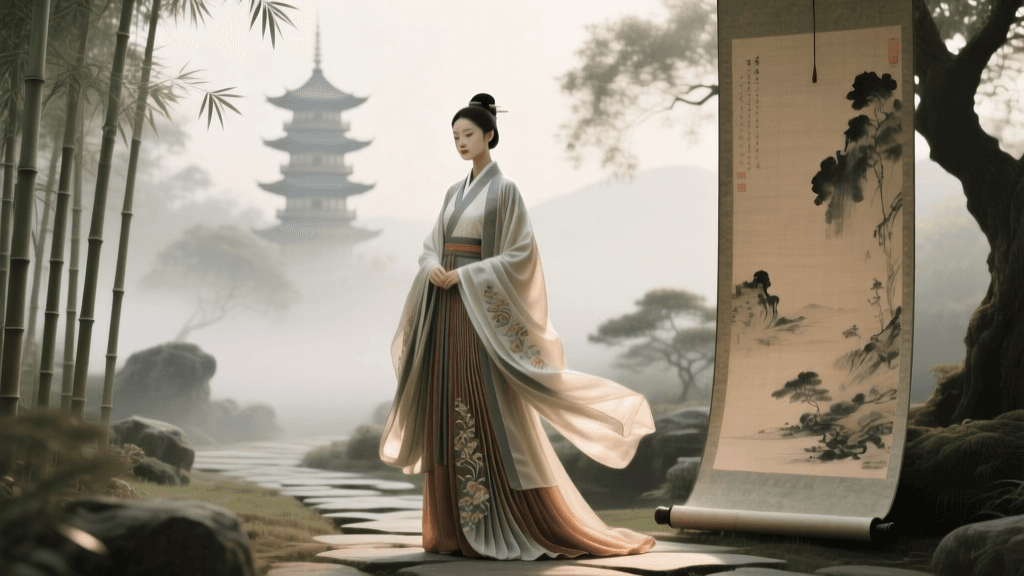
Chang'e represents lunar elegance and sorrow. Her garments should prioritize weightlessness. A Da Xiu Shan (large sleeve robe) made from layered silk chiffon creates a floating effect when caught by the wind. Adding a Pibo (a long, draped silk scarf) measuring at least 3 meters in length enhances the illusion of flight, mimicking the Feitian (flying apsaras) seen in Dunhuang cave murals.
The Nine-Tailed Fox (Huli Jing)
Fox spirits are shapeshifters associated with allure, intelligence, and the wilderness. To capture this, contrast is key. Pair a structured, high-collared Mamianqun (horse-face skirt) featuring dark, earthy tones with a bright, contrasting faux-fur mantle. The skirt should feature intricate embroidery of peonies or autumn leaves, symbolizing the fox's connection to the natural world and earthly temptations.
The Dragon King (Longwang)
Deities of water and weather demand authority and opulence. The Yuanlingpao (round-collar robe) is the ideal canvas. As noted by the Metropolitan Museum of Art's research on historical Chinese silk weaving, techniques like Kesi (cut silk tapestry) were historically reserved for imperial and divine dragon motifs. For a modern recreation, seek out heavy Zhuanghua brocade with raised gold or silver dragon scales, paired with stiffened "cloud shoulders" (Yunjian) to broaden the silhouette and project immense power.
Fabric and Color Theory: The Five Elements (Wuxing)
In Chinese cosmology, the Wuxing (Five Elements) dictate the fundamental forces of the universe. Mythological garments must adhere to these elemental color palettes to remain culturally authentic. Furthermore, the choice of natural fibers over synthetic alternatives drastically alters how the garment moves and catches the light.
The traditional craftsmanship of silk is paramount here. As recognized by UNESCO's Intangible Cultural Heritage list, Chinese sericulture and silk weaving techniques produce textiles with a unique luster and drape that polyester simply cannot replicate. When budgeting for mythological Hanfu, always prioritize natural silk or high-grade rayon over cheap polyester, as the latter will look stiff and costumey rather than divine.
- Wood (Mu): Associated with spring, growth, and the Azure Dragon. Use shades of celadon, emerald, and deep teal. Best fabrics: Raw silk and linen blends for a natural, organic texture.
- Fire (Huo): Associated with summer, passion, and the Vermilion Bird. Use crimson, vermillion, and burnt orange. Best fabrics: Glossy silk satin to mimic the flickering of flames.
- Earth (Tu): Associated with late summer, stability, and the Yellow Emperor. Use ochre, imperial yellow, and terracotta. Best fabrics: Heavy cotton or matte brocade.
- Metal (Jin): Associated with autumn, purity, and the White Tiger. Use stark white, silver, and pale gold. Best fabrics: Silk organza and metallic-threaded jacquard.
- Water (Shui): Associated with winter, wisdom, and the Black Tortoise. Use midnight blue, obsidian, and deep plum. Best fabrics: Flowing silk charmeuse that ripples like water.
Practical Guide: Sizing and Proportions for Ethereal Silhouettes
Historical Hanfu was often tailored to specific, practical measurements. Mythological Hanfu, however, requires exaggerated proportions to achieve an otherworldly silhouette. The most critical measurement in a deity's wardrobe is the Tongxiu (wingspan or total sleeve width).
Measuring the Da Xiu Shan (Large Sleeve Robe)
For a standard historical Hanfu, the wingspan typically ranges from 1.6 to 2.0 meters. For mythological figures, you must extend this measurement to create the "weeping sleeve" effect that drapes elegantly past the fingertips and pools on the floor.
- Calculate Base Wingspan: Measure your arm span from fingertip to fingertip. For an average height of 165 cm (5'5"), this is roughly 165 cm.
- Add the Drape Allowance: Add 60 cm to 100 cm to your base wingspan. A 2.4-meter wingspan will result in sleeves that hang 30 cm past the fingertips. A 2.8-meter wingspan will create dramatic, floor-sweeping sleeves ideal for Chang'e or celestial immortals.
- Sleeve Width (Cuff): Historical cuffs vary, but for deities, the cuff opening should be extremely wide—often 60 cm to 80 cm in circumference—allowing the inner lining to spill out gracefully during movement.
Sizing the Mamianqun (Horse-Face Skirt)
The Mamianqun relies on precise waist and length measurements. For mythological styling, the skirt should graze the floor to hide modern footwear and elongate the legs.
- Waist Measurement: Measure your natural waist, then add 4 cm for overlap and comfort. Ensure the waistband is made of stiff cotton or brocade to support the heavy pleats.
- Length Calculation: Measure from your waist to the floor while wearing the shoes you intend to wear with the outfit. Add exactly 2 cm to this measurement. If you plan to wear 5 cm platform "cloud shoes" (traditional wooden clogs), add 7 cm to the base floor measurement. A standard custom length for a 165 cm tall person is usually around 105 cm to 110 cm.
"The magic of mythological Hanfu lies not just in the embroidery, but in the physics of the fabric. A 3-meter silk Pibo caught in an updraft transforms a mortal into an immortal in the blink of an eye."
Accessorizing the Immortals: Hair and Jade
No mythological garment is complete without its corresponding accessories. Deities in Chinese lore are heavily adorned with jade and intricate metalwork, which serve as spiritual anchors.
Hair and Headpieces: Celestial beings wear elaborate updos secured with Buyao (step-shake hairpins). For a fox spirit, choose Buyao featuring dangling pearls and fox-fire motifs. For a dragon deity, opt for gold-plated hairpins shaped like ruyi scepters or crashing waves. Budget approximately $30 to $80 USD for high-quality, tarnish-resistant brass or silver-plated Buyao sets on specialized Hanfu accessory markets.
Jade Pendants (Yupei): Jade represents purity and moral integrity. A Yupei set, worn hanging from the waistband of the skirt, consists of multiple carved jade (or high-quality resin/glass for budget builds) pieces that chime softly when walking. This auditory element is crucial for embodying the measured, graceful steps of an immortal. A complete, authentic nephrite jade set can cost upwards of $500, but museum-grade resin replicas can be sourced for $40 to $60.
Sourcing and Budgeting Your Mythological Wardrobe
Because mythological Hanfu requires specific, exaggerated measurements and niche fabrics, off-the-rack options are often insufficient. Most enthusiasts rely on custom Taobao tailors or specialized Hanfu studios. Here is a practical timeline and budget breakdown for commissioning a custom mythological outfit.
The Commission Timeline
- Week 1: Design and Fabric Sourcing. Finalize your sketches, Wuxing color palette, and select fabric swatches. Tailors will often send digital mockups for approval.
- Week 2-3: Embroidery and Weaving. If your garment requires custom embroidery (e.g., a nine-tailed fox motif on the skirt panels), this stage takes the longest. Machine embroidery is faster and cheaper ($50-$100 extra), while hand-embroidery can add months to the timeline and thousands to the cost.
- Week 4-5: Tailoring and Assembly. The cutting, pleating, and sewing of the garment. Pleating a Mamianqun requires high-heat pressing to ensure the pleats remain sharp even in wind.
- Week 6-8: Shipping and Customs. Using a reliable shopping agent (like Superbuy or CSSBuy) to consolidate and ship your items internationally via DHL or FedEx.
Budget Breakdown (Example: Chang'e Moon Goddess Set)
- Custom Da Xiu Shan (Silk Chiffon/Organza): $120 - $160
- Custom Mamianqun (Moon Rabbit Embroidery): $80 - $120
- 3-Meter Silk Pibo Stole: $30 - $50
- Pearl Buyao Hairpin Set: $45
- Agent Fees & Express Shipping: $60 - $90
- Total Estimated Investment: $335 - $465 USD
Conclusion
Recreating traditional clothing inspired by Chinese mythology is a profound exercise in cultural storytelling. By respecting the Wuxing color theory, investing in the fluid drape of natural silks, and meticulously calculating the exaggerated proportions of celestial sleeves, you do more than just wear a costume. You breathe life into the legends of the Shanhaijing, allowing the divine elegance of Chang'e, the cunning beauty of the Huli Jing, and the majestic power of the Dragon King to walk once again in the mortal realm.